There is a small detail in José Manuel Villanueva’s account of building Privalia that deserves a place beside the sale price. Years after he and Lucas Carné had founded the fashion business, they still shared a hotel room when travelling together. The company had been sold. The room arrangement had survived. Corporate success had apparently failed to secure a second minibar.
“Lucas y yo somos casi una pareja,” he said in 2019: Lucas and I are almost a couple. The joke contains a useful piece of biography. Their relationship began at Bain & Company, became a business partnership in 2006 and lasted through Privalia’s acquisition by Vente-Privee in 2016. They left the company in 2018. In 2020, they were founding another business together.
That next company, 011h, designs and builds using industrialised components and digital coordination. It is a considerable change of merchandise. A discounted jacket can be packed and posted; a block of flats requires rather more agreement about where everything goes. Villanueva’s second act puts the familiar partnership into unfamiliar territory, with housing delivery as the practical test.
The interesting question is what travels between those two businesses. Clothes and buildings offer few obvious similarities. Both, however, require people, suppliers and a sequence of promises to work together. Read across his career and a recurring interest appears: the organisation behind the offer, the machinery that lets a customer receive what a business has promised.
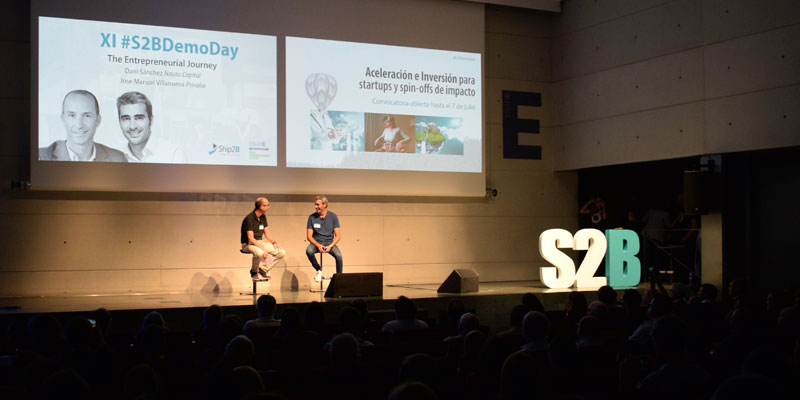
A hotel, a consultancy, a shoe business
Villanueva was born in Barcelona. His father ran a hotel on the Ramblas, giving him an early view of business through everyday dealings with people. He entered Esade in 1994. By 1999 he was beginning his career at Bain in Madrid; his education also included study at the University of Michigan. In 2002, he moved to Vigo to run New Balance in Spain.
The sequence matters because it puts actual trading before the startup label. Hotels receive guests. Footwear businesses deal with brands and distribution. Consulting asks how an organisation makes money. Privalia would bring those concerns into an online setting, with fashionable stock on one side and customers looking for a worthwhile price on the other.
When Villanueva and Carné launched Privalia in 2006, they were adapting the private online sale model already established by Vente-Privee. They were quite open about the precedent. Their task was to make it work in their own market. A business can borrow its format; the relationships, execution and customer confidence still have to be assembled locally.
In a 2010 account of the launch, the founders described an initial investment of €100,000 and another €300,000 from outside partners in November 2006. Such figures give the beginning a useful scale. Before the international expansion and the acquisition, there was a relatively small operation asking suppliers and shoppers to try a different channel.
- 1999Bain & Company
- 2002New Balance Spain
- 2006Privalia
- 2020011h
The shop gets bigger than the shopkeepers
By August 2009, Privalia had passed two million members. Its workforce then numbered 174 people from 20 countries. The business offered language training, exchanges between country teams and a welcome programme for new arrivals. Those details suggest the administrative work hidden inside a growth story: every new market also creates new colleagues who need to understand one another.
Its Barcelona premises changed too, from a small office on Portal de l’Àngel to a large space in the 22@ district. By 2012, the company had expanded into Italy, Brazil and Mexico. The physical move makes a serviceable picture of the change. The website might look like a shop window, but behind it an international organisation was taking shape.
Villanueva later identified a commercial agreement with Nike in late 2007 as a turning point. Before it, the founders could feel movement without clearly seeing the destination. The deal gave them a firmer sense that the project could become substantial. Even in retrospect, his account gives uncertainty its proper place before the reassuring ending.
He has also acknowledged mistakes made during rapid growth, including diversification that went wrong. His response included an organisational reset and a return to steadier development. That admission is more useful than an immaculate founding legend. Growth brings decisions at a pace that can outrun the company’s ability to make them well.
A shop small enough to fit in a phone
The customer was moving while the company grew. In April 2013, mobile devices already accounted for nearly 30% of Privalia’s revenue in Spain and more than 40% in Mexico. Villanueva described periods when phones and tablets generated more sales than computers. Shopping was becoming something people could do away from a desk.
By November that year, he put the mobile share of global sales at 40%. Privalia had recorded more than €422 million in revenue in 2012. Yet his description of its essential activity remained wonderfully plain: “Somos tenderos.” We are shopkeepers. The term brings the conversation back to the transaction, with all the obligations that follow it.
The work also extended beyond the purchase button. On a later visit to Mexico, he described delivery times falling from 15 days to six and then four. A flash sale creates urgency in an instant. Fulfilling it demands warehouses, information and transport. The customer eventually judges the parcel as well as the price.
That operational perspective helps explain his resistance to the romance surrounding entrepreneurship. He has argued against putting founders on a pedestal. A shopkeeper has customers to answer to and suppliers to pay. The title allows less room for posing, which may be one of its considerable attractions.
Selling the company, keeping the partnership
Vente-Privee acquired Privalia in April 2016. The transaction was reported at about €444 million. The company whose format had helped inspire the Barcelona venture became its buyer a decade later. It is a pleasingly circular plot, although the work continued after the deal.
Villanueva and Carné stayed to support growth, develop synergies between the platforms and guide integration. Their departure was announced in November 2018, with Fabio Bonfà taking over executive leadership. The dates distinguish selling a company from finishing a job. Signing an agreement leaves a great deal of ordinary work for the people responsible for making it function.
His wider business connections include an early shareholding in Groupalia and a place among Lanai Partners’ investors and advisers. Those affiliations sit alongside the operating career. They also show how a company’s history spreads into a network of founders, backers and future projects, long after the original website has changed owners.
At Elogia’s twentieth anniversary in 2019, Villanueva credited both hard work and luck, including the good fortune of meeting the agency along the way. It was a generous way to discuss success. The familiar tale gives the founder a spotlight; his version made room on the stage for people who had helped the business find its customers.
“Somos tenderos.”
José Manuel Villanueva, 2013
“We are shopkeepers.”
The next product needs foundations
011h launched in 2020 with a founding group that brought experience from property, commerce and technology. Foundamental announced a €10 million seed financing that December. Alongside Carné and Villanueva were José Ojeda, Josep Barbera, Juan Velayos and Alex Valls. The next venture would require several kinds of expertise around the same table.
Its model connects design, manufacturers and building sites through a digital platform. Components are made before they arrive for assembly. Planning a building and planning its construction become connected tasks. The approach asks a practical question at the drawing stage: how will the proposed design actually be made?
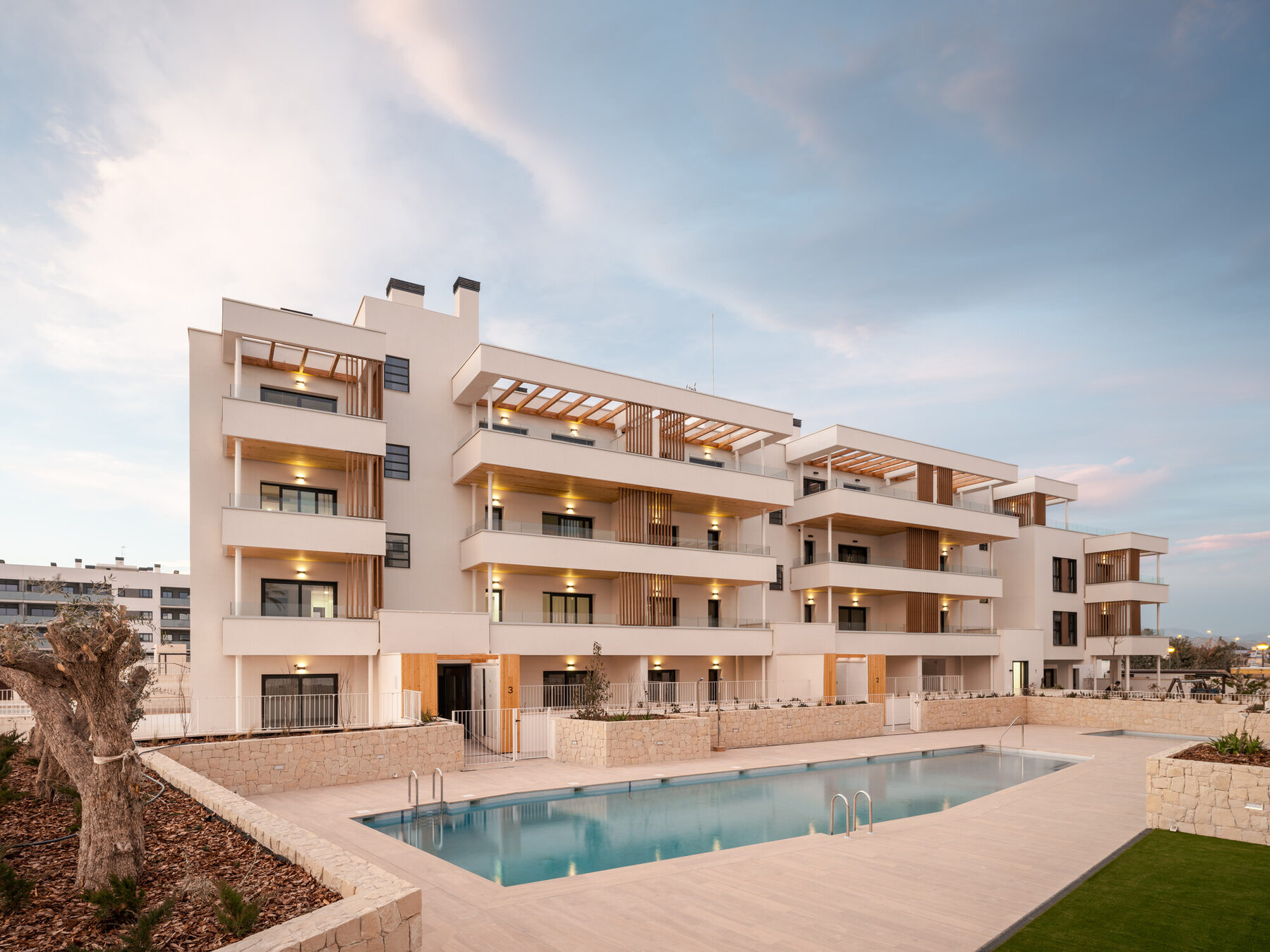
The work has taken shape in specific places. Life Habitat in L’Hospitalet comprised eight homes with Renta Corporación. Fioresta in Alicante comprised 51 homes with AEDAS Homes. Casernes in Barcelona added 56 social housing units with IMHAB. These are different sizes and clients, giving the system more than one setting in which to prove itself.
There is an appealing tension in the move from fashion to housing. The first business used limited selling windows; the second produces things intended to stay put for decades. Both depend on coordination, but the consequences and timescales change. An experienced founder still has to learn the demands of the material in front of him.
The calendar has become part of the product
In October 2025, 011h announced another €20 million financing round. In March 2026, Villanueva appeared at REBUILD on a panel about making affordable housing into a repeatable product. By September, AXIS, the venture capital manager of Spain’s Instituto de Crédito Oficial, had announced plans to invest up to €12 million through Fond-ICO Crecimiento.
The AXIS investment is intended to develop the technology, expand operations and support a future platform open to third parties. The wording describes an ambition as well as financing. The company is working towards a system others can use, extending the question beyond what its own team can deliver on an individual building site.
Public appearances place Villanueva in the discussions where that system meets developers and housing providers. The task is now to persuade an industry to organise work differently. A successful past venture may secure a hearing. Homes, contracts and delivery dates must do the rest of the persuading.
Barcelona, with obligations attached
Barcelona remains central to his account of what enterprise can achieve. He describes it as open, welcoming and dynamic, values culture as a source of prosperity, and argues for attracting talent through constructive networks. The city is both his birthplace and the setting for businesses with ambitions beyond it.
He has also spoken candidly about the balance between professional achievement and personal life, and about wanting to reach later life comfortable with the choices he made. That gives his second act a more demanding measure. A company can grow while its founder still has questions about how he wants to spend his time.
The shared hotel room is a good place to leave him. It holds the friendship, the persistence of an old arrangement and the absurdity of trying to summarise a working life with a transaction price. Villanueva and Carné built a business together, sold it and chose another difficult undertaking. The partnership continues. This time, the deliveries come with foundations.