When Jordi Romero was 13, he built a website for his cousin's travel agency. His cousin and her business partner paid him with three weeks of English lessons and accommodation in London. It was an unusually well-targeted piece of compensation: a travel business had found a way to send its young developer abroad.
The exchange makes a good opening entry in a career that would eventually involve international investors, a Barcelona software company and rather larger numbers. It also puts something practical ahead of the usual founder mythology. There was a customer. There was work to be done. The reward bought him an experience he could use.
Romero had already discovered that making things could bring in money. As a child, he tried making and selling hair lotion after seeing how it was produced at a hairdresser's. With the arrival of a computer at home, he moved towards fixing computers and printers, then writing simple applications. A neighbourhood market was quite sufficient for a start.
His later confidence about earning a living came from those early experiments. He had made money before adulthood made it a necessity. The interesting question in his story is what happened when that instinct met a product that thousands of businesses could use for free. Getting someone to try software and getting someone to pay for it would prove to be separate accomplishments.
An engineer goes looking for an education
Romero grew up in Gràcia, Barcelona, and taught himself programming from magazines and the internet. He began freelance programming for acquaintances at 16. By the time he studied computer engineering at the Universitat Politècnica de Catalunya, from 2004 to 2010, he already had experience doing work for clients. Formal education arrived alongside a functioning commercial education.
His small software business served architecture and construction firms. That gave him a bounded problem: understand a particular customer, build something useful, sell it. At Teambox, the Barcelona project-management startup later renamed Redbooth, the boundaries expanded. He joined a business that needed to learn how to grow an organisation around a product.
He described joining an early startup as an “MBA” with “no theory and all practice.” His reasons included technical challenges, the chance to move to the United States and the opportunity to learn from developer Mislav. Marketing, fundraising and the machinery of selling software became part of the curriculum. Nobody had to invent a case study.
At Redbooth he worked alongside Pau Ramon, who would become a Factorial co-founder. Their friendship extended to climbing, travelling and, for a time, sharing a flat. Before asking investors to believe in their compatibility, they had accumulated a fair amount of evidence themselves.
“I build companies from Barcelona.”
Jordi Romero
Three founders, one familiar irritation
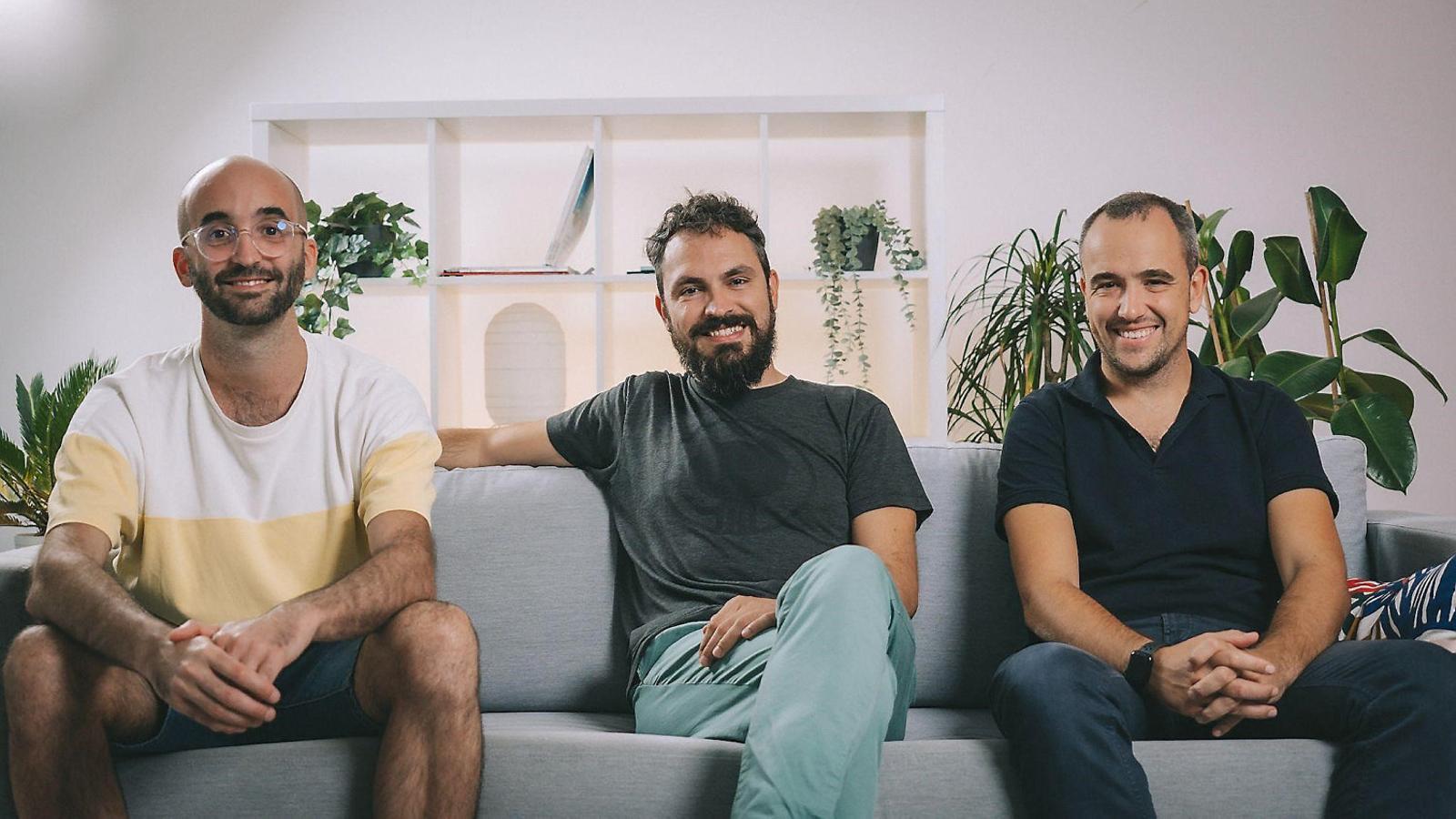
Factorial began in Barcelona in 2016 with Romero, Ramon and Bernat Farrero. They brought experience in productivity software and an irritation with the administrative work growing companies accumulated. Keeping track of employees meant dealing with documents, leave, payroll and processes that could become surprisingly awkward before a company became particularly large.
Small businesses were the intended customers. The premise was approachable: put the recurring work in one place, automate what could be automated, and give managers information they could actually use. A founder could explain it without asking the listener to imagine a distant technological future. The paperwork was already there.
The product's usefulness, however, did not immediately settle the question of its business model. Factorial initially offered software free to gather feedback. Romero has described a three-year stretch of experimenting and revising the offer. The early company had to learn which improvements customers valued enough to support financially.
Charging per employee became an important decision. A smaller customer team meant a smaller bill; expansion brought a larger one. As he put it, “if they grow, they pay more.” The relationship between the size of the business and its subscription became easy to grasp. Even a beautifully designed product benefits from a bill its customer can understand.
The investors got a few questions too
In September 2018, Creandum announced that it had led Factorial's seed round, joined by Kfund and Point Nine Capital. The company had already attracted more than 20,000 business sign-ups. Sign-ups measured interest, and the early offering included free software. They should not be mistaken for a count of paying customers.
Creandum's account lingered on the founders' curiosity. Romero, Farrero and Ramon asked the investors about as many questions as they received. The detail is revealing because fundraising is often described as an audition with all the judgment flowing in one direction. These founders were conducting an interview of their own.
There was good reason to take the relationship seriously. Romero has spoken about losing control of an earlier company and choosing investors poorly. He also counts waiting too long to monetise Factorial among his mistakes. The caution comes from participation, rather than a newly discovered enthusiasm for giving advice.
His recommendation to other founders is consequently fairly stern: charge early, because willingness to pay tells you whether the need is real. It is an arresting lesson from someone who first exchanged software for an education abroad. A useful product still needs an honest transaction. The method of payment can be creative; indefinitely postponing the question gets expensive.
Barcelona was the base, not the boundary
Romero's case for building in Barcelona has always allowed for customers elsewhere. In a conversation about Factorial's €15 million financing in 2020, he described access to local talent and a network built through earlier work. The base of operations could be local while customers, partners and capital came from around the world.
That distinction matters in the geography of his career. San Francisco supplied experience and contacts. Barcelona supplied collaborators, continuity and a place to build. Moving between the two did not require treating one city as a preliminary stage to be discarded once the business became serious.
By September 2021, Factorial had raised an $80 million Series B led by Tiger Global. In his announcement, Romero said the team had grown from 39 people in 2019 to 253, and had opened an office in Mexico City. The ambition to serve businesses internationally was acquiring employees and addresses.
In 2022 came a $120 million Series C led by Atomico and a $1 billion valuation. It was a financing milestone for the company he had co-founded six years earlier. The arithmetic was conspicuous. For customers, the proposition still depended on less glamorous arithmetic: hours recovered, information found and routine tasks completed without another round of chasing colleagues.
The microphone stays in Barcelona
Alongside running Factorial, Romero is a general partner at Itnig and co-hosts its Spanish-language podcast. The setting gives his public life a useful second perspective. He is an operator explaining his own decisions, an investor listening to another founder's plans, and a host helping get the story out into the room.
Itnig's history reaches back to a development consultancy started by Farrero at the UPC computer-science faculty, with work beginning in a family garage. Its stated purpose is to help build a Barcelona ecosystem with global ambition, combining technology, knowledge, capital and physical meeting places. Romero's overlapping roles sit comfortably inside that idea.
The fund describes initial investments of €100,000 to €500,000 and support with fundraising, sales expansion and partnerships. It says founders run their companies and that it does not take board seats. That stance gives practical expression to a concern that runs through Romero's earlier recollections: getting help should leave room for the founder to lead.
His own website begins with the compact sentence, “I build companies from Barcelona.” It lists the company, the fund and the conversations together. There is something pleasantly economical about that introduction. A business card could manage it. Explaining everything those three commitments demand would require a considerably longer meeting.
Another useful idea, another test
In 2026, Factorial's financing moved into another bracket: a $150 million Series D led by General Catalyst at a $2.5 billion valuation. Its business had widened beyond HR into finance and IT. The next product argument concerns AI agents working with the information and rules a company already keeps inside its software.
Factorial describes a two-agent arrangement: one represents the organisation and its policies, while another assists an individual employee. Its declared ambition is to let people and agents work together across company operations. This remains a product strategy to execute, with the familiar challenge of making something complicated feel useful in an ordinary working day.
On October 7, 2026, Factorial presented its personal AI agent One as it continued an expansion focused on Germany. Romero also appeared on the programme for Factorial Summit in Barcelona, with a keynote and an Itnig podcast session alongside Farrero. The engineer, executive and interviewer were sharing a calendar again.
Away from those commitments, his declared interests have included sailing, climbing and carpentry, with Bob Dylan and Fargo among his cultural favourites. Carpentry is an appealing detail in a software founder's biography. Materials have opinions. A joint either holds or it does not. The customer, too, eventually gets a say.
Romero has described seeing young employees develop into managers as a success worth celebrating. It is a quieter measure than a funding round, and a personal one. His career began with work that bought him an education. The company he leads now has to make room for other people to learn, take responsibility and build something that holds.
Follow the conversation
Read, listen and explore Jordi Romero’s work.
- Jordi Romero’s personal website
- Twitter / X
- GitHub
- Factorial
- Factorial company profile
- Itnig Capital
- Itnig podcast on YouTube
- Watch: founder-led sales at Slush
- Watch: the 2026 funding conversation
- Read: Setting sails for a new startup journey
- Read: Romero on early work and money
- Read: Creandum’s 2018 investment account
- Read: Factorial’s Series D announcement
- Read: the October 2026 One launch