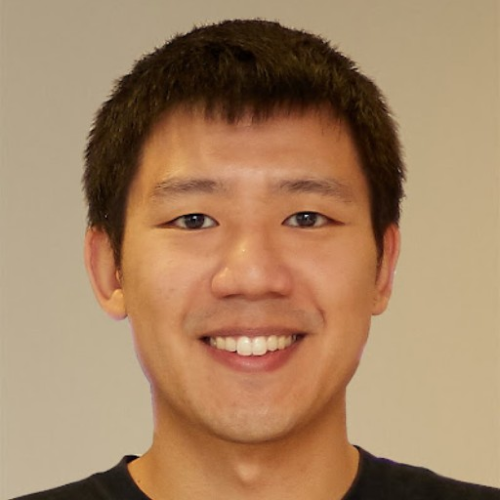
Jonathan Wang measures time differently than most people in biology. Where a lab counts in weeks, he counts in hours. That single instinct - borrowed from the ruthless clock of high-frequency trading - is the whole story.
Wang is the co-founder and CEO of Watershed, a Cambridge company with an audacious pitch: hand a biologist raw sequencing data in the morning and give them a therapeutic insight by the end of the day, without them writing a single line of code. It sounds like the kind of promise startups make and quietly retire. Wang built a company around it because, by his own account, most people told him it couldn't be done. That is precisely the sound he listens for.
The platform, known variously as Watershed Informatics and Watershed Bio, sits in an unglamorous but enormous gap. Sequencing a genome has gotten absurdly cheap over the past two decades. Making sense of the flood that follows has not. Between the biologist who understands the science and the bioinformatician who can wrangle the data lies a chasm, and drug discovery keeps falling into it. Watershed's job is to be the bridge - a cloud platform of ready-made workflows for whole-genome sequencing, single-cell and spatial transcriptomics, epigenomics, proteomics, and protein folding, with tools like DeepMind's AlphaFold baked in.
Scientists want to learn about the software and data science parts of the field. They just don't want to become software engineers writing code to understand their own data.
— Jonathan Wang, MIT News
The second act nobody predicted
Rewind to the early 2010s. Wang is an undergraduate in MIT's Electrical Engineering and Computer Science department, the class of 2013. He had arrived expecting to study biology. He left with a computer scientist's brain and a taste for problems that scale to millions. An internship in an MIT biology lab left an impression, though not the one his advisors might have hoped for: he found the experimental rhythm painfully slow next to the fast feedback loops of software. He would remember that feeling. It took a decade to act on it.
First came a detour that was really a proving ground. While still at MIT, Wang started trading in his dorm room with a neighbor, Christina Qi, who lived in the room next door. They woke early to trade European market hours and cleared roughly two thousand euros a day. That side hustle became Domeyard, a high-frequency trading hedge fund he co-founded in 2013 with Qi and Luca Lin. The name was a wink - MIT's Great Dome fused with Harvard Yard, a merger of the two campuses its founders came from.
The name game
Wang has co-founded two companies, and both names are quiet metaphors. Domeyard stitched together two universities. Watershed is the place where rivers - and insights - first begin to flow. He is a man who names things carefully.
Domeyard was not a lemonade stand. At its reported peak it made in the neighborhood of a billion dollars of trades a day. Wang, as the technical lead, built the machinery underneath: servers colocated in the Chicago Mercantile Exchange's data centers, millions of lines of proprietary code, infrastructure that swallowed petabytes. He had turned down the conventional path after an Apple internship because, as he put it, the financial world was “full of really tough technical problems.” Trading was simply harder, and harder was the point.
I feel like we can do better in a lot of areas and with some technological problems because we started from scratch.
— Jonathan Wang on Domeyard, Forbes
What a hedge fund taught him about DNA
Here is where the two halves of his life quietly clicked together. At Domeyard, Wang hit a recurring wall. Researchers with PhDs in mathematics and physics could prototype brilliant models on their laptops. Turning those prototypes into production systems, though, required engineers who didn't understand the research. The handoff was where good ideas went to die. So his team built software that let a prototype become production as easily as building on a laptop.
Then his oldest friend gave him the biology version of the same problem. Wang met Mark Kalinich at MIT - Kalinich, class of 2013, a physician-scientist - and the two stayed close after graduation. Through Kalinich, Wang kept hearing about the bottleneck inside top research institutions: brilliant biologists starved of fast, high-powered data analysis. It was the trading floor's dilemma wearing a lab coat. The gap between the person who understood the science and the person who could compute it was the same gap, in a different industry.
In 2019, Wang and Kalinich founded Watershed to close it. The insight Wang carried over from finance was not a specific algorithm. It was a tempo. In trading you have the data and the computational firepower, but the real edge is turning research around in a very short amount of time - think hours, not weeks or months. He wanted biologists to feel that same velocity.
The intern returns
The lab internship that once bored a young Wang with its slowness became the exact problem he'd spend his thirties solving. He didn't leave biology. He went and got the tools to speed it up, then came back.
The bet that Cambridge made
On March 30, 2023, Watershed closed a $14.5 million Series A led by Canvas Ventures, whose founding partner Paul Hsiao joined the board. Existing backers Bessemer Venture Partners and Accomplice came along. The round pushed Watershed's total funding to roughly $18-20 million across three rounds. Hsiao's read on the company was blunt: Watershed had been “executing at an incredible pace,” building “an exceptional platform that solves real-world drug discovery needs.”
Wang's own framing of the market gap is the thesis in a sentence. “While the size and variety of data in the life sciences has grown exponentially for the past two decades,” he said, “there remains a lack of centralized and collaborative platforms serving both biologists and bioinformaticians.” Watershed is his answer: a single place where the two tribes can finally work off the same data.
By late 2025, MIT News was profiling the company as a case study in making complex analysis accessible - a no-code layer over some of the most sophisticated computational biology on the planet. The vision, Wang insists, has not wavered since day one: to become the dominant biocomputing platform for the world's scientists.
What excites me about Watershed is tackling an extremely difficult problem that most people think can't be solved.
— Jonathan Wang
The operator underneath the founder
Talk to people about how Wang works and a pattern emerges. He hires strong generalists and resists rigid role boundaries - a habit carried straight from a scrappy hedge fund where everyone wore several hats. He admires investors who do their own deep, independent research rather than nodding through diligence. And he is allergic to vision-for-vision's-sake; he prefers refining execution through concrete, granular steps, the kind of engineer who trusts the next hundred small decisions more than the grand slide.
There is a through-line to all of it. Wang keeps choosing the harder version of whatever room he walks into. Apple was interesting; trading was harder, so he traded. Trading was solved enough; biology's data problem was harder and more meaningful, so he switched fields entirely. The unifying trait isn't finance or biology. It's a gravitational pull toward the problem everyone else has written off.
Watershed sits in Kendall Square, the dense Cambridge grid often called the most innovative square mile on earth, a few blocks from the labs whose slowness first nagged at him as an intern. It's a fitting address for a second act. The kid who came to MIT for biology, got seduced by computer science, and made a fortune trading milliseconds has circled all the way back - carrying the speed with him.
The wager is simple to state and brutal to build: give every biologist, at every organization regardless of size, the computational firepower that used to belong only to hedge funds and elite institutions. If Wang is right, the next generation of medicines won't be gated by who can afford a bioinformatics team. If he's wrong, he'll have failed at exactly the kind of problem he likes best. Either way, he's counting the hours.