Passwords, Jonathan Daly likes to say, do not work. It is an admirably blunt opening from a marketer who has spent more than a quarter-century around technologies built to avoid blunt-force outcomes. Passwords are forgotten, reused, phished, stuffed and reset. They also have a minor talent for ruining an evening. In the essay Daly wrote when he joined BioCatch in 2022, the modern authentication ordeal stood between a parent and the fifth season of Cobra Kai with the tweenagers. Cybersecurity rarely gets a domestic punch line. Here, the joke carries the thesis: protection has become so conspicuous that legitimate customers are asked to prove themselves again and again, while criminals learn the routine.
Daly's proposed change begins with something quieter. Watch how a person behaves. The pressure of a tap, the rhythm of typing, the path of a mouse and the way a device is handled all create signals. BioCatch analyzes such interactions alongside device, application and network data. The bank does not need a customer to remember one more secret; it looks for patterns that help distinguish ordinary behavior from criminal intent, coercion or automation. The product is statistical and technical. Daly's contribution is to make its logic feel almost obvious.
A career in invisible categories
The through-line in Daly's career is not one security product. It is the act of explaining a category just before everyone agrees on the vocabulary. He studied speech communications at Syracuse University, graduating in 1998, and later completed an entrepreneurship certificate at Boston University's Questrom School of Business. The pairing now reads like a neat description of his work: find language for a new market, then help build the company that occupies it.
His company list is a map of enterprise technology's changing anxieties. It includes IONA Technologies in middleware, Charles River Development in trade-order management, Liquid Machines in enterprise rights management and Endeca in business intelligence. Then came Core Security, Carbon Black, IntSights, Onapsis and DTEX. The subjects shifted from penetration testing to endpoint defense, threat intelligence, business-application security and insider risk. At Carbon Black, Daly said he helped define and launch endpoint detection and response and create the threat-hunting category. At IntSights, he worked alongside sales as pipeline grew 400 percent in less than two years.
IONA, Charles River Development, Liquid Machines and Endeca
Core Security, then product and category work at Carbon Black
Threat-intelligence marketing at IntSights
Vice president of global marketing at Onapsis
Chief marketing officer at DTEX Systems
Chief marketing officer at BioCatch
These were not friendly products to summarize over lunch. Each dealt in activity that was difficult to see and expensive to ignore. Daly learned to work where technical proof, a buyer's fear and a sales team's urgency meet. A recommendation on his LinkedIn profile credits him with supporting the launch of a strategic-alliance program. Another describes him as a collaborative leader who energizes a team. The public version of Daly is earnest about security, but he does not sound embalmed by the industry's seriousness. He calls himself a “communication geek.”
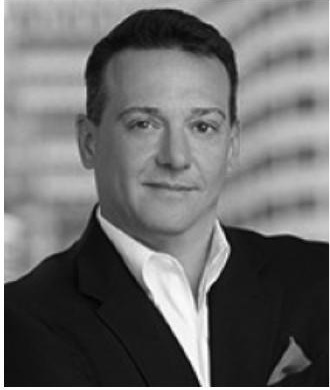
The pleasure of aiming smaller
At BioCatch, Daly's target market included a finite set of very large banks. That fact turned a common marketing instinct upside down. More reach was not automatically better. “We didn't want to be on an ad platform where we were wasting even a penny showing ads to people who didn't care or were not within our ICP,” he said. The ungainly abbreviation means ideal customer profile, but the useful word is care. Precision began with finding the institutions already signaling a reason to listen.
BioCatch worked with 6sense and Marketbridge on an account-based pilot aimed at 553 banks. The team built more than 200 segments, made over 450 creative assets, launched 125 campaigns and constructed more than ten landing pages in six months. Content shifted according to the account's research behavior and apparent place in the buying journey. Daly called the approach “spearfishing” when he presented it with Marketbridge at an Association of National Advertisers conference. The aquatic joke did real strategic work: one-to-one and one-to-few efforts were designed to land with a particular account, not merely float past a large audience.
“What fascinates me as a communication geek... is that it allows us to listen.”Jonathan Daly on buyer-intent signals
Listening produced movement. The case study reported a fivefold increase in accounts at the active pipeline stage, while active engagement rose 63 percent. Six percent of the full account list entered the pipeline after March 2023. These figures belong to a particular campaign, not a universal law. The reusable idea is the discipline underneath them. A smaller field can justify richer work. Relevance can be produced deliberately. The marketer's role becomes closer to a careful correspondent than a megaphone operator.
Long Swipe Sally enters the bank
There remained a creative problem. Behavioral biometrics is built from the most recognizably human material imaginable, yet its name sounds like something stored in a locked laboratory drawer. BioCatch and Marketbridge answered with fictional people. Long Swipe Sally swipes with a flourish whether she is dancing or paying a bill. Heavy Tapper Ted brings the same intensity to his touchscreen that he brings to a business pitch. Other characters typed at speed or lingered on a device in their own peculiar ways.
The concept worked because it copied the product's central observation: people are wonderfully consistent in their quirks. With no time for a conventional photo shoot, the team used generative-image systems to create the cast. It went through more than 400 generations, refining settings, clothes and demographic representation before animating the portraits. When the agency first proposed AI for the creative work, Daly's remembered answer was “hell yeah.” It is difficult to imagine that appearing in a password policy.
The campaign reported a 113 percent lift in website sessions from target accounts, a 37 percent increase in branded search and a 21 percent improvement in organic rankings against competitors. Daly's own verdict was pointed: AI in marketing could be more useful than producing outlandish pictures if the work had a purpose. In this case, the production method and the message mirrored one another. Machine intelligence was used to depict the human patterns that another machine-learning system was designed to recognize.
A promise with two words
In June 2025, BioCatch recast “Stay safe” as its brand assertion. Daly wrote that it should not behave like a polite sign-off. It was meant to carry the company's mission: make banking safer every day. The language is spare, especially beside the vocabulary of fraud telemetry, behavioral sequencing, money-mule networks and real-time risk scoring. That spareness is the point. A brand promise must remain intelligible after the product presentation has finished.
His writing has grown more urgent as scams have become more organized and AI has made imitation cheaper. Yet the proposed defense remains stubbornly personal. “The one thing each of us owns, completely, is how we behave,” Daly wrote in 2022. The statement is philosophical for a corporate blog, and slightly romantic about data. It also captures why he joined BioCatch. After marketing tools that watched threats, endpoints, applications and insiders, he found a system that treated the legitimate person's behavior as the most useful signal in the room.
“We believe that a brand is a promise. And our promise is clear: We fight to make banking safer every day.”Jonathan Daly, 2025
The $2.4 billion next chapter
On August 3, 2026, Visa signed a definitive agreement to acquire BioCatch for $2.4 billion in cash. The deal remains subject to customary conditions and regulatory approval, with closing expected by the end of Visa's fiscal second quarter of 2027. At announcement, BioCatch said its systems protected 760 million users on 1.8 billion devices, served more than 350 banking clients in 21 countries and analyzed 19 billion sessions a month. The quiet movements Daly had spent four years explaining were becoming part of a much larger payments story.
An acquisition price does not belong to a marketing executive alone, and Daly does not claim it. BioCatch was founded in 2011; its scientists, engineers, fraud analysts, customers and investors built the technology and network over many years. His role was narrower and still consequential: give the work a language, find the institutions most ready to hear it and make its human premise visible. This is operator work disguised as storytelling. It joins product truth to buyer attention, then checks whether anything moved.
Daly's public aspirations remain fixed on less friction and more personal security. The future he describes is one in which the bank recognizes the real customer without turning every login into an examination. There is an elegant inversion in that idea. For decades, computers trained people to behave for machines: choose the acceptable password, locate the code, answer the question. Behavioral intelligence asks the machine to pay attention instead. For a self-described communication geek, listening has become both the marketing method and the product metaphor.