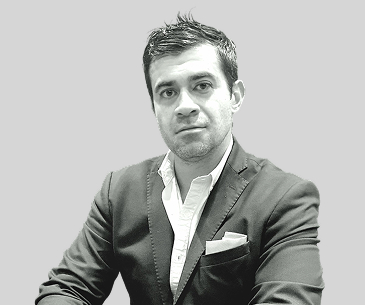
Jonathan Ceja once thought real estate was someone else’s business. Working in brokerage and private banking, he saw property as a competitor to the investments he knew. Later, he admitted that he had spoken badly of the sector. Then he went looking at its risks more closely. The criticism turned out to have a practical use: it gave him things to check.
It is an appealing place to begin a founder’s story. A change of mind is more interesting than a prediction made with perfect hindsight. Ceja’s account contains the awkward bit: he had to revisit his own view. Today, the Miami-based founder and CEO of KUN Capital works in a business where real estate, private capital and financial technology share the same conversation.
An investor changes his mind
The warning signs he described were tangible: a developer’s reputation, permissions, demand, and projects seeking money before the basic paperwork was ready. His earlier skepticism had become a way to examine an opportunity. The lovely drawing of a future building had to survive questions about the present.
KUN’s beginnings, in his account, go back to an idea shared by two friends in 2015, followed by formal establishment in 2019. That distinction matters. An idea can have a generous childhood; a company eventually needs rules. The firm’s own chronology starts in 2019, with the evaluation of property and technology projects.
Read together, these details suggest a founder carrying questions from one professional world into another. He had experience with financial institutions. Property offered a different setting in which to ask what an investor owned, who controlled the decisions, and how the money would reach the project. The setting changed. The questions remained useful.
Two countries, one set of questions
The geography soon widened. KUN’s company chronology records Riviera Maya investment vehicles in 2021, a first Brickell vehicle in 2022, and Miami and Playa del Carmen office openings in 2025. These are milestones in the firm’s account of its development. They give Ceja’s work a map: Mexico on one side, Florida on the other, with property projects connecting them.
Crossing a border also changes the questions around the capital. In a January 2025 essay, Ceja discussed planning for Mexican investors with US positions, giving attention to residence, the type of investment and tax arrangements. His subject was the practical work surrounding an investment, rather than a contest between two attractive destinations.
A skyline is an excellent advertisement. It is a less complete explanation of a financial arrangement. This is one reason the geography matters to the profile: Ceja’s work asks people to understand a structure that stretches between places. The postcard can arrive first. The explanation still has to catch up.
The cake has to finish baking
For all the architectural language that now surrounds KUN, Ceja has another explanatory device: a cake. In his September 2023 essay on investment purpose, he compared equity participation to baking. The ingredients have to come together, and the participants have to wait until the result is ready before taking their slices.
The comparison brings a little domestic common sense to a subject crowded with financial vocabulary. Owning a stake in a project involves time. A recipe and an oven are more memorable than a page of abstractions. There is also something mildly comic about imagining a group of impatient shareholders gathered around a cake that refuses to bake any faster.
His essay widened the meaning of investment to include education and giving, alongside equity, debt and technology. That choice is revealing as a piece of public writing. It invites a reader to consider different kinds of reward and different horizons. The money question stays in the room, but it has to share the table with questions about what the investment is meant to accomplish.
The costs hiding in plain sight
His July 2023 writing on investor mistakes has a plainer tone. He addressed concentration, emotional decisions, limited financial knowledge and overlooked costs. Fees received their own place in the discussion: entry, exit, management and operating charges can change the result an investor actually receives.
This is a useful counterweight to the large words. Purpose and legacy may be the memorable parts of a conversation; costs are often the part with immediate arithmetic attached. A small charge has no need of an inspiring speech. It simply turns up and reduces the amount left over.
Ceja also described educational material through KUN’s relationship with ArkAngeles. The emphasis on explanation runs through this part of his work. Before someone participates, there is vocabulary to learn and a time horizon to understand. In a profile of an investment founder, that attention is worth following. It shows how much of the job happens before a transaction, when a person is still deciding what the opportunity means.
A place on both sides of the table
By February 2025, Ceja was describing a model that connected property-backed lending with the possibility of later equity participation. His essay presented ways private capital could enter a project through debt, with a potential route toward a stake in the development. The description was KUN’s account of its financing approach.
That progression gives the word “structure” something concrete to hold. The person supplying capital might occupy different positions in the arrangement over time. The project needs financing; the participant needs an intelligible account of what they receive. A business relationship takes shape around those different needs.
Earlier Brickell coverage described KUN’s participation through shares in the company owning a development site, together with work by development partners. It also described board involvement and an arrangement tied to the project’s eventual sale. Those details put Ceja in the business of assembling relationships around a property. A building may be the visible result, but the financial arrangement has its own participants, sequence and responsibilities.
A token needs somewhere to go
Ceja’s interest in digital assets comes with a particularly useful piece of writing. His August 2024 tokenization essay considered regulation, security, valuation, investor understanding and the need for active secondary markets. Digital ownership, in that discussion, still needed the surrounding market to function.
That last point gives the subject some welcome friction. Something can be represented digitally without becoming easy to sell. His argument makes room for the less photogenic work: controls, explanations, market participation and agreement about rights. A token can have an immaculate technical wardrobe and still be waiting for somewhere to go.
In October 2025, his writing described a future phase in which interests in KUN’s property projects could be represented through regulated tokens. He outlined a combination of tangible real estate, auditable blockchain and AI-assisted analysis. It was a statement of direction. The phrasing places the proposed token representation in a next phase, giving his ambitions a sequence rather than presenting the whole vision as an accomplished fact.
A visual reading of Ceja’s October 2025 vision, rather than a performance chart.
The algorithm still has company
The firm’s August 2025 discussion of AI described KUNIADVIZOR and work ranging from scenario simulations to property analysis and investor content. It also described human validation. That qualification gives the technology a place within a process: analysis arrives with people still involved in interpreting it.
There is a connection here to the broader organization. Israel Ceja Aguilera, identified in his own risk-management writing as KUN’s co-founder and COO, discussed internal controls, information and operational threats. The shared surname establishes no family relationship by itself. The public role establishes a colleague working on another part of the same institutional problem.
For Jonathan, this makes the technological ambition part of a larger story about organization. More information creates work as well as possibility. Someone has to decide how it enters a decision, who checks it and what happens next. The machinery can be fascinating. The human arrangement around the machinery deserves an equally careful look.
Even the stage has risks
In a television conversation about investment architecture, Ceja offered a small reminder that risk is stubborn. “Los riesgos siempre están,” he said: risks are always there. He then included the possibility of tripping while stepping down from the stage. Finance briefly came down to floor level.
The joke works because it gives uncertainty a familiar scale. His explanation continued with structure and metrics as ways to manage what remains uncertain. The conversation returned to trust, communication and the communities where the firm participates. The language became personal without requiring a tale of private life.
His voice also appears at the end of KUN’s April 2025 market report, in a signed closing message emphasizing preparation, informed decisions and patience. Across these appearances, the tone varies from a stage joke to a formal message. The concern continues: how people make decisions when they have reasons to hurry, worry or hope.
Leave room for the foundations
In July 2026, Ceja explained his architectural comparison through the image of a penthouse being imagined before the foundations were settled. He described examining purpose, participants, rules and legal, financial and operational arrangements before projecting a return.
“Be the architect of the investments of your life.”
Jonathan Ceja, July 2026
His closing phrase puts responsibility into the metaphor. The investor has a part in the design. Reading his career through that idea, the earlier doubt about real estate becomes a useful beginning. He had a belief, encountered a different possibility, and brought his concerns into the work that followed.
The metaphor leaves us with a good question for any ambitious project: what has to be settled before the attractive part can stand? For Jonathan Ceja, the answer has occupied essays, financing arrangements and a business spanning two countries. The penthouse gets the view. The foundations earn their keep quietly, carrying everything above them.