The feature looked good. The team was excited. Jon O'Bryan reached for a napkin. Before anyone invested more time in building it, he wanted two rough numbers: how many customers might use it, and how much money it might bring in. The answer was disappointing enough to stop the work. In his telling, that small calculation saved his startup $100,000.
It is an appealingly inexpensive instrument for a founder with a physics doctorate. No dashboard, no strategy retreat, no committee convened to explain why the committee should meet again. Just a quick estimate that made a promising idea look less promising. His co-founder Rahul Asati responded by threatening, in jest, to confiscate the napkins.
O'Bryan's career has involved rather different kinds of uncertainty: the early universe, shared housing, hiring engineers across borders, and the daily puzzle of understanding a customer. The napkin supplies a useful way into that career. He has learned to ask questions small enough to answer before committing to problems large enough to occupy years.
Before the inbox, the universe
At Stanford, O'Bryan studied mathematics. He then went to the University of California, Irvine, where his work moved through particle theory and cosmology. Irvine records his physics PhD in fall 2015, with Asantha Cooray as his adviser. These were years spent dealing with questions whose scale made a startup roadmap look pleasantly compact.
A 2013 paper bearing his name examined whether the fine-structure constant varied across space. He and his collaborators used measurements of the cosmic microwave background from Planck, looking for patterns in the light left over from the early universe. Their analysis found no evidence for the spatial variation they were testing.
The result matters to this story for its restraint. A question had been asked, measurements had been examined, and the result placed limits on what could be claimed. There was no obligation to produce a discovery merely because a discovery would have made a more exciting headline.
In 2015, O'Bryan also appeared among the authors of a paper using Planck data to constrain models of cosmic inflation. His collaborators included Cooray, Joseph Smidt, Chang Feng, Brian Keating and Donough Regan. Long before he was selling software, he was contributing to work that made uncertainty explicit.
The customer arrives with a real problem
His route into business passed through earlier ventures including Partage and Blanket Homes. Then came PadSplit, where he served as co-founder and chief technology officer. The business addressed a problem with an immediate human scale: making shared housing available to people who needed an affordable room.
PadSplit's founding team included Atticus LeBlanc and Frank Furman. By August 2022, the company said its marketplace offered more than 4,800 housing units in ten cities and had housed more than 10,000 people. That year, it entered the Inc. 5000 at number 290. Those are company milestones, achieved by a team, and they describe the operating environment in which O'Bryan had been working.
A housing marketplace has people on several sides of a transaction, each with reasons to get in touch. Software can record a transaction neatly while leaving the surrounding human situation considerably less tidy. In discussing Atlas, O'Bryan has connected his experience at PadSplit with the problem of fragmented support. Asati had been thinking about what better support could look like. O'Bryan had encountered the need.
His later advice to founders includes a cheerful warning against property management. The joke has a practical history behind it. He had already spent years working on businesses where the product extended well beyond a screen.
A small entrance to a much larger room
O'Bryan and Asati founded Atlas in 2021. The company joined Y Combinator's Winter 2022 batch, with Brad Flora listed as its primary partner. The immediate proposition was customer-support software: conversations, tickets, a customer timeline, session recordings and the information needed to understand what had gone wrong.
Session recording is a revealing part of the design. A customer trying to describe a problem is often being asked to reconstruct a sequence of events. Letting an engineer watch that sequence reduces the distance between the complaint and the investigation. A support conversation becomes useful to someone beyond the person assigned to answer it.
O'Bryan's ambition extended into customer relationship management. Support offered a practical entry into that wider market because it was a place where customers were already talking. A company could begin by solving an immediate service problem, then build a fuller account of the relationship around those interactions.
“So attack the CRM market, enter with support is a good way to think about it.”
Jon O'Bryan
That introduces a difficult balance. A focused product is easier to explain and easier for a buyer to try. A broad platform promises connections between activities that separate tools handle poorly. O'Bryan has discussed both sides of that trade-off. Atlas was built around the possibility that the information passing through support could become useful across the business.
One hundred tickets, four piles
His advice about improving support starts with a modest assignment. Take the last hundred tickets and sort them into four groups: product questions, feature requests, bug reports and manual tasks. Then measure where the team's time goes. It is an exercise in looking closely before buying more capacity.
The distinction between those groups changes what a sensible response looks like. A repeated product question invites clearer explanation. A bug report needs an engineering investigation. A feature request asks the business to make a choice. An account change may simply need a better process. Putting all four into one queue can obscure the fact that they require different kinds of work.
Sort the work → measure the time → choose the fix
O'Bryan also argues that support conversations can inform product development and sales. Customers ask about missing features, describe problems and consider upgrades in the same channels where they seek help. His proposal is to make those conversations visible across teams, so their value survives beyond the closing of a ticket.
The company's own statement of purpose gives support a role in growth and retention. That is a substantial demand to place on an activity often budgeted as overhead. It also explains why O'Bryan keeps returning to the details of the interaction. The customer has already taken the trouble to say something. The business might as well pay attention.
Learning to hire beyond the familiar
O'Bryan's views on international hiring changed through experience. He has written that he was initially reluctant about remote work and recruiting overseas, concerned about communication, time zones, working relationships and the quality of candidates. He eventually concluded that access to talent, different perspectives and faster hiring outweighed the disadvantages.
In March 2025, he described having hired more than sixty international engineers across two startups. Atlas then had twenty people spanning three continents and seven time zones. He outlined a process that included technical interviews, a live project and explicit expectations about overlapping working hours. Distributed work, in that account, required quite specific arrangements.
He recommended a four-hour overlap during East Coast business hours, with only a small portion devoted to meetings. The rest could remain working time. It is a useful detail because it makes a general enthusiasm for remote teams concrete: people need to know when they can reach one another, and when they can get on with the job.
For a founder whose education might make credentials an easy shortcut, the willingness to reconsider where good people come from is worth observing. Familiarity can make a hiring decision feel comfortable. It cannot, by itself, establish who will do the work well.
The joke has an operating manual
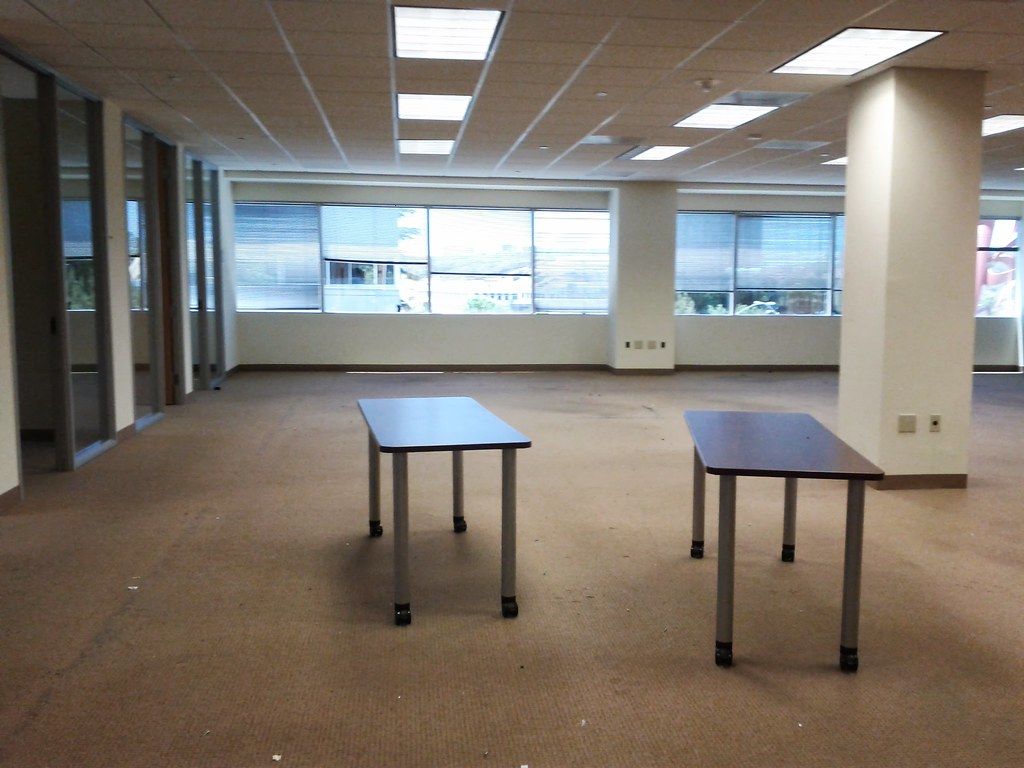
O'Bryan's public writing has room for absurdity. A founding sales-development role came with a proposed $120,000 offer, a challenge to sell him a pen, and an office photograph whose furnishings suggested that the procurement department was still finding its feet. He advertised entertainment with more confidence than certainty about the outcome.
Another post traced the evolving priorities of repeat founders, ending with a joke that a fourth-time founder abandons focus altogether and builds an all-in-one startup. It was a fair target for someone building Atlas. Self-awareness is cheaper than market research, though it does help keep the sales pitch bearable.
His more serious lessons concern consistency, partnerships and judgment. He has warned against overestimating dramatic problems while overlooking small ones. When considering a co-founder, he suggests asking whether the relationship could survive a weekend hike. The point is prior experience of difficulty together, rather than a shared taste in pitch decks.
He is also skeptical of paying for advice from people who lack the context to make it useful. Outside expertise can help at particular moments, he argues, but plans still need someone to carry them out. The recurring concern is the work close at hand: the customer, the colleague, the next decision that needs to be made.
Another classroom, another customer
In April 2026, Atlas joined dlivrd Technologies' portfolio. The announcement identified O'Bryan as CEO and described shared sales, marketing and operational infrastructure intended to help Atlas expand. It brought the company's support tools into a group of businesses focused on delivery technology, where communicating with customers forms part of everyday operations.
There is a teaching chapter, too. Raft School lists O'Bryan alongside Divyam Chandel as an instructor, and identifies him as a co-founder. Its program helps participants build and ship an app using AI coding tools. The curriculum emphasizes planning, verification and methods students can apply to subsequent projects.
Those subjects fit a career that has repeatedly moved between investigation and execution. A physicist learns to test an account of the world. A founder discovers how many assumptions a customer can overturn in a single conversation. A teacher has to make a method understandable enough for someone else to use.
The napkin is still a pleasing image to keep at the end of all this. A feature can look handsome, attract enthusiasm and still deserve a difficult question. O'Bryan's account leaves the team with less to build and a little more money to spend elsewhere. His co-founder, understandably, would like a word about the stationery.