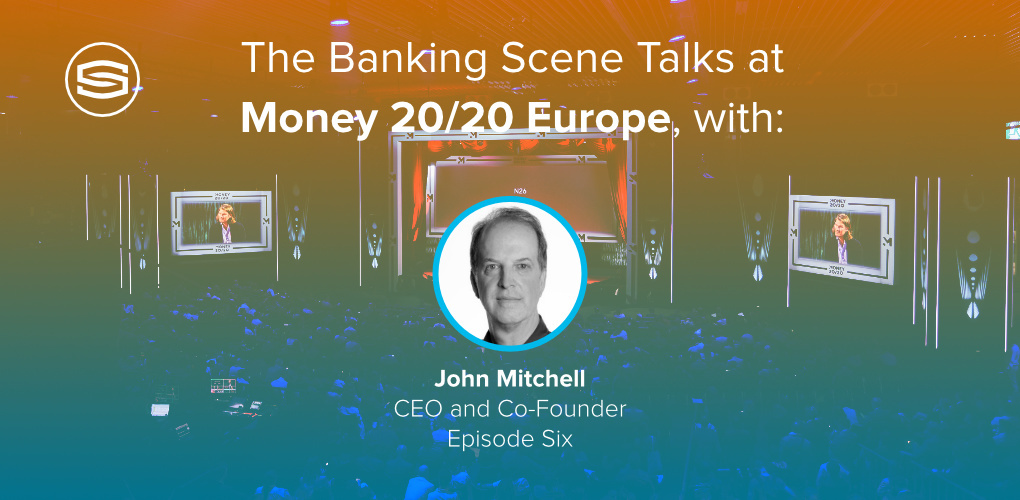
A company name can be an expensive exercise in sounding inevitable. John Mitchell and his co-founders arrived at theirs by counting. On his Austin porch in 2015, they considered the ventures they had worked on together. This would be their sixth. The domain was available. Episode Six had its name, and the future could get on with being uncertain.
The simplicity is rather pleasing. Payments, the business Mitchell had already spent years learning, is capable of making almost anything complicated. Money must move, balances must agree, and a promising new idea must somehow fit the machinery already in place. A charming name can be settled in an afternoon. Those arrangements take longer.
Mitchell, now CEO and co-founder of Episode Six, had reached a practical conclusion with Chermaine Hu and Futeh Kao: they wanted to build a platform from scratch. Their customers would use it to create financial products of their own. Previous experience had supplied plenty of evidence about what existing systems made difficult. The next venture would begin with those frustrations on the drawing board.
A salesman learns what a card can do
Mitchell grew up in Colorado Springs and came to Austin for the University of Texas, where he earned a bachelor’s degree in economics. His working life started considerably earlier. He remembers a paper route in sixth grade, followed by sales while still at school. As a boy, he also built model aircraft and naval vessels, staying with a project until it was finished.
His entry into payments carried the same mixture of commercial curiosity and willingness to become involved. At Netspend, he made the company’s first sale while acting as an advisor. He saw demand, thought the offering could be adjusted, and helped develop its early business. That encounter also introduced him to Kao, a future partner in Episode Six.
Over seven years at Netspend, Mitchell helped redirect the business toward underbanked Americans and built its sales and distribution network. The work put a particular kind of customer at the center of the business: someone whom conventional banking did not adequately serve. Distribution mattered because a useful financial product still needed a way to reach the people who might use it.
He later became CEO of Rêv Worldwide, building its international business and operating platform, including multicurrency travel prepaid loyalty products. The geography widened; so did the requirements. A payment product used across currencies and countries must accommodate more than the assumptions of its original market. His career was accumulating reasons to want a more adaptable foundation.
- NetspendReach customers through prepaid payments.
- Rêv WorldwideBuild across currencies and travel markets.
- Episode Six · 2015Give other companies the machinery to build.
A Texas idea with a Hong Kong beginning
Hu and Kao brought their own experience to the founding conversation. Hu became CFO; Kao became CTO; Mitchell became CEO. The relationships predated the company. Mitchell and Kao had worked together since around 2000, and Hu joined their professional orbit around 2011. This was a new business with an existing working history behind it.
Although Mitchell was based in Austin, the company began in Hong Kong. Hu came from there, the founders had contacts in the region, and Mitchell describes an environment that welcomed fintech. In his telling, setting up the company took less than a day. That is a brisk administrative overture for a business whose customers must be rather less casual about paperwork.
The decision had commercial consequences. HSBC and Japan Airlines became early customers, and Mitchell has said that the Hong Kong domicile helped make the HSBC business possible. The company’s international life therefore began before it had a domestic success story to export. Different markets were part of the initial problem, rather than an inconvenience to address after growth.
Japan Airlines is an especially revealing connection. An airline wants payments to support the travel relationship it already has with customers. Episode Six supplies infrastructure beneath that experience. The arrangement brings Mitchell’s earlier work in travel and foreign exchange into view again: the payment itself belongs inside a larger activity, whether a journey, a purchase or a business account.
The tact of leaving the old machine running
Starting from scratch can be exhilarating. Asking a bank to do the same requires considerably more tact. Mitchell’s pitch makes room for the systems institutions already depend upon. Episode Six describes a progressive approach to modernization: introduce new capabilities alongside existing infrastructure, then move further as the institution is ready.
The company provides card issuing and ledger infrastructure. A ledger keeps track of balances and movements of value; issuing and processing capabilities help turn an account into something customers can pay with. Banks, fintechs and brands build products using that foundation. The work is largely behind the scenes, which is precisely where useful machinery is expected to behave itself.
Mitchell has pointed out that moving software into the cloud does not, by itself, improve it. The design matters. His argument is that institutions need systems they can change as requirements change, with a transition they can manage in terms of cost, time and risk. A new location for an old limitation would be a disappointing renovation.
“Putting something in the cloud doesn’t make it necessarily better.”
John Mitchell · 2023
HSBC’s PayMe in Hong Kong gives that argument a recognizable shape. Mitchell has described how its move to Episode Six supported scalability and how PayMe for Business extended the experience into merchant payments. The consumer sees a wallet and a way to pay. Mitchell’s business concerns the records, processing and ability to adapt underneath it.
One platform, many local complications
International reach is easy to announce and harder to operate. In explaining Episode Six’s design, Mitchell returns to shared concepts that take different forms locally: identifying customers, controlling the movement of money and changing a program when requirements change. The ambition is to configure those differences without creating an entirely separate technology project for every market.
He also draws a boundary around what his company provides. Its technology offers tools that clients can use to meet their obligations; the financial institutions remain responsible for their own compliance. That distinction helps explain the business model. Episode Six can supply adaptable infrastructure across markets while each institution determines how its own products operate within local requirements.
By March 2026, Mitchell was discussing another practical consequence of being international: data sovereignty. He described growing scrutiny of American software and the importance of local cloud deployment, including the ability to establish infrastructure in Jakarta. A global company still needs an answer to the local question of where its customers’ records will live.
His earlier comments on digital currencies have a similar emphasis on connections. In 2022, he argued that bridging traditional money and newer assets would require payment technology able to accommodate different forms of value. He also expected cash use to keep declining as digital and mobile transactions spread. These were his forecasts, and their recurring interest was the infrastructure that lets people actually transact.
Capital, and a customer crossing the table
In May 2023, Episode Six announced a $48 million Series C led by Avenir, with participation from Anthos Capital. The stated purpose was to expand its commercial efforts and scale the business. At the time, it reported operations across 38 countries. By its September 2026 announcement, the company described a presence in more than 50.
For Mitchell, the 2023 year-end reckoning also included a more personal business connection. Brian Muse-McKenney joined as the company’s first chief revenue officer, having previously been one of its early customers. Someone who had experienced the buyer’s side of the problem was now helping sell the answer. Few introductions to a product can be quite as thorough as having needed it.
That review also drew attention to Business Now, Pay Later, an offering designed to let banks provide installment options to business customers. It illustrates how Mitchell thinks about the platform’s usefulness: a bank should be able to respond to a specific customer need without beginning another long reconstruction. The underlying technology earns its keep through the products somebody else can make.
The next episode still needs a ledger
In September 2026, Episode Six launched its Token Control Ledger, described as a system of record for banks issuing and managing tokenized money. It handles the lifecycle of supported tokenized deposits and stablecoins, including ownership records and reconciliation. Mitchell’s stated expectation is that this money will move through multiple networks, currencies and markets.
October brought Verified Backing, a capability within that ledger. The company says it checks recorded backing before a supported token is created and checks its outstanding status at redemption. The scope matters: it is a technology control for tokens issued through the system. It does not hold or independently attest to reserves, and the issuer retains its audit and regulatory obligations.
For a founder who has spent years discussing adaptable infrastructure, this is a recognizable continuation. New forms of money still require reliable records of who owns what and what can be redeemed. The terminology changes more readily than the underlying responsibility. Even an adventurous financial future must eventually balance its books.
There is another side to Mitchell beyond the account ledger. He serves on Re:wild’s board, adding conservation to his public commitments. And in discussing business travel, he has spoken about wanting to experience the places he visits rather than simply arrive and leave. After so much work making things move, the wish to stop and look around seems entirely reasonable.