The conference room needed a little help. When interviewer Monica Langley arrived at Celsius’s Boca Raton headquarters to film a conversation with John Fieldly, the surroundings were disarmingly ordinary. Her crew brought in a branded cooler to give the picture some color. Finding one was easy. Coolers were everywhere.
It is a useful place to begin with Fieldly, the company’s chairman and chief executive. The room offered little theater; the merchandise supplied plenty. His account of building a beverage business keeps returning to an unglamorous question: where will someone encounter the can? An advertising campaign can introduce it. A refrigerator puts it within reach.
In 2012, Fieldly joined Celsius as chief financial officer. There were 12 employees. By 2026, he was describing a workforce of roughly 1,300 and a company managing three energy drink brands. Between those two pictures lie a retail apprenticeship, a finance career, a distribution agreement with PepsiCo and an increasingly complicated job. The title on his door has changed less often than the work behind it.
A career spent watching the shelf
Born in Newburgh, New York, and raised north of Tampa, Fieldly was working long before he entered a boardroom. At 14, a car-wash customer liked his efforts enough to offer him a dishwashing job. Later came Eckerd Drugs, where he watched shopping patterns and learned about displays. The customer, in other words, arrived in his education before the balance sheet.
He earned his accounting degree at the University of South Florida in 2004, studying around work. One professor’s combination of teaching, fishing and Jimmy Buffett T-shirts made the profession look particularly attractive. Fieldly’s verdict on his own much longer working hours: “I think I got bamboozled.” A career choice deserves an occasional complaint about the brochure.
His professional route included Lebhar-Friedman, the business publishing company, and Oragenics. He became a Florida certified public accountant. The eventual move to Celsius followed a call to former colleague and mentor Gerry David, then its CEO. Fieldly asked whether the business needed a CFO. It did.
The formal appointment arrived in January 2012. By March 2017, he was simultaneously interim CEO and CFO, as well as a director. Those overlapping responsibilities gave him a view across the company’s finances and daily decisions. He had worked inside the business for more than six years when the board appointed him permanent chief executive on April 17, 2018.
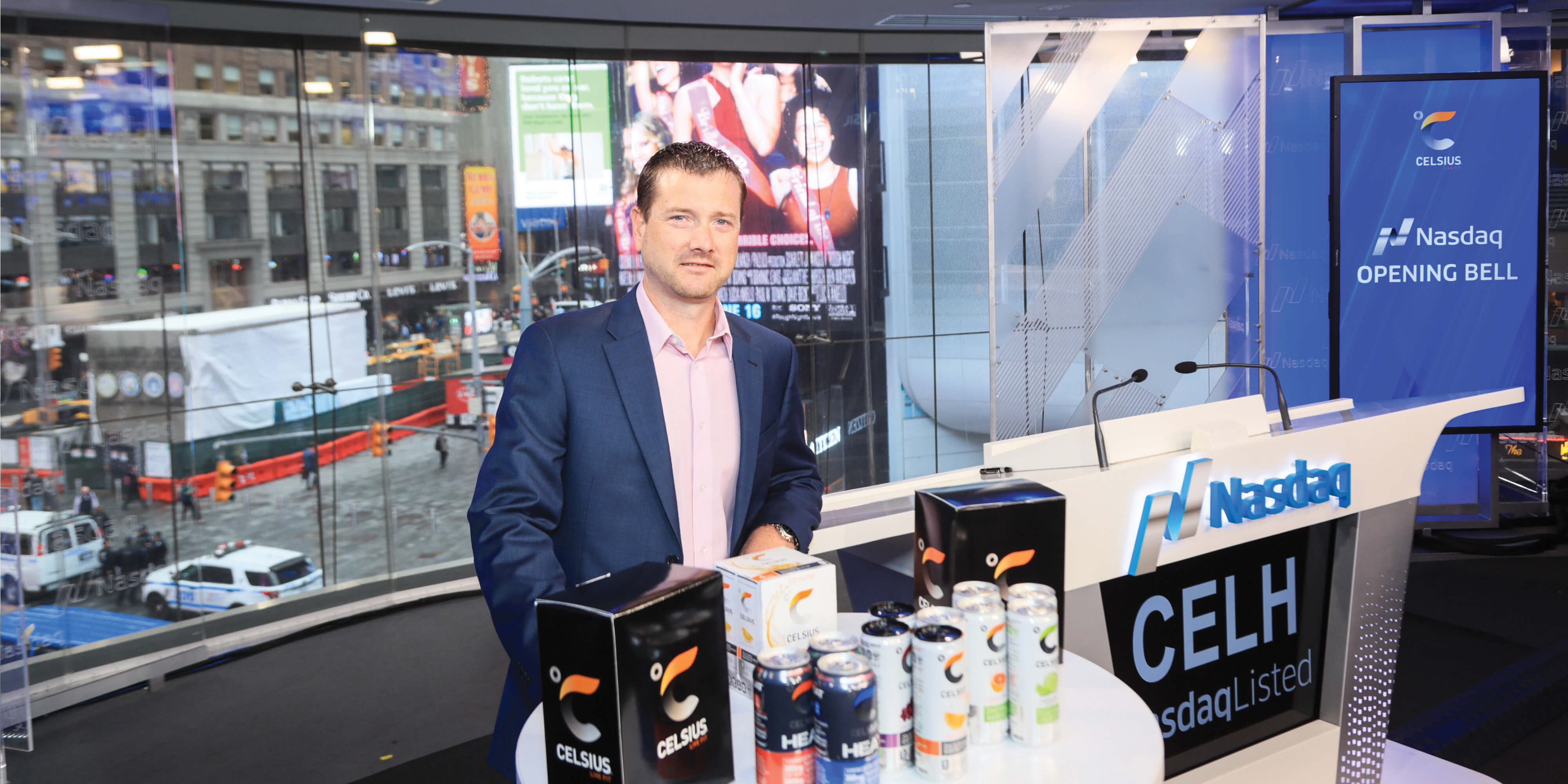
The progression matters because Fieldly joined an existing company. He inherited products, investors, relationships and problems. His opportunity was to help an organization recover and then grow. That makes the Celsius story an account of stewardship, with all the obligations that word carries, as much as personal advancement.
The distance between wanting and buying
The breakthrough partnership came on August 1, 2022. PepsiCo and Celsius announced a long-term distribution agreement, accompanied by a $550 million investment in convertible preferred stock. The arrangement initially covered U.S. distribution, with exceptions, across retail and food service. PepsiCo also became the preferred distribution partner globally.
For a finance executive, there was capital. For someone who had watched shoppers at Eckerd, there was access. The agreement linked Celsius to a system capable of reaching the places where people make an immediate choice about a drink. A company selling something people carry out of a store has a very physical relationship with opportunity.
Fieldly made that distinction concrete in a 2024 conversation. Before PepsiCo, many Celsius customers bought the product warm and took it home. The partnership increased access to checkout coolers and other cold placements. He said the company had placed more than 10,000 coolers during the previous year, alongside placements in PepsiCo’s equipment.
“How do we be part of that ritual?”
John Fieldly, on entering customers’ daily routines
A cold can at checkout has a different invitation to offer from a multipack destined for the kitchen. The first competes for the next few seconds. The second has already secured a place in someone’s shopping plan. Fieldly was seeking both. His language about routines gives the retail mechanics a human scale: the recurring stop, the familiar store, the purchase that becomes easy to repeat.
The results changed scale quickly. Annual revenue rose from $653.6 million in 2022 to $1.318 billion in 2023. Expanded distribution and more items per location helped drive North American growth. These were measurable changes in availability, alongside the work of persuading customers to choose the product.
Four years, a different company
Annual company revenue, rounded. The 2025 total includes Alani Nu and Rockstar from their respective acquisition dates; the business perimeter changed.
The industry noticed the execution. Beverage Industry named Fieldly its 2022 Executive of the Year. BevNET chose him as its 2023 Person of the Year, pointing to the transition into PepsiCo’s distribution system and his approach to working with partners. The recognition concerned a demanding piece of coordination. Trucks and account relationships rarely volunteer to become glamorous.
One name becomes three
Success with one brand brought the possibility of owning more. On April 1, 2025, Celsius completed its acquisition of Alani Nu for $1.8 billion, including $150 million in tax assets. Cash and stock financed the transaction. Key leaders from the previous ownership agreed to remain as advisers, preserving a connection to the people who had built the brand.
That August, Celsius acquired Rockstar Energy in the United States and Canada. Fieldly now had to think across three distinct names. Buying a brand also means taking responsibility for its commercial relationships and the expectations customers bring to it. The management problem expands well beyond finding room for another logo in the presentation.
In his conversation with Langley, he described brands as having individual voices, tones and crowds. That is a revealing way for an accountant to discuss assets. A portfolio can share capabilities while its brands retain different personalities. Flatten those differences and some of the reason for buying the brands begins to disappear.
Full-year 2025 revenue reached $2.515 billion, up 85.5%. Alani Nu contributed about $1.002 billion after the acquisition; Rockstar added $55.6 million. CELSIUS brand revenue grew 7.5% to roughly $1.458 billion. The large company increase therefore included a major change in what the company owned. Fieldly’s expanding business needs to be read with that distinction intact.
The arithmetic gets awkward
By the second quarter of 2026, the portfolio presented a less tidy picture. Company revenue rose 10.6% to $817.9 million. CELSIUS brand revenue fell 11.7%. The same organization could be growing overall while its namesake brand was having difficulty. Both figures describe the job Fieldly now has.
Q2 2026 versus Q2 2025. Portfolio results and individual brand performance tell different parts of the story.
In an August interview, he explained that Celsius had reduced slower-selling items to concentrate on faster sellers and wider distribution. Shelf changes do not all happen at once. Removing items and securing new cold placements operate on different schedules. A decision intended to simplify the assortment can leave a messy interval for the business to manage.
On August 10, the company announced leadership changes. Tyler Bohannon became chief commercial officer. Tony Guilfoyle took the new role of chief business transformation officer, effective July 1. President and chief operating officer Eric Hanson departed. Fieldly said the leadership structure needed to evolve with the business, and that the changes had been discussed over several months.
For someone whose Celsius career began with financial responsibility, this is familiar territory at a different magnitude: connect an operating decision to its consequences, then adjust. The earlier growth remains part of his record. It cannot do the next quarter’s work for him.
A longer route to the customer
International expansion adds another dimension. Celsius entered a multi-year global partnership with Aston Martin Aramco in January 2026. By July, Fieldly was discussing its role in reaching markets beyond the United States, including the United Kingdom, Ireland, Australia and New Zealand. Formula One offers a traveling meeting place for a brand seeking new audiences.
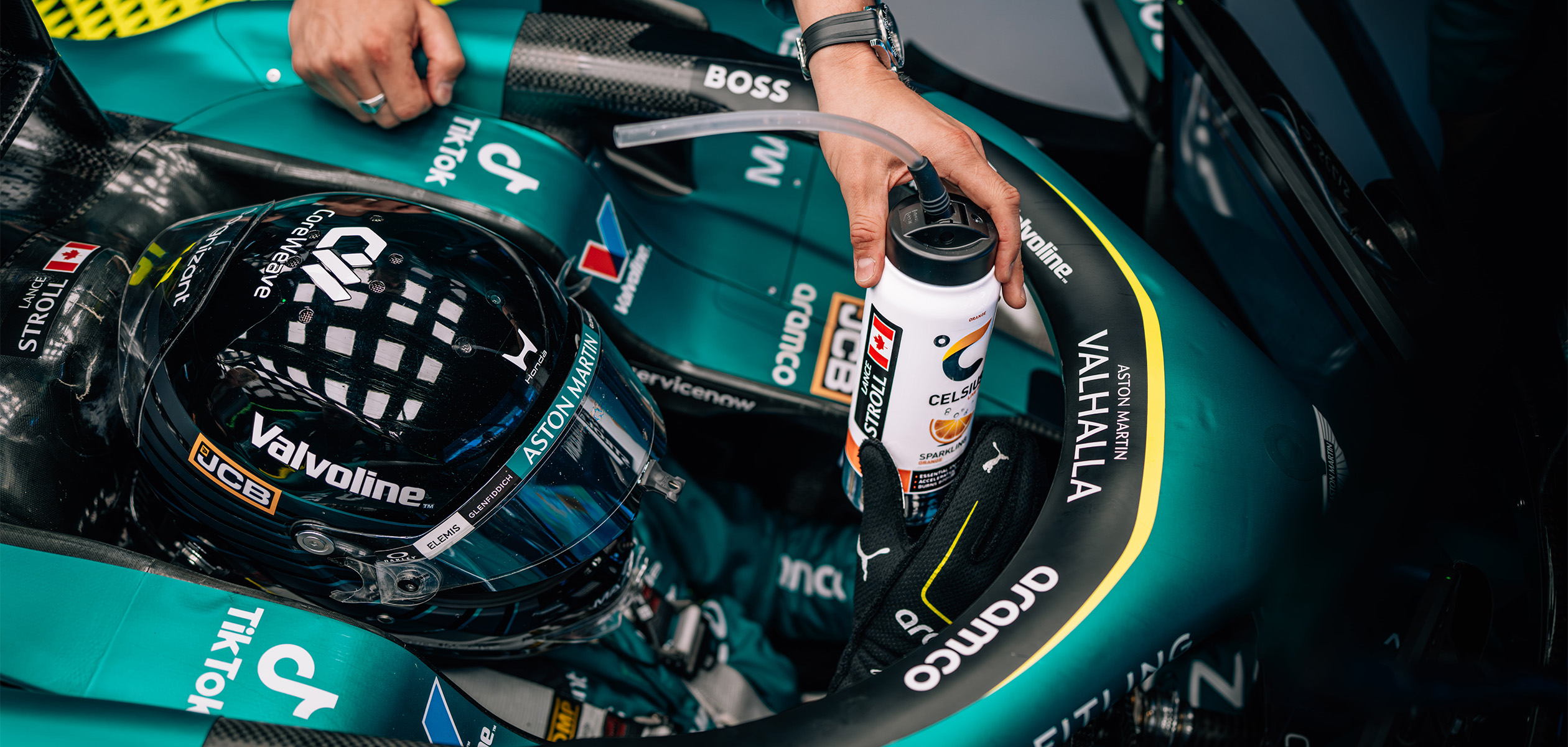
His interest also extended to the machinery behind the spectacle. He wondered what Celsius could learn from Formula One’s logistics, infrastructure and systems. It is a pleasingly practical curiosity. Surrounded by racing cars, the finance graduate still finds a reason to ask how everything gets where it needs to go.
Back in Boca Raton, that question can be answered on a smaller scale. During Langley’s visit, she heard Fieldly encourage employees to hand a drink to a delivery driver. Staff were expected to keep products ready to share. The company’s branded Jeeps carried samples to events and the beach. A public company still had people offering someone their first can.
He also talks about giving younger people decisions of their own. In a recent professional update, Fieldly described CELSIUS University as a way for students to gain marketing experience and act as the CEO of their campus. His enthusiasm for it fits his own route through work and education. Responsibility arrived in stages, often before the next formal title.
In describing his leadership approach elsewhere, he has emphasized learning from store visits, employees and retail partners. Those are specific places to look for an idea. They also keep an executive in contact with the consequences of decisions made at headquarters. A presentation can arrange a shelf perfectly; the actual shelf gets the final vote.
Fieldly’s ambitions now stretch across a portfolio and several countries. The ordinary customer encounter remains a useful measure of the work. It gives the strategy a person at the other end of it. Somewhere between the conference-room cooler and the next store visit, someone has to reach out and choose.