John Cutler - product thinker and author of The Beautiful Mess
Product Thinker
59K+
subscribers
The Beautiful Mess

John Cutler

The question mark who turned the product world's tidiest lies into 59,000 reasons to embrace the chaos.

Systems Overthinker Newsletter Author Product Educator Keynote Speaker Anti-Hot-Take
~1,000
Published pieces
59K+
Newsletter readers
10+
Years writing

The Man Who Named Your Dysfunction

There is a word for the place where your product team churns out features nobody uses, where velocity is high and value is low, where roadmaps are really just a list of executive wishes dressed up in sprint clothing. The word is "feature factory" - and John Cutler put it in your vocabulary.

That 2016 Medium post, "12 Signs You Are Working in a Feature Factory," did what every great piece of writing does: it named something everyone was experiencing but nobody had articulated. Product managers around the world forwarded it to their managers, printed it, and taped it to their monitors. Cutler, characteristically, shrugged. He had never planned to be a product thinker. He had never planned for much of anything.

Self-described as "a train wreck of career decisions," Cutler dropped out of NYU, toured America playing bass guitar and piano, made a bartending CD-ROM game for Nickelodeon called "Last Call" that flopped spectacularly, dabbled in real estate tech, and eventually landed - sideways, as he tends to - in product management. Nothing was linear. Everything was instructive.

Today he runs The Beautiful Mess, a weekly Substack newsletter that has gathered 59,000 subscribers by doing the opposite of everything the algorithm demands: no hot takes, no listicles-dressed-as-wisdom, no "5 frameworks that will transform your team." Just nuanced, systems-oriented thinking about the genuinely difficult problem of how people build products together.

We're systems thinkers and complexity thinkers when it comes to our customers, but if you're a systems thinker internally you're an over-thinker.

- John Cutler, INDUSTRY 2025 Keynote

That tension - between the complexity organizations celebrate outwardly and the simplicity they demand inwardly - is the engine of everything Cutler writes. He is, by his own accounting, an "observer of dysfunction." He prefers "thought fast follower" to "thought leader." He would rather ask one good question than answer ten bad ones.

Which, as it turns out, is exactly what 59,000 people have been waiting for.
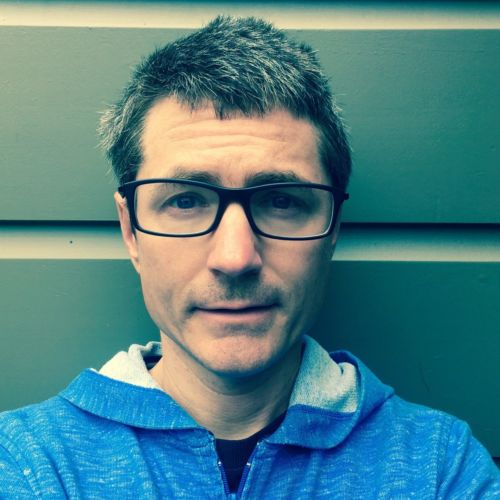

Feature Factory: A Diagnosis, Not a Cure

In 2016, Cutler sat down and wrote out twelve signs that an organization was prioritizing the production of features over the delivery of outcomes. He posted it on Medium. It spread through Slack channels and team meetings and conference talks like a diagnostic test nobody had ordered but everyone needed.

The feature factory concept stuck because it described something real - the gap between what companies say they care about (customer outcomes, business results) and what they actually measure (velocity, story points, features shipped). Cutler had no framework to sell. No certification course. Just an accurate description of a widespread malady.

Feature Factory vs. Outcome-Driven Team
Feature Factory Signs
  • Success = shipped features
  • Roadmap locked months ahead
  • Little time for discovery
  • Teams never revisit shipped work
  • Velocity is the north star
  • Customer impact rarely measured
  • PMs are ticket writers
VS
Outcome-Driven Signs
  • Success = measurable customer value
  • Roadmap adapts to learning
  • Discovery baked into the process
  • Teams iterate after launch
  • Impact is the north star
  • Experiments over assumptions
  • PMs set direction, not tasks

Six Ideas Worth Knowing

🏭

Feature Factory

Organizations that measure output over outcomes - "a storypoint machine where the company only cares about how much is being shipped." Coined by Cutler in a 2016 viral post that product managers still forward to their managers today.

North Star Framework

A metric that persists for 1-3 years, surrounded by input metrics that form a causal "belief map." Co-authored with Amplitude in 2019 - a practical tool for aligning teams around what actually creates customer value.

🎮

Work as Game Design

Good products share DNA with good games: clear attainable goals, balanced difficulty, timely feedback, signs of progress, meaningful choices. Reframe your PM role as game designer and see what changes.

🔧

Product OS

A company's product operating system - the dynamic mix of strategy, goaling, planning cycles, and capital allocation. Most companies would not release their internal processes to customers. That's the problem.

🌐

Network Model Goals

Goal cascades are harmful - they create a telephone game of misaligned priorities. Cutler argues for network model goals where teams connect their work to outcomes through a web of interdependencies, not a chain of command.

📸

Anti-Instagram PM

Social media promotes oversimplified, surface-level takes on product management. Cutler calls out the Instagram-ification of PM - where shareable simplicity beats honest complexity - and refuses to participate.

350+
Substack issues
~1K
Total pieces written
7+
Podcast episodes hosted
10+
Major keynotes
1
Flop CD-ROM game

A Timeline of Happy Accidents

Early

NYU Dropout, Touring Musician

Left New York University, hit the road with bands playing bass guitar and piano across the US for a couple of years. The question mark was already asking questions; academia just didn't have the answers.

Mid-90s

Bartending CD-ROM Game Creator

Made "Last Call" for Simon & Schuster / Nickelodeon - a bartending simulation CD-ROM that he describes as "critically acclaimed but a flop." His first product. His first lesson in the gap between creative ambition and market reality.

2014-16

UX Researcher & PM: AppFolio, Pendo, Zendesk

Worked his way through a series of B2B SaaS companies, developing his thinking about customer research, product discovery, and organizational dysfunction. The frustration was productive.

2016

"12 Signs You're Working in a Feature Factory" Goes Viral

A Medium post defines a concept. Product managers around the world recognize their employer. The term "feature factory" enters the product lexicon permanently.

2018-19

Co-Founded Iteratively, Acquired by Amplitude

Built a product with co-founders, then joined Amplitude when they acquired it. His first taste of what he would later spend years writing about: what happens when a small team becomes part of something larger.

2019-22

Product Evangelist at Amplitude (1,569 Days)

Worked with product teams globally, co-authored the North Star Playbook, and became one of the most visible voices in product education. He counted the days, which is very Cutler.

2020

Launched The Beautiful Mess on Substack

Started the newsletter that would become his most sustained creative project. At the time: a newsletter. Today: 59,000 subscribers and a podcast.

2023-24

Senior Director, Product Enablement at Toast

Moved into a large B2B organization to practice what he preaches at scale. Led product enablement across a complex restaurant-tech platform while continuing to write weekly.

2024

Launched The Beautiful Mess Podcast

Added audio to the mix, interviewing Gene Kim, Hazel Weakly, Petra Wille, and others about sociotechnical systems, complexity, and how organizations actually function versus how they think they function.

2025-26

Head of Product at Dotwork

Joined a startup building a platform for product operating systems - instrumenting the very thing he has been writing about for years. Keynoted INDUSTRY 2025 and DDD Europe 2025. Still writing every week.

The North Star Playbook

Cutler co-authored the North Star Playbook with Amplitude in 2019. It became one of the most widely adopted product frameworks for aligning teams around customer value. The core idea: pick one metric that captures the value your product delivers - a metric that persists for 1-3 years - and surround it with input metrics that form a causal map of what drives it.

North Star Framework
The Amplitude / Cutler Model
North Star Metric (1-3 years)
The single metric that best captures the value your product delivers to customers
Input Metrics (causal map)
Leading indicators that predict movement in the North Star - your team's controllable levers
Business Outcomes
Revenue, retention, growth - the lagging results that follow when you move the North Star
Work
Experiments, features, and improvements that move the input metrics

Details That Explain a Lot

Cast as "The Question Mark"

In a childhood school play, young John Cutler was cast as a question mark. Not a character. Not a hero. A punctuation mark that signals uncertainty, curiosity, incompleteness. He has never quite escaped the role - and does not seem to want to.

🎮

Last Call: The Bartending Game That Flopped

"Critically acclaimed flop" is how he describes it. A CD-ROM bartending simulation game he built for Nickelodeon and Simon & Schuster in the mid-1990s. His first product. He learned everything from it: shipping doesn't mean succeeding, quality doesn't guarantee adoption, and the gap between what you build and what people want is wider than any roadmap suggests.

🎸

Two Years on the Road as a Musician

Before any of the tech career happened, Cutler played bass guitar and piano in bands touring America. Most product thinkers come from engineering or design. Cutler came from a tour van. That background in performance, in reading a room, in creating something that has to work live - in front of an audience, without a safety net - runs through everything he writes.

🦑

johncutlefish

His handle across platforms is "johncutlefish" - a pun that turns Cutler into cuttlefish (the cephalopod mollusk known for its remarkable intelligence, camouflage ability, and the fact that it has three hearts). The cuttlefish is also a creature that is hard to classify, moves sideways, and is considerably more complex than it looks. Make of that what you will.

Seven Things Cutler Actually Said

"

I'm a train wreck of career decisions, nothing has been intentional.

"

We're systems thinkers and complexity thinkers when it comes to our customers, but if you're a systems thinker internally you're an over-thinker.

"

Some companies figure out how to treat how they work as a product and it's a force multiplier in the company.

"

Would you release your internal processes to customers? Most wouldn't - which suggests processes deserve the same design rigor applied to products.

"

Pirate ships are way more organized than your average company - and way more democratic too.

"

An observer of dysfunction - I prefer 'thought fast follower' to 'thought leader.'

"

I doodle for fun, I always draw. I enjoy communicating... I like helping people and sharing knowledge.

The Beautiful Mess: What It Is

The Beautiful Mess launched on Substack in 2020, but Cutler had been writing for years before that - on Medium starting in 2015, on his personal blog cutle.fish, in LinkedIn posts that went further than LinkedIn posts usually go. By the time the Substack launched, he had been exercising the muscle daily for half a decade.

The newsletter name is both a description and a thesis. Product development is inherently messy. It is cross-functional, uncertain, non-linear, political, emotional, and slow in ways that nobody's methodology fully accounts for. Most product content tries to paper over this messiness with frameworks and playbooks. Cutler leans into it.

A typical issue of The Beautiful Mess does not begin with "here's a simple framework." It begins with an observation - something Cutler noticed across multiple teams, clients, or conversations - and then spirals outward, asking questions, drawing diagrams, considering adjacent fields, refusing to land on an easy answer. Subscribers describe it as "the newsletter I actually read," which in 2026 is high praise.

He publishes multiple times per week. He draws constantly - complex, sometimes chaotic diagrams that capture systems thinking in ways prose cannot. He almost never writes about a single company. He almost never names names. "I might see something at work that inspires a topic," he has written, "but when I write about it, I incorporate my interactions with many different companies." The newsletter is a composite portrait of how organizations actually function.

As of 2026: 59,000+ free subscribers, hundreds of paid subscribers at $5/month or $50/year. A podcast with notable guests from the product and engineering world. And still going, every week, without missing.

Why He Doesn't Sound Like the Others

Most product content is designed to be shareable. Short. Confident. A numbered list. A framework with a catchy acronym. Something that can be dropped into a Slack channel with the message "worth reading" and never actually interrogated.

Cutler writes against this current deliberately. He uses the word "nuance" without irony. He draws diagrams that do not simplify - they add complexity, show tradeoffs, acknowledge that the answer depends on context. His most famous posts are the ones that name a problem precisely without prescribing a solution, because he genuinely believes the solution is context-dependent.

He cites Ed Schein on helping, Amy Edmondson on psychological safety, Christina Wodtke on OKRs and game design, Gene Kim on sociotechnical systems. He brings organizational psychology, systems theory, service design, and game design to bear on questions that most product content treats as simple engineering problems. The Beautiful Mess is cross-disciplinary by design.

He draws constantly. The visual communication is not illustrative decoration - it is thinking. Cutler uses diagrams the way other writers use paragraphs: to work through relationships, to show causality, to make visible the invisible structure underneath organizational behavior.

The result is writing that is not always easy to read, that does not always land on a clean conclusion, that makes you sit with discomfort rather than offering relief. Which turns out to be exactly what 59,000 people in the product world have been looking for. Relief is easy to find. Honest diagnosis is rare.

Things Worth Knowing

1

His handle "johncutlefish" is a pun on his name - Cutler + fish = cuttlefish, the remarkably intelligent cephalopod with three hearts and extraordinary camouflage abilities.

2

He counted his days at Amplitude with precision: 1,569 days as Product Evangelist. Not years. Days. This is either a great commitment metric or a very long sprint retrospective.

3

He was literally cast as a punctuation mark - "the question mark" - in a school play. He has never escaped the role and at this point seems to have made peace with it.

4

He plays ukulele with his young son. The man who critiques how teams learn and collaborate apparently applies those principles at home, starting with tiny audience members.

5

His first product, a bartending CD-ROM game, flopped. He describes it as "critically acclaimed" - which means someone liked it - but a flop. This is product development in a sentence.

6

He has published roughly one article every two weeks for a decade - nearly 1,000 pieces in total. Not counting tweets. Not counting diagrams. Just articles. Most product thinkers have a newsletter. Cutler has an archive.

Dotwork and the Product OS

In 2025, Cutler joined Dotwork as Head of Product. Dotwork is building what he has been writing about for years: a platform for the product operating system - covering strategy development, goaling, portfolio management, planning and review cycles, capital allocation, and high-level roadmaps.

The move from product educator to product practitioner at a startup is deliberate. Cutler has spent years writing about how organizations should think about their internal operating systems as products. Now he is building one, from the inside, in startup survival mode - continuing to publish the newsletter weekly throughout.

The question he keeps returning to: if you would not release your internal processes to customers, why do they not deserve the same design rigor you apply to your products? Dotwork is his answer to that question, made tangible.

Some companies are operating like it's 2004 and some like it's 2024 - the spread of organizational maturity is enormous and underappreciated.

- John Cutler
Share this profile