At an awards ceremony in 2025, John Ackerly thanked his brother for helping him build a company. Then he supplied the qualification every family business deserves: after thirteen years, they still got along. He called that part a miracle. The audience was celebrating entrepreneurship. Ackerly was also celebrating the continued survival of Thanksgiving.
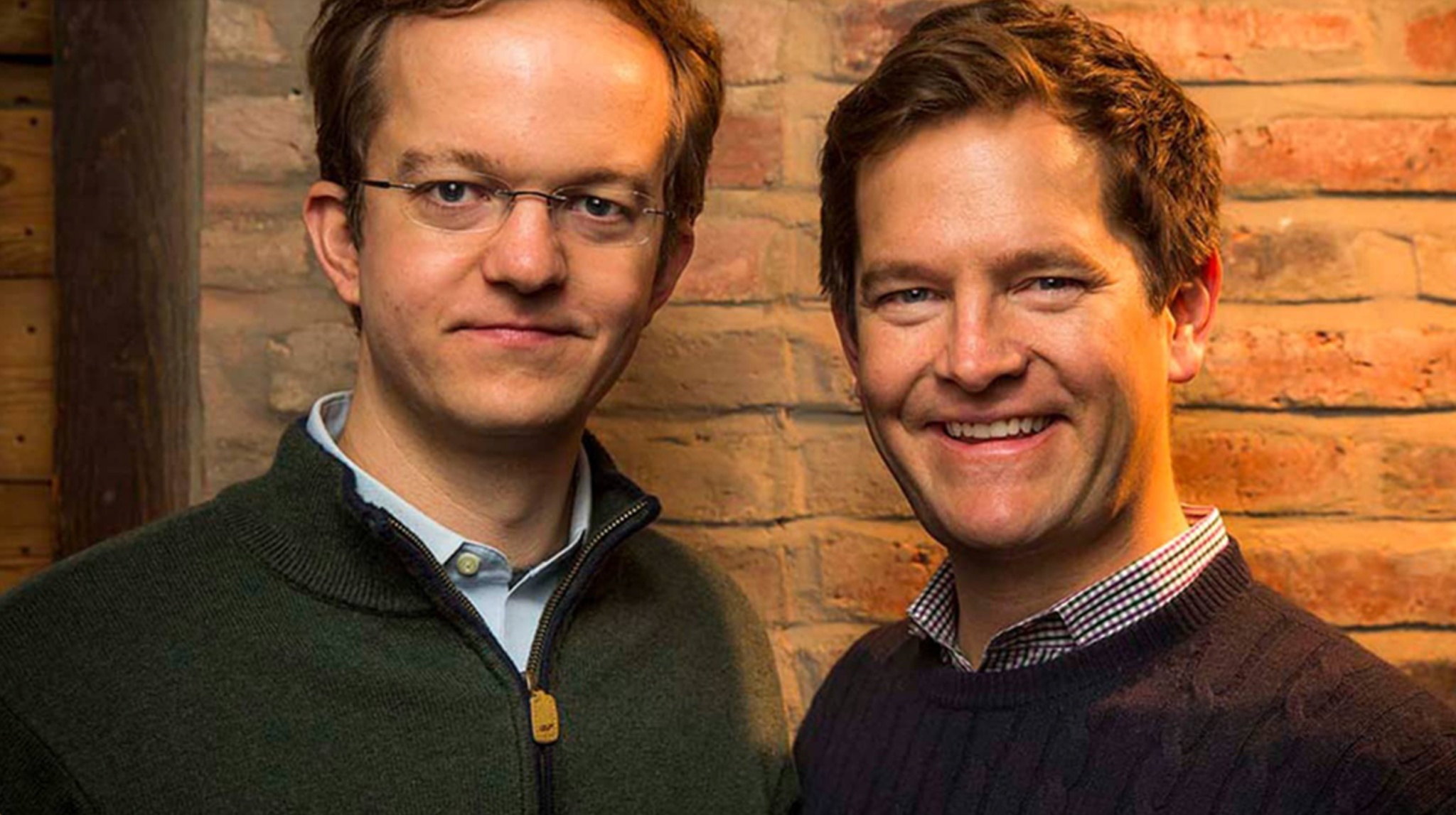
His brother Will had supplied the invention behind Virtru. John had helped turn it into a business. In accepting the EY Entrepreneur of the Year award for the Mid-Atlantic region, John called Will “the pilot light behind this business.” He also thanked his wife, Rory. Years earlier, in their New York apartment, she had encouraged him to stop circling the idea and start. Her instruction was economical: “You just have to go do this.”
That domestic push became a long professional commitment. Ackerly, Virtru’s co-founder and CEO, has spent much of his working life on a question that sounds simple until someone tries to answer it: how do you give useful information to another person without surrendering every say in what happens next?
The morning the question changed
On September 11, 2001, Ackerly was working on technology policy at the White House National Economic Council. Federal privacy legislation was on the agenda. The proposal he was helping advance would have required consent before personal information could be passed to third parties. Then the attacks changed the day, the policy conversation and the direction of his career.
For Ackerly, the aftermath exposed a painful tension. Government needed to connect information across institutions. Citizens also needed boundaries around the use of their information. He has returned to those competing demands throughout his public conversations about Virtru. His account treats both as practical problems, with consequences beyond a policy document.
The entrepreneurial question followed naturally. Could technology make carefully limited sharing easier? A useful system would let information reach someone with a legitimate reason to see it, while preserving a way to enforce the owner’s rules. In a world moving toward cloud services and collaboration across organizations, those rules would need to survive the trip.
A résumé with an unexpected doubles partner
Ackerly’s earlier credentials look like a well-planned route through established institutions. He graduated from Williams College summa cum laude, studied at Oxford as a Rhodes Scholar and earned an MBA at Harvard Business School with highest honors. Before Virtru, he worked as an investor at Lindsay Goldberg, helping entrepreneurs expand their businesses.
He also served as policy and strategic planning director at the US Department of Commerce. Policy, finance and entrepreneurship each gave him a different view of the same difficulty: institutions want to put information to work, and they have obligations to the people and organizations behind it.
There is a less familiar entry in his college record. Williams lists Ackerly, class of 1997, among its Rhodes Scholars who played varsity sports. His sport was tennis. The combination adds a pleasing detail to the polished biography: somewhere between the academic distinctions, there were serves to return.
Will’s professional route ran through the National Security Agency, where he spent eight years working on security architecture and information sharing. He developed the Trusted Data Format, or TDF, during that period. The brothers brought different skills to their venture: John’s work centered on building the business; Will’s invention supplied its technical foundation.
Business & investment
Trusted Data Format
The send button needed a companion
The technical idea is easier to understand through an ordinary office mistake. A document is safe inside a company system. Someone emails it to a partner. It gets forwarded again. The useful act of sharing has carried the document beyond the place where the original organization could easily control access.
Virtru’s approach binds protection to the information itself. Encryption makes the content unreadable without authorization, while access policies determine who may decrypt it. The policy can keep mattering after the file crosses an organizational boundary. The aim is to let people collaborate while retaining enforceable choices about access.
In his 2022 conversation with #RISK founder Nick James, Ackerly described the mission as giving people and organizations “simple and powerful control over their data.” The adjective simple carries considerable weight. A security feature that requires everyone to abandon familiar work habits faces an opponent more persistent than any sales team: people trying to finish their day.
Email was the brothers’ early focus. It offered a specific, recognizable problem with a familiar interface. Their proposition required the security to fit the work. The sender should not need to become a cryptographer before writing to a colleague.
Set its access rules.
people and systems.
Adjust or revoke access.
Years later, his advice to founders remained deliberately modest: solve a bounded problem, make the product work, look after customers and expand from there. In a 2020 interview, he recalled the lengthy wait before the first customer arrived in 2014. He emphasized ease of use as the central early hurdle. The business had to earn adoption, one working solution at a time.
The photograph on the wall
By 2018, the brothers had found an unusual piece of office decoration: a photograph of John Podesta. The compromise and release of Podesta’s emails during the 2016 election had made the consequences of exposed correspondence painfully visible. Ackerly said the picture reminded the team why its work mattered.
It is a revealing choice of corporate art. Plenty of offices hang a statement of values. Virtru had a reminder of what happens when a private message becomes public property. The point required little explanatory typography.
Ackerly had worked in a Republican White House; Podesta had advised Democratic presidents and chaired Hillary Clinton’s campaign. The office reminder crossed that political divide. Confidential information can become someone else’s instrument regardless of the sender’s affiliations. For a privacy company, that was a rather direct organizing principle.
A company that leaves room for others
In June 2022, Virtru announced OpenTDF, an open-source project intended to let developers incorporate persistent data controls into their own applications. The decision extended the brothers’ idea beyond the products Virtru sold directly. Other builders could work with the underlying approach.
The distinction matters to Ackerly’s ambition. A company can sell a useful tool to its own customers. A shared standard can also connect systems that were built by different people, bought by different organizations and never designed to belong to the same vendor. For information to travel, its protection needs to make sense at the destination.
That collaborative instinct also took physical form in Washington. In 2023, Virtru opened a 17,000-square-foot headquarters called The Hub. The company signed a thirteen-year lease and became the first recipient of the district’s Vitality Fund, part of an effort to revive downtown.
Ackerly wanted the space to host discussions, training and gatherings around cybersecurity. He also offered a sensible test for office attendance: people should have a reason to be together. If they were simply doing work they could do at home, they could stay there. A large office, in this view, needed to justify the commute.
“It’s a challenge that no one company can solve on its own.”
John Ackerly, discussing The Hub in 2023
The numbers caught up with the idea
In July 2025, Virtru announced $50 million in new funding led by ICONIQ, with Bessemer Venture Partners, Foundry and The Chertoff Group participating. The round doubled its valuation to $500 million. The company said it served more than 6,000 organizations across the public and private sectors.
July 2025
At that funding round
Those figures describe the company’s financing and reach at that moment. They also mark how far the original email problem had expanded. Virtru’s customer list included financial institutions, enterprise software companies and government organizations. Protecting information as it moved between systems had become a business with several different kinds of buyer.
Ackerly’s own recognition followed the same arc. Alongside the regional EY award, he received a CyberScoop 50 award in the Industry Leadership category in August 2025. His public response credited the team. At the earlier EY ceremony, his thanks had already made the supporting cast clear: his brother, his wife and the people doing the daily work.
The file keeps moving
The next year brought more places to apply the idea. In May 2026, Virtru launched Collaborate, a FedRAMP-authorized offering for working on sensitive files across organizational boundaries. It included controls for human users and non-human identities, bringing the question of permission into workflows that involve AI agents.
In July, a partnership with Mattermost brought protected file sharing into that collaboration platform. Users could classify a file and apply handling restrictions as they uploaded it. In September, Virtru and Glasswall announced a partnership combining file reconstruction technology with encryption and policy controls. The two jobs were complementary: make a file safer to handle, then govern access to its contents.
By October 20, Virtru had announced its fifth consecutive Inc. Power Partner award. The sequence of products and partnerships gives Ackerly’s ambition a concrete shape. More applications, more collaborators and more kinds of identity create more occasions to ask who should be allowed to see something.
The family joke at the awards ceremony belongs in this story because it brings that long project back to human scale. Behind the formats and financing are two brothers still working on an idea together, and a wife who once told one of them to get on with it. Ackerly’s work keeps returning to the moment before information passes into someone else’s hands. He wants the sender to retain a say after pressing send.