Every tour begins as a romance and becomes a spreadsheet. The romance has a crowd, a stage and perhaps a van aimed at the next city. The spreadsheet has room capacities, promoter names, stale links, crossed fingers and a venue that stopped answering email sometime during the previous decade. Johannes Naylor has chosen the spreadsheet.
Tapped Ai, the company he leads as CEO and technical founder, wants performers to discover places to play, apply for opportunities and plan routes from a phone. Its public promise is neat: create a world tour from your iPhone. The machinery behind that sentence is less neat. It involves web crawling, data engineering, matching, real-time interfaces and the endless civic duty of deciding whether a place still hosts music on Thursdays.
This is familiar ground for Naylor. His career has moved through banking, decentralized media, generative music and startup software, yet the work keeps returning to the same stubborn question: how do you turn unreliable activity into a system people can trust? Music supplies the characters. Infrastructure keeps the show on time.
Before the venue map, there was the machine room
Naylor describes himself as an engineer and entrepreneur from Virginia who likes to build cool things. The line is casual, almost suspiciously so. At Virginia Commonwealth University he earned a bachelor's degree in computer science, followed by a master's focused on data science and machine learning. Around the coursework he accumulated the kind of competitions that turn abstract skill into a noisy weekend.
His Wine in a Million project used natural-language processing to recommend bottles from written reviews and won GDIT's 2019 Natural Language Processing Challenge. Another project used augmented reality and microservices to check whether a car was available on a lot, earning second place at RamHacks that year. His teams also placed in regional cyber defense and penetration-testing competitions. As software lead for VCU's Hyperloop team, he worked on a project selected among 20 international teams for SpaceX's competition.
Then there was the organizing. Naylor served as president of student developer group RamDev, helped bring companies and students into weekly technical talks, and led RamHacks through its first fully virtual edition in 2020. In 2022 he organized RVA Remix, a week-long music remix competition with workshops, seminars and prize money. Building software was one education. Building the room around builders was another.
The infrastructure route into music
Music arrived through the infrastructure door
At Afton Chemical, Naylor worked on web applications for data scientists and chemical engineers. At Capital One, he moved into cloud infrastructure for real-time payments, data pipelines and modernization work. Those jobs did not put him on a festival poster. They taught him what happens when a system cannot merely look convincing. Money must arrive. Data must survive. Somebody will notice when the service is down.
Audius brought those habits into music. From 2022 to 2023, Naylor worked on cloud infrastructure across Google Cloud and AWS, distributed tracing and the platform's content-storage system. Audius operates across a decentralized network, a wonderfully technical way of ensuring there is never only one machine to blame. Observability mattered because failure could hide in more places.
Udio added generative AI and consumer product work. Naylor's résumé credits him with building its mobile app from scratch using React Native and Expo, managing machine-learning pipelines, adding experimentation across the web, app and API, and using product analytics to guide development. He remained at Udio from autumn 2024 to autumn 2025. By the time he left, he had worked on both the invisible processing line and the screen in a listener's hand.
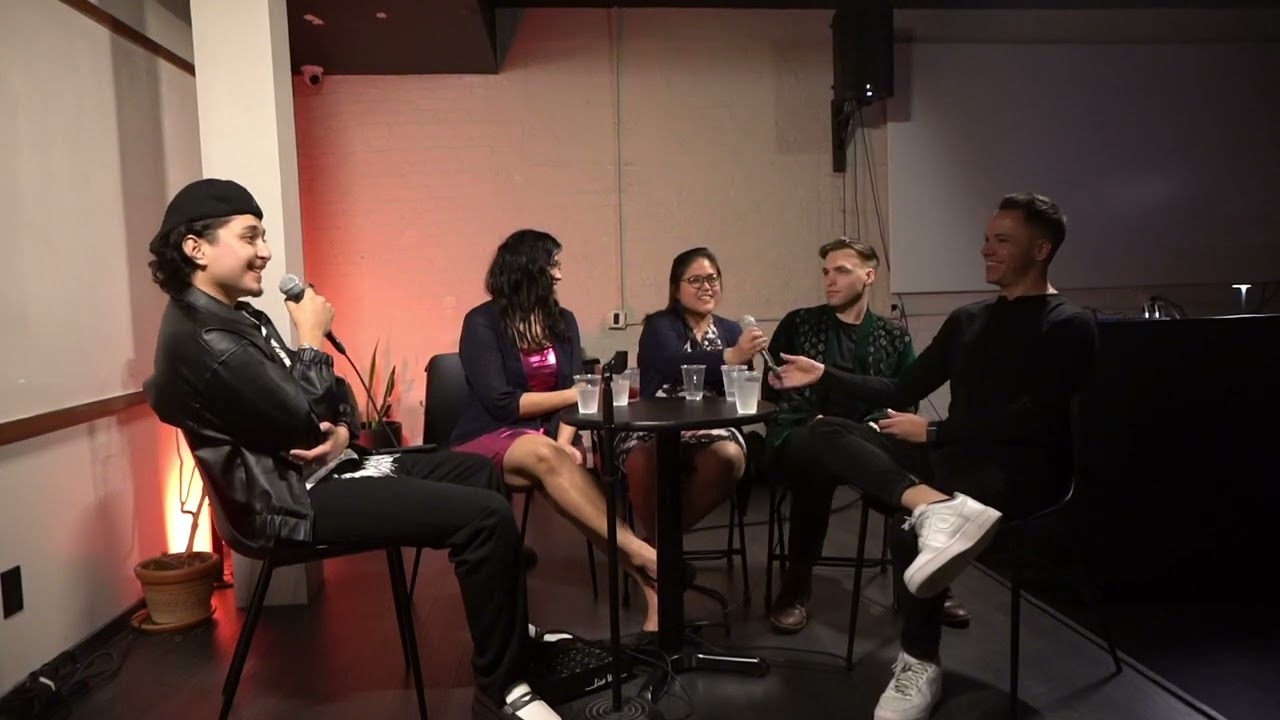
“Deadlines create focus. Without them, people get busy but not productive.”Johannes Naylor, from his published working manual
A podcast guest became a co-founder
Tapped began with a conversation. Naylor had invited entertainment entrepreneur Ilias Anwar onto his startup podcast. They talked about In The Loop, Naylor's earlier product for producers to discover one another, and about the practical frustrations Anwar saw around performers. The pair did not immediately produce a company. Months passed. When In The Loop paused after its developers moved to better-paid work, Naylor called Anwar and returned to the problem.
Their early thesis was broad: a professional network and booking layer for performers, something that could join collaborators, opportunities and transactions. A 2023 profile reported that both founders had left six-figure jobs, that the product was approaching 1,000 users, and that they planned to establish the company in New York. The pair later joined an Antler cohort in Austin. At a New York Tech Week event, they scrapped their pitch deck the night before and presented more freely. It was founder theater with an honest subtext: the company was still learning what it was.
The product narrowed. Tapped now presents itself as a live-music database and a way for performers to find venues and plan tours. That is a more disciplined claim than rebuilding every professional relationship in entertainment. It also fits Naylor's toolkit. A useful venue product needs collection, normalization, search and feedback. The interface can feel like discovery. Underneath, it is a campaign against bad records.
Naylor and Anwar have kept a taste for jokes. An April Fools post once announced that artist DDG had bought Tapped for $28.28 million and shut it down. The comment thread gave the game away. The invented figure was precise enough to travel. Publicity is cheaper when the founders are willing to be the bit.
The most revealing product has one user
Naylor has published a user manual for working with Johannes Naylor. It is partly earnest management document and partly anti-mystery device. He values constant learning, empathy, creativity, integrity and what he calls joy with grit. He asks for clear communication, aligned incentives, healthy conflict and colleagues who push him to improve.
The details make it credible. Slack is for most work, with public channels preferred. Calls or texts are for urgency. Writing wins when retention matters, while real conversation handles introductions and nuance. He likes diverse environments and even strangers nearby when he needs focus, but prefers a team packed into one room when a release becomes a crunch. His most productive windows sit on both sides of lunch, which allows him to call himself both a morning person and a night owl without entirely cheating.
He also asks for blunt feedback, then adds a warning against disrespect. The result reads like an engineer documenting tolerances. The manual admits where the interface may surprise you before production traffic arrives.
Dabbling, with production habits
Naylor left Udio in October 2025 and began writing more openly about building in an era when software can be made quickly and discarded just as quickly. His project archive is exuberantly untidy. Pennysite is a website builder priced around generation rather than a monthly SaaS bill. Housefly teaches web scraping through interactive challenges. Saint John is a distraction-free Android home screen with an embedded language model. An audio-streaming engine processes sound on the fly. A Postgres proxy tries to stop dangerous database operations before they land.
Older curiosities keep returning in new clothes. Wine in a Million, the student competition winner, was rebuilt with vector search and serverless tools in 2026. A Rust project searches for usernames across hundreds of social networks. Another tool stores JSON inside PNG files. His GitHub profile calls this “dabbling,” while also listing current interests in underwater drones, acoustics and hardware. Ninety-two public repositories make the understatement do heavy lifting.
There is a business version of the same curiosity. Naylor now offers technical advice to music-AI startups, due diligence for investors and consulting on audio pipelines, transcoding and streaming infrastructure. The advisory pitch draws a straight line through Udio, Audius and Tapped. The projects keep the line from becoming too straight.
A career written from the plumbing outward
Naylor's public life is split between New York City and Barcelona. He writes about both with the observational seriousness of someone ranking coffee shops while thinking about distributed systems. His site opens with the Bavarian greeting “Grüß Gott.” He lists German and Spanish alongside English, describes music, travel and building things as hobbies, and invites supporters to buy him shawarma. The tone matters. Infrastructure people are not required to sound like infrastructure.
The ambition underneath the jokes is consistent. He wants to work where music, artificial intelligence and production systems meet. For Tapped, that means making live-music information useful enough for a performer to move from a possible room to a credible route. For his advisory work, it means helping teams decide whether an audio idea can survive outside a demonstration. For his personal projects, it means keeping the distance between curiosity and a working artifact pleasantly short.
The venue spreadsheet will not disappear because somebody gives it a prettier color. It disappears when the data beneath it becomes more dependable than the private list. That kind of victory is slow, cumulative and difficult to photograph. Naylor's career suggests he is comfortable there, in the part of the show where the pipes have to work before anybody gets to applaud.