Jimmy Brock was teaching tennis in Middlesboro, Kentucky, when a pupil's husband suggested a different summer job. The husband worked in human resources at CONSOL. Brock needed money for college. A mine was eighteen miles from home. The arrangement had the modest ambitions of summer employment. It acquired rather more permanence.
His first trip underground left him uncertain. The people around him changed that. By summer's end, he wanted to return. In 1980, he joined full time as an environmental engineer. Years later, he would describe an early job cleaning conveyor belts. A corporate biography rarely gives the conveyor belt much billing. In Brock's case, it deserves a line near the top.
Today, he is chairman and chief executive of Core Natural Resources, the company formed when CONSOL Energy and Arch Resources merged in January 2025. His working life connects a summer at Matthews Mine in 1979 with a business that sends coal into international steel, industrial and electricity markets. The distance is measured in responsibilities as much as years.
A career with plenty of transfers
Consider the geography. Matthews was in Tennessee. Buchanan was in Virginia. Mill Creek took him to Kentucky. Then came the northern West Virginia operations. In a 2014 account of his career, Brock traced the moves with the matter-of-fact precision of someone explaining a route to work. Seven years after starting, he went to Buchanan. Island Creek followed. Another promotion meant another move.
The pattern matters because the familiar phrase “worked his way up” can conceal most of the work. Each transfer put him inside a different operation, with different equipment, colleagues and production demands. Before his authority covered several mines, his experience had accumulated inside individual ones. His career proceeded through the places where a plan has to survive contact with the shift.
At Mill Creek, he became mine foreman in 1997. The following year brought a move to Humphrey Mine as assistant superintendent, followed by superintendent. He also ran Dilworth and Robinson Run. In 2005, his remit widened to vice president of northern West Virginia operations; in 2007, to senior vice president of northern Appalachia operations. He became chief operating officer for coal in 2010.
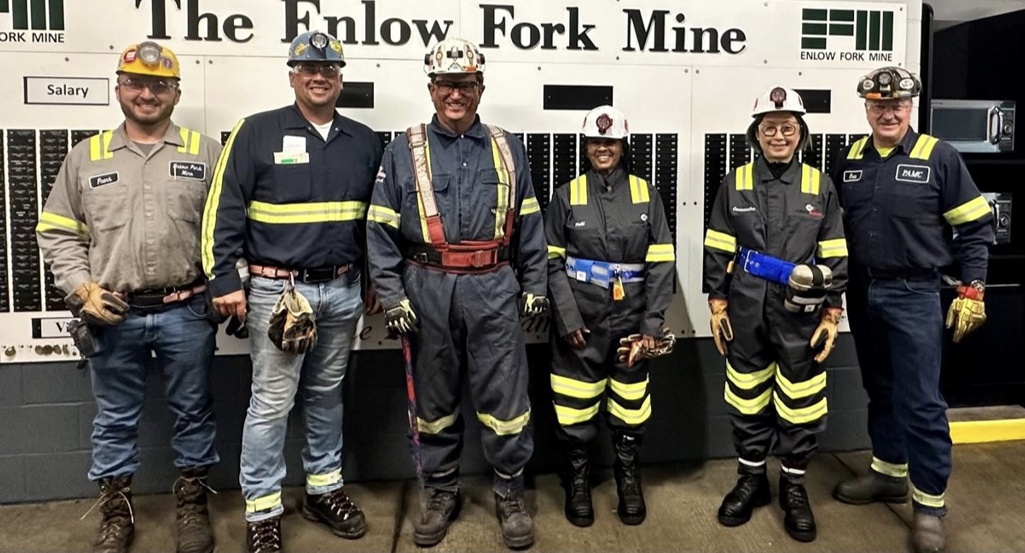
That sequence has an unglamorous virtue: the job titles tell you what he had to learn. Foreman, coordinator and superintendent are jobs with people and machinery attached. They give the later executive titles a practical backstory. The office arrived after a lengthy education in what happens outside it.
Understanding the complaint
Brock's explanation of his management style is unusually concrete. Operating equipment early in his career helped him understand employees when they brought him a problem. He wanted to know how their work was done, as well as how to supervise it. Experience gave him a common vocabulary with the people doing the job.
In a 2019 conversation with investor and podcast host Nate Abercrombie, he described work across seven states and experience ranging from a simple mine opening to the Pennsylvania Mining Complex. Beside him was finance chief David Khani, whose career had included Wall Street and the study of commodity cycles. Their backgrounds offered two ways into the same business: the workings of a mine and the workings of a market.
It is an instructive pairing. A machine can perform well while the price of its output falls. A customer can want coal that cannot be delivered economically. Understanding one part of the system does not settle the others. Brock's operational grounding helps explain his authority; the breadth of the business explains why authority still needs colleagues.
Matthews Mine
officer, coal
CONSOL Energy
then CEO of Core
Seven years of looking
The route to Core also involved a long apprenticeship in waiting. CONSOL's coal business became a separately traded company in November 2017, with Brock as CEO. When the Arch combination was approaching completion, he said the search for possible transactions had been going on since that separation. Projects had been examined. Many had failed to reach agreement.
“We've been looking at it for seven years,” he said in November 2024. That is a useful corrective to the speed of a merger announcement. A press release fits on a screen. Finding the right combination can consume a substantial piece of an executive's tenure.
He was candid about a particularly human obstacle: executives' egos. A deal might require a chief executive to move aside. Valuations were another barrier. His enthusiasm for Arch included an acknowledgment that the other company did some things better than CONSOL. That admission is a sensible beginning for joining two organizations. Everyone arriving convinced they have nothing to learn would make for a very expensive meeting.
“We've been looking at it for seven years.”
Jimmy Brock, on the search for a combination, November 2024
Two businesses, one new name
The merger closed on January 14, 2025. Brock became executive chair. Arch's Paul Lang became chief executive. More than 99 percent of the shares represented and entitled to vote at each company's stockholder meeting supported the proposals needed for the deal. The companies projected annual cost savings and synergies of $110 million to $140 million. Those were expectations, with integration still to do.
The commercial logic combined metallurgical coal with high calorific value thermal coal. One business connects to steelmaking; the other serves electricity generation and industrial customers. Export infrastructure added another connection. A mine's geography is fixed, but its range of customers depends partly on how its product gets out.
Core's footprint now includes the Pennsylvania Mining Complex, Leer, Leer South, West Elk and Black Thunder. Its export network includes the Baltimore terminal and an ownership interest in the Dominion Terminal Associates facility in Norfolk. These are physical parts of the strategy: mines, rail connections and ports. A larger company has more options, and more moving parts to coordinate.
& terminals→Steel · Power
Industry
Different products. Shared dependence on getting the material to its customer.
In October 2025, Brock took on the CEO role as well as the chairmanship, succeeding Lang. The appointment was effective October 6 and announced two days later. Lang agreed to provide transition consulting through year-end. For Brock, a period leading the board had become another assignment leading the company.
The medal and the meeting room
Recognition had arrived before Core's creation. In 2016, Brock entered the West Virginia Coal Hall of Fame. In 2024, the American Institute of Mining, Metallurgical, and Petroleum Engineers awarded him its Charles F. Rand Memorial Gold Medal. The award recognized his industry leadership and his vision for coal's place in the energy transition.
His public responsibilities have extended beyond company boundaries. He has chaired America's Power and the Pennsylvania Coal Alliance, and served on the National Mining Association's executive committee. These organizations give him a role in the industry's policy arguments as well as its operating decisions. His advocacy has a readily identifiable constituency: the sector in which he has spent his career.
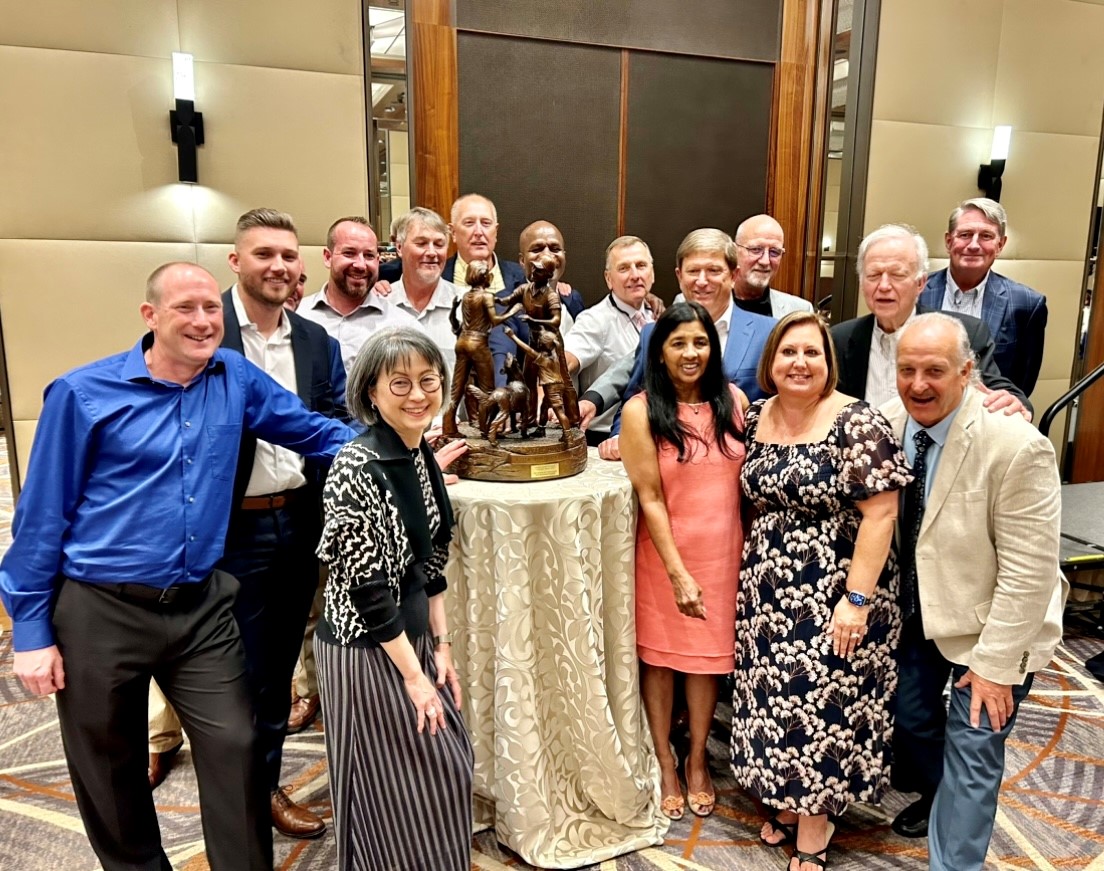
There is a useful distinction between an honor and the next day's assignment. An award recognizes work already done. A combined company requires decisions about what comes next. Brock's recent years have supplied both experiences, often close together.
Coal with another destination
Part of that future sits inside CONSOL Innovations, now a Core subsidiary. Its projects treat coal as a feedstock for materials. CFOAM, a carbon foam made from coal, is used in tooling for aerospace components. Touchstone Advanced Composites takes that material into manufacturing applications. C-BATT, a venture with X-BATT, is developing battery anode materials.
There are building products, too: research into combining coal and coal byproducts with recycled plastics for composite decking. The collection is an unexpected neighbor to the familiar business of selling fuel. An aircraft component and a deck are rather different answers to the question of where a load of coal might eventually go.
These activities show the range of Core's ambitions. They do not establish that every proposed application will become a large business. The interesting point for Brock's story is the extension of the company's thinking: a career built around extracting and moving a material now includes efforts to sell it into different manufacturing uses.
The next shift belongs to someone else, too
By August 2026, the succession plan had become more specific. President Mitesh Thakkar assumed day-to-day responsibility for operations, marketing, logistics and long-term strategy. Nathan Tucker became chief financial officer. Brock remained chairman and CEO. The arrangement gave an expanded operating brief to a colleague who had joined CONSOL in 2015.
The distinction is worth keeping clear. Brock still holds the chief executive title; Thakkar now runs the primary daily functions. Leadership here is being redistributed through named responsibilities. After decades of Brock's own promotions, the company is giving the next executive a wider field of work.
The operating test continues. Core reported roughly $1.1 billion in revenue for the second quarter of 2026. Its high calorific thermal segment sold 8.4 million tons, while coking coal sales reached 2.3 million tons. The Powder River Basin segment reported a negative cash margin per ton, a company-defined operating measure. The portfolio contained progress and pressure at the same time.
Those figures keep the personal story tethered to its actual setting. Longevity offers experience; it does not set coal prices. Consolidation adds assets; it does not make every asset equally profitable. Brock's current ambition is to improve productivity and costs while returning capital to stockholders. The work still has to be done, one operation at a time.
On October 22, Core scheduled its next results discussion for November 5. Another date in the diary, another account to give. The student who took a summer job now chairs the board and shares the daily running of the business with a developing leadership team. A tennis lesson started the introduction. Forty-seven years of work explain why the introduction lasted.