Jim Voss remembers the date. November 17, 2022. Asked about his arrival at Tenneco, he supplies the day with the precision of someone who has had ample reason to remember it. Apollo’s acquisition had closed. The automotive supplier had a new owner and a new chief executive. Voss had inherited an organization whose products were built to move. Getting the organization itself to move would be another matter.
His diagnosis began with the company’s hierarchy. The people making products and moving them through distribution centers created the value. Yet the organization, as he described it, put too much weight above them. He wanted to reverse the arrangement. Senior management would support the people doing the work. The chief executive would have to be useful.
There is a pleasing inconvenience in that idea. A title can be printed on a business card in seconds. Being useful requires somebody else to agree.
The psychology graduate in the engine room
Voss’s academic route offers a clue to his priorities. He studied psychology and sociology at Maryville University, followed by a master’s in organizational development at Webster University and an MBA at Washington University in St. Louis. People, groups, organizations, business: the sequence reads like an expanding set of questions about why anyone does anything together.
Those qualifications sit alongside a career in industries with considerable physical substance. He held senior roles at Premcor, an independent oil refiner, and Solutia, a specialty chemicals and materials business. At Solutia he became executive vice president and chief operating officer. Long before he was responsible for automotive components, he was responsible for organizations that made things.
His later board work crossed similar territory. ABC Technologies’ 2022 circular recorded his chairmanship of Vacuumschmelze and a board position at Kem One. It also recorded earlier appointments at businesses including Taminco and Stepan. This is a career built across industrial companies, with their different products and recurring questions about leadership, capital and execution.
By his own account, automotive was already nearby. Materials from his chemical-industry years went into windscreens, tires and under-hood applications. Moving to a vehicle supplier brought him closer to an ecosystem he had spent years supplying from one step away. He has described living in Detroit and enjoying the move into a Tier One business.
A rehearsal called Vectra
In October 2015, following an Apollo acquisition, Voss became president and CEO of the company that would take the name Vectra. The business previously known as OM Group announced its new identity the following month, along with plans to move headquarters from Cleveland to St. Louis.
Vectra brought together Vacuumschmelze, EaglePicher Technologies and Borchers. Specialty materials and specialty chemicals were its terrain. Voss linked the name change and relocation to a new strategic direction, with growth and operational improvement at its center.
Three senior appointments accompanied the announcement: Edward Yocum in legal and compliance, Gary Westbrook in information technology and Nancy Stemme in human resources. Voss made the connection explicit in his explanation: attracting experienced leaders was one way to make ambitious business plans happen.
The pattern matters. Years before Tenneco, his opening moves already included changing the leadership team and giving a collection of industrial businesses a shared direction. A corporate rename gets the stationery changed. The appointments determine whether anything more consequential follows.
A new owner, an old industrial problem
When Apollo completed the Tenneco transaction, shareholders became entitled to $20 in cash per share and the stock stopped trading on the New York Stock Exchange. Voss’s appointment took effect immediately. A public company had become a privately owned business, with an industrial operator at its head.
The acquisition announcement described a supplier serving original equipment manufacturers and aftermarket customers across light vehicles, commercial trucks, off-highway equipment, industrial applications and motorsport. Its work extended well beyond the passenger car parked outside. So did the coordination required to run it.
For Voss, the attraction was the underlying company: its people, technologies and industrial reach. His criticism concerned the way authority operated. He has described the culture he inherited as excessively driven from the top. Changing leaders’ behavior, in his account, became an early priority.
His university subjects suddenly sound rather practical. Psychology and sociology concern the people who must hear a difficult message, challenge an assumption or make a decision. Organizational development concerns the arrangements that help them do it. Put those concerns inside a manufacturer and they acquire a production schedule.
“You have to care about people. You cannot be a leader if you don’t.”
Jim Voss
What a value looks like on Tuesday
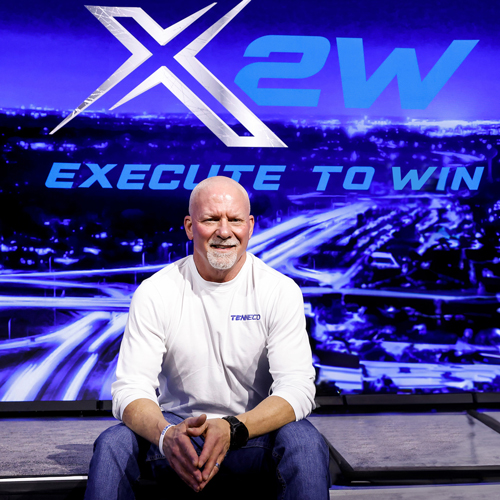
Tenneco now gives that approach a name: The Tenneco Way. Its published values include candor, simplification, faster organizational decision-making, execution and winning employees’ and customers’ confidence. The language is muscular. The practical test is whether employees can use it during an ordinary working day.
Consider simplification. Tenneco describes reducing layers, removing barriers between teams and resisting bureaucracy. Each instruction concerns something a leader can actually change. Fewer handoffs can mean less waiting. Clear responsibility gives a question somewhere to land. A process that everybody tolerates may still deserve a second look.
The company also runs Culture Sprints, team sessions that establish ways of working and develop communication skills. Tenneco University provides leadership development; NextUp prepares future plant managers. These are attempts to give the cultural argument a place on the calendar, with participants and work attached.
Voss’s emphasis on emotional intelligence fits here. A manager asking for honesty must be prepared to receive an answer that complicates the afternoon. Otherwise, the invitation becomes an office decoration. He has made leading with emotional intelligence an explicit expectation.
The dorm room and the balance sheet
There are more revealing details than slogans. Voss has recalled joining an India leadership cohort for a week, staying in the dorms with the participants. He also describes plant standards developed with plant managers, followed by an initially doubtful reception and then growing participation as sites met them.
The anecdote gives his management argument a human scale. An executive can endorse development from a comfortable distance. Sharing the timetable and accommodation makes participation rather more literal. It also gives everyone involved something more memorable than a launch email.
His enthusiasm for culture coexists with conventional decisions about the portfolio. In October 2024, Tenneco announced an agreement to sell Öhlins Racing to Brembo. Voss connected the proposed sale to simplifying the business and strengthening its balance sheet.
Öhlins made suspension technology; Brembo made braking systems. The announcement described an industrial combination for the buyer and a change of focus for the seller. It was a reminder that running Tenneco also meant choosing what should sit inside the company.
That gives the culture argument a firmer setting. Leaders can invest in people while making decisions about ownership and assets. Both commitments eventually meet the same requirement: someone has to make a choice and carry it through.
India gets a larger part
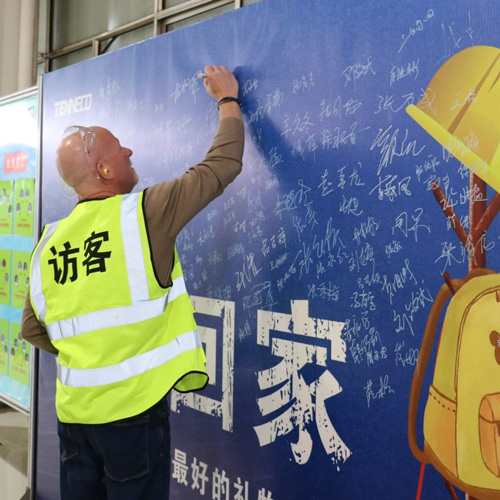
India became a clear expression of Voss’s growth priorities. In March 2025, he discussed its place in Tenneco’s global plans with CNBC-TV18. The company highlighted the talent and innovation coming from its Indian operations, and the opportunity to serve both Indian and global vehicle manufacturers.
Two months later, Tenneco appointed Arvind Chandra CEO of its India operations. The remit included Clean Air, Monroe Ride Solutions, Champion Ignition and Powertrain bearings and sealings. Voss tied the appointment to expanding the business, moving faster on innovation and serving regional customers.
Chandra brought experience across automotive businesses and international markets. The appointment placed a named leader over a defined set of operations. For a chief executive who talks frequently about execution, that is a useful progression: identify a market, explain its importance, appoint someone to carry the responsibility.
From the plant floor to the starting grid
In January 2026, Tenneco announced a multiyear technical partnership with the Cadillac Formula 1 team. It would work with the team and GM Performance Power Units on components, systems and engineering support, including powertrain and ignition technologies.
Voss framed the partnership around trust in performance and execution. Formula 1 supplied a particularly visible setting for that argument. Tenneco’s engineers would work with the team’s specialists; the announcement connected the project to the supplier’s long relationship with General Motors.
The less theatrical measurements continued too. Tenneco’s June 2026 release on its 2025 sustainability report recorded an 18% reduction in both energy intensity and Scope 1 and 2 greenhouse-gas emissions intensity against a 2019 baseline. It also reported assessments covering more than 1,300 suppliers.
Those figures concern the company under his leadership, with work distributed across its teams. They give concrete dimensions to an ambition he expresses repeatedly: earning customers’ trust through the way the business operates. A racing partnership attracts attention. An assessment of suppliers fills rather more spreadsheets. Both belong in the job.
Voss’s career keeps returning to the relationship between people and performance. The psychology graduate became an industrial operator, then an automotive chief executive. Along the way, he has kept asking leaders to examine how they behave toward the people on whom the business depends.
Turning a hierarchy upside down is an attractive drawing. Keeping it that way requires daily decisions about whose work matters, who gets heard and who clears the obstacles. At Tenneco, Voss has assigned himself a supporting part. For a chief executive, that is a demanding job description.