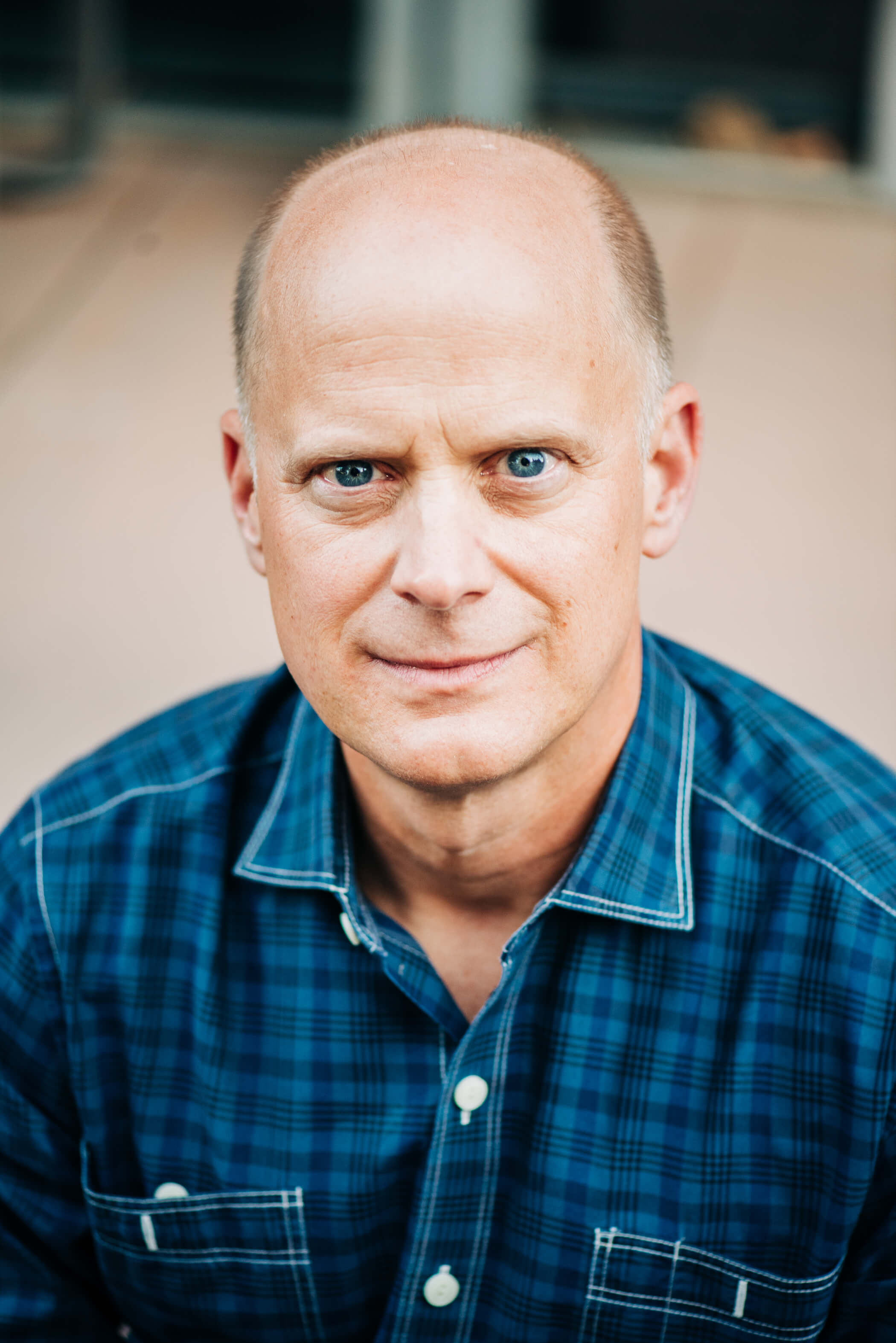
The Operator Who Spotted the Future from the Back Row
In 1997, Jim Szafranski sat in a Stanford classroom and watched Andy Grove — Intel's legendary CEO, the man who wrote "Only the Paranoid Survive" — break down how to think about inflection points. The lesson wasn't about semiconductors. It was about process. Hard problems, Grove argued, are just soft problems with the right framework applied.
Szafranski has been proving that thesis ever since. He holds two degrees from MIT — a bachelor's and a master's in computer science and engineering — and finished his Stanford MBA in 1998. That combination of engineering rigor and Grove-influenced strategic thinking became the lens through which he would build, acquire, and lead technology companies for the next three decades.
Before Prezi, he operated in the unsexy but critical world of enterprise mobile security. At Fiberlink, he rose from VP of Business Development to Senior VP, building MaaS360 — a mobile device management platform that protected corporate phones and laptops in the early days of bring-your-own-device culture. When IBM came knocking in 2013, Fiberlink sold. Szafranski stayed on to lead the platform inside one of the world's largest tech companies, then quietly began looking for what was next.
"The technology is not the hard part. Finding the right problem, that's the hard part."
- Jim Szafranski, CEO, PreziWhat was next turned out to be Prezi — and the timing was more intentional than it appeared. By 2015, the company had 1 million users and a distinctive zooming canvas that made presentations feel alive. But it was built around an assumption that was already eroding: that the presenter and the audience would be in the same room.
Szafranski noticed something unusual almost immediately after joining as COO. Customers were asking if they could stream Prezi over Zoom. In 2015. When Zoom was a niche tool for remote teams. He started paying attention to that signal, and over the next five years, he quietly repositioned the product roadmap around it.
When the pandemic arrived in 2020, the world suddenly needed exactly what Prezi had been building: a way to present visually to an audience sitting in seventeen different locations. Szafranski became CEO in July of that year, stepping into the role as Peter Arvai moved to Executive Chairman. The timing looked prescient. It was.
"The question shouldn't be 'Where can we use AI?' It should be 'What are we actually trying to fix?'"
- Jim Szafranski, Inc. Magazine, April 2026Under Szafranski, Prezi absorbed Infogram in 2017 — a data visualization tool that gave users the ability to build charts and infographics without leaving the platform. What had been a single product became a suite: Prezi Present for classic presentations, Prezi Video for on-screen video communication, and Prezi Design for graphics. Three tools, one idea — that visual communication is more than slides.
The transition from COO to CEO didn't happen in a single announcement. Szafranski had been on the board since 2018, elevated to President in 2019, and spent three deliberate months working alongside Arvai before taking the title in 2020. He describes the process with the same systematic approach Grove taught him: map the inputs, identify the constraints, define the outputs. Don't rush the handover. Get the measures right first.
Today, Prezi serves over 20,000 organizations, including more than 100 Fortune 500 companies and the majority of US school districts. The platform has crossed 100 million users — up from the 1 million that were there when Szafranski arrived. That's not just user growth. It's evidence that the strategic bet on visual, distributed communication landed correctly.
His current focus is AI. Prezi has integrated AI into its creation tools, allowing users to generate presentations, suggest designs, and automate repetitive formatting decisions. But Szafranski is publicly skeptical of how most companies approach AI adoption. In a 2026 piece for Inc., he argued that most AI projects fail not because the technology is wrong but because leaders start by asking "where can we use AI?" rather than "what problem are we actually trying to solve?" Grove's framework, again. The shape of the question determines the quality of the answer.
His OKR implementation at Prezi — Objectives and Key Results, the management system made famous by Intel and later Google — reflects the same instinct. Don't just set goals. Define the measurable results that tell you whether you've actually hit them. The process is the point.
Before his operator years, Szafranski ran his own venture: Sandial Systems, which he seed-funded and grew to over $45 million in VC backing. He also held a VP of Product Management role at Cometa Networks, a joint venture between Intel, IBM, and AT&T. The experience of working across those institutional behemoths — and then leading a startup through its own fundraising arc — gave him an unusual read on how large organizations move and where they stall.
At Tut Systems, he led the product line that underpinned the company's 1999 IPO. That's a résumé footnote that most people skim past, but it signals something important: Szafranski has been in the room at decisive moments repeatedly, and he tends to be the person who built the thing that made the moment possible.
He is based in San Francisco, leads a 270-person company from Oakland, and continues to push Prezi toward the intersection of AI-assisted creation and visual storytelling. The platform that started with a zoom effect and a blank canvas has become something more complicated and more useful: a bet that how you communicate matters as much as what you say.
The Andy Grove Seminar That Still Runs in the Background
In 1997, Szafranski was an MBA student at Stanford when Grove walked into the room to teach. Grove's thesis: even the hardest leadership problems — strategy, culture, decision-making — have underlying structure. Find the right process, and fuzzy becomes clear.
Szafranski absorbed it as a working operating principle. You see it in his OKR implementation, in the three-month CEO transition, in how he frames AI strategy. The algorithm hasn't changed. Only the problems have.