A purchasing decision can look wonderfully dull. A supplier, a price, a delivery date. Somewhere behind the paperwork, however, are people, land, water and a set of consequences that refuse to stay inside a spreadsheet. Jessica Yagan built part of her career getting a large company to pay attention to those consequences. Then she went looking for another place where a decision about money could change what happened next.
Today, as partner and chief executive of Chicago’s Impact Engine, she works with venture capital and private equity. Earlier, she worked on sustainable sourcing at McDonald’s. The connection between the two jobs becomes clearer when you consider the dollar moving through them. Buying food sets production in motion. Investing in a business helps determine which activities can grow. In both cases, money carries instructions, whether anyone has bothered to write them down.
Yagan’s story is about trying to make those instructions deliberate. It includes public policy, corporate purchasing, small companies, family investments and the occasional basketball movie. The scale changes. The question keeps coming back.
Before the investment committee, an interest in government
Yagan grew up in southern Illinois with parents who helped people in their community. Her first imagined route toward useful work ran through government. She studied public policy at Haverford College and interned with Senator Paul Simon. Business was a means she discovered along the way, rather than the original destination.
Her frustration was with politics crowding out policy. She subsequently worked at the Initiative for a Competitive Inner City, the Boston organization founded by Harvard Business School professor Michael Porter. Its premise brought her closer to a different lever: the economic strengths of urban communities and the possibilities of private enterprise.
That move matters because it kept the purpose of her work intact while changing the mechanism. A policy student could become interested in companies without abandoning an interest in the public good. Her later degrees also straddled institutions: an MBA from Stanford and an MPA from Harvard Kennedy School, where she graduated in 2007.
“No, I always wanted to make the world a better place.”
Jessica Droste Yagan, on whether she always wanted to enter business
There is a practical challenge tucked inside that ambition. Wanting a useful outcome leaves a great many choices open. You still have to select a place to work, a decision you can influence and a way to know whether the result helped. Yagan’s career keeps narrowing that broad desire into particular jobs.
The legacy she wanted was a purchasing habit
A corporate social responsibility internship at McDonald’s exposed her to the supply chain. She identified it as both an opportunity and a challenge. After graduate school, she joined the company and spent seven years there, helping develop its global and United States sustainable sourcing strategies.
Her remit covered food and packaging. It meant connecting environmental, ethical and economic considerations to the ordinary business of securing supply. A company planning to keep operating for decades has reasons to think beyond the price available this afternoon. Long horizons can make sustainability a purchasing concern.
Asked in 2015 what she was proudest of, Yagan emphasized the work behind the scenes: making sustainability part of everyday decisions. She wanted buyers to understand why those decisions mattered to the business. The achievement she described was a habit that could survive her departure.
It is an unusually unglamorous answer to a question that practically invites a trophy. A purchasing habit is difficult to photograph. Nobody cuts a ribbon for a better set of questions. Yet a repeated decision can outlast a campaign, and a principle embedded in operations can keep working when its original advocate has moved on.
Years later, describing how that experience shaped her investing, she offered a compact explanation:
“Anything can be broken down into its component humans and component parts, and made better.”
Jessica Droste Yagan, Better Money Better World interview, 2021
Eight businesses, sixteen weeks, a different kind of scale
By September 2014, Yagan was leading Impact Engine. She already knew the organization as a supporter, investor and mentor. Its third accelerator cohort brought eight mission-focused businesses into a sixteen-week program. The work was close to founders: helping companies develop, find resources and prepare to raise money.
Moving from a corporation to a small organization offered faster development of ideas and greater flexibility, she explained at the time. It also brought the difficulty of building a brand with limited resources. The change was not wholly unfamiliar. Her husband, entrepreneur Sam Yagan, had given her years of proximity to startup life.
Her early changes included assigning experienced mentors to individual companies and adding a chief investment officer, Tasha Seitz. A founder would have a consistent person to help with growth and fundraising. Investors would have someone focused on finding and serving them. Community building had acquired specific responsibilities.
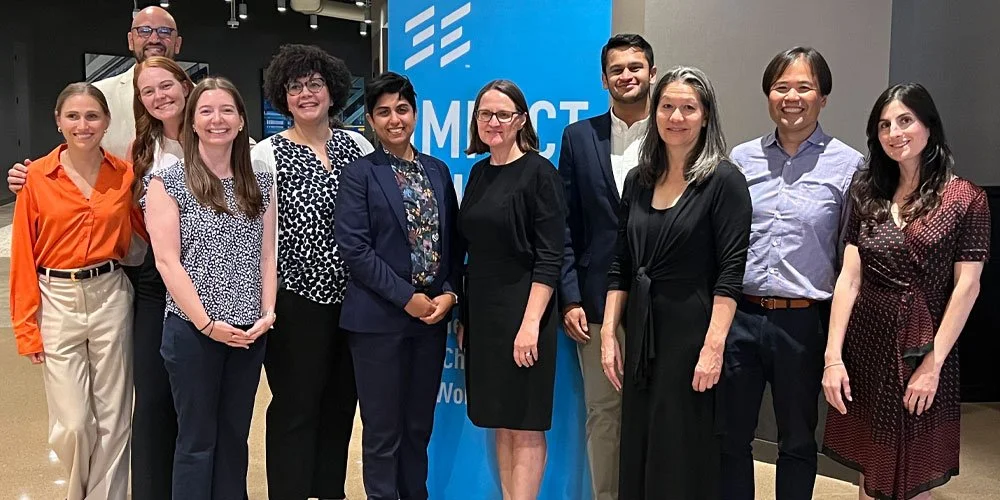
That emphasis on relationships has remained visible beyond the firm. Yagan serves on boards including the Global Impact Investing Network and The ImPact, as well as Chicago’s Rustandy Center for Social Sector Innovation and University of Chicago Laboratory Schools. Her work moves between the investment field and institutions closer to home.
- 2012Impact Engine launches its first accelerator fund, before Yagan becomes CEO.
- 2014Yagan takes the leadership role.
- 2015The firm launches a $10 million venture fund.
- 2019Its first private equity fund expands the approach to later stages.
- 2025The firm reports passing $250 million in assets under management.
Give the ambition something to report
Impact Engine’s approach puts positive impact inside the product a company sells. Its stated reasoning is that revenue growth and useful outcomes can then reinforce each other. Economic opportunity and environmental sustainability are among its investment themes, including education, affordable housing, jobs, water, energy and waste.
The firm develops an impact thesis for each investment and agrees on metrics alongside financial reporting. Those measures address scale, effectiveness and accessibility. It also asks investees to sign a mutual impact commitment. An aspiration is expected to become something the company and investor can revisit together.
Scale
How widely does the benefit reach?
Effectiveness
How useful is the result?
Accessibility
Who can actually benefit?
The importance of that reporting is easy to miss in a field full of attractive intentions. A business can grow without reaching the people it meant to serve. A service can reach many people without delivering much value. Counting activity and understanding an outcome require different questions. The framework asks investors to keep asking.
Yagan also took the argument beyond private companies. In January 2020, she submitted a comment to the Securities and Exchange Commission opposing proposed changes to shareholder-proposal procedures. She argued for participation by multiple stakeholders and for investors’ ability to hold corporate management accountable. The letter connected ecological and social concerns with business stewardship.
It adds another dimension to her view of capital. An investor has a voice as well as a balance. Who gets to raise a question inside a corporation can matter alongside which corporation receives an investment. Accountability needs a route into the room.
The family portfolio enters the conversation
In August 2025, Yagan joined Amit Bouri for the Global Impact Investing Network’s Impact Now series. Their conversation addressed her journey toward aligning all of her family’s assets with measurable impact. The discussion ranged across asset classes and the different roles of catalytic capital and institutional investment.
This broadens the unit of attention from an individual fund to a family’s financial life. A donation and an investment do different work. So can different kinds of investment. Treating them together raises a more demanding question than choosing a single worthy cause: how should the whole collection of assets express the family’s priorities?
The conversation also included Lift Up Enterprises and PadSplit as examples connected to income inequality and affordable housing. Such subjects bring an abstract investment discussion back to recognizable experiences: earning a living and finding somewhere to live. The financial mechanism matters because of what it can make possible.
There was a parallel development at work. In February 2025, Bernstein Private Wealth Management announced more than $40 million in commitments for the second fund in its partnership with Impact Engine. The relationship had begun in 2022. Yagan described growing interest among private wealth investors in connecting social and financial returns.
A fund partnership and a family portfolio are different settings, but they pose a related organizational task. Someone has to translate an intention into a vehicle, select investments and follow the results. Conviction alone cannot handle the paperwork. That is perhaps finance’s least romantic contribution to a better world, and one of its necessary ones.
A basketball movie belongs in this story
Yagan has been explicit about how she sustains her optimism. In 2021, she wrote about deliberately balancing her reading with positive news. By November 2025, her list included the Good Good Good newsletter, the book Abundance and inspiring sports movies, most recently Hoosiers. She was even training her streaming recommendations toward that preference.
There is something pleasantly ordinary about an investment executive negotiating with an entertainment algorithm. One might expect a manifesto; sometimes the next useful input is a basketball film. Her explanation was practical: she finds it easier to work toward a path forward when her attention is not trapped in everything going wrong.
In 2025, Stanford published a case study about Impact Engine that examined a larger version of her recurring question. What would a more comprehensive measure of market-rate returns look like if it accounted for social and environmental effects? The case positioned the firm’s work as an effort to expand the field while bringing people together.
That question gives her career an unfinished quality. Purchasing, investing and measuring are all ways of deciding what deserves attention. Yagan keeps returning to the consequences tucked behind the transaction. A dollar will do its assigned job. Her work asks the person assigning it to think a little longer.