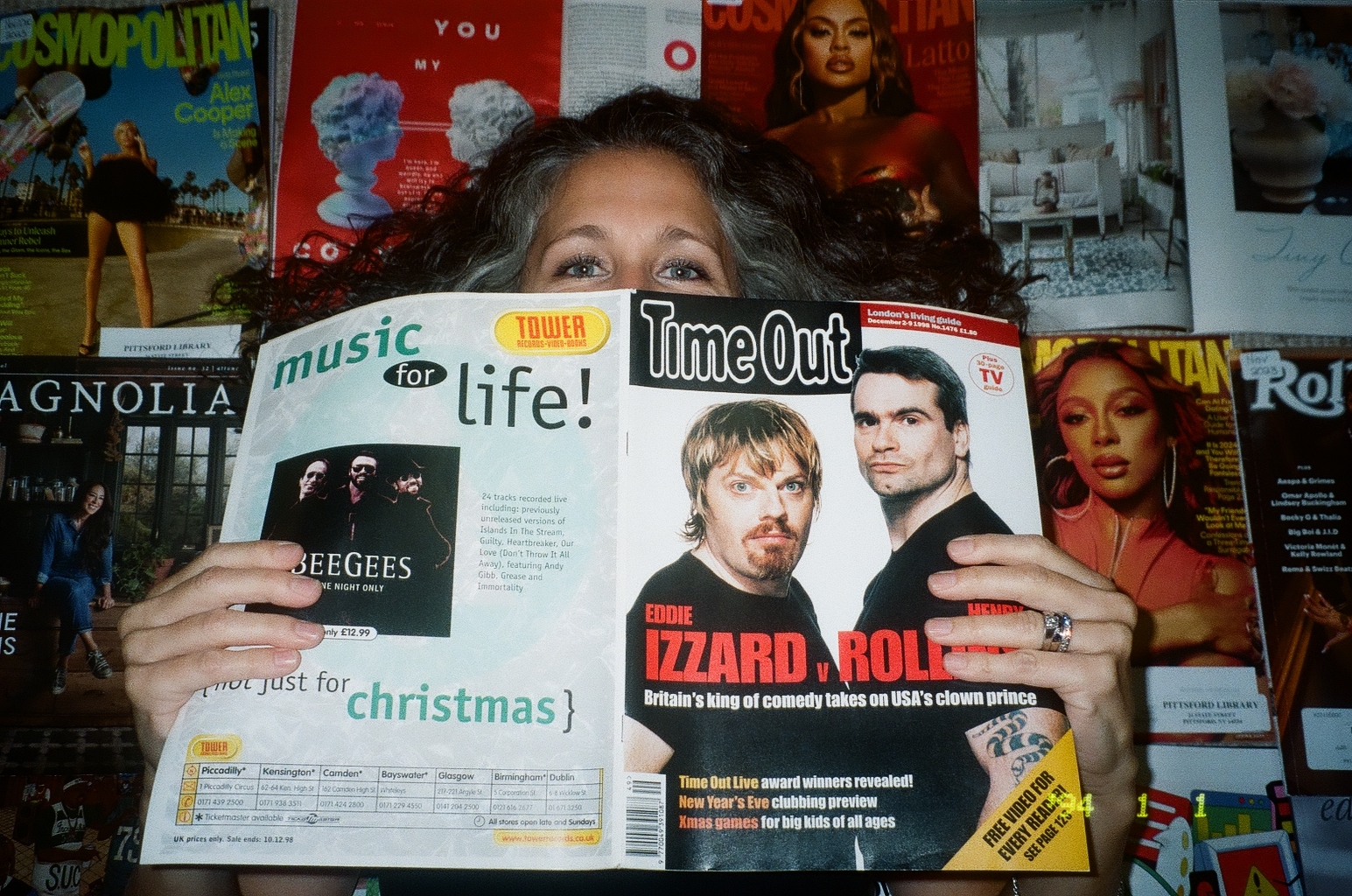
Before the corner office, before the succession plan and before the title grew to president and CEO, Jessica Savage had a bedroom wall full of advertisements. She tore the pages from Cosmopolitan and taped them up, studying how an image and a few chosen words could make a person stop. One Neutrogena hand-lotion campaign from those years still hangs in her office. Most teenage decorations are designed to be discarded. Savage kept the evidence.
Her first real workshop was the high-school yearbook. As editor, she could combine writing, photography, layout and the social puzzle of representing other people. She even turned her first vehicle, a 1985 Ford F-150, into material. Her father had bought the short-bed municipal truck at auction for $300. It arrived baby blue with reflector stripes, then received a proper Ford-blue paint job and new wheels for graduation. Savage made cool cars a feature of the yearbook. She still considers it the best spread in the book.
There is a neat little blueprint in those details: collect what catches your eye, notice why it works, then make something other people will want to look at. Years later, the woman responsible for an independent advertising agency still talks about print with the zeal some executives reserve for quarterly targets. Print, to her, brings together art, imagery, words and people. It makes an idea tactile. It asks for attention and rewards a second look.
An agency career built one room at a time
At SUNY Geneseo, a marketing class taught by Dr. Jeff Gutenberg supplied the professional vocabulary. A video about the Tribeca agency Kirshenbaum Bond + Partners, then helping to build the Target brand, showed her where creativity and communication could meet for a living. After college, Savage joined Grey Direct in New York City. She learned from a supervisor she remembers as passionate, smart and direct, a woman who modeled the confidence required to be heard in business.
Savage worked in Manhattan advertising for four years. After September 11, she and her husband reconsidered where they wanted to live. They moved to the Rochester area in 2002, and she met Lauren Dixon, co-founder of the agency that would become DS+CO. The attraction was larger than a job description. Dixon Schwabl's branding and public-relations work was visible around the community, and its culture of philanthropy offered a version of agency life with local roots.
She joined as an account manager and stayed. The sentence is short; the education inside it lasted decades. Savage worked through account service, led the account leadership team, became a managing partner and took a place in the agency's management circle. Clients, staffing, investments and strategy were discussed collectively. The future president learned the company by carrying its daily obligations before she inherited its public authority.
The handover was unusually deliberate. Dixon and co-founder Mike Schwabl began succession planning years before any announcement. Savage learned in 2015 that she had been chosen as a future successor. The agency staff heard the news in 2018. At the start of 2021, she became president while Kim Allen became CEO. In May 2024, after Allen decided to leave the role, Savage added chief executive to her title.
A long runway can remove some of the theater from a promotion. There was no stranger arriving with a rescue plan and a new vocabulary. Savage had already spent years at the decision-making table and had co-led the agency through an unsettled period. When the CEO transition came, she emphasized transparency, a sound business strategy and a strengthened C-suite. The title changed; the working relationships did not have to begin from zero.
“I know that I have something to learn from every person I encounter.”Jessica Savage on leadership and mentorship
The generous mechanics of a good conversation
Savage's leadership language returns obsessively to attention. She recommends taking an improv class because nobody can contribute well without listening to the people already onstage. She recommends learning to write because clear sentences discipline clear speech. She recommends studying people “like you're an anthropologist” in airports, grocery lines and concerts, watching which conversations draw others in and what bodies say before mouths catch up.
Then comes the more difficult part: leave room. Ask an open question. Resist the reflex to answer somebody's story with your own. Go one question deeper. Remember the detail and bring it back the next time you meet. To Savage, this is not social polish. It is the infrastructure of trust. Her blunt summary is “Business is relationships.” The phrase survives because her instructions make it concrete.
Listen actively enough to respond to what was said, not to the answer rehearsing in your head.
Practice clarity in short notes, long arguments and the bones of a presentation.
Read verbal and nonverbal cues. Attention is a form of preparation.
Ask curious questions and let the other person finish the thought.
Look up, make eye contact, notice something real and begin.
Remember a detail. A later question proves that the earlier answer mattered.
This method is warm, but it is not vague. It requires preparation and recall. When Savage speaks with students, she changes tone and examples to meet them where they are. At an industry gathering, she arrives with questions about the opportunities other leaders see. The point is not to perform easy charm. It is to give the conversation enough structure that something honest can happen.
Her own mentors gave her that kind of room. She recalls Dixon making sure she joined pitches even as an early-career professional. In a 2026 conversation, the two described complementary temperaments: Dixon the thinker, Savage the feeler. They also described disagreement as useful. Listening to another view can end with the bracing discovery that the other person is right. Leadership, in their telling, requires enough confidence to enter the argument and enough humility to change course.
“The purpose of a leader is to develop the team around you and help other people rise.”Jessica Savage, 2026
The CEO, the journal and the imaginary rock band
Savage's mornings begin before the agency. She talks with her husband and their dogs, Phoebe and Charlie, folds laundry and gets the house in order. She may send the C-suite a note about where she will be; sometimes the executives simply trade sunrise photographs. On the drive in, she calls her parents. At her desk, she writes in a five-minute journal before Jira, email, one-to-ones and deep work begin to compete for the day.
The routine is almost comically domestic for a chief executive, which is why it is revealing. Order arrives in small acts. Connection comes before the calendar. Reflection gets a protected minute before reaction takes over. Her at-home coffee is Chock full o'Nuts with whole milk, a brand name that sounds like it wandered in from the age of print ads she loves.
Outside the office, Savage spends time with her family and the dogs at a cottage on Keuka Lake in the Finger Lakes. She watches her daughters play lacrosse. Asked what she would do with an unexpected $500, she said she would put most of it in savings, then perhaps hunt for a small French antique. The practical answer contains a trapdoor into whimsy, much like the executive who once wanted to be a broadcaster like Jane Pauley and still dreams of fronting a band like Fleetwood Mac.
Her professional compass is a print by the artist Anthony Burrill: “Work hard and be nice to people.” It sounds almost too tidy for business. Savage treats both halves as verbs. Work means studying, writing, asking for help, learning new tools and having difficult conversations. Nice means generosity with attention, credit and opportunity. Neither instruction excuses the other.
She is candid about procrastination, mistakes and self-doubt. Her useful answer to the last of these came from a colleague: keep a “Good Stuff” file of messages that acknowledge strong work. On a bad day, memory can become an unreliable witness. A folder of specific evidence is harder to cross-examine. Savage also calls leaders “DIY leaders,” assembled from examples, corrections, borrowed wisdom and the occasional humbling disagreement.
That may be the best way to understand her rise at DS+CO. The career was not a straight ascent powered by certainty. It was a long act of noticing. A teenager saved ads. A student recognized an industry. An account manager watched how decisions were made. A future president sat at the table before the title arrived. A CEO still begins with a blank journal page and the conviction that somebody else in the room knows something she does not.
Advertising has accumulated faster tools, stranger channels and more data than the girl with magazine pages on her wall could have imagined. Savage has embraced continued learning, earning digital-marketing certifications in 2024 and speaking openly about experimentation with new technology. Yet her central claim remains stubbornly analog: people need people. The next useful idea may begin with eye contact, a remembered detail, or enough silence for another person to finish the sentence.