At nine, Jennifer Zuccarini arrived at her best friend’s birthday party wearing a green corduroy smock dress she had made herself. The sewing had taken ages. The audience was unconvinced. Nobody believed she had made it. Years later, with two lingerie businesses on her résumé, she remembered the dress with affection: “I wish I still had it.”
It is an appealing first fashion review. The child does the work; everyone else suspects a professional. It also introduces a concern that has followed Zuccarini into adulthood: a piece of clothing has a life beyond the table where it is made. Eventually, somebody wears it into a room. What happens then is part of the design.
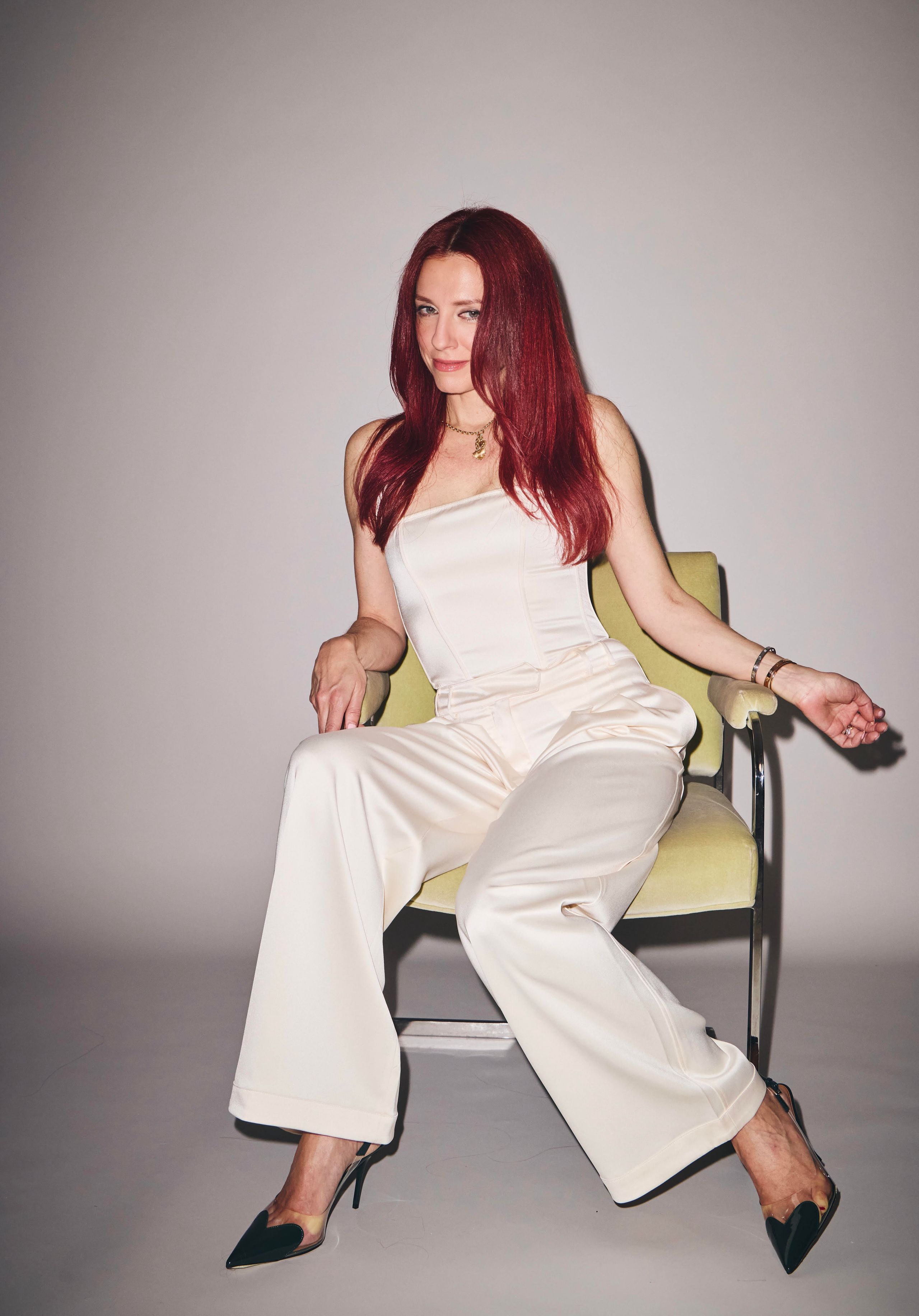
Today she is the founder and CEO of Fleur du Mal, the New York label she started in late 2012. Lingerie, ready-to-wear and swimwear share its wardrobe. Her ambition has been to make the experience of getting dressed feel personal, expressive and a little mischievous. The business involves rather more calculation than the mischief suggests.
A gallery, a bar, then a cutting table
Zuccarini grew up in Toronto, watching fashion television and reading magazines. She remembers the appeal of dressing up for clubs and warehouse parties, the feeling that an evening might go somewhere unexpected. Her father encouraged his daughters to work for themselves. Early jobs included his business, boutiques, bars and restaurants. A fashion career was imaginable long before it became a plan.
For a while, she entertained another future: art dealing. There would be artists to discover, travel, a gallery and parties. One can see the attraction. She studied art history and fine arts in Montreal, graduating from Concordia University with a BFA in 2001. During her final year, work in an atelier shared the schedule with evening classes. Looking at things and making things were competing for the same hours.
Making won. She moved to New York in 2001 to study fashion design at the Fashion Institute of Technology. Her specialization was tailoring, an education in shape and construction that seems a useful preparation for a career concerned with what a garment reveals, supports and frames. Lingerie would enter the story later.
At Nanette Lepore, she encountered the working machinery of New York fashion: an in-house sample room, local production and trips between factories, cutters and embroiderers. The days were long and weekends routinely disappeared into work. It was an education with very little resemblance to the leisurely gallery career she had pictured.
Nightlife. A sewing machine.
Fine arts. The atelier.
Production. Her own labels.
Two very different fitting rooms
In 2005, Zuccarini co-founded Kiki de Montparnasse. As creative director, she worked across lingerie, clothing and leather accessories. The venture opened a Soho flagship and later stores in Los Angeles and Las Vegas. It gave her a setting in which the atmosphere around a product mattered alongside the product itself.
Then came a change of scale. She joined Victoria’s Secret as a design director in 2008. The move took her from building a luxury label to observing a large corporation from inside. For someone already inclined toward independence, employment could still be an apprenticeship. She wanted to learn how a company of that size operated.
Her next business would be her own. Fleur du Mal launched in 2012, after a preparation period that tested her impatience. She expected to finish its business plan in a month. It took about six months, possibly longer. There were forecasts to construct, price points to decide and factories to consider. The document required answers that enthusiasm could not supply.
She also discovered that a campaign could consume money in surprisingly literal ways. An elaborate photographic set had to be paid for, then stored. Looking back, she thought a rented hotel could have delivered much the same result. Four walls and a door can become an expensive lesson when you insist on owning the walls.
“We don’t take ourselves too seriously.”
Jennifer Zuccarini
A bra has to negotiate with reality
Her training helps explain why the clothing and lingerie have always belonged together. Zuccarini has said the very first Fleur du Mal collection included ready-to-wear. She admired designers including John Galliano, Jean Paul Gaultier and Alexander McQueen, whose clothes drew on lingerie. She came to intimates with a fashion vocabulary already in place.
A lace bodysuit, in this view, has several possible appointments. It might sit under a jacket or become the visible centre of an evening outfit. The appeal depends partly on what the wearer wants to do with it. A collection can offer that possibility; it cannot decide the evening on her behalf.
Construction sets its own conditions. Zuccarini has described a bra as having 26 components and potentially 36 sizes. Three millimetres can make a consequential difference in fit. A beautiful photograph cannot settle that question. The garment has to meet a body, and the body is entitled to object.
in Zuccarini’s example
can alter the fit
Her 2021 account of construction makes the point: visual drama depends on quiet precision.
She has spoken warmly about seeing customers choose Fleur for weddings and other occasions. A message praising the fit can make her day. It is an unglamorous measure beside a campaign image, which is precisely why it matters. The customer has spent time in the clothes and returned with an opinion.
The art dealer stayed in the room
The alternative career has left traces. In 2018, Fleur’s New York retail space included a gallery called The Peep Show, with art selected by Zuccarini. The name offered fair warning that this would be an unusual shopping expedition. She had found a way to put the gallery and the clothes in the same room.
Her art education also turns up in the garments. Orchids associated with Japanese artist and photographer Nobuyoshi Araki informed a collection’s lace and embroidery. An image can become a pattern; a pattern can become something someone wears. The movement between those forms gives her earlier studies a continuing job.
Other references are cheerfully personal. She likes poker, and a poker theme made its way into a collection. A money-themed collection divided opinion and sold out. For Zuccarini, a theme can linger before it becomes clothing. Vintage shopping, exhibitions, shapes and colour palettes are all material to store away.
She describes needing time to enter a creative rhythm, with sketchpads, preferred pencils and music assembled around her. Travel can interrupt the routine enough for an idea to arrive. There is something pleasingly domestic about the equipment: after all the discussion of a brand’s identity, somebody still needs the right pencil.
The company inside the clothes
Running the business has required another kind of development. In a 2025 conversation, Zuccarini acknowledged that her early attention went heavily toward the vision and the brand. She had learned to invest more deliberately in the team. Seasonal recognition, birthdays shaped around individual preferences and outings became ways to express that attention.
She also described an early financial crisis that forced a delay in payroll and was followed by the loss of much of her team. It is a sobering episode in a career whose public evidence is often silk and good lighting. The founder has responsibilities that continue after a collection has been photographed.
Her family offers company in the entrepreneurial life. Her sister Janet founded Gusto 54 Restaurant Group. In a joint interview in October 2025, the sisters talked about their Canadian upbringing and the influence of their father, an Italian immigrant. Their businesses inhabit different rooms, but both involve persuading people that an experience is worth leaving home for.
Jennifer spoke fondly of returning to Toronto for Janet’s restaurants. She also expressed interest in eventually opening a shop there, citing the city’s place among Fleur’s international customer markets. Home remains a place to visit, eat and perhaps one day work in again. A business plan can have a return address.
Who is the outfit for?
In February 2026, Zuccarini described designing for different appetites: a customer might want straps and provocation, or something sheer and romantic. She asks how someone will feel in the garment. Some want the piece to be visible. Others may keep the same design private. Both choices belong in her thinking.
That leaves room for sophistication without requiring a performance. Her recollection of receiving lingerie with expectations attached helps explain why the wearer’s choice matters to her. Desire can become awkward when another person writes the instructions. A designer can offer an invitation and leave the response open.
The next chapter is taking practical shape. Fleur du Sport arrived in April 2026. Zuccarini has discussed international growth and a more affordable line. Her 2026 Inc. recognition cited 25 percent year-over-year growth, two new retail locations and international expansion. The ambition now comes with an operating history.
The child in the corduroy dress wanted to make something and wear it somewhere. The adult has acquired factories, forecasts and a team, along with a much larger wardrobe of possibilities. The original question remains wonderfully ordinary: what would you like to put on, and where might it take you?
More of the conversation
Interviews, a sister act and the clothes themselves.