Before Amy Binder ran a communications firm, she learned to work in a darkroom. Her father, David Finn, co-founded Ruder Finn, but he also photographed sculpture. She grew up learning how much a position changes a picture. Later, at Brown, she took photography courses at the Rhode Island School of Design. A career behind the camera once seemed a possibility.
There is a pleasing complication here. Public relations promises to help people see something. Photography requires deciding what to leave outside the frame. Binder would eventually make a business out of considering the angle, while insisting that a communications plan should answer a fairly unsentimental question: what is this supposed to accomplish?
Her route to that conviction runs through a family company, an agency launched into an uncooperative economy, business school, and a daughter who first chose a different profession. It also runs through the accounts. Some careers turn on a grand declaration. Part of Binder’s turns on how to organize a profit-and-loss statement.
A family name, and a company of her own
Binder began her communications career at Ruder Finn in 1983 and rose to president of Ruder Finn Americas. She had a substantial job inside a firm with a family history. The advantages were visible. So was the question that follows a founder’s child: how much of the achievement belongs to the person, and how much to the surname?
She has spoken candidly about that uncertainty. Earning an MBA and starting a company helped establish a record she could recognize as her own. In 2001, she founded RF|Binder, initially an independently run agency within the Ruder Finn Group. A 2014 restructuring made it a separate, woman-owned business. Founding and independence were two distinct steps, thirteen years apart.
The beginning offered little opportunity for self-congratulation. The new practice focused on internet businesses. After September 11, clients failed, and Binder recalled losing half the business in six months. The response was to take its research skills and understanding of consumers to more traditional companies. A company selling advice had to take some of its own: reconsider the market.
Her father’s advice was that the job began when someone said no. It is an inconvenient philosophy for anyone hoping that a difficult assignment will politely disappear. It also helps explain the persistence of the business question in her work. An appealing campaign is one thing. Finding a workable response to a client’s difficulty demands more.
Collaboration, entered in the accounts
Binder’s explanation of the agency’s structure is refreshingly concrete. Rather than give separate groups their own profit-and-loss statements, RF|Binder used one for the agency, alongside client-level accounts. People could be assembled around an assignment across disciplines and locations. The financial arrangement supported the behavior she wanted: sharing expertise.
A retail specialist, for example, might contribute to a consumer-banking account. Senior industry specialists remained involved, but experience could travel. The proposition sounds straightforward until budgets give every department a reason to guard its people. Binder was addressing a familiar managerial problem at the place where it becomes rather less philosophical: who gets credit for the work.
“Our assets are our people.”
Amy Binder, on running a professional service business
That approach made the boundary between traditional and digital communications less useful to her. A client’s problem could require several kinds of expertise at once. Housing them in separate territories might make an agency easier to diagram. It could also make the assignment harder to solve. The organizational choice put a practical obligation behind the invitation to collaborate.
Bring the factory to the audience
One assignment for nuclear-energy company AREVA makes the approach easier to picture. The public could not simply be expected to visit a recycling facility in France. RF|Binder helped bring the facility to an audience instead, using a live webcast and a conference event in Washington, D.C.
Viewers explored the plant virtually, while a satellite connection enabled questions for AREVA’s chief executive and scientists in France. Binder later discussed the campaign in a studio interview. The problem involved access as much as wording. A difficult-to-visit operation became something people could examine and ask questions about without boarding a plane.
The distinction matters in a career often summarized by job titles. Here was an actual decision about how an audience could understand a subject. Technology served the conversation. The visit, the questions, and the people answering them belonged to the same communications task.
Another example came through the Rockefeller Foundation’s Insight Dialogues. RF|Binder’s credited team developed a content platform whose output included 35 short- and long-form videos. The award entry reported 2.7 million total video views across the campaign. Binder appears among the credits alongside creative, production, design, agency and foundation colleagues. The list gives collaboration names and jobs.
short- and long-form videos, built by a team spanning strategy, creative, production and design.
The agency also expanded its social-impact work in 2017, when Annie Longsworth brought her practice into the new RFB|Siren division and led its San Francisco office. Binder described a growing demand from businesses, consumers and investors for attention to social and environmental impact. Her agency’s services were changing with the questions clients faced.
The next Binder takes a different route
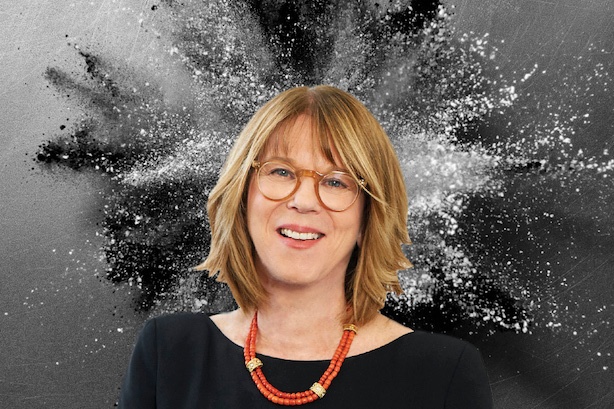
Family history returned in another form when her daughter Rebecca joined the business. Rebecca had spent more than a decade at Booz Allen Hamilton and Innosight, working on strategic planning, process improvement, risk and performance. She joined RF|Binder in 2018 as senior managing director of strategic initiatives and became president in 2022.
Amy had understood, even if she was disappointed by, her daughter’s earlier reluctance to join. Rebecca initially reported to another executive. Amy has said that the promotion depended on proving she could make the transition to a different industry. A family connection could start a conversation; it could hardly do the daily work.
The outside experience also gave the family business something useful to absorb. Rebecca helped expand strategic communications, content, digital, data and analytics offerings. Mother and daughter had arrived at the relationship between strategy and communications from different directions. Their shared workplace brought those experiences into regular contact.
For Amy, the academic connection has lasted too. She earned her undergraduate degree with honors at Brown and an MBA at Columbia Business School. Her professional biography records service on Columbia’s Family Business Program Advisory Board and guest lecturing in its MBA program. Family enterprise had become a subject she could help other people think through.
One hundred companies, three questions
Binder’s insistence on a business purpose has an unusually concise expression. “It has got to start with: what is the business problem we are trying to solve?” she said in 2021. The question asks a communications team to understand the assignment before deciding what to publish.
In February 2025, RF|Binder released its Clarity Index, examining 100 corporations using publicly available communications. Its framework separated language, connection and impact. That distinction makes room for a message that is easy to read but poorly aimed, or one that reaches people without helping the business accomplish anything.
The agency reported that higher-scoring companies and sectors also tended to show stronger year-over-year revenue growth. That finding describes an association; it does not establish that clearer communications caused the growth. The distinction is worth preserving precisely because Binder argues that the work deserves serious business attention. Measurement becomes more useful when its limits remain visible.
The study’s average grade was B-. Even organizations with considerable resources had room to improve. For an adviser, that is a more interesting starting point than the assumption that a large company must already have explained itself well.
The audience has changed its address
Binder’s recent writing follows the movement of attention. In September 2025, she argued that changes across established media and social platforms create opportunities for earned coverage. Independent reporting, in her account, supplies credibility that can carry into other channels when the original story is shared.
The point has consequences for everyday choices. A communications team needs to understand the audience of a particular outlet, the format that suits it, and the places where the resulting coverage might travel. Treating every channel as interchangeable makes that work harder. Distribution has become part of the judgment.
By May 2026, she was writing about why brands were taking Substack seriously. Her interest concerned the concentration of journalists, specialists and engaged readers on a publishing platform outside the familiar corporate website. A company choosing where to communicate needed to consider where people with relevant expertise were already holding the conversation.
These arguments continue the concern she raised in a 2022 BRITE Ideas conversation produced by Columbia Business School’s Center on Global Brand Leadership: communications and business are deeply connected, yet the disciplines do too little to prepare people to understand one another. The gap leaves room for misunderstanding on both sides of the meeting table.
Twenty-five years, and another angle
On October 20, 2026, RF|Binder announced its fourth consecutive Inc. Power Partner Award. The agency was marking its twenty-fifth anniversary, with Binder still at its head. That same year, her writing returned to the early photographic education and a question sharpened by artificial intelligence: what value does a person add when information is widely available?
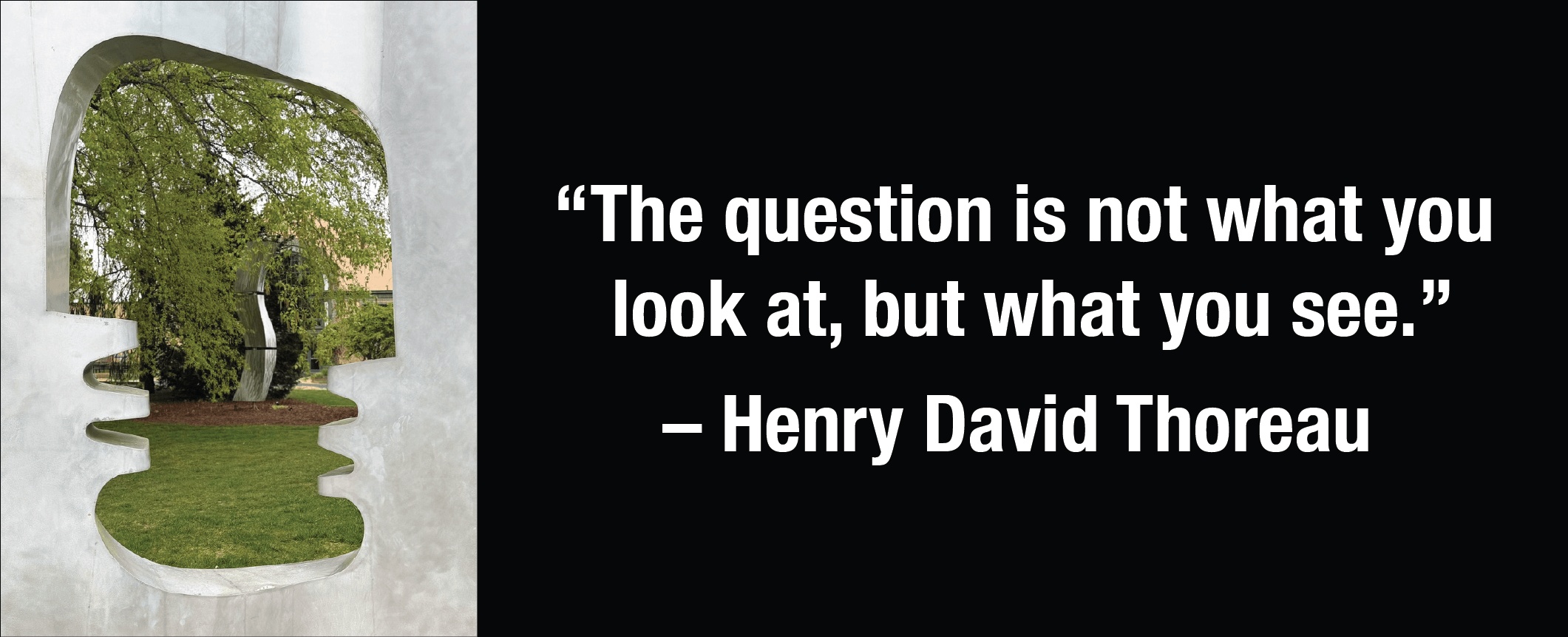
Her answer centers on judgment. In the agency’s offices, her father’s watercolors and sculpture photographs remain on the walls; conference rooms carry the names Calder and Moore. The connection with art has survived changes in ownership, distribution and technology. It gives her argument a physical setting, rather than leaving it stranded in an anniversary slogan.
There are smaller glimpses of the person behind the argument. She has described cooking as time to think and create. The business requires its own patience with preparation: understanding an audience, bringing the right people together, and asking what the work should achieve before anyone rushes to serve it.
Across that quarter-century, Binder has kept returning to a choice she learned before she ran an agency. Move a little. Look again. The subject may be familiar; the next useful angle still has to be found.
Read, watch, follow
More from Amy Binder and the people who have interviewed her.
RF|Binder website ↗Amy Binder on LinkedIn ↗The Ability to See · July 2026 essay ↗Watch: Women-Led Entrepreneurship in PR ↗Listen: BRITE Ideas · Amy Binder, May 31, 2022 ↗Interview: PR in the Digital Age ↗Interview: leadership, family and photography ↗RF|Binder’s news and essays ↗