Jeff Price once explained his music company to a parliamentary committee by comparing it to Federal Express. You paid to have a package delivered. The delivery company did its job. It did not acquire an enduring interest in whatever happened to be inside the box. For a business accustomed to taking percentages, there was something faintly impertinent about the analogy. Price had spent years making it practical.
He was talking about TuneCore, the digital distributor he co-founded with Gary Burke and Peter Wells. Its early proposition was wonderfully unromantic: pay a flat fee, put your music in online stores, retain your rights and receive the sales revenue passed on by those stores. An unknown band could buy the same kind of access as an established performer. Talent remained a difficult business. Getting onto the shelf became a service you could purchase.
That distinction has occupied Price through several companies and several arguments. At Audiam, he went looking for royalties that recordings and songs had earned without reaching their owners. At Word Collections, which he founded in 2020 and still leads, he followed the question into comedy, then back into music publishing. His subject is the space between an audience enjoying something and its creator receiving the money.
The record label was his education
Before the licensing systems came the records. Price co-founded the New York independent label spinART in the early 1990s. Its releases included work by the Pixies, the Apples in Stereo, Richard Thompson, Echo & the Bunnymen and an assortment of artists whose careers did not fit neatly into one commercial compartment. An independent label lives with the consequences of taste. It also lives with distribution invoices.
Price’s route there had been irregular. His mother’s advertising career meant frequent moves; he has described attending eight schools in twelve years. Before music became his business, he tended bar, sold books from mall kiosks and worked as a production assistant for Rachael Horovitz. The later executive was preceded by someone who had done a fair amount of ordinary work in unfamiliar places.
At spinART, the romance of finding music met the mechanics of making it available. During his work with eMusic from 1997 to 2001, Price was also getting an early view of paid downloads. His jobs included content acquisition and business development. The internet was changing what a distributor actually had to do. A record could reach a listener without a pressing plant, a truck or a shop assistant wondering where to file it.
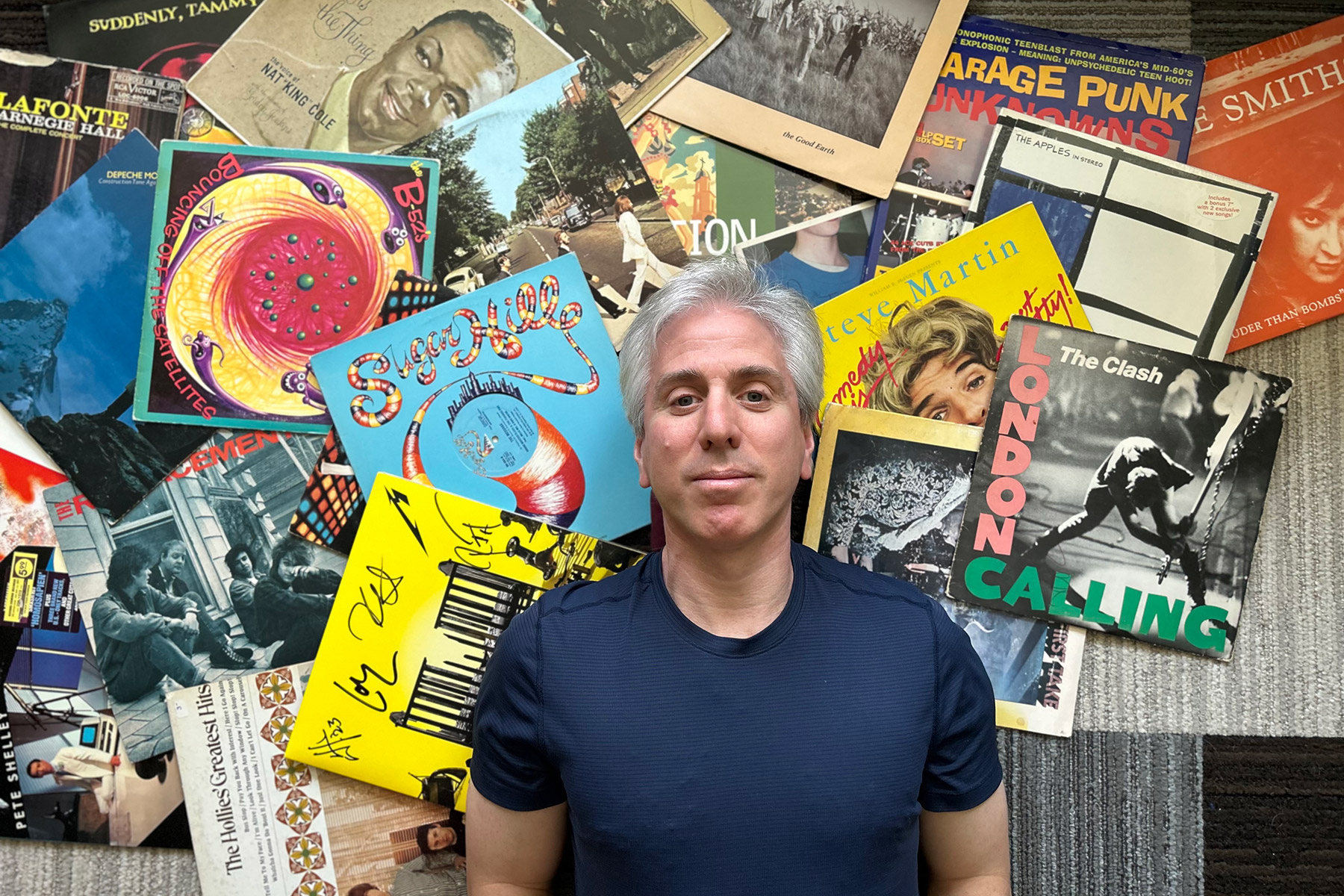
For Price, the awkward question was why the old percentage should survive the disappearance of so much of the old work. He had encountered digital distributors while running his label and disliked the terms. His response was to build a company around a different charge. The practical experience mattered: he had been the customer before he became the competitor.
A fee for the journey
TuneCore launched in January 2006. The appeal lay partly in what a musician could understand without consulting a specialist: upload the recording and artwork, choose outlets, pay for delivery. Behind that transaction sat identifiers, metadata, contracts and retailer requirements. Price’s company undertook the machinery. The musician kept ownership.
In an early interview, he described the company’s famous customers and its unknown ones as having the same agreements. The distinction between an artist with a familiar name and one with a home recording was not supposed to determine access. That was a business choice with cultural consequences. A distributor no longer needed to predict a hit before agreeing to handle a record.
It also left something essential unresolved. Being available does not make a song desirable. Price pushed back against promises of instant success in his public writing; no delivery service could manufacture an audience simply by accepting an upload. TuneCore lowered one barrier. The musician still had to make something people wanted to hear and persuade them to listen.
Artists keep their rights.
TuneCore’s early distribution model separated the cost of delivery from the artist’s subsequent sales income.
His 2018 appearance before Canada’s House of Commons returned to this logic. A legislator asked how the service survived on its revenue. Price used the parcel-delivery comparison and described a fee for a defined task. He was no longer at TuneCore, but the explanation remained unusually concrete. There was no need to make the business sound magical. Its attraction was that it could be ordinary.
By 2020, TuneCore said it had paid independent artists more than $2 billion since its founding. That total stretched well beyond Price’s tenure. He had left in 2012, after being removed as CEO. The distinction matters: a founder’s original argument can travel much farther than the founder’s authority to decide what happens next.
The first exit did not end the argument
Price did not greet his departure quietly. In an October 2012 interview, he disputed the direction of the company and described his efforts to keep it working. He said he had sent the board a twelve-page letter outlining what he thought it should do. Even after losing the job, he was still producing instructions for the business.
His account was openly partisan, delivered by a removed founder who remained a shareholder. Yet it exposed a tension that makes his career more interesting than a series of product launches. The qualities that persuade someone to challenge an industry do not necessarily make boardroom life comfortable. Conviction can attract customers and become a management problem in the same afternoon.
“Service with transparency and accountability.”
Jeff Price, describing his preferred model for artists, 2012
In that interview, Price argued that serving artists could be a sound commercial proposition. He did not present fairer terms and a profitable company as incompatible ambitions. His next venture would charge for a different kind of work: finding money already generated by music and getting it to the people entitled to receive it.
The song inside the recording
Audiam launched in June 2013. The problem was less visible than getting an album into a store. A recording and the composition it contains can generate different payments for different owners. Someone might control the song without controlling every recording of it. A cover, a live performance or a video could create another trail to follow.
Audiam’s work involved connecting recordings to compositions and collecting the associated royalties. Its early focus included YouTube, where the use of music in other people’s videos could be difficult for a songwriter to identify and administer. Price was moving from distribution to detection. The file had arrived; now someone had to establish whose work it contained.
The particular performance captured in audio
Recording owner & distributorThe underlying composition, across its recordings
Songwriter & publisherThe catalogues Audiam represented included Metallica, Bob Dylan, the Red Hot Chili Peppers and Jason Mraz. Canadian rights organization SOCAN acquired the company in 2016. Price remained until July 2020, when SOCAN announced his immediate departure and named its chief operating officer, Jeff King, to assume the CEO’s duties.
There was another company after that exit, too. The repeated pattern is striking without requiring a theory about his private motives: Price builds a service around a payment problem, acquires clients and backers, leaves, and finds another payment problem. The industry’s accounting supplies a remarkably durable supply of unfinished business.
When the words are spoken
Word Collections began in 2020 with comedians and spoken-word performers. A comedy album contains a recorded performance, but it also contains written material. Paying for the recording does not, by itself, settle every question about the underlying work. Price applied the distinction he knew from music publishing to a field where the second payment had often been overlooked.
The company represented routines by George Carlin, Bill Hicks, Margaret Cho and Roy Wood Jr., among others. This brought Price’s career into a pleasingly literal relationship with words: jokes written to make an audience laugh could also require a licensing conversation unlikely to produce much laughter in the room.
Word Collections subsequently expanded into music publishing administration. In August 2023, it announced $5 million in funding led by Metallica’s Black Squirrel Partners. Its represented catalogues included Metallica, Kirk Hammett, Greta Van Fleet and Thomas Dolby. The investment linked the administrative work to musicians with a direct interest in how the numbers came out.
- 2006 / TuneCoreGetting the recording into digital stores.
- 2013 / AudiamConnecting uses of music with royalty payments.
- 2020 / Word CollectionsCollecting for literary works and musical compositions.
The distance he is still trying to shorten
The newer projects bring the argument back to independent musicians. Songwriter Collections launched in March 2025 as a service for songwriters and publishers. In October that year, Price and Converge drummer Ben Koller announced the Heavy Music Collective, pairing royalty collection and recovery with education for artists across heavy music. The person behind the drum kit had become a partner in explaining the paperwork.
By October 2026, Word Collections was describing direct collection arrangements with services including Apple, Amazon, Spotify and YouTube for selected territories outside the United States. Coverage varied by service. Its approach allowed clients to select works, rights and territories; the company described one disclosed administration fee. These are company-described arrangements, rather than a promise that every musician will receive the same result.
The aspiration is consistent with the earlier ventures: fewer stops between the use of a work and the person being paid for it. Word Collections says it identifies original recordings, covers and live versions, then checks the information and payments attached to them. The ambition is global. The work remains stubbornly particular: a song, a recording, a territory, an amount.
Price has a short description of persistence: “Water on stone eventually makes the Grand Canyon.” It suits a career spent returning to questions other people might prefer to consider settled. Music supplies the pleasure. Someone still has to check the statement. For three decades, he has kept volunteering for that part.