Imagine choosing the perfect song for a film. You have the scene, the recording, the goosebumps. What you need next is permission. Then another permission. The sound recording belongs to one chain of rights; the composition belongs to another. The audience hears three minutes of music. The buyer encounters an organization chart.
- Two businesses: recordings through Warner’s labels; compositions through Warner Chappell.
- One new entrance: a unified global sync operation announced October 21, 2026.
- The bigger bet: make music easier to license, distribute and monetize, including through licensed AI.
A song has two front doors
Warner Music Group has decided that the chart needs work. Its new global sync organization brings together recorded music and publishing under Ron Broitman. Sync is the business of pairing music with pictures: films, advertisements, television and games. The company promises clients a single point of entry across its catalog, with coordinated pitching, clearance and administration.
It sounds like housekeeping. For someone trying to finish a commercial before a deadline, housekeeping can be the product. Warner’s argument is that a collection of valuable songs becomes more useful when buying permission takes less effort. Whether the new structure delivers faster clearances will be a practical test, rather than something an announcement can prove.
The recording
The particular performance.
Labels and master owners.
The composition
The underlying song.
Writers and publishers.
There is an important boundary. Warner’s recording relationship with an artist does not establish ownership of that artist’s compositions. Co-writers and outside publishers may have a say. Combining departments cannot manufacture permissions the company does not control. The improvement is a clearer route through Warner’s own business.

The machinery around the microphone
The name Warner can make this sound like a branch of the movie studio. The music business left Time Warner in 2004. Its ancestry includes Warner Bros. Records, founded in 1958, and a publishing predecessor established by Jack Warner in 1929 to acquire copyrights for films. The modern group grew by assembling businesses with different histories and musical instincts.
Access Industries acquired Warner in a transaction valued at $3.3 billion in 2011. The company returned to public markets in 2020, pricing 77 million shares at $25 each. The resulting $1.925 billion offering consisted entirely of shares sold by existing owners. Warner received no proceeds. That distinction is easy to miss: a public listing can change who owns a business without putting new money into its recording budget.
Today, its labels include Atlantic and Warner Records. Warner Chappell serves songwriters. ADA handles independent distribution and label services. Those distinctions matter to customers: an artist seeking recording investment needs a different agreement from an independent label seeking distribution, or an advertiser seeking a recognizable chorus.
The company earns money from streaming, physical releases, licensing and artist services; publishing adds performance, mechanical and synchronization income. Artists, writers and other rights holders receive their contractual shares. There is no single public price for becoming a Warner artist. Advances, services, ownership and revenue splits depend on the agreement.
Its competition comes from Universal and Sony, as well as BMG and independent distributors offering different combinations of capital, control and support. Warner’s case rests on its particular catalog, teams, commercial relationships and geographic reach. For a musician, the useful question is which team can do specific work worth the rights or income being exchanged.
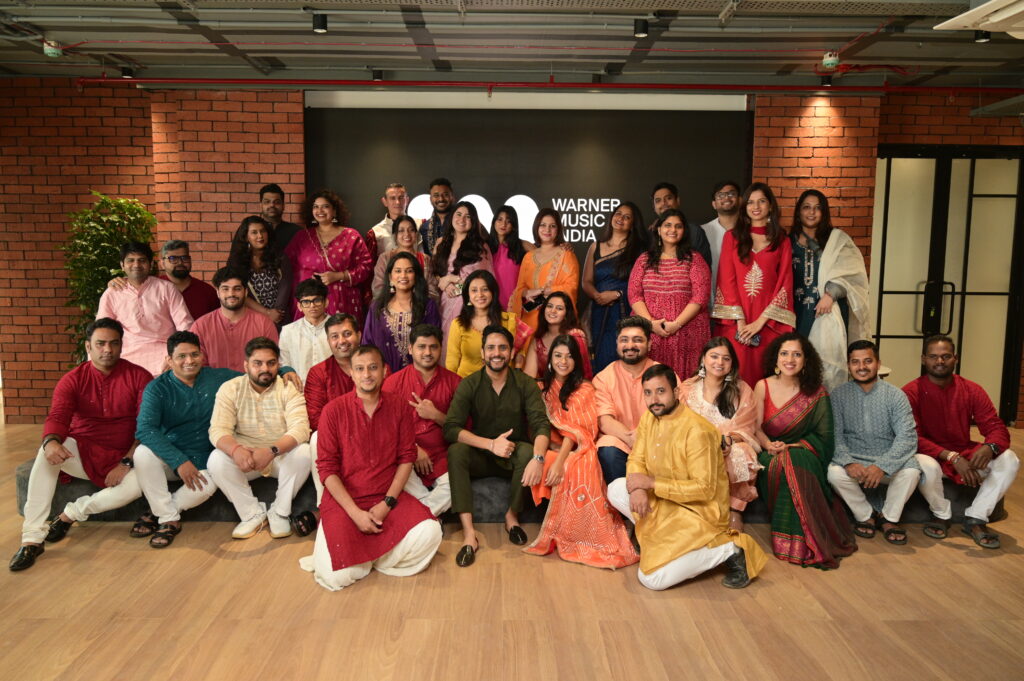
Warner describes its working values as curiosity, collaboration and commitment. Its paid Emerging Talent Associate internships offer one route into the business. Those statements describe the employer’s intentions; the quality of any artist’s experience will depend on the people actually doing the work.
That supporting work is becoming more technical. Warner’s 2026 acquisition of Revelator added distribution, rights management, royalty accounting and analytics tools. Its July ADA expansion described integrating that technology across its independent services. A release may arrive as a piece of art, but getting it delivered and paid correctly requires dependable records.
The bill arrives before the payoff
Robert Kyncl arrived as CEO in January 2023 after serving as YouTube’s chief business officer. His background includes Netflix’s move into streaming. At Warner, the task involves both finding new revenue and paying for an organization capable of collecting it.
The 2025 restructuring plan targeted approximately $300 million in annual cost savings by the end of fiscal 2027. Expected pre-tax charges were approximately $200 million, including about $170 million in severance and termination costs. Those are different numbers: a recurring savings target and the cost of changing the business. Employees experience the second before shareholders can judge the first.
There have also been reminders that distribution relationships can end. The termination of Warner’s BMG agreement reduced fiscal 2025 recorded-music revenue by $81 million. That is a specific vulnerability in the model: distributing somebody else’s catalog brings revenue while the agreement lasts.
The subsequent results were stronger. In the quarter ended June 30, 2026, Warner reported total revenue growth of 10% and operating income of $305 million, compared with $169 million a year earlier. The company attributed progress to operating performance, revenue mix and restructuring savings. A good quarter provides evidence; it does not settle every strategic question.
An opponent becomes a customer
Warner’s November 2025 Suno agreement illustrates another change. The deal settled litigation and established a licensed AI partnership. Its announced framework included creator choice over using names, likenesses, voices and compositions in new AI songs. Suno also acquired Songkick from Warner. A separate Udio agreement established a licensed creation framework.
“We’re here to turn dreams into stardom and audiences into fans.”
Warner Music Group / stated purpose
The public rationale was commercial: protect rights while creating additional ways to earn. Warner’s February 2025 Spotify agreement pursued another version of that goal, covering recordings and publishing and extending direct publishing licensing into additional countries, including the United States.
Make the difficult part easier to buy
There is a useful lesson here for businesses without a single hit record. Start with the customer’s task. Coordinate the people who must say yes. Keep the underlying information accurate enough that a sale can become a payment. Warner is applying that logic to assets that can earn again whenever a new audience finds them.
The conditions matter. A combined service needs rights it can actually license, systems that work and customers willing to pay. An artist still needs a suitable contract. A songwriter still needs accurate accounting. The song supplies the feeling. Warner earns its place by making the work around that feeling worth buying.
Warner Music Group ↗ · Warner Chappell ↗ · ADA ↗ · Company news ↗
LinkedIn · X · Instagram · Facebook · TikTok
Listen to the strategyRobert Kyncl with Nicolai Tangen: artist development, streaming and AI ↗