There is a splendidly unmusical question at the center of Willard Ahdritz’s career: where is the money? A song can cross an ocean in a second. Its earnings have historically taken a more leisurely route. For a Swedish saxophonist who became a label owner, that difference was difficult to accept. The audience had heard the record. Somewhere, somebody had collected. The musician was still waiting.
Ahdritz would eventually build Kobalt around that gap. But a revealing ornament in his working life may be the Viking helmet that sat, with a sheathed sword, on his Manhattan office windowsill in 2015. Most executives settle for a framed award. Ahdritz had brought equipment for a raid. His chosen territory was the music industry’s accounts department.
The joke suited a founder whose argument was both technical and personal. He wanted the systems to work because he cared about the people at the other end. Behind a royalty statement was someone trying to make another record, pay for another session, or remain a musician. Getting the arithmetic right could determine whether that happened.
The saxophonist meets the statement
Before Kobalt, there was Telegram Records and Publishing in Stockholm, which Ahdritz co-founded in the 1980s. Sweden’s music was traveling. The commercial arrangements supporting it were harder to navigate. He saw an international business organized through local and regional systems, with the artist some distance from the information and the proceeds.
He later recalled the frustration of artists asking him for money while he struggled to understand the statements arriving upstream. That experience gave his eventual business an unusually concrete grievance. The problem was sitting on his desk. It was also coming through the door, in the form of musicians who needed to be paid.
His sympathies had a musical foundation. Ahdritz played saxophone and admired jazz, including Herbie Hancock and Miles Davis. When he joined Twitter, his early profile photograph showed him with Wayne Shorter and Miles’s son, Erin Davis. For an executive building software, it was a useful declaration of taste: the database might occupy his working day, but the musicians remained the point.
His other interests made the combination less improbable than it sounds. He had worked as a coder during Swedish military service. He also studied finance and accounting at the Stockholm School of Economics and spent time at NYU Stern. Music, computing and accounts would all find employment in the same idea.
A business plan with very little glamour
At L.E.K. Consulting, Ahdritz spent years working on strategy and finance before returning to music. The detour mattered. It gave him experience with industries that already treated complex flows of information as something to organize systematically. The record business had excellent instincts for a chorus. Its administrative machinery offered another sort of opportunity.
By summer 2000, the venture that became Kobalt was testing its proposition with a publishing catalog acquired from Diesel Music. Its working name was NCM, short for Net Copyright Management. The public launch followed in January 2001. Even the discarded name tells you where his attention lay. There are more romantic ways to introduce yourself at a party.
The founding proposition was to provide services to rights owners while allowing creators to retain their copyrights. Ahdritz argued that a company using technology could operate on thinner margins and benefit as the overall market grew. That required persuading people that better administration could be a business worth building, rather than an inconvenient expense attached to the interesting work.
It also required patience. In his 2015 essay about music’s prospects, Ahdritz described a mismatch: listeners had gained sophisticated digital access while creators were still served by accounting infrastructure built for an earlier world. Every new way to listen could add transactions. Unless those transactions could be identified and matched, popularity and payment would continue to drift apart.
A play is only the beginning.
- 01Music is usedA stream, broadcast or video
- 02Ownership is matchedWhich song? Which writers?
- 03Royalties are collectedUsage becomes money owed
- 04The creator can seeWhere it came from and what was paid
A simplified view of the administrative work Ahdritz set out to improve. Different rights follow different collection routes.
Freedom, with an account balance
Kobalt’s portal made the proposition visible. A songwriter could examine information about the use of their work and the money associated with it. The philosophical promise had acquired a screen. In a business accustomed to selling dreams, a useful account balance possessed a certain novelty.
The appeal extended beyond the size of any individual payment. Information could help creators understand their audiences, make decisions and ask better questions. Ahdritz’s recurring concern was the power that came from controlling information. Giving the person who wrote the song a clearer view altered that relationship.
In 2017, he put the principle plainly: “It is about offering freedom to artists.” Economic freedom and creative freedom belonged in the same conversation for him. A contract, a collection system and a career decision were connected. The artist who could see what was happening had more room to decide what should happen next.
Those principles did not remove the need to do the ordinary work of publishing. Kobalt built a creative operation as well as a technology business. Sas Metcalfe became chief creative officer; Laurent Hubert took a growing leadership role. Writers still needed people who understood songs, relationships and opportunities. A better database was useful, but it could not attend a writing session on somebody’s behalf.
“It is about offering freedom to artists.”
Willard Ahdritz, 2017
Getting the collection chain to behave
AMRA took the infrastructure argument further. Kobalt acquired the collection organization and relaunched it in 2015 as a global digital society. Working with Tomas Ericsson, Ahdritz pursued a more direct approach to international digital collections, reducing reliance on a succession of territorial intermediaries.
The underlying question was familiar: how many stages should a payment pass through before it reaches its destination? Each stage creates work, expense and a possible delay. AMRA’s model sought to collect at a global level from digital services, with technology handling the identification and allocation. The ambition was administrative, but its consequences reached directly into a songwriter’s income.
Ahdritz could make these discussions entertaining. In describing Kobalt’s YouTube work, he distinguished premium music videos from a clip of a jumping cat. Different uses had different economics; he wanted the industry to recognize and collect the revenue available from each. A cat could be a music customer without showing much interest in the publishing agreement.
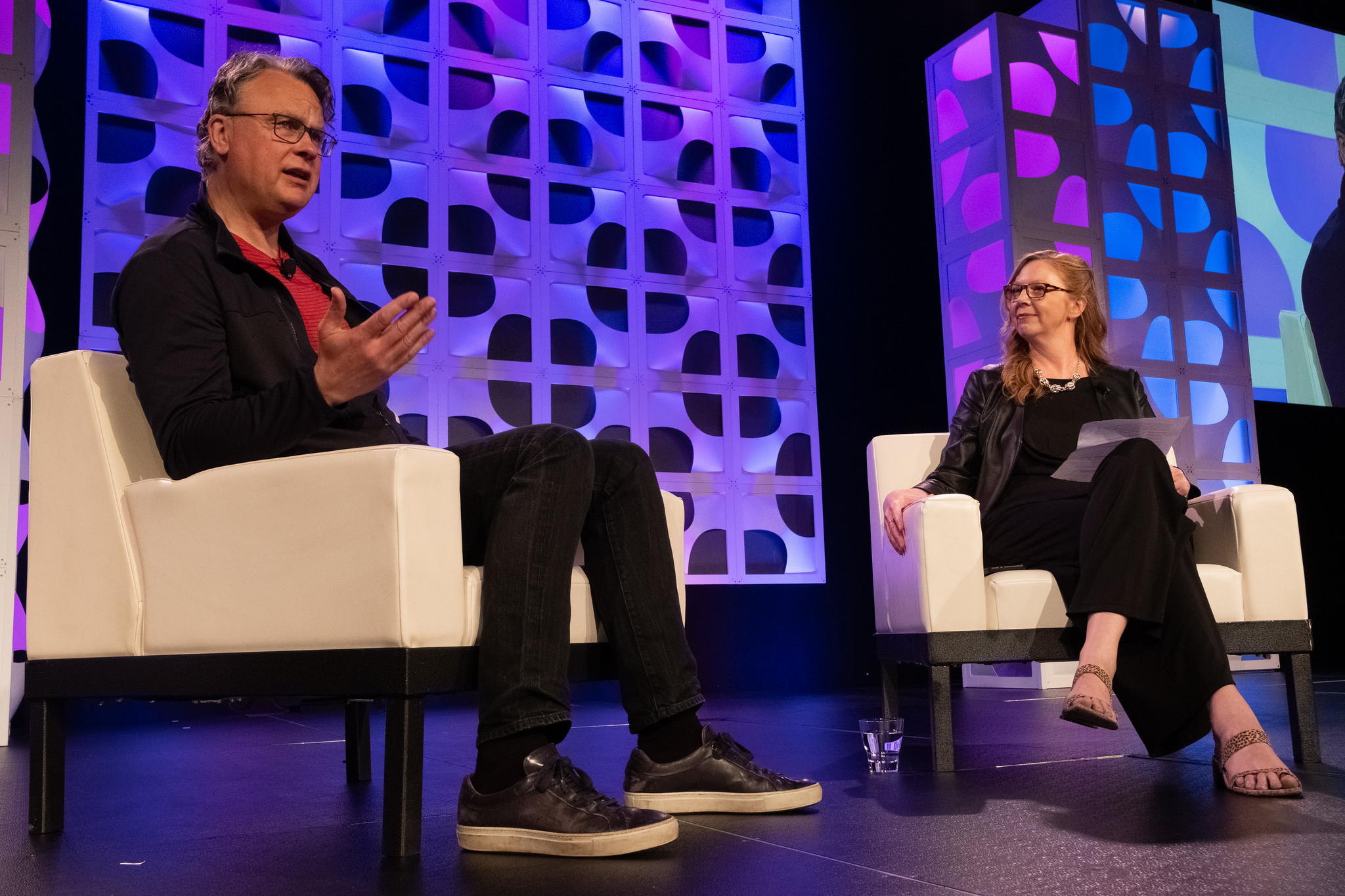
At Music Biz in Nashville in May 2023, he discussed AMRA on stage with association president Portia Sabin and received its Innovator Award. The award had been designated for 2020 and was presented in 2023. It was an apt occasion for a founder who could turn a discussion of payment systems into a lively public argument.
The service provider and the asset owner
There was another development alongside the service business: Kobalt Capital. This distinction matters in understanding Ahdritz. Helping creators retain ownership and managing money that buys copyrights can look awkward together. He described the arrangements separately. Kobalt served rights owners; the investment funds acquired rights using investors’ capital.
By 2016, the Kobalt-managed KMC fund had spent $200 million on music rights and advances over five years. The capital came from investors, rather than being a purchasing budget belonging to Kobalt’s publishing service. Ahdritz was applying his knowledge of royalty collection to a second audience: people who wanted to own the income streams.
The transactions that followed supplied tangible evidence of that market. Fund I sold to Hipgnosis for $323 million in 2020. In October 2021, KKR and Dundee Partners bought the Fund II music rights portfolio for approximately $1.1 billion. It contained more than 62,000 copyrights. Kobalt Music Publishing continued administering the works under a multiyear agreement.
Approximate purchase price of Kobalt Capital’s Fund II portfolio in 2021.
That continuing administration is a telling detail. A sale could change who owned a catalog while leaving the collection work with Kobalt. The operating system and the asset were separable. For Ahdritz, whose career joined music with finance, both sides had become substantial businesses.
Handing over the keys
In January 2020, Laurent Hubert succeeded Ahdritz as Kobalt’s chief executive, and the founder became chairman. It was a change in responsibilities after two decades spent pushing his idea into the industry. The business now had a leadership structure that could carry it beyond the founder’s daily direction.
Its shape continued to change. In May 2021, Sony acquired AWAL and Kobalt Neighbouring Rights for approximately $430 million. AWAL had extended the service approach into recorded music, offering artists distribution and other support. The sale moved those operations to a new owner while Kobalt continued with publishing and AMRA.
In 2022, Francisco Partners agreed to acquire a controlling interest in Kobalt. Ahdritz remained chairman after that transaction. The sequence placed a practical qualification beside the founding ideal: building independent services still required capital, shareholders and decisions about ownership. Ahdritz had spent years advocating for creators’ choices. His own company had choices to make, too.
Back to the beginning, with other founders
On July 7, 2026, Primary Wave’s acquisition of Kobalt closed and Ahdritz left the business. By October 1, he was launching Ahdritz Capital Partners, working across New York and Stockholm with investment partners Stephen Langer and Isabel Keulen. The next chapter would involve backing founders in music and media technology.
The emphasis remains recognizable. ACP targets infrastructure, services and platforms connecting audiences and creators. Its website highlights EVEN, a direct-to-fan business built around artists selling to listeners while retaining ownership. The wrapper has changed from operating company to investment firm. Questions about the relationship between creators, customers and intermediaries remain close to the center.
Ahdritz also wants to help international companies establish themselves in the United States, with operational support and introductions in New York. He knows the experience of arriving with an idea and needing to build a network. After years spent shortening the journey between a song and its earnings, he is working on another difficult passage: the distance between a founder’s ambition and a functioning business.
The saxophone, the financial training and the impatience with an unreadable statement belong to the same story. Ahdritz kept returning to the practical conditions that let people continue creating. The song might travel by itself. Someone still has to make sure the money gets home.
Keep listening
Conversations, writing and the next chapter.