Jeremy Zimmer noticed the chair. He was interviewing for an assistant’s job at the William Morris Agency, and the seat beneath the young movie agent Fred Milstein was moving in ways an office chair should not. Loose ball bearings were the problem. At lunchtime, Zimmer found another chair, borrowed its bearings, repaired Milstein’s, and left a note. He got the job. Hollywood offers many theories about getting a foot in the door. Here was one involving a modest knowledge of furniture.
The detail is worth keeping beside the more imposing entries on his résumé. Zimmer co-founded United Talent Agency in 1991 and served as its CEO from 2012 to 2025. He helped broaden a business rooted in literary representation into music, sports, digital talent and advisory work. Yet the chair tells you something the corporate milestones cannot: before he was responsible for a large organization, he could make himself useful in a small, immediate way.
A little mechanical sympathy
Zimmer’s first workplace education came with oil changes. At about fourteen, he started working at a gas station in Malibu, near Pacific Coast Highway and Corral Canyon. He liked the customers, the practical tasks and the responsibility. By about sixteen, he recalled, he was managing gas stations. There were people coming and going, things to fix, and a business that needed to keep moving.
That is a fairly good apprenticeship for an agent, even if the customers eventually arrive with screenplays rather than flat tires. You have to listen, establish what needs attention, and do something useful before the conversation becomes a ceremony. His later chair repair had the same modest advantage: the result could be tested by sitting down.
Stories were the family business
Zimmer also came from a family with a substantial Hollywood connection. His mother was the novelist Jill Schary Robinson; his grandfather was Dore Schary, the writer, producer and former MGM chief. The family supplied an early acquaintance with storytelling. It also makes any account of his career incomplete without acknowledging the access that accompanied the name.
School proved less congenial. Zimmer attended Boston University but did not graduate. He has described his love of reading and stories alongside his difficulty fitting into formal education. In a later conversation about his childhood, he connected its unconventional character with the independence and persistence he brought to work. His route into an agency was an attempt to find somewhere those abilities could be put to use.
Schary helped arrange a William Morris interview. Zimmer entered its mailroom, the traditional starting place in an industry that can make even a delivery cart sound like a finishing school. He later joined ICM in Los Angeles in 1984, moving into literary representation and packaging. In 1989 he became a partner at Bauer/Benedek. The agency business had become his profession.
The grandfather could help secure a conversation. The junior employee still needed to work out what to do once he was inside. Zimmer’s account of volunteering to drive William Morris executives and their spouses is revealing. He would take them to the theater, wait, take them to dinner, wait again, and drive them home. The work gave him brief stretches with people he otherwise would rarely have met. Opportunity sometimes came with a parking assignment.
“I’ve always been a builder.”
Jeremy Zimmer, announcing his next chapter, 2025
An agency grows more doors
UTA emerged in 1991 from the merger of Bauer/Benedek and Leading Artists Agency. Zimmer was one of its co-founders. Its literary roots matter: representing the people who write and direct stories puts an agency close to the point at which a film is still an idea, long before there is a red carpet to organize.
He also established UTA’s agent training program. It is a consequential piece of institutional work for someone whose own agency education began at the bottom. A training program has a longer horizon than a single negotiation. Its usefulness turns up in other people’s judgment, habits and eventual responsibilities, often years after their first assignments.
After Zimmer became CEO in 2012, the company kept adding ways to represent people. The Agency Group acquisition in 2015 expanded music. The 2019 investment in Rich Paul’s Klutch Sports Group brought a major sports relationship; the acquisition of Digital Brand Architects that year extended the creator business. MediaLink followed in 2021, and the Curtis Brown Group in 2022. An agency once associated chiefly with scripts was acquiring a much wider vocabulary.
The transactions were different in kind. A stake in a sports agency creates a different relationship from buying a literary business or a marketing adviser. Together they show how far the field of representation had widened. An artist’s work could travel through a performance, a book, an endorsement, a digital audience or a conversation with a brand. The agency wanted more ways to participate.
In July 2022, UTA and EQT announced an investment making EQT the largest outside shareholder. The partnership and leadership retained a controlling interest under the announced arrangement. For a founder, that brought the familiar question of growth into sharper focus: how to bring more capital and capabilities into the company while preserving the working culture that had attracted its people.
The party that became a protest
In February 2017, Zimmer publicly explained a decision with a more unusual balance sheet. UTA would cancel its traditional Academy Awards party and hold a rally instead. Its Iranian filmmaker client Asghar Farhadi had said he would forgo attending the Oscars amid the controversy over the U.S. travel ban. A celebration of movies now had an absent filmmaker at its center.
The agency committed $250,000 to the American Civil Liberties Union and International Rescue Committee. United Voices became a gathering in support of creative expression and the exchange of ideas. For a business built on the movement of stories and the people who make them, the issue was close to its daily work.
Zimmer’s explanation had room for a joke about his appetite for party food. He could enjoy a reception and still decide this one should become something else. The episode is a useful corrective to a career told only through deals: sometimes the decision is what to do with a date already booked on the calendar.
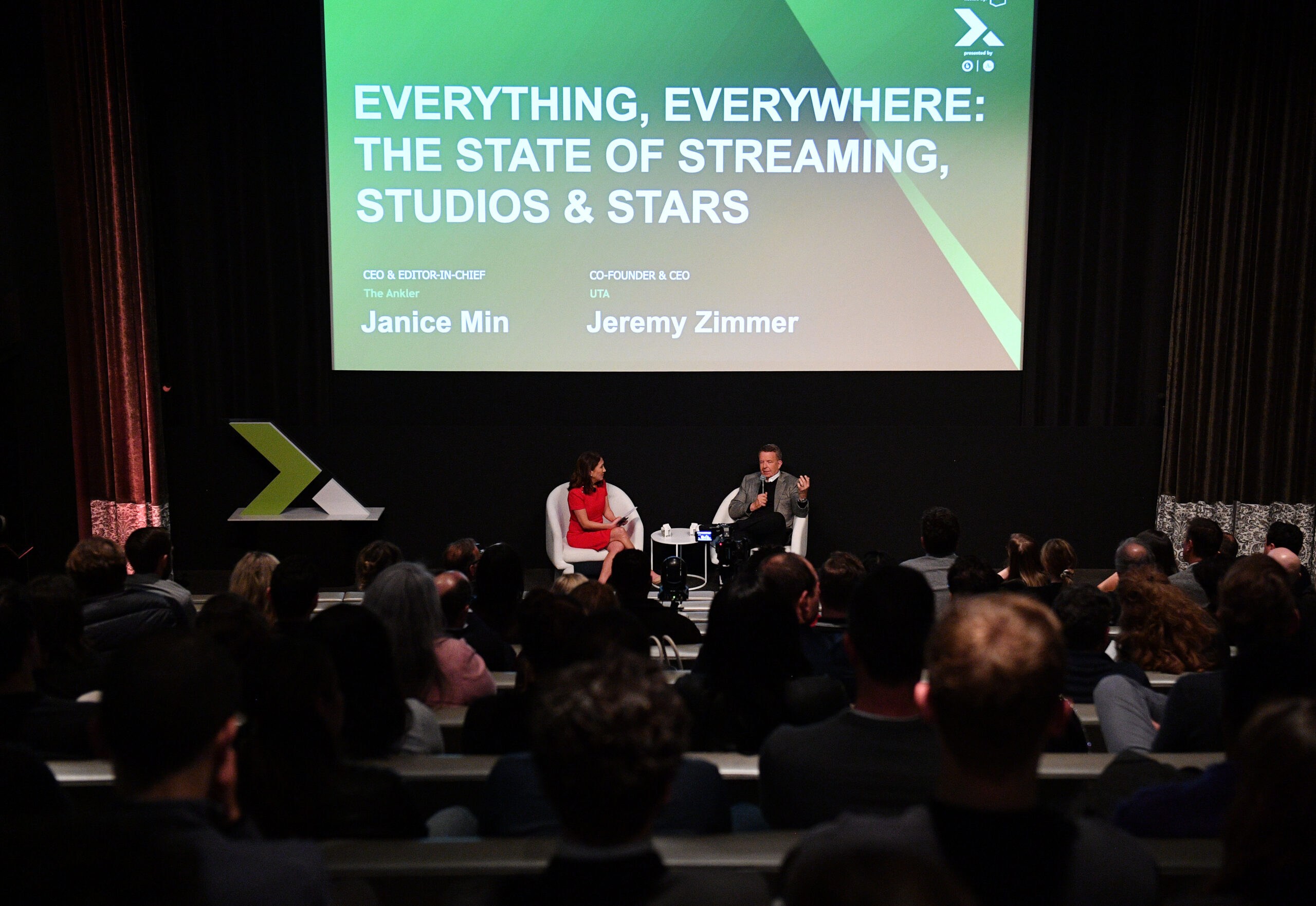
When the screen changes, who gets paid?
By March 2023, another argument was approaching a deadline. In a public conversation with Janice Min, Zimmer backed writers seeking better economics as the possibility of a strike drew closer. The setting was an entertainment summit; the subject was the working arrangement behind the entertainment. A show could reach viewers through new technology while the people making it disputed the terms.
There is a distinction between finding a new way to distribute work and finding a satisfactory way to pay for it. Representation sits in the uncomfortable space between those tasks. An agent may welcome a new buyer and still argue with the buyer about the contract. Zimmer’s public support for writers belonged to that continuing negotiation over what a changing business should offer the people supplying its stories.
Another kind of building
Outside the agency, Zimmer became campaign chair of The Veterans Fund, a U.S.VETS initiative supporting the redevelopment of the West Los Angeles VA campus. The effort brought together organizations including the Home Depot Foundation, City National Bank and Hudson Pacific Properties. Its purpose was to help prepare the ground for a residential community for veterans and their families.
The West LA Veterans Collective’s 2023 impact report recorded the initial $10 million fund as raised, supporting pre-development efforts and early staffing. U.S.VETS also named Zimmer a recipient of its Judge Harry Pregerson Award in 2022. This work concerns a different sort of project from the ones talent agencies usually package: housing, partners, money and the patient business of getting something built.
The next caller
In March 2025, UTA announced that David Kramer would succeed Zimmer as CEO on June 1. Zimmer would help with the transition through the end of the year and retain a board seat. In his message to colleagues, he described wanting to create something meaningful in another chapter of his career. Leaving a place he had helped build meant giving up a familiar daily source of belonging.
By 2026, one new project had a name that looked rather less formal than a corporate title: 877UNMPLYD. Zimmer co-hosts the live Twitch show with producer Rachel Braun. Made with Adam Faze’s Gymnasium, it takes career questions from people navigating unemployment and work. The show also brings hiring news, openings and conversations with people involved in hiring.
Mailroom employee → agency co-founder → CEO → live advice host
Different jobs. A continuing interest in what people might do next.Braun has described one obvious difference between a recorded podcast and a live show: the awkward bits stay in. That is part of the appeal of this particular next act. The former executive has stepped into a format where the question arrives from outside, the answer has to happen now, and there is a co-host rather than an organizational chart to share the work.
The show’s stated ambition is practical: make unemployment less isolating and help people work out their next move. Zimmer has spent much of his life around unusually visible careers. Here, a caller can bring a problem that has never interested a studio or an awards committee. There is still a person trying to get somewhere, and still a reason to listen.
The chair story remains a good place to leave him. A junior employee spotted something wrong, understood a possible remedy and took the trouble to try it. Decades of deals later, Zimmer is answering another kind of call. The setting has changed. There is work to do.