Jared Gutstadt wrote the guitar riff for Pawn Stars in about twenty minutes, by his own recollection. It belonged to a batch of ideas for a History Channel promo. Then the producers heard it and wanted it for the show itself. A small assignment acquired a much longer life. For a musician accustomed to looking for an audience, television offered an appealing arrangement: the audience was already sitting down.
The speed makes a good anecdote. The change of use makes a better explanation of his career. Again and again, Gutstadt has found something musicians have already made, or already know how to do, and looked for a different place to put it. A television cue could become a theme. An album could become a podcast. The work involved in producing those podcasts could become the problem behind a software company.
He became known as Jingle Jared, a name with the practical virtue of explaining half the sales pitch before its owner opened his mouth. His companies have carried him from the edit bay into music publishing, collaborations with recording artists, and audio fiction. There is considerable variety in the credits. The recurring question is wonderfully plain: where else could this go?
An editor discovers the other side of the cheque
Gutstadt grew up in Toronto and studied at Western University before moving to New York to attend NYU. Music and media were already travelling together. He played in bands while developing the skills that could keep him employed in a city with a firm position on rent. His television work included MTV Cribs and Chappelle’s Show. The day job eventually supplied a more useful opening than a conventional record deal.
On the third season of Chappelle’s Show, he worked his own music into edits. Executive producer Neal Brennan called him a jingle punk. Gutstadt’s account of the episode includes a warning to stop doing it; the subsequent royalty payment seems to have made the more lasting impression. Here was evidence that music could earn money after the session ended, through a route he had encountered while doing another job.
In October 2008 he and Dan Demole founded Jingle Punks. They had met at a Black Keys concert, an appropriately noisy setting for a business conversation about background music. The company began in a Lower East Side apartment. Early submissions arrived on CDs, handed over by musicians who had heard these two might get a song onto television. There were enough discs to make the need for a better system fairly clear.
The editor understood the buyer’s problem from inside the deadline. A production needed music that worked, that could be located quickly, and that could be cleared. A band needed someone to hear its recording. Getting those needs to meet was a business in its own right. The prospect had less ceremony than being discovered by a label. It also had a customer.
The search box gets a record collection
The Jingle Player made the library searchable. Instead of relying on an artist’s appearance or reputation, a client could look for musical references and moods. Gutstadt described Jingle Punks as “a matchmaking service between bands and media companies.” The description gave the technology an almost social job: introduce a piece of music to a production that could use it.
In his explanation of the selection process, the haircut was supposed to lose its vote. A composer with no fashionable connections could still make exactly the sound an editor needed. Jingle Punks used tags to describe the music and, in the arrangement described at the time, split licensing fees equally with its artists. The administrative work was part of what made an otherwise inaccessible market usable.
By 2015 the business reported $18 million in revenue for the previous year and had 3,000 artists on its books. Its offerings included a library search and original commissions. That combination mattered. Some productions wanted a recording waiting on a shelf; others needed something written for them. Gutstadt had built a place where both conversations could happen.
The corporate history soon acquired its own sequence of introductions. WME took a majority stake in 2012. In March 2015, music publisher ole bought Jingle Punks. The acquisition brought its repertoire together with ole’s production music and added international rights administration. A company that started by getting music into an edit was now part of a much larger apparatus for collecting and licensing it.
The original Jingle Punks model connected independent music with film, television and advertising.
A hat for the meeting, an orchestra for Nas
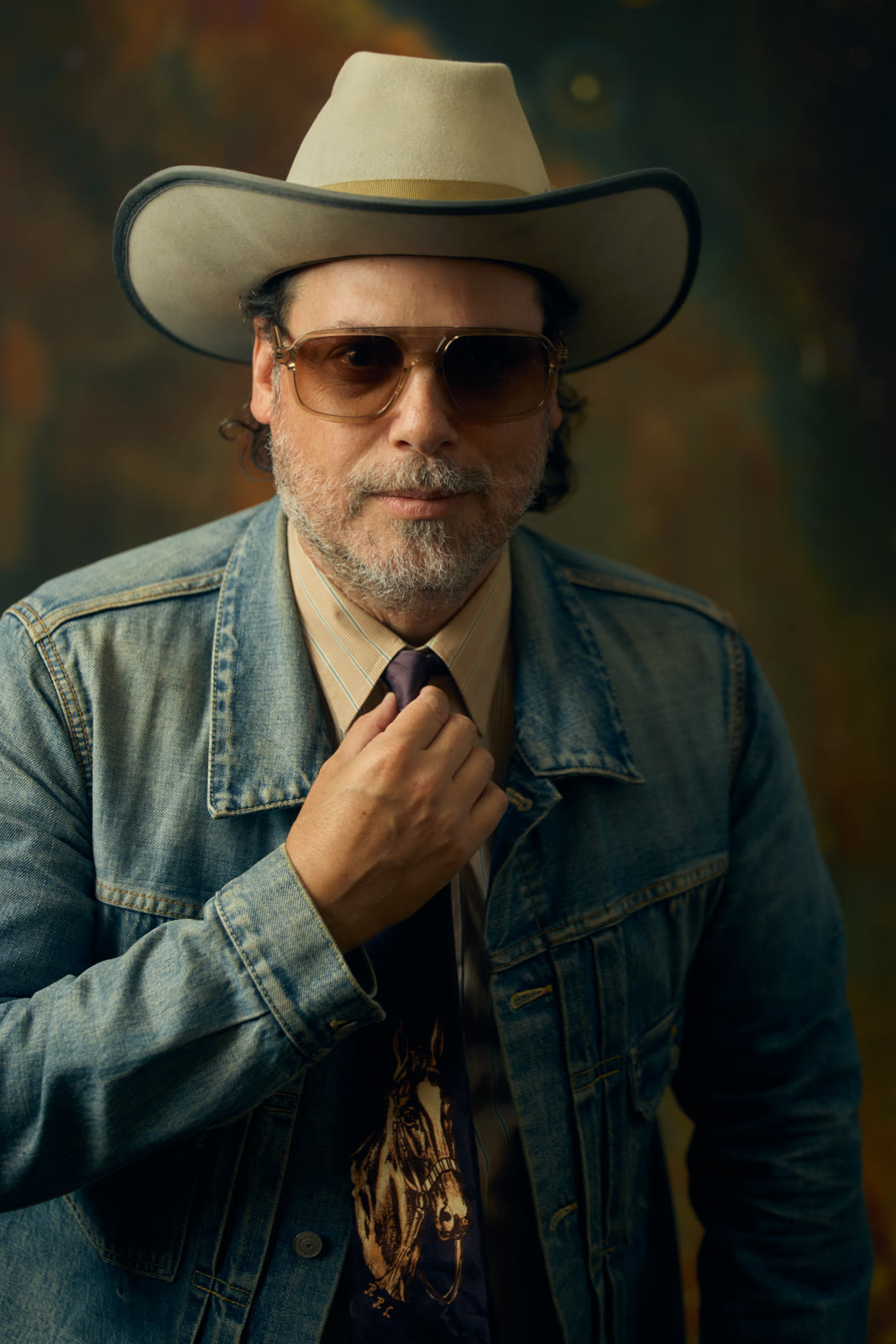
Gutstadt did not leave the performance entirely to the recordings. He wore cowboy hats into business meetings, explaining the habit as preparation for an appearance: “It’s my stage gear.” The clothes made the executive easier to remember. Anyone selling music for somebody else’s programme could appreciate the usefulness of a recognisable opening motif.
His promotional instincts could be less dignified. Jingle Punks put its logo on urinal cakes in television network bathrooms. It is difficult to imagine a positioning exercise with a more literal interpretation of captive attention. The stunt sits comfortably beside his taste for a memorable name: he understood that a supplier could become a character in the buyer’s working day.
The relationships also changed what he could make. The Hipster Orchestra gave familiar popular music chamber arrangements; a collaboration with Nas brought an orchestral treatment to Illmatic. Gutstadt’s work reached across the boundaries between television commissions and recording artists. A jingle business provided reasons to be in rooms where more music could happen.
He described a packed working routine, moving between the studio, calls and several meetings a day. “I am not good at not being busy,” he said. The appetite for activity helps explain the range without making it mysterious. There is a musician here who likes another session, and an entrepreneur who hears another possible assignment. Sometimes they appear to be booking each other.
The album that needed a plot
Bear and a Banjo began with songs. Gutstadt and Jason “Poo Bear” Boyd made a record produced by T Bone Burnett, with a contribution of lyrics from Bob Dylan. The collaborators were established; finding a release path remained a problem. Gutstadt said the record had been rejected by every label. Even a credit list like that could leave an album waiting for somewhere to go.
The solution was to invent a world around it. Released in 2019, the podcast followed the fictional Bear and Banjo through American musical history, with Dennis Quaid providing narration. Across eight episodes, the songs acquired characters and situations. The album could reach listeners through a story that gave them a reason to come back.
Burnett had introduced Gutstadt to Quaid. Their collaboration on the series led to more work together, including The Dennissance, an interview show launched with Audio Up in April 2020. Its title came from Gutstadt noticing Quaid’s repeated appearances on posters while driving his children to school. An observation from the school run had become a programme name. Naming things remained one of his portable skills.
Audio Up expanded the approach into other musical settings. Gutstadt and Scarlett Burke co-created Make It Up As We Go, a drama about an aspiring songwriter in Nashville. Burke explained that the music preceded the series. The songs helped determine the story built around them. A listener could follow the fictional career and leave with actual recordings.
A listener could follow the fictional career and leave with actual recordings.
The musical podcast proposition
Songs with somewhere to live
Miranda Lambert performed “Champion” for the Make It Up As We Go finale in November 2020. Gutstadt shared the writing credit with Burke, Nicolle Galyon and Jeff Peters. The series placed songwriting inside the action, while its soundtrack gave the music a life beyond an episode. The publishing and the storytelling could keep introducing listeners to each other.
The same year, Halloween in Hell assembled a very different cast, including Machine Gun Kelly and Tommy Lee, for a horror musical. Audio Up’s slate could accommodate country ambition and theatrical mischief. Gutstadt received Adweek’s Podcast Innovator of the Year and Podcast Producer of the Year honours for 2020, recognition of a move into a medium where music could carry more of the narrative.
By 2024 he was extending those connections through Audio Chateau Records, Audio Up’s label arm. Clayton Johnson joined its roster after co-writing Lana Del Rey and Quavo’s “Tough”; he also had a songwriting agreement through Audio Up’s joint venture with Universal Music Publishing Group. The label’s stated approach offered artists routes into podcasts, books and graphic novels alongside their recording work.
Another 2024 joint venture brought Gutstadt back into business with Anthem, the company formerly known as ole. It opened opportunities to develop earlier intellectual property, including Bear and a Banjo, and to work with Anthem’s music catalogues. The old company and the new one had useful things to offer each other. His career was accumulating connections rather than tidily closing chapters.
- 2008Jingle Punks
Music meets the edit bay - 2019Bear and a Banjo
An album gets a fictional world - 2020Audio Up
Original stories built for listening - 2026Rebel Audio launch
Podcast production becomes software
Now the production desk is the product
In March 2026, Gutstadt introduced Rebel Audio with $3.8 million in announced seed funding and television producer Mark Burnett as an adviser. The pitch addressed the practical labour surrounding a podcast: recording, editing, publishing and promotion. After years of producing shows, he was working on tools for people who wanted to make their own.
The public beta opened in June. By then the company announced a $4.15 million seed round and brought podcaster Mike Majlak into the role of Chief Creator in Residence. Its announced tools included translation into more than thirty languages, clips for social platforms and distribution. These were the company’s promises about production access, with the everyday creator as the intended customer.
Gutstadt’s ambition has a familiar shape. The Jingle Player helped editors navigate a music library; Rebel aims to bring a complicated sequence of podcast tasks into one workspace. The new material is a person’s recorded voice, and the tools include AI. The old concern survives: a useful piece of work can be stranded by everything required to get it out.
On October 16, 2026, Rebel held Pod U in Franklin, Tennessee, gathering creators and its team for conversations about making shows and building the tools around them. Gutstadt was there alongside Majlak and MD Motivator. After the libraries, theme songs, fictional musicians and label ventures, the next project still has room for people sitting together, talking about what to make.
That short Pawn Stars riff remains a pleasing place to begin. It escaped the narrow assignment that produced it. Much of Gutstadt’s work since has pursued the same possibility, patiently or otherwise: perhaps the thing you have made belongs somewhere you have yet to think of. He has kept giving himself another place to look.
Keep listening
Music, conversations and the next assignment.
▶ Watch: Jelly Roll with Jared Gutstadt▶ Watch: Gutstadt’s TEDx talk