A customer relationship manager ought to have a decent relationship with its customers. Yet the familiar bargain in business software is strangely unfriendly: accept a complicated system, or accept a simple one that soon runs out of road. Jayesh Mori and his fellow founders built Salesmate around the possibility that buyers deserved a less tiresome choice.
That decision makes a useful entrance to Mori’s working life. He co-founded Rapidops, a software development and consulting business, and became CEO of a product that would have to survive its own customers’ expectations. A consultant can recommend a change. A product owner must live with the change next Tuesday, when somebody needs to finish a sale.
His career now encompasses another version of the same question at Experro, where he is founder and CEO: how much machinery should a customer have to understand before getting something done? The settings change from a salesperson’s screen to an online shop. The tension remains remarkably familiar. Software can accumulate capabilities faster than a person can accumulate patience.
Three classmates, and a complaint worth keeping
Rapidops dates its beginnings to 2008. Salesmate followed in 2016, created by three friends and classmates: Mori, Samir Motwani, and Dipesh Patel. Their consulting work had exposed a recurring complaint about CRM software. Available products could feel overcomplicated or insufficiently capable. They wanted useful power with a more approachable experience.
Today Salesmate’s leadership divides the work among Mori as CEO, Motwani as COO, and Patel as CTO. It is an arrangement with a long shared history behind the job titles. The classmates did more than remain in touch. They carried a business relationship from consulting into a subscription product, where a buyer’s decision comes up for renewal.
There is a certain discipline in that model. Selling a project establishes a beginning and an eventual handover. Selling a subscription invites a repeated verdict. Every additional feature has to find a place in somebody’s working day. For Mori, those two kinds of business sit close enough together to make the distinction unusually tangible.
Salesmate’s product history shows the expansion in practical terms: calling and text messaging in 2018, live chat and automation journeys in 2021, ticketing and Sandy AI in 2024, then call transcriptions and AI agents in 2025. The sequence puts Mori’s original problem under a useful spotlight. Keeping a product approachable gets harder as it learns more tricks.
The engineer who keeps learning design
Mori began as a software engineer in India, later gaining experience in financial analytics and predictive analytics startups in the United States. That background helps explain the territory he occupies: technology, commercial decisions, and the experience of the person using the result. He has worked across the boundaries that an organisational chart can make look rather tidier than they are.
His account of building Salesmate includes the difficulty of understanding customers, marketing a product, and getting the technology right. These are ordinary phrases with expensive consequences. An engineer may solve the technical problem beautifully and still discover that nobody recognises the product as the answer to their own problem. A business requires agreement between those two descriptions.
Then there is the spare-time interest. Mori calls himself a self-taught designer. Asked for the game he is best at, he answered, “Selling!” He also described himself as a night owl. Put those details together and the familiar distinction between technical founder and commercial founder becomes less helpful. His interests refuse to stay in their assigned departments.
He has named Figma as a favourite tool. A design application is an apt choice for someone who moves between engineering and selling: it lets a proposed experience become visible before a team commits to building it. There is pleasure in that stage, too. An argument about an abstract feature becomes a conversation about what a person will actually see.
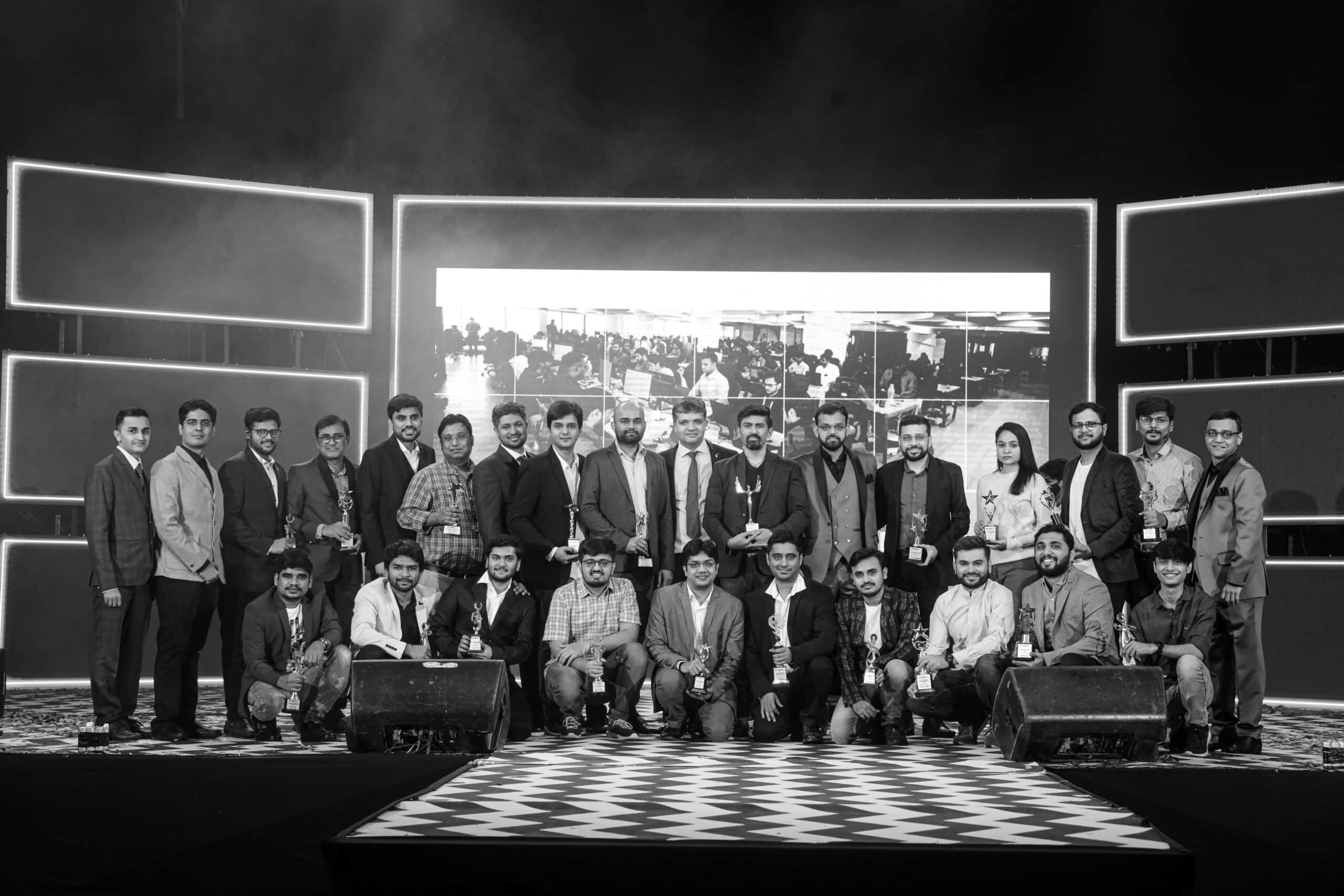
Growth makes leadership part of the product
Rapidops appeared on the Inc. 5000 in three successive years: No. 1,312 in 2019, No. 1,560 in 2020, and No. 1,050 in 2021. In 2022 it placed No. 93 on the Mid-Atlantic regional list. Those are company rankings, rather than personal awards, but they mark the business Mori was helping lead as its responsibilities expanded.
A growing software business presents its chief executive with an awkward bargain. More people make more work possible; they also make it less possible for one person to follow every decision. The founder’s own competence can become a bottleneck if every uncertain question has to travel back to the same desk. Growth changes the job even when the name on the door stays put.
Mori’s conversation with Gene Hammett on Growth Think Tank centred on having the right leadership for growth and developing people into leaders. The subject fits that change in scale. A company making products for other organisations must also develop the people who can take responsibility for the work. Delegation becomes part of how the product reaches the customer.
Rapidops describes its operating culture through small empowered teams, learning, craftsmanship, and attention to business impact. These are the company’s stated commitments. Their relevance to Mori’s story lies in the task they set for a leader: translating an appealing set of principles into decisions about time, responsibility, and what gets shipped.
At Experro, the customer moves to the shop floor
Experro brings Mori’s work into commerce: search, product discovery, personalisation, and the tools merchants use to manage digital experiences. In a 2024 conversation with Claus Lauter, he discussed shopping expectations, website speed, and headless commerce. The technical language describes a separation between the customer-facing experience and the systems doing the transaction work underneath.
For a merchant, the attraction is room to change what shoppers encounter without replacing every component behind the counter. Mori discussed working with businesses already using platforms such as Shopify, BigCommerce, and Magento. The ambition was to improve the experience around that existing investment. A shopkeeper has good reason to be fond of improvements that leave the shop open.
Diamonds Direct offers a concrete example. BigCommerce’s announcement of its new headless storefront identified Experro as a partner and Mori as Experro’s chief executive. He described the integration as giving the retailer more freedom to launch customer experiences and improve engagement. The relationship placed his product alongside an established commerce platform, serving a retailer with physical stores as well as online customers.
customer wants
software understands
business can deliver
A conceptual view of the connection between experience, software, and operations.
The familiar challenge returns in a different costume. More freedom for the people building a shop can introduce more complexity behind it. The useful question is how much of that complexity reaches the merchant, and how much reaches the shopper. Mori’s professional territory sits precisely where those costs have to be negotiated.
A conversation beside the demo screen
By Shoptalk Fall 2025 in Chicago, Mori was demonstrating Experro’s generative AI capabilities with colleagues Melaney King and Pratyaksh Salvi. The company’s account of the event placed conversational search and product suggestions at the centre of its demonstrations. His pitch was plain: “AI should just work. And it should make you money”.
“AI should just work. And it should make you money”.
Jayesh Mori, at Shoptalk Fall 2025
It is a useful sentence because it gives the technology an ordinary commercial test. An impressive answer on a screen has to become something a merchant can use. For a founder whose work crosses consulting, CRM, and commerce, that insistence on usefulness provides continuity. The interface can acquire a speaking voice; the business still has to justify paying for it.
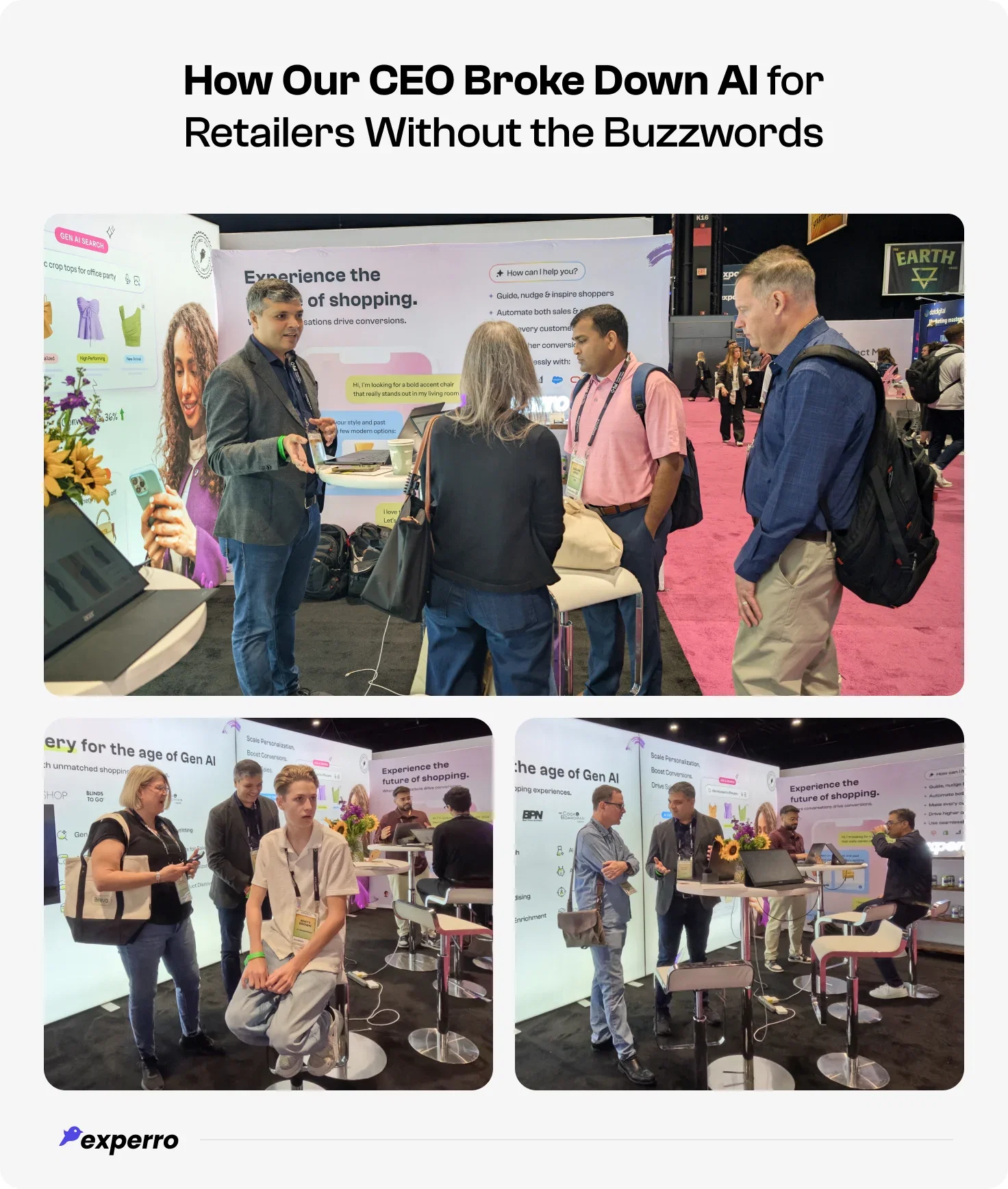
In an interview with Azadeh Williams, Mori described a shift from clicking through products toward expressing needs in longer questions. His expectation was that commerce would increasingly include voice and image search, alongside conversations with software. This is his view of where shopping is heading. It also makes the underlying design problem more personal: customers expect to explain themselves in their own words.
The work continued in 2026. Agile Network India listed him for a May panel in Ahmedabad about why delivery teams fail to create business impact and what leaders must change. In July, Experro reported that he joined King, Salvi, and Nachiket Kumar at Online Retailer in Sydney, meeting retailers and demonstrating its discovery tools.
Ahmedabad and Sydney offer two perspectives on the same working life. One conversation concerns how teams produce results. The other concerns whether a buyer can recognise those results in a demonstration. Mori moves between both. A company can deliver a great deal of software while leaving the commercial question unanswered; an attractive sales pitch can leave the delivery question equally exposed.
His next challenge is already contained in the earlier one. Salesmate began with a complaint about software that demanded too much accommodation from its users. Experro now asks shoppers and merchants to trust a more conversational experience. The technology has changed considerably. The person paying for it still wants the same small courtesy: help me get on with my day.