A bird is an uncooperative subject for a software demonstration. It moves. It hides. It offers a brief sound and then declines to repeat itself. In 2020, Jay Sonani was part of a student team building an Android application around precisely this difficulty: identifying a bird from an image or a recording. The application was called AI-Birdie. Its premise was simple enough to explain outdoors. Its construction involved deep learning, visual data and acoustic data, all brought together on a phone.
Today, Sonani builds enterprise voice AI agents as a Forward Deployed AI Engineer at PolyAI, based in the Toronto area. Between the bird application and that job sits a collection of smaller, sometimes decidedly ordinary problems: how much traffic occupies a road, which lecture is happening now, how a web request reaches a server, how a piece of writing sounds like a particular brand. The subjects change. The projects keep returning to the passage between information and a usable answer.
Seven students and a bird call
AI-Birdie received the Special Jury Award at the ninth CSI-InApp National Student Project Awards in July 2020. Sonani belonged to a seven-person team at Sarvajanik College of Engineering and Technology in Surat, Gujarat. Alongside him were Arnav Bhavsar, Jaimi Sheta, Neha Dadarwala, Nirali Nanavati, Smit Jivani and Vishal Jobanputra. Keeping all seven names in the picture matters. The award recognized a shared project, and the application’s several moving parts make that collaboration easy to appreciate.
The team’s application accepted two kinds of evidence. A picture could supply visual information about a species; a recording could supply acoustic information. The repository describes deep learning and audio generative adversarial networks among the approaches involved. For a user, however, the starting point was a camera screen or an audio recording. The app’s flow connected those inputs to identification results, with a dashboard, notes and a checklist elsewhere in the experience.
That surrounding structure is a telling part of the work. A recognition result gives someone a name. A saved image, a recording and a note give that person something to return to. AI-Birdie’s architecture made space for those later visits. It treated identification as one activity within an application, with navigation and records around it. Even a project about birds has to deal with the less glamorous business of keeping things where people can find them.
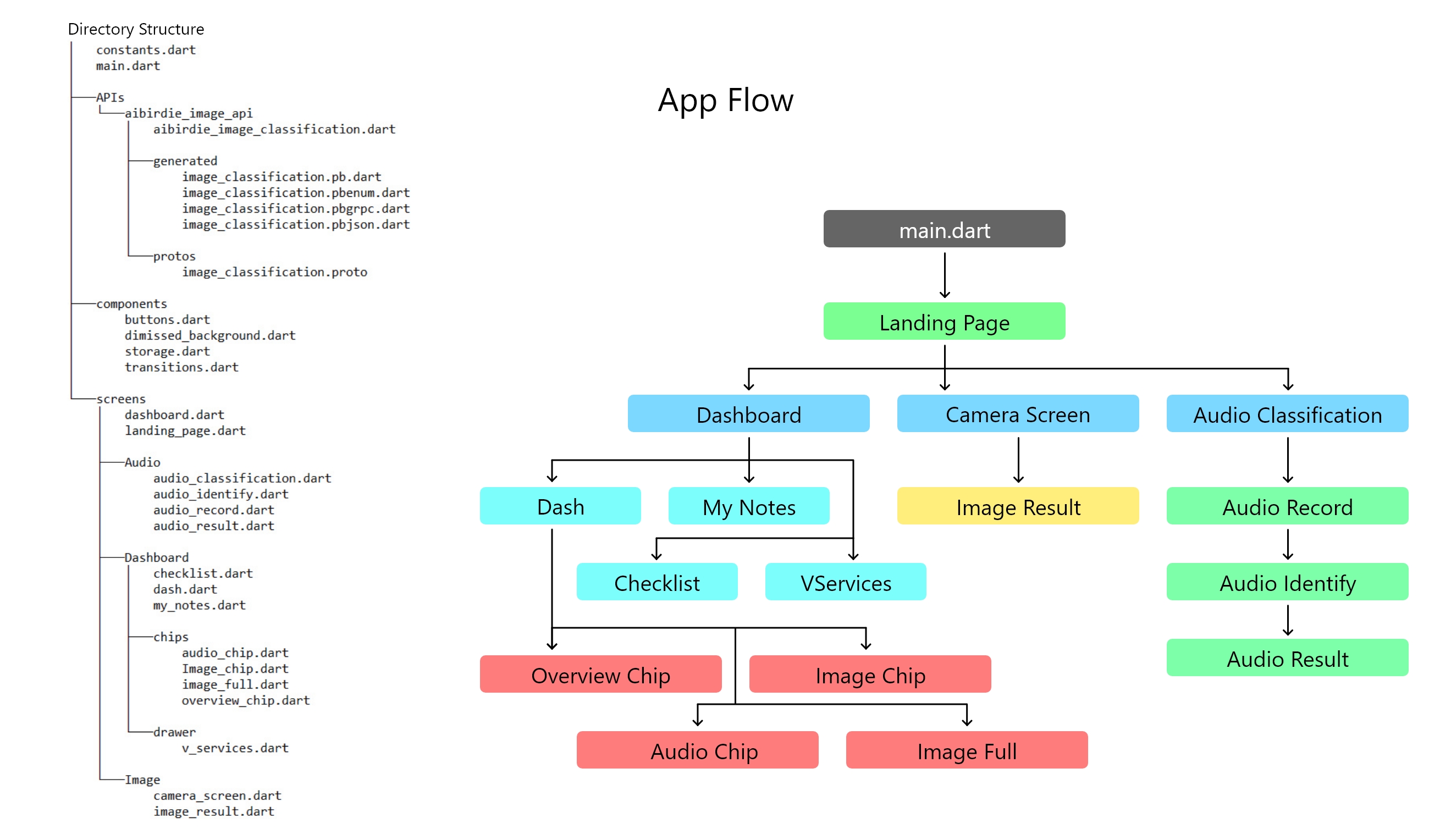
The public repository also links to a demonstration video. There is something useful about that combination: code, an explanation of the application and a way to watch it. Each answers a different question. The code exposes construction. The diagram exposes organization. A demonstration helps a viewer follow the intended experience. Together, they give the student project a shape beyond the sentence that announces its award.
A road, a rectangle, a percentage
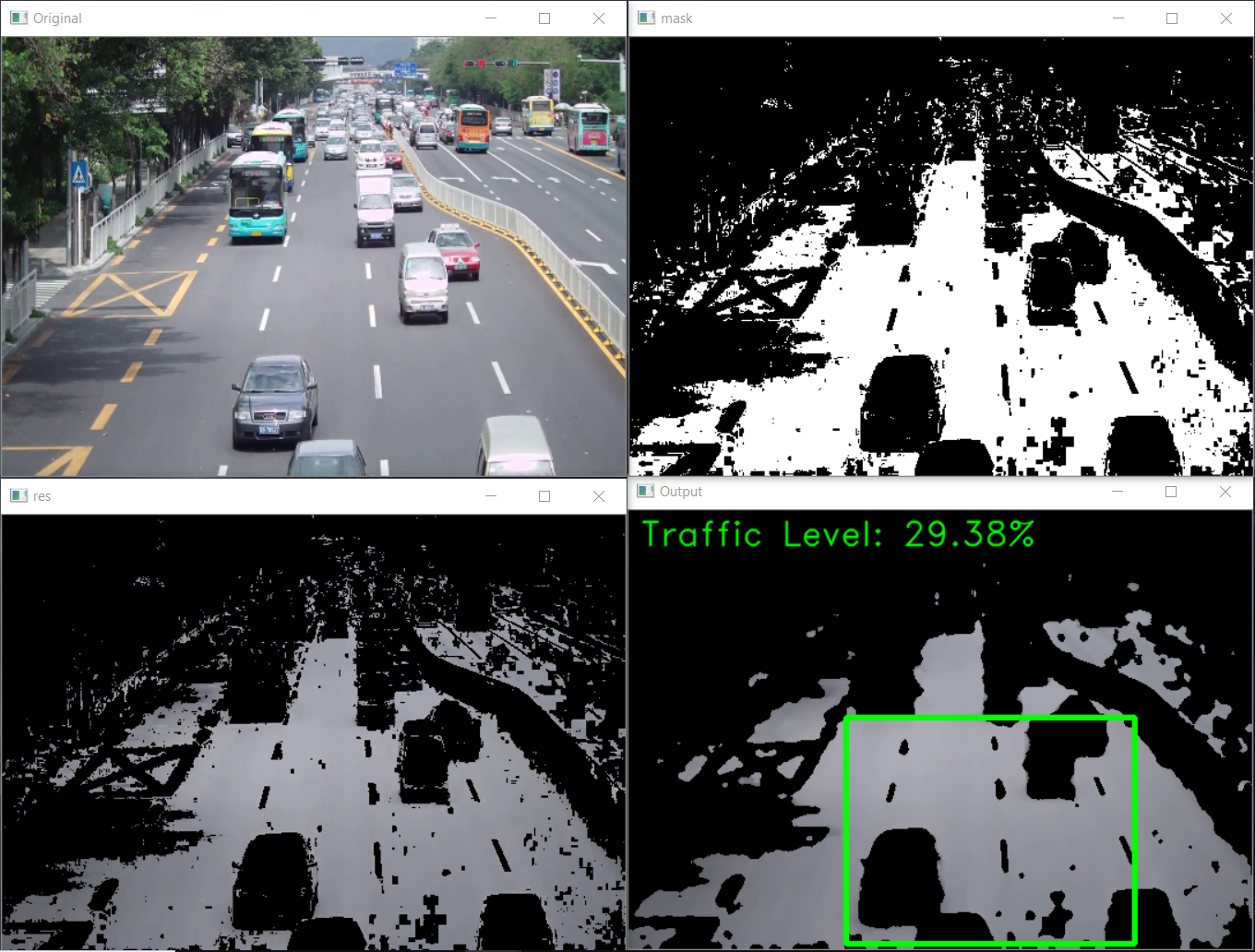
One of Sonani’s earlier projects took a more stripped-down route. Traffic-Detection, published in 2019, used Python and OpenCV. Its explanation describes calculating the amount of road color within a selected area and using that to display a traffic percentage. The accompanying screenshot places the original road scene beside processed masks. A green rectangle marks the area being examined, while a number appears above it.
The image has the agreeable lack of ceremony of an engineering experiment. Buses and cars fill one window. Black-and-white shapes fill another. The displayed traffic level is 29.38 percent in that particular example. It is a demonstration output, tied to the pictured scene and the project’s method. What makes the image interesting is the visible transformation: a familiar street becomes a set of pixels, then a measurement someone can read.
A separate application from the same period addressed a question familiar to students: what class is happening now? Live-Time-Table supplied a lecture’s subject and professor, with remarks. It also allowed lecture details to be edited with valid credentials. The idea has an almost comic economy. After all the discussion about what software might someday understand, here was an application prepared to tell you whose lecture you were supposed to be attending.
These projects work at different levels of complexity, but their inputs and outputs are unusually legible. A road image goes in; a traffic percentage comes out. The time of use helps determine a lecture; subject and professor appear. The bird application takes a picture or a sound and offers an identification. That clarity gives a reader a way into Sonani’s work without needing to know the programming languages first.
The offer, and the question that followed
In 2021, Sonani publicly reported receiving admission to Dalhousie University’s Master of Applied Computer Science program. He was waiting for a response from Carleton University’s Master of Computer Science program and asked other applicants whether he should wait or proceed with Dalhousie. He included his academic score and English-language test result. It was the sort of practical question that appears before a career acquires a tidy retrospective outline.
“Should I wait for Carleton’s response or go with the Dalhousie?”
Jay Sonani, in his public university-admission discussion
The question leaves the decision open at that moment. Later work supplies a concrete next chapter: Sonani is named among the authors of Serverless B&B, a Dalhousie group project dated May 2022. The team included Mugdha Anil Agharkar, Ridham Ghanshyambhai Kathiriya, Vivekkumar Patel, Rahul Kherajani and Pankti Vyas. The project documentation lists a code repository and a deployment, placing him within another group building an application together.
There is a useful change of scale here. AI-Birdie brought several kinds of data into a mobile experience. Serverless B&B sat within a cloud-computing course project. Sonani’s Dalhousie study spanned 2021 to 2023. The sequence puts student software, postgraduate work and team delivery in the same career, without requiring a dramatic conversion scene. The evidence is quieter: another application, another group, another environment in which the parts have to meet.
Lecture timetable
Special Jury Award
Dalhousie team project
LLM Voice API
The useful honesty of an unfinished proxy
In 2025, Sonani published an HTTP reverse proxy written in Go. A reverse proxy sits between a client and a backend server, passing requests through and returning responses. His project included logging, caching and error handling. He used an existing demonstration backend, allowing the assessment to concentrate on the proxy itself. The project separated configuration, helpers, middleware and proxy logic into different packages.
Its documentation is particularly candid about how it was made. Sonani lists YouTube and image searches among his learning resources, as well as ChatGPT, Perplexity and Grok. He names Cursor as a development aid, Postman for testing requests and Excalidraw for the architecture diagram. Those entries describe a working process with several tools and several kinds of assistance. They also make the process available for scrutiny.
He records the project’s limitations with similar directness. Authentication, load balancing, rate limiting and HTTPS support were among the missing pieces. He also identifies the proxy itself as a single point of failure. The proposed next steps address those gaps. This is the language of an assessment with a defined scope: here is what was implemented, here is what remains, here is how the design might be extended.
That account makes the project more readable. A short feature list alone would leave a reader to imagine its boundaries. The explanation supplies them. Logging helps expose incoming requests. Caching can reduce repeated trips to the backend. More instances would require choices about distribution and coordination. The proxy is a modest application, but its documentation opens the door to the larger questions it would encounter if it grew.
The details also make a distinction between a feature and a plan. Redis caching appears in the implemented design; load balancing appears in the discussion of expansion. Keeping those apart helps anyone reading the project understand what they could try today and what would require further work. Sonani’s explanation gives the assessment that practical boundary. It is easy to write a list of technologies. Describing why an existing backend was sufficient, where middleware belongs and what happens when a proxy fails takes the reader closer to the decisions behind the list.
How playful should a brand be?
Another 2025 project examines voice in the editorial sense of the word. Sonani’s LLM Voice API is a FastAPI service for generating and managing a brand’s language profile. It describes tone along five dimensions: warmth, seriousness, technicality, formality and playfulness. A brand can sound approachable, formal, detailed or humorous in different combinations. The project turns those editorial qualities into something an application can store and evaluate.
FIVE DIMENSIONS / LLM VOICE API
The API’s tone dimensions, shown without invented scores.
The service can generate profiles from website content and writing samples. It retains versions and evaluates text against a specified version. That version history is a practical detail. If a brand changes its tone, the application can distinguish one profile from another rather than quietly replacing the old reference. Evaluation then has an identifiable target. For anyone who has heard “make it sound more like us,” the attraction is understandable.
The project includes a Cohere provider and a deterministic stub for testing. Its documentation describes database migrations, API endpoints and unit and integration tests. Those are the supporting mechanisms that let a language experiment behave like a service. A sample sentence may be the visible object of attention, while storage, validation and repeatable testing keep the surrounding application coherent.
Sonani announced joining Replicant as a software engineer in 2024, thanking the people involved in interviews and onboarding. His current work at PolyAI places enterprise voice agents at the center of his professional role. Looking back across the public projects, the bird recording remains a memorable starting point. A sound arrives. Software must decide what to do with it. Between those two events, an engineer has a considerable amount of work to arrange.