Jason Damata’s first memorable television critic was his grandfather. In Boston, Grandpa Rocco watched the Massachusetts legislature and occasionally shouted at the people on screen. The boy beside him could not always follow the proceedings. He could certainly follow the commentary. Rocco’s verdict, delivered at intervals, was economical: “Well then do something, you bums!”
Rocco ran a neighborhood deli near the family’s three-generation home. His grandson remembers television giving him the means to understand legislative procedure, taxes, and the decisions affecting his business. Formal schooling had ended early for Rocco. His education in government continued in front of the set. For a child watching alongside him, public affairs came with a running explanation and very little reverence.
Damata would later work at C-SPAN and write about its founder, Brian Lamb. Looking back in 2019, he treated his grandfather’s viewing habits as evidence of what access could accomplish. Here was a person learning how power worked by being allowed to watch it work. Television could make a citizen more capable, even when the citizen responded by heckling the furniture.
That memory offers a useful entrance to Damata’s subsequent career. The founder and CEO of Fabric Media has worked across communications, social networks, research, and publishing. His jobs concern attention, but the grandfather story concerns understanding. The difference matters whenever a business celebrates the size of its audience before asking what the audience actually took away.
“Well then do something, you bums!”
Grandpa Rocco, as recalled by Jason Damata
A magazine before the marketing
Fabric’s first form was a magazine in 1996. Damata has described gathering poetry, art, and people from college around it. He studied at the University of Denver, where his eventual BA combined journalism and philosophy, with minors in international relations and politics. Someone responsible for approving degree combinations apparently permitted curiosity to have the steering wheel.
The combination makes sense beside his later work. Journalism asks what happened and how to establish it. Philosophy asks what the explanation means and whether its premises survive inspection. A communications business has uses for both, particularly when the customer sells something whose name requires a second conversation.
His early ventures also included a restaurant and a telecommunications policy research firm. These are awkward items to squeeze into a conventional professional origin story. They are rather better preparation for talking to people with different incentives. A restaurant operator, a researcher, and a magazine editor all have to persuade someone else that a thing is worth their time.
Fabric’s business launch dates to 2007; Damata has separately described restarting it as an agency in 2008. Keeping those dates distinct preserves something of the venture’s actual shape. The magazine came first. The communications operation followed. His interest in assembling contributors predates the corporate language used to describe the assembly.
- Poetry, art, a magazineFabric’s college beginnings
- A media business takes shapeFabric’s company launch
- The agency restartDamata’s description of the next chapter
- Ad Age 40 Under 40Recognition for the founder
Learning to ask at C-SPAN
C-SPAN brought Damata into the machinery behind the television he had grown up watching. In his own 2019 account, he placed his employment there between 2001 and 2005. His work included educational programming and travel around the country with cable operators. The experience joined a public purpose to the unglamorous practical work required to keep a media institution reaching people.
Lamb became an enduring mentor. Damata’s affection for him is plain, but the quality he emphasizes is more interesting than a generous introduction or a useful piece of career advice. He remembers Lamb asking questions that helped him work out his own thoughts. Mentorship, in this telling, left room for the younger person to do the thinking.
There is a quiet challenge in that approach for anyone paid to advise executives. Arriving with an answer can be gratifying. Asking a question means risking the discovery that the problem was framed badly. It also means allowing the other person to participate in the answer. Damata’s later work as an interviewer gives that lesson somewhere practical to go.
Several versions of television
The next chapters took him through different ways of getting video and conversation to an audience. He was on the founding team of Fora.TV, the online video venture associated with talks and public ideas. He served as CMO of Bebo and acting CMO of Trendrr, the social analytics company acquired by Twitter. His professional vocabulary expanded with the platforms.
These roles put distribution and measurement next to each other. A social network organizes participation. An analytics company tries to describe what that participation amounts to. For businesses trying to understand television’s relationship with online conversation, the two questions are inseparable: where did people go, and what did they do when they arrived?
Another strand led to explore.org, where Damata helped develop live nature broadcasting and its syndication. The subject matter changed considerably. Think tanks, social conversation, and animals on live cameras do not make an obvious programming bundle. They do reveal the range of audiences a media career can involve once the television set stops being its only destination.
In 2015, Ad Age included him in its 40 Under 40. His LinkedIn entry adds a small joke about having told the truth about his age. The recognition belongs in the chronology; the aside belongs in the portrait. Even a tidy professional credential apparently needs a little room for mischief.
What 72 people can make together
Today, Fabric describes itself as an integrated communications and strategic marketing consortium. The noun is useful. Its team brings together communications specialists, journalists, analysts, and creative practitioners, with people listed in Los Angeles, Denver, Nashville, New York, Madrid, and elsewhere. Damata’s base is Los Angeles. The working network travels further.
His recap of 2023 gives the model some dimensions. He reported that 72 consortium participants collaborated with 37 companies. Those numbers describe that year’s activity, rather than a present-day employee count. The distinction is particularly useful for a business built around a network: the people involved in making something can outnumber those on a conventional staff list.
The same recap described more than 200 videos, 42 special reports, and 47 newsletters. These outputs require different skills, deadlines, and kinds of judgment. A video needs a conversation worth watching. A report needs a question worth investigating. A newsletter needs a reason to return. Producing all three makes the word communications carry a fairly heavy bag.
Fabric’s work can also become literal production. The credits for VIZIO’s extended-reality stage project list Damata as executive producer, with Geoff Katz as creative director and editor and Mike Gasbara directing emerging technologies. The project used virtual environments and camera-tracking systems. Beneath the technology sits a familiar production problem: several specialties have to agree on what the audience will see.
Historical activity reported by Damata in his 2023 recap.
The publisher inside the agency
Damata is also a co-owner and publisher of TVREV. Alongside its articles, the business provides industry analysis, workshops, and reports. The Measure gives Fabric another publishing operation focused on data and insight. These are places where the questions raised in client work can become part of a wider industry conversation.
In July 2025, The Measure identified Damata as its editor-in-chief when he interviewed iSpot’s Emily Wood. The discussion moved from her career into programmatic partnerships, the scale of measurement, and the growing emphasis on business outcomes. He also asked about a favorite advertisement and the work of maintaining partnerships. The commercial system and the people inside it occupied the same conversation.
A separate 2025 appearance at Circana’s Growth Summit placed him alongside iSpot’s Lindsey Woodland and Paramount’s Travis Scoles. In March 2026, at Marketecture Live III, he joined conversations about connected-TV measurement and spoke with Tubefilter co-founder Josh Cohen about social video. The recurring subject is how to describe television when the old boundaries around it keep moving.
That is a demanding subject for a publisher because the terms themselves invite disagreement. An audience, an impression, and an outcome answer different questions. Bringing them into one discussion does not make them interchangeable. Damata’s career has given him repeated occasions to stand between people who need each other’s information and do not necessarily begin with each other’s language.
Cannes, with the questions handed over
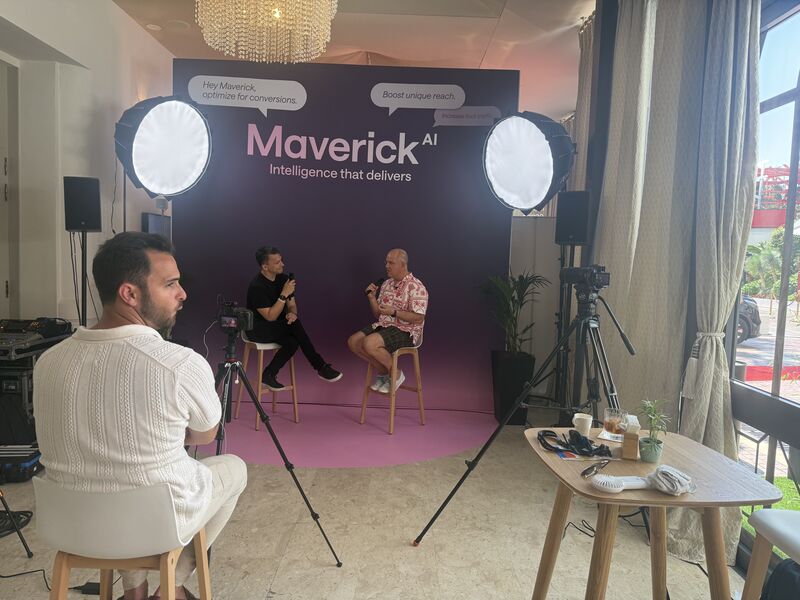
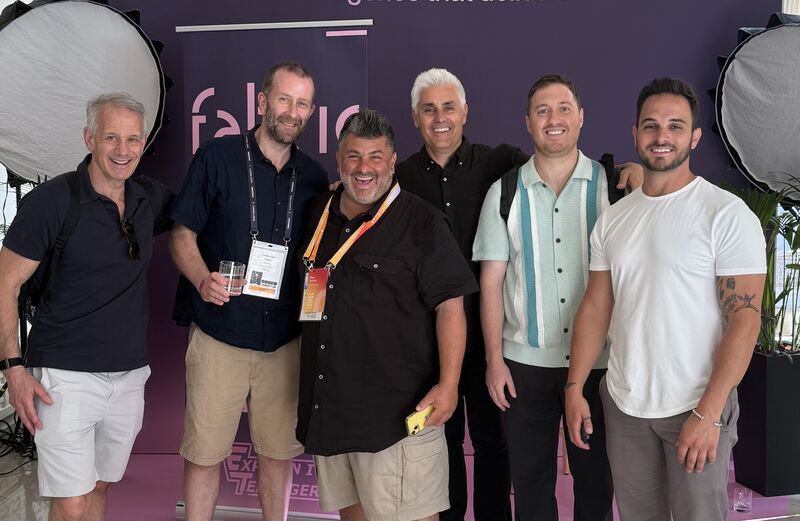
At Cannes in 2025, Fabric’s innovation studio supplied a physical setting for those conversations. Damata’s account of the project described more than 50 sessions, with partners and collaborators including Madhive, Alan Wolk, Jeremy Bloom, and others. He also admitted that the work meant missing parties. The advertising industry had somehow found a way to turn the Riviera into a production schedule.
One part of the effort handed the microphone to younger interviewers. Damata reported that eight teenagers made 37 interviews through Explain It to a Teenager. His son Rio participated. The project gave inexperienced questioners access to experienced executives, with a premise that discouraged the guests from hiding entirely inside familiar professional shorthand.
In one published interview, Rio asked Ad Age’s Jack Neff about trade journalism. TVREV’s credits named Rio as reporter, Guy Piaquadio as videographer, and Jason Damata as producer and publisher. It is a compact picture of the division of labor: the parent helps make the encounter possible, while the teenager gets to ask the questions.
There is an appealing consistency here with the lesson Damata took from Lamb. Experience can be useful without occupying every available minute of the conversation. A good introduction, a working camera, and the freedom to ask something basic may give a younger person more than another speech about the importance of networking.
The room still matters
Damata’s interest in the future of media includes a concern about what happens to shared experience. In a conversation with Tim Hanlon on In the Vicinity, he discussed local information, community, and the difficulty of sustaining common reference points as audiences separate. He treated the weakening of local news as a problem for the places people live, beyond its implications for an advertising plan.
His essay about the distraction economy makes a related argument: personalized feeds create extraordinary possibilities for expression while making a shared account of events harder to maintain. He points toward direct reporting, longer conversations, and support for information people trust. These are his judgments about the media system, informed by a career spent helping businesses operate within it.
The grandfather in Boston, the college contributors, the cable operators, and the teenagers at Cannes belong to different chapters. Put beside one another, they suggest why Damata keeps making publications and arranging conversations. Someone needs access. Someone else has an explanation. Before either can be useful, there has to be a place where they meet.
Rocco had a television and a forceful request that somebody get on with it. His grandson has a consortium, two publishing operations, and a longer list of people to gather. The practical task remains recognizable: open the room, make the exchange possible, and give the people inside something worth talking about.