Jason Barker went to Tennessee to answer questions. The occasion was an episode of CEO Sessions, the video series he had begun for employees of ABA Centers. He described the reason plainly: a company growing quickly leaves people wondering how it arrived at this point, and what comes next. A chief executive can send a memo. Barker also put himself in the room.
The photograph from that visit offers a pleasingly unceremonious version of executive life. Barker stands in a blue suit, smiling, his glasses in his hand. Behind him are bright floor tiles and climbing equipment. There is a microphone clipped to his jacket. The setting supplies its own reminder that a business has places where actual work happens, well beyond the place where its organizational chart is drawn.
Today, Barker is Chief Executive Officer of ICBD in Fort Lauderdale. His working life has taken him through accounting, regional leadership, national operations, and the CEO’s office. The thread connecting those assignments is the practical business of making an organization function across more people and places. The Tennessee visit makes that thread visible: expansion creates questions, and somebody with authority has to hear them.
An operator before the handoff
Barker’s route into executive leadership began with a business education. His public career history lists a bachelor’s degree in business administration, with an accounting focus, from the University of Washington’s Foster School of Business. Later came a master’s degree at the University of Minnesota-Twin Cities, completed during 2012-2014. By then he had already been a chief executive. His education and career overlapped; learning continued after the title had arrived.
Earlier assignments included leading St. Mary Medical Center and St. Vincent in Billings, Montana. He subsequently held the presidency of CareMore’s plan business and the CEO position at Prospect Medical Systems. These were different organizations, with different structures and responsibilities. Read in sequence, they form a career spent moving between financial responsibility and the task of running an enterprise. There is a certain usefulness in having occupied both sides of the budget conversation.
Accounting gives a manager a way to inspect a promise. What resources will it take? When will the expense arrive? Who carries responsibility if the numbers fail to match the plan? These are ordinary operating questions. Barker’s background places them alongside the questions that come with managing teams. The combination helps explain the kind of experience he brought to his later assignments, without requiring a mythology of the born chief executive.
A bigger map, a different job
In 2016, ChenMed brought Barker into its Florida leadership. The appointment emphasized collaboration, growth opportunities, and relationships across its operating teams. He arrived after the Prospect and CareMore roles. South Florida became the base for another stage of his career, this time inside an organization where responsibility could stretch from a local market to a national network.
The next change was announced in December 2019. Barker would become Chief Operating Officer on January 1, 2020. ChenMed then had nearly 80 centers, 19 markets, and three regions. His promotion extended a paired leadership model to the executive level, with Barker working alongside Gordon Chen and reporting to CEO Christopher Chen. Responsibility had a structure, rather than depending on one executive’s ability to be everywhere.
The promotion also recognized work that rarely makes for a glamorous portrait: strengthening operating and transportation functions, improving leadership training, and developing relationships with colleagues. Transportation is a useful detail. It puts the scale of an enterprise into everyday terms. A business can have a persuasive strategy and still depend on whether the arrangements supporting its daily work actually hold together.
A regional leader can learn a place through repeated contact. A national operations executive has to make that knowledge useful to people in other places. Training, responsibility, and working relationships become ways to carry judgment across distance. Barker’s assignment grew in precisely that direction. The map expanded; the job increasingly involved helping other leaders make decisions without having to wait for him.
A career in three handoffs
- 2016Florida market leadership
ChenMed - 2020National operations
ChenMed COO - 2024Executive leadership
ABA Centers CEO
The founder steps aside
In September 2024, Barker became CEO of ABA Centers. Christopher Barnett, who had founded the company in December 2020, moved into the chairman’s role. The business had already reached No. 5 on that year’s Inc. 5000. Its expansion was underway before Barker took charge. That chronology matters: he arrived to lead the next phase of a company whose first chapter belonged to its founder and existing team.
Barnett made the handoff part of his own argument about entrepreneurship. He wanted the business to move beyond dependence on its founder. Appointing an experienced executive was an organizational decision with a personal consequence: the founder would no longer run daily management. The September announcement placed Barker’s operating experience at the center of that transition.
Barker described his task as putting the infrastructure in place to sustain growth. It is a less flamboyant ambition than opening another location, and potentially a more demanding one. Infrastructure, in this context, means the arrangements that allow people to do their jobs as the company gets larger. A founder’s early decisions have to become responsibilities that others can understand and carry.
There is a familiar tension in that handoff. The business needs enough continuity to preserve the reason people joined it, and enough organizational change to support a different scale. Barker had worked inside large networks. Barnett had built this particular company. The chairman-and-CEO arrangement brought those experiences together while assigning daily executive responsibility to Barker. The next chapter would require more than changing the name at the top of a presentation.
The CEO takes questions
By July 2025, Barker was using CEO Sessions to explain operations and future plans to employees. His Tennessee visit brought the format into an in-person conversation. The idea acknowledges something easily overlooked in an expanding company: employees can see change around them while still being uncertain about the reasoning behind it. A growing map does not explain itself.
The format has an advantage over a polished announcement. Questions begin with what employees want to understand. The CEO still supplies the answer, but the starting point moves closer to the team. Recording the conversation gives it a life beyond the room. Colleagues elsewhere can hear the explanation, rather than receiving a version that has passed through several people.
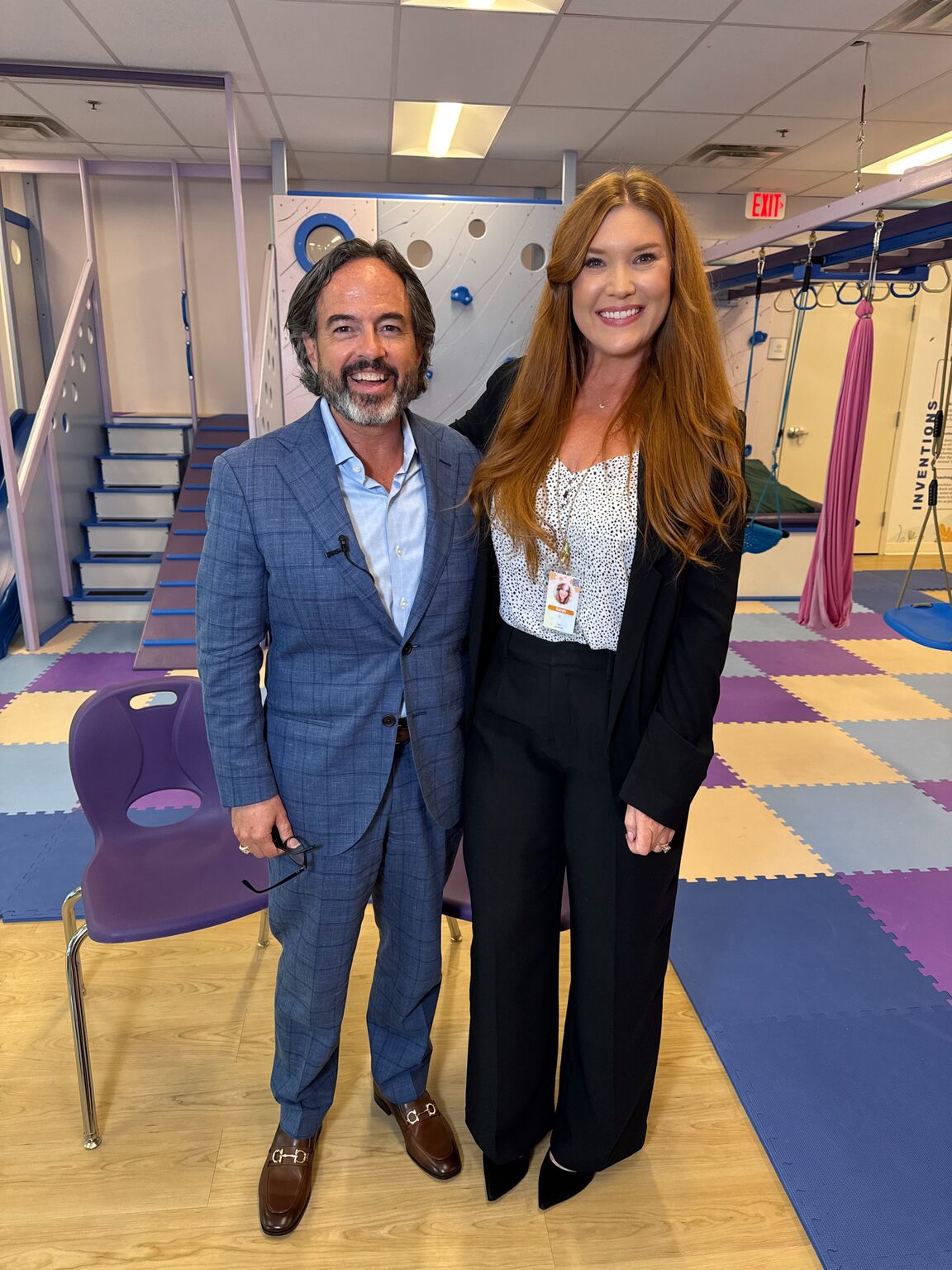
The suit meets the day job. Barker, left, on a team visit for CEO Sessions. Photograph shared by Jason Barker.
Other people’s next chapter
Another part of Barker’s public story concerns employees receiving help to continue their education. He celebrated the inaugural cohort of scholarship recipients graduating from Temple University’s master’s program, describing a company-funded route through graduate study. His account made room for the people who had supported the program: Quatiba Davis, Tiffany Hodges, Jessica Wooton, and the Temple team. The graduation post reads as a collective milestone.
The distinction between recruiting experience and helping employees acquire it is consequential. One fills a present vacancy. The other makes an investment whose usefulness extends beyond the current week’s staffing requirements. A graduation is a tangible point in that process. People who began as employees now have another qualification and another set of possibilities. Their advancement becomes part of the company’s operating story.
For Barker, who completed graduate education after reaching executive leadership, that milestone sits comfortably within his own chronology. His career includes both formal study and increasingly broad assignments. The employee program adds other people’s development to the picture. An executive profile can become crowded with titles; here, some of its substance lies in the names he chose to thank.
Rankings have calendars
During Barker’s tenure, ABA Centers reached No. 1 on the Financial Times’ Americas growth ranking in 2025. In April 2026, it announced a second appearance, at No. 5 overall, with a reported compound annual growth rate of 328.3 percent. The announcement described investment in organizational infrastructure and employees as part of a more durable phase of expansion. Those are company results, built through the work of many people.
ABA Centers’ overall positions. Rankings describe different measurement periods; they are not a score of the CEO’s individual performance.
The chronology gives these numbers their proper place. The company’s 2024 Inc. debut preceded Barker’s appointment. Later lists cover periods that can also cross leadership changes. A ranking can establish that a business expanded rapidly. It cannot distribute every part of that growth among the founder, a new CEO, and the employees carrying out the work. The calendar is a useful antidote to the temptation to make one person stand for an entire company.
The work beyond the chair
At ICBD, Barker now sits within a leadership team that includes Barnett as founder and chairman, alongside executives responsible for finance, operations, legal affairs, technology, growth, and people. The organization puts him at the head of a portfolio rather than merely one operating company. His current role extends the scope of a career already accustomed to multiple layers of responsibility.
In a March 2026 conversation with Timothy Zercher, Barker returned to the responsibility that comes with leadership. “Leadership missed something. And we have to own that.” The sentence leaves little room for a chief executive to take the applause and pass along the difficulty. He also discussed the need for consistent leadership across a dispersed organization. Distance, in his account, makes the work of management more demanding.
“Leadership missed something.
Jason Barker · March 2026
And we have to own that.”
Seen from the CEO’s chair, expansion means more places, more employees, and more decisions. Seen from the Tennessee room, it means having a question and getting the chance to ask it. Barker’s career connects those views through the work of operations. The microphone on his jacket is a small detail, but an apt one: after all the assignments and promotions, there remains the business of explaining what happens next.