In 2001, a collection of B-sides, covers and stray recordings by The Get Up Kids arrived under the title Eudora. The liner-note logic belonged to independent music: gather the fragments, sequence them carefully, and give fans a coherent object worth keeping. James Tweedy was credited as the compiler. More than two decades later, he is doing a larger version of that work at Trinity Western University. The fragments now include student ambitions, faculty scholarship, institutional history, faith, campus life and the nervous calculations of families choosing a university. His job is to help those pieces sound like one institution without sanding away their differences.
Tweedy is Trinity Western's vice president of Marketing and Communications and chief marketing officer. The title places him at the executive table, reporting to the president and carrying responsibility for the university's brand, institutional communications, enrolment and advancement marketing, creative services, digital platforms, events and productions. The more revealing word in the university's description of his role is steward. A steward does not invent the thing from nothing. A steward listens for what is already valuable, makes it legible, and leaves it stronger than he found it.
That distinction fits the public sentence Tweedy uses to introduce himself: “I love helping people and organizations become who they were created to be.” It is warmer than the usual executive inventory of growth, transformation and results. It also sets a demanding standard. Helping an organization become itself requires deciding which inherited ideas deserve protection, which habits have become noise, and how a promise can survive contact with a website, an admissions campaign and a thousand daily decisions.
The useful education of a record label
Before the university chapter, Tweedy accumulated more than two decades of experience across entertainment, consulting and consumer products. Public traces from the early 2000s put him in the independent-record ecosystem around Vagrant Records. He received photography credit on a Vagrant compilation and was listed as a label contact in contemporary music coverage. Former colleagues later described him as a marketing director who helped execute plans despite obstacles and contributed to Vagrant's growth. Another credited him with helping turn a side business of Crank! Records into a standalone company.
Record labels are useful schools for marketers because indifference is immediate. A fan will not care about the internal complexity behind an album release. The songs, the sleeve, the show, the recommendation from a friend and the feeling of joining a scene either add up or they do not. There is no committee language sturdy enough to rescue an artist who does not connect.
Higher education operates on a different scale and with higher stakes, but it faces the same test of coherence. A university can list programs, research grants, athletics, clubs and facilities. Prospective students are still asking a more intimate question: can I picture my life there? The marketer's task is to make the evidence answer without pretending the choice is simple.
A vision needs a voice
Tweedy began teaching marketing courses in Trinity Western's School of Business in 2017. Around 2018, he moved into the executive director role in Marketing and Communications. He joined the university's Executive Leadership Team in 2020. The sequence matters. He was simultaneously close to the classroom, close to the machinery of campaigns, and increasingly close to institutional decisions.
One of those decisions concerned Trinity Western's first institutional vision statement. Tweedy played an integral part in developing it, then faced the harder second act: giving the vision a public expression. A sentence approved in a strategic room may be accurate and still fail to live anywhere. It needs a visual identity, language people can repeat, and encounters that make the promise credible.
The renewal did not emerge from a solitary creative reveal. Tweedy guided an iterative process that sought input from students, parents, donors, alumni, staff, faculty and strategic partners. That list is a map of competing expectations. Current students know the lived experience. Parents carry risk and hope. Faculty protect intellectual substance. Donors remember the institution across decades. Staff know where lofty language collides with daily systems.
Inviting all of them does not guarantee agreement. It does something more practical: it gives the brand enough contact with reality to become useful. The resulting identity refocused attention on student experience and the commitment to equip graduates for life. A redesigned institutional website became its central point of engagement, especially for prospective students and their families. Tweedy later described the next phase as continuous optimization, looking for a long-term development partner able to work across Drupal, Acquia, APIs, single sign-on and Salesforce. The language is operational. Launch day was a beginning, not a finish line.
Nine journeys, one invitation
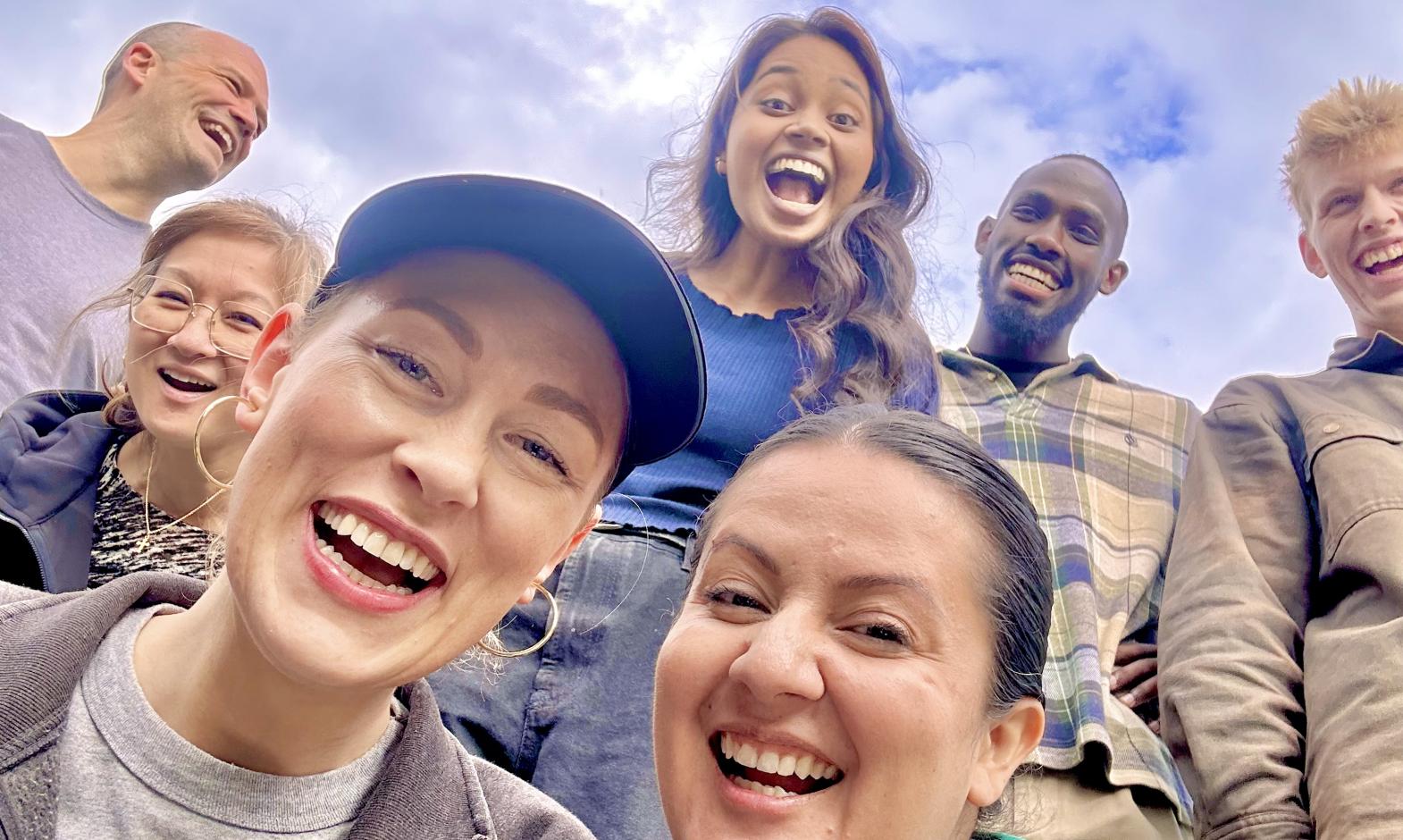
The clearest test of that system arrived with Be the light, the university's most comprehensive multiplatform campaign. Trinity Western partnered with Crew Marketing Partners to develop an enrolment idea that could express the brand promise “Equipped for Life” with emotional force. The selected concept followed nine students from childhood into university, through the influence of teachers and peers, and onward as graduates.
This was a sensible piece of marketing architecture. Universities sell a future that cannot be sampled in advance. A prospective student can tour a campus and compare programs, but the real product is personal change over time. By showing journeys rather than reciting attributes, the campaign made that invisible product visible.
The campaign ran nationally across digital and traditional formats. Trinity Western reported more than 25 million views across its website and digital channels, plus more than 85 million impressions from billboards, transit ads and radio. It contributed to record undergraduate domestic enrolment and the university's highest level of undergraduate enquiries. In 2025, the LIT Advertising Awards gave it platinum in the Integrated Marketing Campaign category. It was also runner-up in the Keystone Awards for Best Higher Ed Marketing Campaign.
Tweedy's own explanation returned to the cultural mood. In a period of contention, division and political polarization, he said, sharing an uplifting message rooted in Jesus' words offered encouragement and positioned the university around hope and positive influence. The point was distinctly Christian, but the campaign mechanics were broadly legible: make the institution's belief concrete through the people living it.
The habit of naming the team
When the award arrived, Tweedy did something revealing. He named the contributors. His public celebration called out Saida, Kelti, Christian, Teresita, Ayomide and Aaron, then thanked partners Braden, Joshua, Daniel and the wider Crew team. The message made his leadership visible without placing him at the center of the frame.
That habit appears elsewhere. When a longtime events leader prepared for a new season, Tweedy publicly praised the colleague's vision and the team assembled around it. In a testimonial about a two-day strengths-based leadership workshop, Tweedy emphasized the shared language it gave his group and the deeper understanding of each member's gifts. The pattern is consistent with his personal mission: people become more capable when their contribution is seen clearly and connected to a collective purpose.
His reading list offers another glimpse of the operator underneath the storyteller. Asked which books he wished he had found earlier, Tweedy named David Allen's Getting Things Done, Peter Drucker's The Effective Executive and Andy Grove's High Output Management, with Clayton Christensen's Competing Against Luck as a bonus. The shelf moves from personal focus to executive priorities, production systems and the progress customers are trying to make. It is almost a compact syllabus for turning intention into repeatable work.
At Trinity Western, that operating range extends beyond marketing. Tweedy participated in the team that developed TWU 2030: Every Graduate Equipped, launched in 2023. He serves on a standing committee that advises the Board of Governors on recruiting, admissions, marketing and communications. He completed an MBA at the university that same year and earned a Prosci change-practitioner certification in 2024. He remains an instructor as well as an executive.
Belonging is the distribution
There is a temptation to read Tweedy's career as a leap from a culturally lively business into an institutionally serious one. The more interesting reading is continuity. Independent music taught him to recognize communities built through symbols, stories and repeated participation. A Christian university asks him to steward a community with older commitments, more constituencies and consequences measured across a graduate's life.
The work is not finished when a campaign wins or a site launches. A university brand is tested when an admissions email lands, when a faculty member teaches, when a student asks for help, and when an alumnus explains the place years later. Marketing can coordinate those signals, but it cannot manufacture their truth. Tweedy's collaborative process acknowledges the limit. The strongest story is assembled with the people who must live inside it.
That may be why the line from Eudora to Be the light feels less surprising the longer one looks. Both projects gather distinct voices, arrange them with care and offer them to a community. The format changes. The wager stays the same: if people recognize something honest in the sequence, they will carry it forward.