James Truchard chose a patch of bare rock. In 1995, while looking for a new home, the cofounder of National Instruments settled on a Hill Country lot that would require considerable persuasion before it resembled a garden. He added soil. He built with stone. He learned which plants liked which places. A person accustomed to making computers cooperate with scientific instruments had found another collection of things with opinions of their own.
Years later, walking through that garden, he described a childhood without electricity, when his family grew crops and reused what it could. His shirts had been made from feed sacks. One print, he remembered, featured monkeys. There are many ways to dress for a future in technology. This was an economical one.
Truchard, known around NI as Dr. T, spent four decades running a company concerned with measurement. Yet the time scale he preferred was surprisingly difficult to fit on a dashboard. After taking NI public in 1995, he developed a hundred-year plan. A quarterly earnings call must have felt like a conversation conducted between ticks of a clock.
The garden makes that time horizon easier to understand. You arrange the conditions, observe what happens, and make changes. Growth requires attention long after the satisfying moment of planting. A frost may have its own proposals.
Before the garage, a stubborn connection
Truchard was born in Austin County, Texas, in 1943. At the University of Texas at Austin, he earned a physics bachelor’s degree in 1964, a physics master’s in 1967, and an electrical engineering doctorate in 1974. His studies overlapped with a working life at the university’s Applied Research Laboratories, where he became a research scientist and later a division head.
There, the practical problem involved testing sonar equipment for the U.S. Navy. Computers could collect and analyze measurements, but getting them to communicate with instruments took substantial work. Truchard later recalled one interface that consumed two person-years of effort. That is an expensive conversation for two machines to have.
When the IEEE 488 instrument-connection standard appeared in 1975, he saw an opening. Standard connections could spare engineers the ordeal of rebuilding the same bridge. In 1976, with laboratory colleagues Jeff Kodosky and Bill Nowlin, he founded National Instruments in his garage. The first product connected instruments to a DEC PDP-11 minicomputer through GPIB, the General Purpose Interface Bus.
The garage is the picturesque part. Their working arrangements are more revealing. The founders kept their university jobs while developing the business. Truchard remembered three years of moonlighting before going full time, a period that helped them finance the company themselves. The opportunity had to survive contact with paying customers before it could become anyone’s full-time occupation.
A spreadsheet for the laboratory
The early connection business carried a larger possibility. If a computer could communicate with an instrument, software could help determine what that instrument did. A researcher would have more freedom to choose how to collect, examine, and present measurements, instead of accepting the limits of a fixed front panel.
By 1983, Truchard and Kodosky had a useful example from another profession. Spreadsheets were changing financial analysis. Truchard wanted comparable freedom for people working in test and measurement; Kodosky wanted to invent a programming language. Their ambitions met in LabVIEW, introduced in 1986. Truchard’s economical verdict: “We both got our wish.”
LabVIEW let users construct programs graphically. Icons and connecting wires formed block diagrams; on-screen knobs, graphs, and buttons could become the face of a custom instrument. An engineer could express a measurement process in a form that looked closer to the system being designed. The computer became part of the apparatus, with software providing much of its behavior.
A conceptual view: the engineer defines the instrument’s behavior.
This also changed who could approach the task. Students without extensive programming experience could work with measurement and control systems. The same basic graphical approach could serve a university laboratory and a professional engineering team, giving newcomers a way into work that might otherwise begin with a formidable software barrier.
In his retirement essay, Truchard traced instrumentation through vacuum tubes, transistors, and then software. The Macintosh’s graphical interface had particularly appealed to NI. Its attraction was practical: the screen offered a way to let people manipulate information more directly. A useful interface could free an engineer to spend more time on the experiment.
One hundred years, with annual adjustments
A hundred-year plan sounds suspiciously like a document nobody expects to be around to review. Truchard’s version concerned values rather than a prediction of precisely which hardware would sell in the next century. Integrity, improvement, innovation, and customer satisfaction could remain useful even as the products changed.
NI also used shorter plans: a ten-year direction, then five-year and annual product plans. In 2002, Truchard explained his confidence in that arrangement: “the quarters will work out for themselves.” That confidence had a material test. During the 2001 industry downturn, NI increased research and development spending and hired hundreds of people, including engineers, while revenue fell.
The plan also expressed an attitude toward ownership. NI had grown without venture capital, and the founders retained considerable influence after its stock-market debut. Public trading introduced outside expectations. A statement of enduring values gave employees and investors a clearer account of what management intended to protect.
“the quarters will work out for themselves.”
James Truchard, on NI’s planning horizons, 2002
His business reasoning could be blunt. Profit provided the freedom to choose what to work on. He wanted NI to give engineers and computer scientists careers with room to grow, and to help customers accomplish work in many industries. The appeal of making tools was the reach: other people could use them to solve problems he would never undertake personally.
There was a less formal expression of the same philosophy in office life. During his years as CEO, he wore jeans, drove an old pickup, had no assigned parking space, and worked in a cubicle employees could approach. The nickname Dr. T suited a business whose chief executive had three degrees but apparently little need for a ceremonial distance from his colleagues.
The customer might still be in school
Truchard’s interest in education followed naturally from the product. A tool only helps a student who can get access to it. He established NI’s Academic Relations Program to reduce obstacles to adopting virtual instrumentation in teaching laboratories. LabVIEW-based technology also reached younger children through RoboLab and LEGO Mindstorms robotics kits.
That is a particularly patient form of market development. A child making a robot move has no procurement budget worth discussing. The value lies in an encounter with engineering: something imagined becomes something built, and then something tested. The student gets a reason to return to the problem when the first attempt behaves badly.
In 2013, Truchard contributed $10 million toward UT Austin’s Engineering Education and Research Center. The gift supported a building that would include the National Instruments Student Project Center, with 23,000 square feet for undergraduates to design and build projects such as solar cars, satellites, and robots. He was helping provide the physical room for students to try things.
His connections extended to Rice University, although he had never been a student there. Through NI, he helped provide an early lead gift for its Oshman Engineering Design Kitchen. His support also encompassed OpenStax, equipment, research, and endowed faculty positions. Rice recognized him with its Dean’s Appreciation Award in 2024, an honor for a non-alumnus whose contributions affected the engineering school.
A company can outlive its founder’s job
Truchard retired as president and CEO at the end of 2016; Alex Davern took over on January 1, 2017. He stayed as chairman until September 2018. The distinction matters in a career so closely identified with one institution. The company he had built could continue while his own job changed.
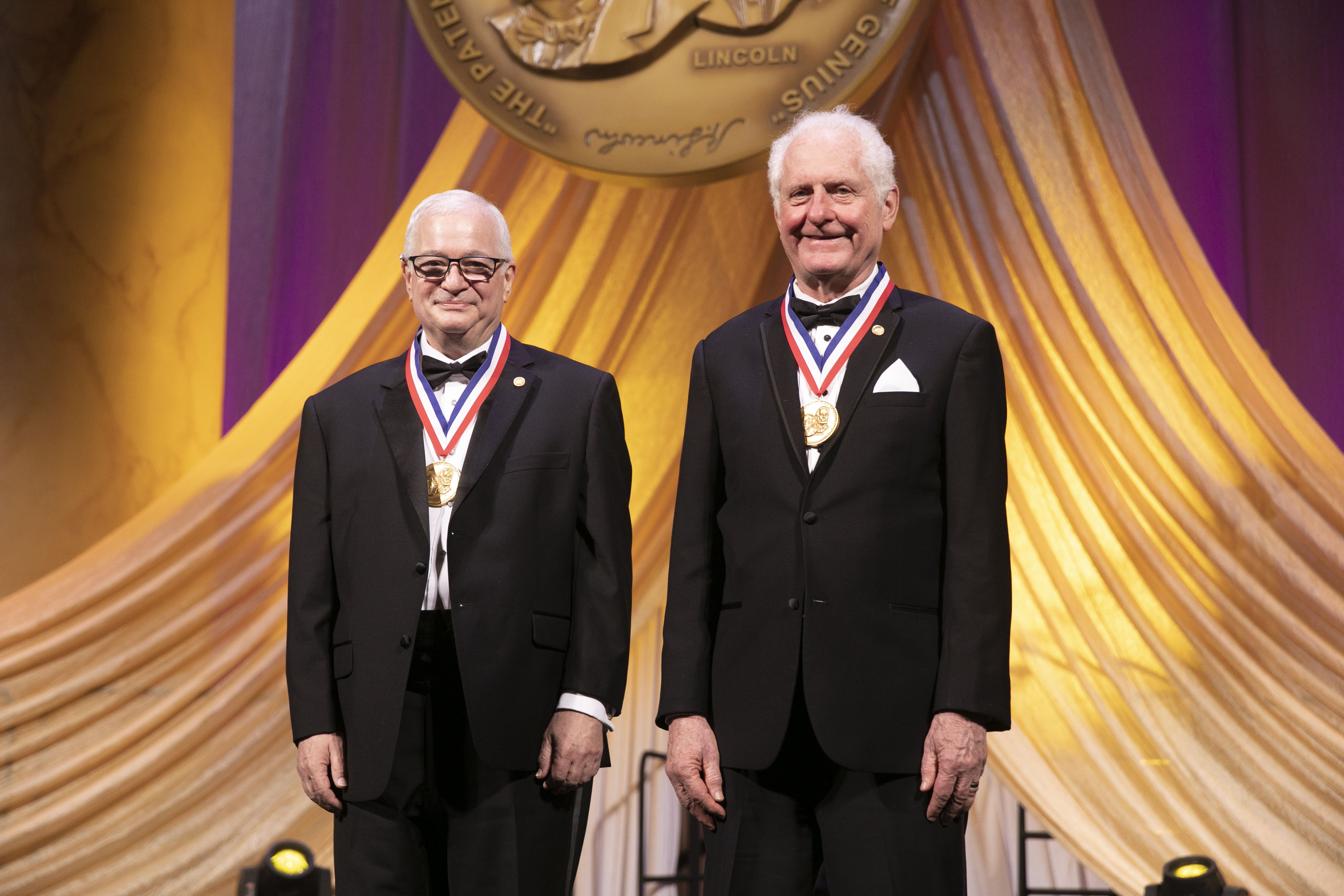
In 2019, he and Kodosky entered the National Inventors Hall of Fame for LabVIEW. The recognition attached their names to an idea that had traveled well beyond the garage: programming a measurement system could be made visual, adaptable, and accessible to the people using it.
NI’s ownership changed, too. Emerson completed its acquisition in October 2023 at an equity value of $8.2 billion. The business remained headquartered in Austin as Emerson’s test and measurement operation. That transaction belongs to the company’s later history; it should not be confused with Truchard’s departure from its leadership years earlier.
In May 2026, Truchard and Kodosky were back among the NI community in Fort Worth for NI Connect. The gathering marked fifty years of NI and forty of LabVIEW. At the Partner Forum, the cofounders received a standing ovation. For a business built around giving other engineers tools, a roomful of people who had used them offered a fairly concrete measure of what had lasted.
The stones can wait
Back in the garden, the systems have more irregular schedules. Rock squirrels carry buckeyes into the walls and, in the process, help plant trees. Armadillos dig up plants. Truchard tolerates them as neighbors, which is a generous policy toward anyone undoing your recent work.
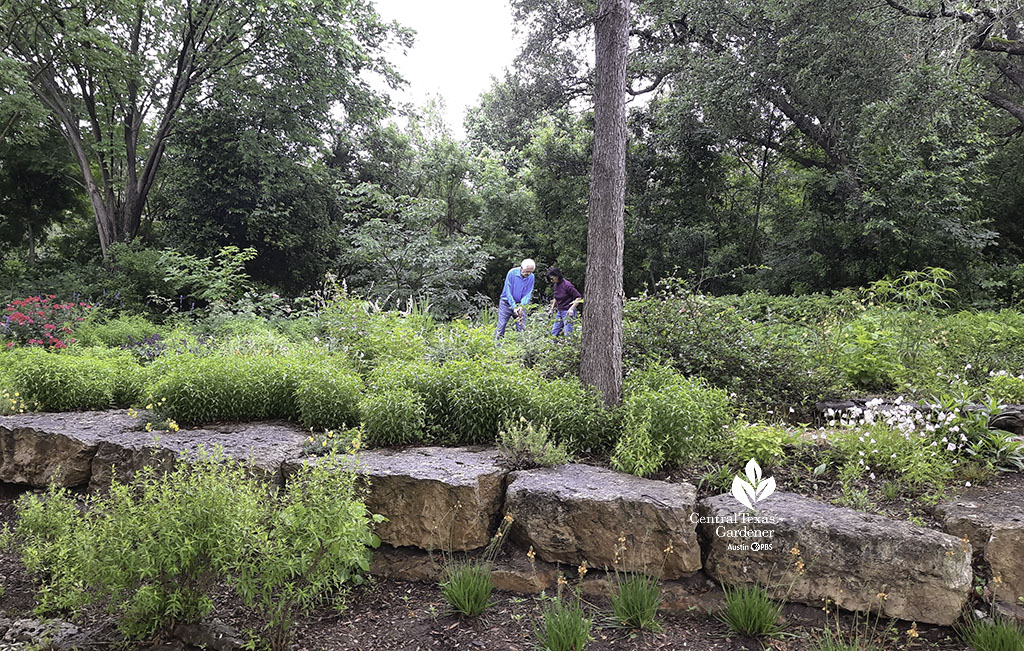
He has photographed the garden extensively and made a book, Memories from a Hill Country Garden - Flowers, Stones, and Critters. Asked about selecting photographs, he described taking roughly 125,000 pictures over a decade. With enough attempts, he reasoned, a good photograph would appear. Even his account of the odds carried a gardener’s patience.
The comparison between company and garden is an interpretation, but Truchard supplies its practical basis. Farming, he says, teaches you to take setbacks in stride. Crops fail; a planting may need doing again. In the garden, plants find their own favorable positions while the gardener learns alongside them. There is planning, and there is the useful evidence of what actually grows.
For all the talk of a century, he leaves room for smaller intervals. A hammock. Hummingbirds. The chance, as he puts it, to “let the world turn on its own for a while.” An engineer who spent decades helping people measure things seems to have found a sensible use for an unmeasured afternoon.