Michael Vilardo graduated from the University of Pennsylvania with baseball still on his mind. He had a degree in philosophy, politics and economics, a record of hitting college pitching, and a plan to keep playing. In January 2015, Purdue announced that his graduate transfer waiver had been approved. He could take management classes and pursue the professional game for another season. An Ivy League diploma was already in the bag. The dream required a different uniform.
The draft never came. That is an awkward opening for a founder’s biography, where the customary arrangement is to make every setback look like a particularly clever appointment with destiny. Vilardo’s sporting ambition deserves to be taken seriously on its own terms. He wanted the job. He had spent years preparing for it. Eventually, he had to choose another kind of work.
Today he is the co-founder and CEO of Subject, which sells digital curriculum and instructional services to schools. He also hosts On The Subject, interviewing people whose lives run through classrooms, playing fields and the choices between them. His first career plan remains unusually relevant to his second: he knows how much a student can want something, and how complicated the route toward it can become.
The timetable was the first opponent
Before Purdue, there had been Richmond, a spell with the Chicago Steel hockey team, and a problem of eligibility. Getting to Penn required an associate degree. Vilardo earned two years of credits in one calendar year at McHenry County College. Later, summer courses and a full fall schedule helped him finish his Penn degree in December 2014.
That chronology carries more weight than the usual list of educational credentials. He was making the calendar accommodate the ambition. Each institution had its own rules; each move required academic work as well as athletic ability. The transfer to Purdue also reflected a specific restriction: graduate students could not compete on Ivy League teams.
At Penn, he led the Ivy League with 55 hits as a freshman in 2013. At Purdue, he played 35 games in 2015 and earned Academic All-Big Ten honors. His roles moved between second base and the outfield. The achievement was real, even though it did not end with the professional contract he wanted.
McHenry County College
University of Pennsylvania
Purdue baseball
His old Purdue questionnaire supplies a smaller, funnier detail. Asked about an unusual baseball moment, he recalled losing a home run when a teammate on first base passed him while going back to tag up. There are elaborate lessons about adapting to circumstances. Baseball can deliver the same instruction while everyone is still running.
A new team, with fewer bats
Vilardo entered startup life through sales and operations at Dispatcher. In his telling, helping the young company raise seed funding introduced him to the pleasure of building something quickly. The business became part of Uber’s freight operation. He subsequently worked on Uber Freight and Uber New Mobility, gaining experience inside businesses still taking shape within a larger company.
There was another enterprise running alongside the day job. HomeTech, his rental business, expanded across six Chicago properties while he was at Uber. He described assembling a team of interns to help operate it. Even the accommodations could be experimental: some guests willingly slept on patios. The phrase “under the stars” does quite a lot of work in the hospitality business.
This was a practical apprenticeship in selling, organizing and getting an operation through the day. It also gave his later founder story some useful texture. Before there were accredited courses and school customers, there were guests, properties and people who needed to know what happened next.
By 2019, he was ready to pursue an MBA. Moving to Los Angeles would change the people around him as much as the subjects on his timetable.
The scholarship that changed his map
The Consortium scholarship that helped him attend UCLA Anderson mattered deeply to Vilardo. He has credited the organization with opening a route beyond the Midwest and described himself as the first in his family to earn a master’s degree. Los Angeles became a place to test businesses and meet collaborators.
One venture, VHomes, turned vacant and distressed motels into weekly and monthly rentals. He developed it with help from Anderson’s venture accelerator and later sold it to a Bay Area rental company. His business-competition practice brought another milestone: a $10,000 Technology Sector Award in UC Davis’s 2020 Big Bang! competition.
Asked what the competition had taught him, he emphasized concise, persuasive pitching. Fundraising, recruiting and everyday negotiations all required it. His advice to aspiring founders was brief enough to remember without taking notes:
“Get started ASAP.”
Michael Vilardo · 2021
At Anderson, he met Felix Ruano through the Riordan Programs and became his mentor and friend. Ruano was developing an education business. Their conversations eventually led to a new venture, with Jon Quiros joining as the technical co-founder. Emile Learning incorporated in October 2020. Ruano was the founding CEO; Vilardo was COO; Quiros was CTO.
The original name came from Rousseau’s Emile, or On Education. A company courting a generation raised on short videos had borrowed its name from an eighteenth-century treatise. Philosophers rarely make the product roadmap, but this one at least made the sign.
What the screen has to earn
Vilardo’s early pitch began with a familiar observation about his prospective customers: teenagers already spent time with sophisticated digital entertainment. In a 2021 interview, he argued that online education needed to offer more than a video meeting and a basic website. Los Angeles, with its production talent, offered a useful place to build the alternative.
The ambition was social as well as commercial. He wanted students to discover interests and possible careers earlier, with access extending beyond the course catalog of their local school. He spoke of education as a route toward financial independence. The work required cameras and software, but the question behind it concerned the choices available to a young person.
Emile became Subject. In the summer of 2021, the founding team brought teachers to Los Angeles to film more than twenty accredited high school classes, including ten AP courses. By 2022, Ruano and Vilardo had been named to Forbes’ 30 Under 30 list in Education.
Their business also had to accommodate the people who buy and administer school courses. Ruano described regulatory barriers and the importance of finding educators already trying to change things. An appealing lesson needs a route into the school timetable. The institutional work sits beside the creative work, whether or not it photographs as well.
Vilardo’s own critique became more specific. In 2022, he described attending seven schools in five years and connected that experience to his interest in access. He said he had been unable to take computer science in his hometown and only encountered the field at his first job. The omission mattered because it had limited what he knew he could pursue.
That is a compelling problem for an education founder to keep returning to. Students cannot evaluate every option if some options never appear in front of them. A broader catalog can introduce a possibility; teachers and students still have to turn that possibility into actual learning.
Back to the ballpark, with a microphone
Vilardo’s public work now includes a steady stream of conversations. On The Subject brings together educators, founders, coaches and athletes. Its description emphasizes youth sports, recruiting, college athletics and life after playing. The subjects fit a host who once organized his education around staying in the game.
The show also gives him room to discuss education beyond a product demonstration. A September 2024 episode with Subject chief of staff Ana Romero ranged across teacher pay, high school curricula and different career paths. The format allows disagreement and digression, two things a course catalog generally has little space for.
In April 2026, Purdue Athletics featured his interview with baseball coach Greg Goff about recruiting and life at Purdue. The former player had returned with a microphone and a different set of responsibilities. His interest in the decisions facing young athletes had survived the end of his own professional ambitions.
Other details keep the executive biography from becoming entirely businesslike. In 2021 he called himself a geography aficionado and a sushi fan, and described exploring Los Angeles neighborhoods by scooter with his fiancée. Maps, food and motion: even his leisure itinerary tended to involve covering ground.
The next season has a different scorecard
In February 2026, Subject announced a $28 million investment led by Vistara Growth. The announcement described nearly 1,000 schools served through about 360 districts and organizations. Its plans included more courses, further platform development and tools supporting teachers and multilingual learners.
Investment led by Vistara Growth to support Subject’s next stage.
For Vilardo, the stated goal remained access to engaging, accredited instruction regardless of a student’s zip code. The scale of the business changes the work required to pursue it. More customers mean more local circumstances, more educators to support and more students whose next step depends on a course being available.
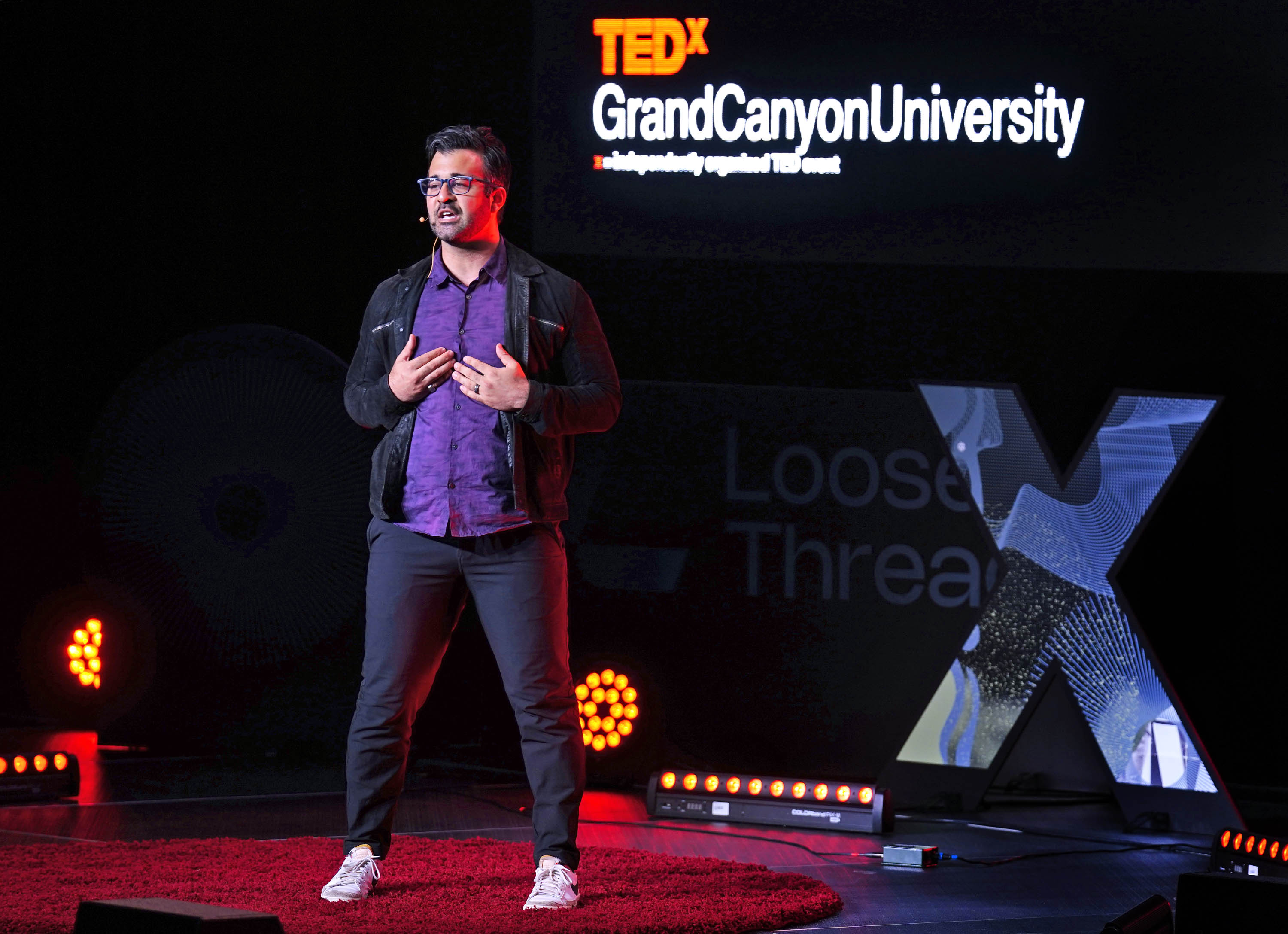
At TEDxGCU in 2025, he made the public case for bringing the appeal of digital storytelling into education. The company he leads now has to translate that argument into the daily experience of schools. A student still needs to understand the lesson, complete the work and earn the credit.
His own route offers a useful reminder of what a credit can mean. An associate degree once opened the next baseball opportunity. A bachelor’s degree made another transfer possible. A scholarship took him to Los Angeles, where he met his co-founders. The destinations changed. Each opening depended on something concrete becoming available at the right time.
Professional baseball never supplied the ending he wanted. There is still plenty to ask a coach about.