On January 1, 1985, James Summerton arrived at a molecular design with one more member in its ring. DNA and RNA use five-membered sugar rings in their backbones. His proposed alternative used six. The difference would be invisible to anyone passing the laboratory door. For Summerton, it was a way around a problem that had been occupying him for weeks: how to make a useful synthetic molecule without making its manufacture prohibitively expensive.
He had been building possible structures with physical molecular models, turning a chemical question into something he could handle. The date gives the episode the air of a New Year's resolution with unusually specific deliverables. Other people might settle for a tidier desk. Summerton had a different backbone in mind.
He called the resulting structural type Morpholino. Its development would involve revisions, collaborators, patents, and years of further work. The six-membered ring supplied a starting point. It also gives us a useful place to begin with Summerton himself: a company founder whose story keeps returning to the material on the bench.
- 1969The sequence-specific idea
- 1980ANTIVIRALS founded
- 1985Morpholino design
- 1997Gene Tools founded
The company he established in 1980, ANTIVIRALS, later became AVI BioPharma and then Sarepta Therapeutics. Those names belong to one corporate line. Summerton's own working life took a turn in 1997, when he left to found Gene Tools. In Philomath, Oregon, he built a business supplying custom-sequence Morpholinos to researchers. The company name is admirably literal.
Arizona, Berkeley, Oregon
Summerton studied chemistry at Northern Arizona University and earned his doctorate in biochemistry at the University of Arizona in 1973. His dissertation examined the compartmentation of ribonucleic acid precursors in E. coli. By then, he had already begun thinking about using a complementary strand to recognize a particular nucleic acid sequence. He dated that idea to 1969, during graduate school.
The underlying attraction was specificity. A sequence could serve as an address. If a designed molecule recognized that address, it could become a way to investigate the work of a particular gene. The eventual research tools would let scientists ask more pointed questions about what happens when a chosen genetic message is blocked.
In 1974, Summerton began full-time experimental work as a postdoctoral fellow at the University of California, Berkeley. Paul Bartlett became an early collaborator. Their names appear together on US Patent 4,123,610, issued on October 31, 1978, for a nucleic-acid crosslinking agent and its use. The patent was assigned to the US government. The paperwork gives an exact date to a collaboration that preceded his first company.
From 1978 to 1980, he held an assistant professorship in biochemistry and biophysics at Oregon State University. In 1980, he founded ANTIVIRALS. The move placed scientific design and business responsibility on the same desk. A molecule now had to be more than an interesting proposal. Someone had to work out how to make it, protect the invention, and organize a company around it.
A useful idea needs other people
There is a temptation to draw scientific careers as a straight line between one person's thought and a finished product. Summerton's career has too many collaborators for that drawing. Bartlett belongs near the beginning. Dwight Weller belongs in the development of Morpholinos. Eugene Stirchak appears with Summerton and Weller on early publications describing the chemistry.
Summerton also placed his early work within a wider history. Groups in Novosibirsk, at Johns Hopkins, and at Harvard were investigating related approaches independently. Acknowledging those parallel efforts makes the story more interesting. Several laboratories were trying to solve a difficult problem, with different structures and different experimental routes.
At Oregon State, Summerton's work reached an undergraduate named Marian Waterman. She spent a year working with him and later remembered his passion and creativity as influences on her own scientific development. She also kept in touch with him after her student days. This is a smaller connection than a patent partnership, but it records something a list of executive titles misses: the experience of being around his work.
Waterman's recollection gives the early Oregon years a human scale. A company can preserve an invention through ownership and production. A laboratory can also send an approach to research out into the world through its students. In Summerton's case, both kinds of connection appear in the record of his career.
“Dr. Summerton’s passion for his work and his creativity were influential.”
Marian Waterman, recalling her student research
The price of an extra corner
The Morpholino design emerged from an unusually practical brief. Summerton wanted starting materials that cost less and assembly chemistry that was easier to carry out. Those demands sat alongside the requirement that the molecule recognize its intended sequence. Cost was part of the design problem from the beginning.
His approach used ribonucleosides as starting materials and transformed their rings into morpholine structures. Changing the backbone also made a different route to joining the subunits available. In plain language, he was reconsidering both the pieces and the way the pieces fitted together. Manufacturing had entered the molecular drawing.
An initial design still left work to do. In 1989, Summerton and Weller developed an improved linkage between the subunits. Their 1997 joint paper, on Morpholino design, preparation, and properties, set out the resulting chemistry. The interval matters. A dated idea can make invention sound punctual; development is rather less considerate of the calendar.
For a researcher using the finished material, the relevant object is a short chain made to a specified sequence. The order of its bases determines the sequence it can recognize. Summerton's contribution involved devising a different supporting structure for that recognizable information. The familiar letters of the genetic alphabet travelled on a different chemical frame.
That distinction helps explain why his work crossed the boundary between chemistry and toolmaking. The purchaser needed a reagent suited to an experiment. Behind that purchase stood decisions about raw materials, synthesis, assembly, and measurement. The invention was buried in the product, doing its job without requiring the customer to repeat the development programme.
Conceptual ring comparison. Shapes show ring size only, not complete chemical structures.
The second company had a narrower name
Summerton's corporate titles changed before his departure. He served as ANTIVIRALS' chairman and chief executive until January 1996, then as president and chief scientific officer. In 1997, Gene Tools became his next venture, a spin-off focused on research quantities of Morpholinos. It was a new business built around a structure he had already spent years developing.
Gene Tools began regularly shipping custom-sequence Morpholinos in 2000. That milestone gives the story a second clock. There is the date an inventor conceives a design, and there is the date customers can reliably order the resulting tool. Fifteen years separated the 1985 design from that regular shipping milestone. A product catalogue can conceal a considerable apprenticeship.
The business also puts a different shape on scientific influence. Researchers elsewhere choose a sequence for their own questions. Gene Tools manufactures the corresponding material. Summerton's invention therefore enters experiments whose detailed purposes need not originate with him. Supplying a tool makes room for other people's curiosity.
The company's current personnel page lists him as manager and chief scientist. It also lists chemistry, biology, production, support, and general management roles. That is the working organization behind the small vial: several kinds of expertise arranged around something too small to inspect by eye.

A notebook deserves a lock
The operational side of Summerton appears particularly clearly in his explanation of laboratory security. He described restricting access to information while patents were being prepared. Different groups had access to different notebooks, and electronic locks controlled entry to rooms and cabinets. The intellectual property had a physical location.
“The research lab books have most of the information,” he explained. It is a practical sentence for anyone inclined to imagine that a scientific business consists entirely of ideas floating above a laboratory bench. Here the information lived in books, and the books required a cupboard with a lock.
His explanation was specific enough to include access by time and place, along with the ability to review who had entered. It suggests an operator paying attention to how work moved through a building. The same career that produced an unfamiliar molecular backbone also required decisions about an employee's key.
There is something appealingly unceremonious about that combination. Patents eventually present an invention in formal public language. Before that, the work has to be recorded, shared with the right people, and kept in order. Summerton's description makes those ordinary arrangements part of the invention story.
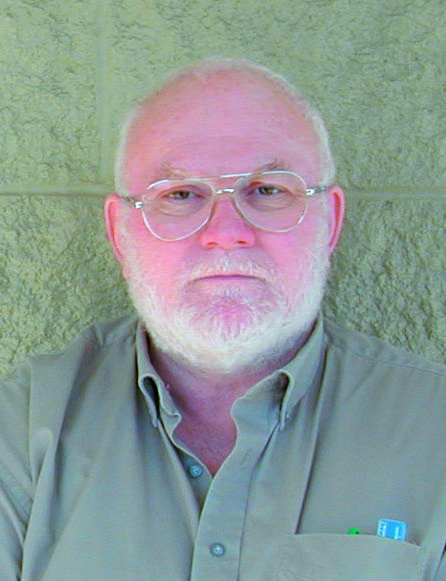
Still working on the way in
Making a molecule left another practical question: how to get it into the cells a researcher wanted to study. Summerton continued working on delivery. In 2005, he published his design for Endo-Porter, a peptide reagent intended to help move Morpholinos and other substances into the cellular interior. It extended his work from the structure of the tool to its use.
A later patent application, published in November 2023, again concerned Morpholinos with increased delivery efficiency. Summerton appeared alongside Yongfu Li, Shan Jiang, and Daniel Bryce Summerton as an inventor. The application supplies a recent, dated example of continued collaborative invention. Its publication records a proposed design; it does not, by itself, establish the outcome of that work.
The span from 1969 to 2023 covers 54 years. Across it, the public milestones keep returning to recognizable questions: can a sequence be addressed, can a structure be assembled, can someone else use it, and can it reach the place where it is needed? Those are practical questions with remarkably long working lives.
Summerton's name connects a university dissertation, a government-assigned patent, the corporate ancestry of Sarepta, and a research-supply company in an Oregon town. The thread running through them is a willingness to keep changing the object until it can be used. On New Year's Day in 1985, that meant giving a ring an extra corner. The rest took considerably longer.