James Murdoch’s first attempt to make something of his own came with vinyl records. In the mid-1990s, after leaving Harvard, he helped start Rawkus with Brian Brater and Jarret Myer. The business was young, the founders were learning, and the surname already required explanation. Asked about his relationship to Rupert Murdoch, James supplied a wonderfully economical answer: “Well, he’s my dad.”
Thirty years later, the question has acquired more expensive surroundings. James has run television businesses across continents, been questioned in Parliament, left the family-controlled publisher’s board and established an investment company. In July 2026, that company, Lupa Systems, completed its acquisition of New York magazine, Vox and the Vox Media Podcast Network. His father once owned the magazine. Even a fresh start can arrive carrying family luggage.
Yet the record label offers another way into the story. Follow Murdoch’s interest in who makes culture, who distributes it and who keeps the rights, and Lupa begins to look less like an assortment of investments. The young partner in a music business and the older investor in comics and journalism are concerned with some of the same commercial questions. The scale has changed considerably. The awkward business of claiming independence has endured.
A surname at the record shop
Born in London in 1972, Murdoch attended Horace Mann in New York before enrolling at Harvard. He studied film and history and drew cartoons for the Lampoon. One strip, Albrecht the Atypical Hun, gave him an outlet for satire before his own family became such dependable material for other people’s entertainment. He left university without a degree in 1995.
Rawkus became associated with artists including Mos Def, Talib Kweli and Company Flow. Its place in hip-hop history belongs to the musicians and to the label’s wider team, rather than to one financier’s biography. For Murdoch, it was an early encounter with a business whose value depended on recognizing work that an audience would care about.
It also exposed the difficulty of separating a venture from its backer’s background. By 2011, the journalist who had interviewed the young record executive was recalling his insistence that Rawkus would remain independent. News Corp had ultimately bought the label. James had joined the family business. An independent beginning could lead back to a familiar address.
Learning the machinery
Murdoch joined News Corporation in 1996. In 2000, he became chairman and chief executive of STAR, the Asian television group. He moved to the top job at British Sky Broadcasting in 2003, serving as CEO until 2007. These were operating jobs: programming, customers, technology, distribution and the everyday obligation to make the numbers work.
At Sky, his tenure included the move into broadband and telephone services. Selling television was becoming a wider relationship with the household. The company could connect the screen, the phone and the internet bill. It was a practical education in how businesses respond when the thing they have been selling becomes part of a larger service.
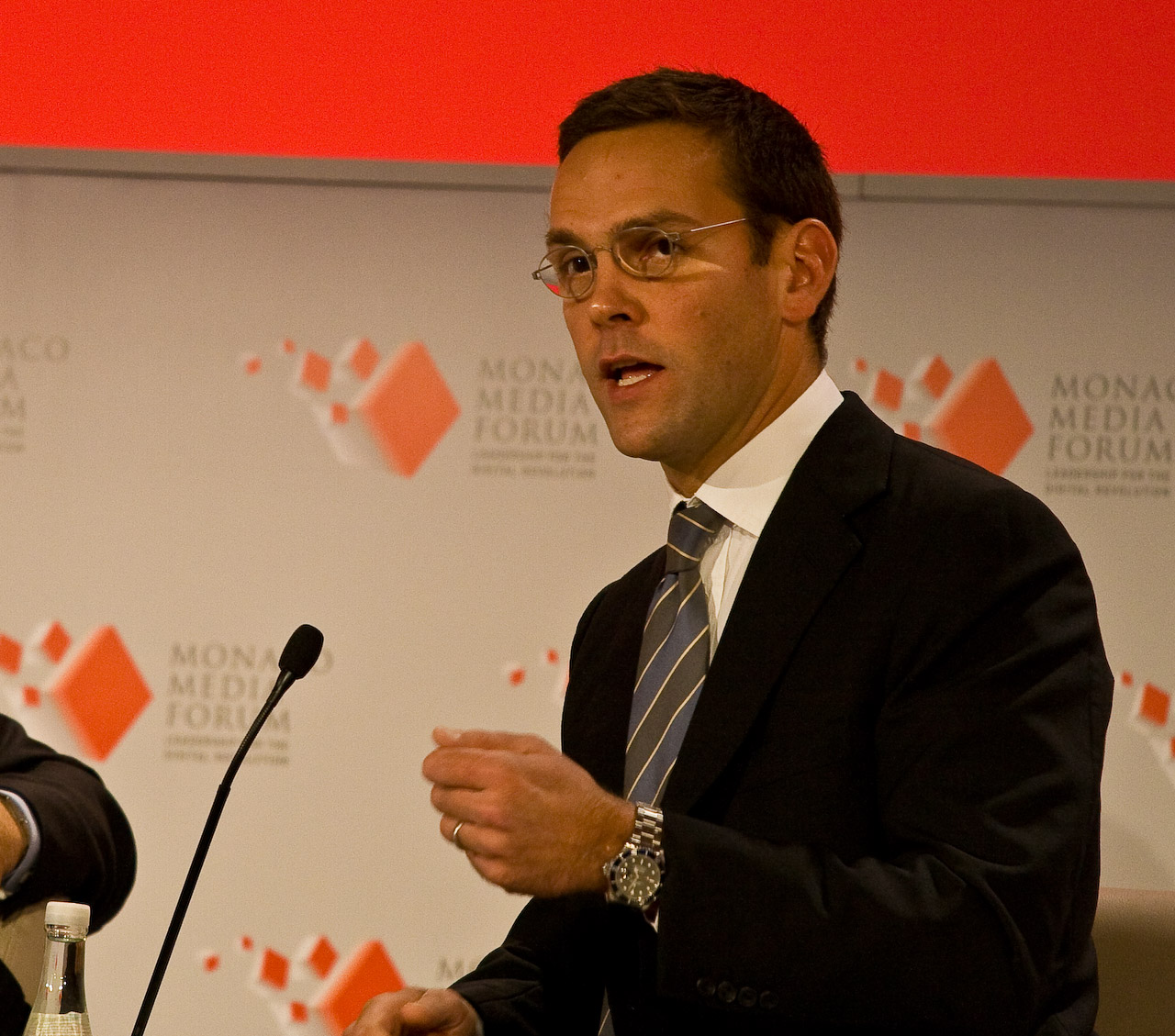

Regional leadership roles followed, then the chief executive position at 21st Century Fox in 2015. He remained there through March 2019, when Disney acquired the company’s major entertainment assets. For all the attention paid to succession, his professional apprenticeship was unusually geographical: Asia, Britain, continental Europe and the United States. He had watched audiences and distribution systems change in more than one market.
Chairman & CEO
CEO
CEO
Founder & CEO
The cost of being in charge
The record cannot be told only through promotions. Murdoch was executive chairman of News International during the period surrounding the News of the World phone-hacking scandal. He appeared before the Commons Culture, Media and Sport Committee in July and November 2011. The newspaper closed that July.
He told the committee that he had not understood the wider extent of hacking until late 2010. Former executives challenged his account of what he had been told. Parliamentary scrutiny criticized failures to investigate and the responsibility of those directing the companies. In April 2012, he stepped down as BSkyB chairman, continuing as a non-executive director.
That chapter matters when assessing his later arguments about responsible media ownership. A career can contain a change of direction without acquiring a clean earlier record. The responsibilities of an owner or executive extend beyond selecting promising businesses. They include asking questions when an answer is inconvenient, investigating wrongdoing and accounting for what happened under the organization’s authority.
Murdoch’s subsequent break with News Corp concerned its editorial content and strategic decisions. He resigned from the board in July 2020. The disagreement was public, but leaving did not remove the earlier chapter from his biography. Anyone considering his present commitments has both periods to examine.
A company of his own
Lupa began in March 2019, before that board resignation. It gave Murdoch a private holding company through which to make investments outside the family-controlled businesses. Based in New York and Mumbai, it brought his operating background into a smaller organization with a wider choice of what to pursue.
His explanation for the move included an unusually distant reference point: what he and his colleagues would want to have done by 2040. In his 2021 APOS keynote, he discussed looking over ten or twenty years, rather than treating the next distribution trend as the entire future. The ambition included emerging Asian markets, new storytelling technologies and live events.
One early investment was Artists, Writers & Artisans, or AWA, the comics publisher and studio founded by former Marvel executives. Comics are relatively compact things to finance. The characters and worlds inside them can have much longer lives, reaching screens, games and merchandise. For an investor who had run an entertainment group, the attraction was readily intelligible.
The more distinctive part was his interest in the terms offered to the people creating that work. He argued that writers and artists should retain more ownership and control as distribution changed. In his formulation, success should leave the author with a continuing interest in what happens to the creation.
“Ultimately, the goal is for the writer and artist to own their work”
James Murdoch, APOS keynote, 2021
Why the room matters
Tribeca adds another dimension. In August 2019, a Lupa-led consortium acquired a majority stake in Tribeca Enterprises, bringing Murdoch into partnership with Jane Rosenthal and Robert De Niro. Tribeca’s activities include a festival, production and work across different forms of storytelling. It gives the portfolio a place where artists can meet an audience in person.
Lupa also invested in MCH Group, the parent of Art Basel, and Murdoch joined its board in December 2020. A fair and a festival make an interesting pair. Both organize attention, but they do it by persuading people to turn up somewhere together. The ticket, the conversation and the encounter with the work are part of the product.
Seen this way, an investment in a cultural gathering sits comfortably beside an investment in a publisher. The publisher develops and distributes work; the event supplies a setting in which it can become a shared experience. That is an interpretation of the portfolio, rather than a promise that every investment will succeed. It explains why live events keep appearing alongside digital media in Murdoch’s account of Lupa.
The India connection
The global side of the business rests on relationships built before Lupa existed. Uday Shankar, the former leader of Star India and Disney’s Asia Pacific business, became Murdoch’s partner in a new investment platform, Bodhi Tree, announced in February 2022. Qatar Investment Authority committed up to $1.5 billion to the venture and its opportunities.
The launch emphasized India and Southeast Asia, media and consumer technology. Bodhi Tree’s present description places Murdoch and Shankar among its co-founders and directors. Several members of the original team had worked together for years; some now hold operating roles inside portfolio businesses. Investing and managing remain closely connected in that model.
The distinction is useful. Murdoch’s career did not suddenly become international when he began investing privately. The networks, local experience and partnership with Shankar had a history. Lupa’s July 2026 portfolio description includes a material stake in JioStar through Bodhi Tree. The newer company carries forward knowledge acquired in the older jobs.
A magazine, again
On July 8, 2026, the purchase of New York magazine, Vox and the Vox Media Podcast Network closed. The acquired businesses operate as a Lupa subsidiary under the Vox Media name, led by Jim Bankoff. The transaction added established journalism and audio businesses to the group’s cultural holdings.
New York arrived with its magazine and digital publications, including The Cut and Vulture. Vox brought its explanatory journalism. The network brought recognizable hosts and shows. Murdoch’s father had owned New York between 1976 and 1991, giving the acquisition an obvious family echo. James’s portfolio supplies a contemporary context for it: work that can move among pages, screens, headphones and live audiences.
In September, that network announced a partnership with Guy Raz’s How I Built This. Raz was acquiring full ownership of the show from NPR, with Vox Media supporting expansion into video and live events. The arrangement offers a concrete example of a creator retaining ownership while using a larger company’s commercial infrastructure. Its results will emerge through the work and the business.
The story after the surname
Murdoch remains a Tesla director, having joined the board in 2017. With Kathryn Murdoch, he founded Quadrivium in 2014, extending their work into civic and environmental initiatives. These commitments sit alongside the investments rather than supplying a single explanation for them. A person’s interests do not have to behave like a tidy corporate division.
Still, authorship is a useful thread. He drew cartoons, helped start a record label, ran distribution-heavy television businesses and now backs companies that develop stories or bring audiences together. In each setting, the relationship between the maker and the owner determines who has room to act.
His surname will continue to bring the first question. The businesses he chooses, the responsibilities he accepts and the terms he helps create will supply the longer answer. Rawkus was an early attempt to make that answer his own. Lupa is the current one. A fresh start, in this career, is something that has to be worked on repeatedly.