James Ferrell came home to Kansas in 1965 with a reasonable plan: help his father sell the family propane business, then get on with his own life. He had a business degree, military experience and ambitions that extended beyond a small shop in Atchison. The family business had other ideas. It owed more than it was worth. Finding a buyer would have required a rather charitable interpretation of the word opportunity.
So he stayed. His father, A.C. Ferrell, had started the business in 1939. His son would spend decades enlarging it, changing its financing and eventually spreading ownership among its employees. Then, after stepping away from daily management, Jim would come back to help repair it. A company can be an inheritance in more ways than one. Sometimes what passes between generations is a problem someone must agree to solve.
Today, James E. Ferrell is chairman of Ferrellgas. His career stretches across the distance between a local delivery operation and a national propane network. Yet the revealing moments are often the inconvenient ones: the business that could not be sold, the acquisitions that needed financing, the return that took longer than expected. His story keeps circling back to the same question. What do you do when the thing carrying your name needs you again?
A different uniform
Before propane became his working life, Ferrell had considered a military career. He graduated from the University of Kansas in 1963, having enrolled in ROTC and received his commission as an Army second lieutenant. He served at Camp Casey in South Korea, then returned to the United States in 1964 and reported to Fort Lewis in Washington. The Army gave him practical experience leading people before he had a company to lead.
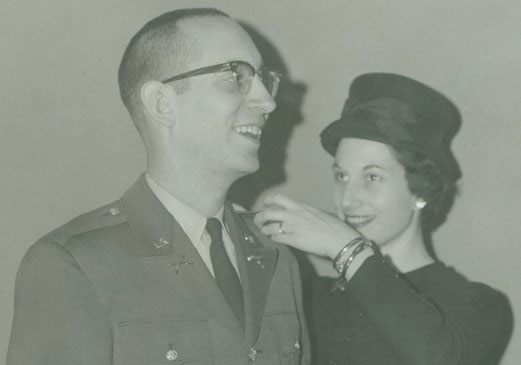
That history still has a place inside the business. In November 2024, Ferrellgas reported employing more than 300 veterans and described military experience as a route into its workforce. The continuity is easy to understand. A delivery company depends on people accepting responsibility for work that happens away from headquarters. Leadership must travel with them.
Ferrell’s father asked him to return to Kansas in 1965. The son who arrived had already learned something about command, but the assignment waiting at home had no orderly timetable. The operation was small, its finances difficult and its future uncertain. Ferrell took over a business whose immediate demands were much less abstract than the subjects taught in business school. There were customers to serve and employees to pay.
The arithmetic of getting bigger
Ferrell began acquiring other propane businesses in 1968. The first was a nearby competitor in Rushville, Missouri, with a $25,000 bank loan. The transaction offered a way to add business without building every customer relationship from the beginning. His early growth depended on convincing lenders that the additional earnings could justify the additional borrowing.
This became a recurring feature of his career: see an operation that could fit, arrange the money, combine the businesses. The logic was straightforward enough to describe. Executing it repeatedly required judgment about customers, routes, equipment and price. A spreadsheet can make an acquisition look pleasantly tidy. Trucks still have to leave the yard.
A nearby Missouri propane business.
Buckeye’s propane assets join Ferrellgas.
Blue Rhino adds tank exchange.
The acquisition of Buckeye’s propane assets in 1986 changed the company’s scale, taking Ferrellgas from a regional operator into a national business. In 1994, it became a publicly traded master limited partnership. That structure brought access to investors through partnership units traded on the New York Stock Exchange. The small family operation now had a financial architecture capable of supporting much larger ambitions.
Growth also rearranged the map of his working life. The company’s offices moved as its staff expanded. Its business reached far beyond northeastern Kansas. Ferrell’s own industry responsibilities expanded too: he served two terms as president of the World LP Gas Association and chaired the Propane Vehicle Council. The executive who had learned the business locally was taking part in conversations about propane internationally.
Who gets to own the work?
One of the consequential transactions in Ferrell’s career took place inside the company’s ownership. In 1998, he led the creation of an employee stock ownership plan. Ferrell Companies, the parent company, was sold to employees. Workers acquired an indirect stake in the propane partnership through the plan, adding another constituency to a business already balancing family history and public investment.
The distinction matters. An employee ownership plan has a particular financial structure; it is more concrete than a manager asking everyone to behave like an owner. In Ferrellgas’s case, it placed an ownership interest behind that request. The company’s 2024 anniversary announcement reported that employees indirectly owned 1.1 million common units through the ESOP.
The plan also gives the later difficulties of the business a personal dimension. Financial trouble threatens more than a familiar name on a truck when employees have a stake in the enterprise. Preserving that stake became part of the work during the company’s subsequent restructuring. The ownership decision made in 1998 would still be relevant more than twenty years later.
The second return
By 2016, Ferrellgas faced a different kind of problem. It had expanded into midstream energy through acquisitions outside its traditional propane business. Those investments went badly. Ferrell returned as interim chief executive and began redirecting the company toward retail propane distribution and Blue Rhino tank exchange. In 2018, Ferrellgas moved to exit the midstream segment.
He later described his return with a candor familiar to anyone who has accepted a supposedly temporary assignment. His recollection carries the understatement of someone who has since seen the calendar.
“I volunteered not thinking it would be that long or that big of a job.”
Jim Ferrell, reflecting on his return in 2016
The repair required changes to operations and to financing. In January 2021, Ferrellgas Partners and Ferrellgas Partners Finance Corporation entered Chapter 11 proceedings. The operating partnership, Ferrellgas, L.P., was excluded from that filing. It is a distinction worth keeping clear: the organization delivering propane and the entities carrying particular financial obligations occupied different places in the restructuring.
In his April 2021 account, Ferrell described a refinancing that extended debt maturities while preserving public equity and the employee ownership plan. He also pointed to a practical operating improvement: the business was delivering more while driving fewer miles. That is a useful measure in a company where the distance between customers can consume the gains from selling to them.
A successor who understood the machinery
Tamria Zertuche had joined Ferrellgas through its 2004 acquisition of Blue Rhino, where she worked in information technology. Her career inside the combined business progressed through technology and operations leadership. She became chief operating officer in 2020. When the board selected her as president and chief executive in 2023, it was choosing someone with years inside the company’s systems.
Ferrell’s endorsement emphasized her work turning Ferrellgas into a logistics business supported by technology and improving its financial performance. That choice fits the problem the company had been working on: coordinating supply, deliveries and customer service across a wide territory. The product may be familiar. The arrangements required to get it to the right place remain demanding.
Zertuche took over on August 1, 2023. Ferrell became executive chairman, then chairman of the board effective August 5, 2024. The change is part of his story, rather than a footnote to it. Returning to a company is one kind of responsibility. Helping put someone else in charge is another.
A rather older collection
There is another Ferrell story, involving parchment rather than propane. In 1999, Jim and Elizabeth J. Ferrell purchased a medieval manuscript containing the work of the French composer and poet Guillaume de Machaut. Known as the Ferrell-Vogüé manuscript, it dates from the fourteenth century. Its earlier owners included Jean, duke of Berry. Even by the standards of a serial acquirer, that is an unusual chain of title.
The Ferrells placed the manuscript on deposit at the Parker Library at Corpus Christi College, Cambridge, in 2004. It was digitized in 2009. A facsimile publication followed, making material that had long been difficult for scholars to consult available for wider study. Their ownership helped change who could see and work with the book.
The manuscript offers a welcome complication to the portrait of a propane executive. Ferrell’s interests have included reading about ancient Rome, Greece and Byzantium. Here, history became something he and his wife could help preserve and open to others. A distribution network and a medieval music collection make an unlikely pair. Both, in their very different ways, involve getting something valuable into other people’s hands.
The business after the comeback
In 2012, Ferrell entered the inaugural class of the LP Gas Hall of Fame. The recognition arrived well before his later return and restructuring work. That timing is revealing. A career can receive its commemorative dinner and still have an untidy chapter ahead. Ferrell’s continued connection to the company has outlasted several plausible endings.
The company’s 2026 annual report still lists him as chairman, with Zertuche as president and chief executive. That is where the story stands today: the business carries his family name, the leadership has passed to a longtime colleague, and employees retain an ownership connection. Ferrell went home intending to arrange a sale. More than sixty years later, the more interesting transaction may be the gradual transfer of responsibility.