Atul Jain’s laptop chose an awkward moment to stop working. He was at Williams Communications in Oklahoma, trying to demonstrate software his young company wanted to sell. TEOCO had already missed the original shortlist. Now, granted a second chance, it had arrived with a machine that promptly declined to participate. In enterprise sales, even the equipment can develop stage fright.
The customer let the team return the next day. They bought another laptop, loaded the software, and demonstrated it on Saturday. Jain later recalled that Williams chose them partly because they had been candid about what their product could do. In the original proposal, they had admitted enough limitations to lose their place among the first five invited vendors. After those demonstrations disappointed, the customer called them back.
That episode contains the question Jain has spent his career testing: can an honest account of your shortcomings help you build a durable business? A software demonstration can be rescheduled. A customer’s confidence is harder to reinstall. For Jain, the distinction became a way of running a company.
The professor takes a different seat
Born in Kanpur, India, Jain was the youngest of three children. His father worked as an engineer in the Public Works Department. A government merit scholarship took him to residential school at eleven. He finished high school in 1976, then earned bachelor’s and master’s degrees in statistics at the Indian Statistical Institute.
His intended destination was a classroom. In 1981 he arrived at the University of Illinois at Urbana-Champaign for doctoral study, expecting to become a professor. Research, teaching, and coaching appealed to him. He had chosen the Indian Statistical Institute over an IIT admission because it seemed closer to that life.
Then contract bridge occupied more and more of his attention. He travelled to tournaments around the United States and drifted away from his academic plans. Eventually he returned to study computer science, earning a master’s degree. His brother, Naveen Jain, had encouraged him to consider the field. The future founder’s route into software had included a considerable detour through a pack of cards.
There was another, more domestic deadline. While he was struggling to finish his master’s thesis, his visiting parents decided to stay until it was done. He promised to complete it in thirty days and did. Parental supervision proved a useful project-management tool. Years later, Jain would still describe teaching and mentoring as work he wanted his life to contain.
- 1981Arrives at Illinois for doctoral study
- 1988Joins the business that becomes TIBCO
- 1995Starts the company now known as TEOCO
- 2025Reflects on thirty years in business
Nine months without a salary
In California, Jain joined Teknekron and later worked in the business that became TIBCO. Vivek Ranadivé was an important influence. Jain spent years learning to build software for large clients, alongside learning what he wanted from a workplace. By 1995, he was ready to try running one.
The business began as Strategic Technology Group. Its eventual name, TEOCO, expanded to The Employee Owned Company. The aspiration was there in the lettering: a company whose people would have a reason to care about its progress. Jain wanted a business that could succeed without bargaining away its values.
The first work was decidedly practical. He helped Mobil build an integrated oil-trading system. Before taking the assignment, he explained that he intended to build a team rather than remain a solo consultant. The client accepted. Within roughly nine months he had four or five people working with him.
Jain took no salary during those first nine months, leaving the money in the company. His hiring rule required six months of a new employee’s salary in the bank before making the commitment. It was a financial precaution with a human consequence: once someone joined, payroll needed to be dependable. Headcount was a promise he expected cash to support.
A job offer, backed by money in the bank.
A small car between two large trucks
Jain’s explanation of profit is unusually easy to picture. Revenue is an eighteen-wheeler travelling along a highway. Expenses are another truck behind it. Between them sits a little Volkswagen called profit. If revenue slows or expenses accelerate, the small car is in trouble. There are accounting courses with less memorable road conditions.
“I love my Volkswagen,” he said. The affection explains his caution. Keeping revenue and expenses aligned gives a company room to continue paying people and serving customers when conditions change. The metaphor also suits the work TEOCO developed: helping telecom operators understand costs and protect margins.
The move from consulting into products was hardly instant. Jain bought an incomplete piece of software and developed it into BillTrackPro, for reconciling telecom expense invoices. Early sales took time. The Williams demonstration belonged to that difficult period, when the company was still turning technical capability into a product customers could use.
Later, TEOCO built analytics around large volumes of call records, addressing problems such as fraud detection, revenue leakage, and margin management. It offered hosted solutions for a monthly fee, supplying hardware as well as software. There was a recurring commercial relationship behind the technology. Each month gave the customer another reason to ask whether it was worth paying for.
“I love my Volkswagen.”Atul Jain, on protecting profit
Cook the soup slowly
A colleague, Rob Betsill, supplied another of Jain’s useful images: he likes to cook the soup slowly. Jain applies that patience to decisions with lasting consequences. Before opening Indian offices in 2007, he wanted confidence in the leadership, connectivity, economics, and ability to operate with integrity. Familiarity with the country did not settle those questions for him.
Acquisitions brought similar hesitation. He worried about what buying another company might do to TEOCO’s culture. In 2006, his executive team encouraged the purchase of Vibrant Solutions. Meeting its people in Rochester helped persuade him that the company was ready. He later described the acquisition as strengthening the culture he had feared losing.
His patience has limits, sensibly enough. Everyday decisions should move quickly, he argues, so that energy goes into making them work. A leader who gives every minor choice the full state-banquet treatment will eventually have a very hungry organization. Jain draws a distinction between the few decisions that deserve prolonged deliberation and the many that need a reasonable answer.
Growth also made the financial arrangements more complicated. TEOCO acquired businesses and took on debt. TA Associates became a minority investor in 2009. Jain’s preference for building from customer revenue belongs alongside those later choices. His history includes outside ownership and borrowing, as well as the discipline of the early consulting years.
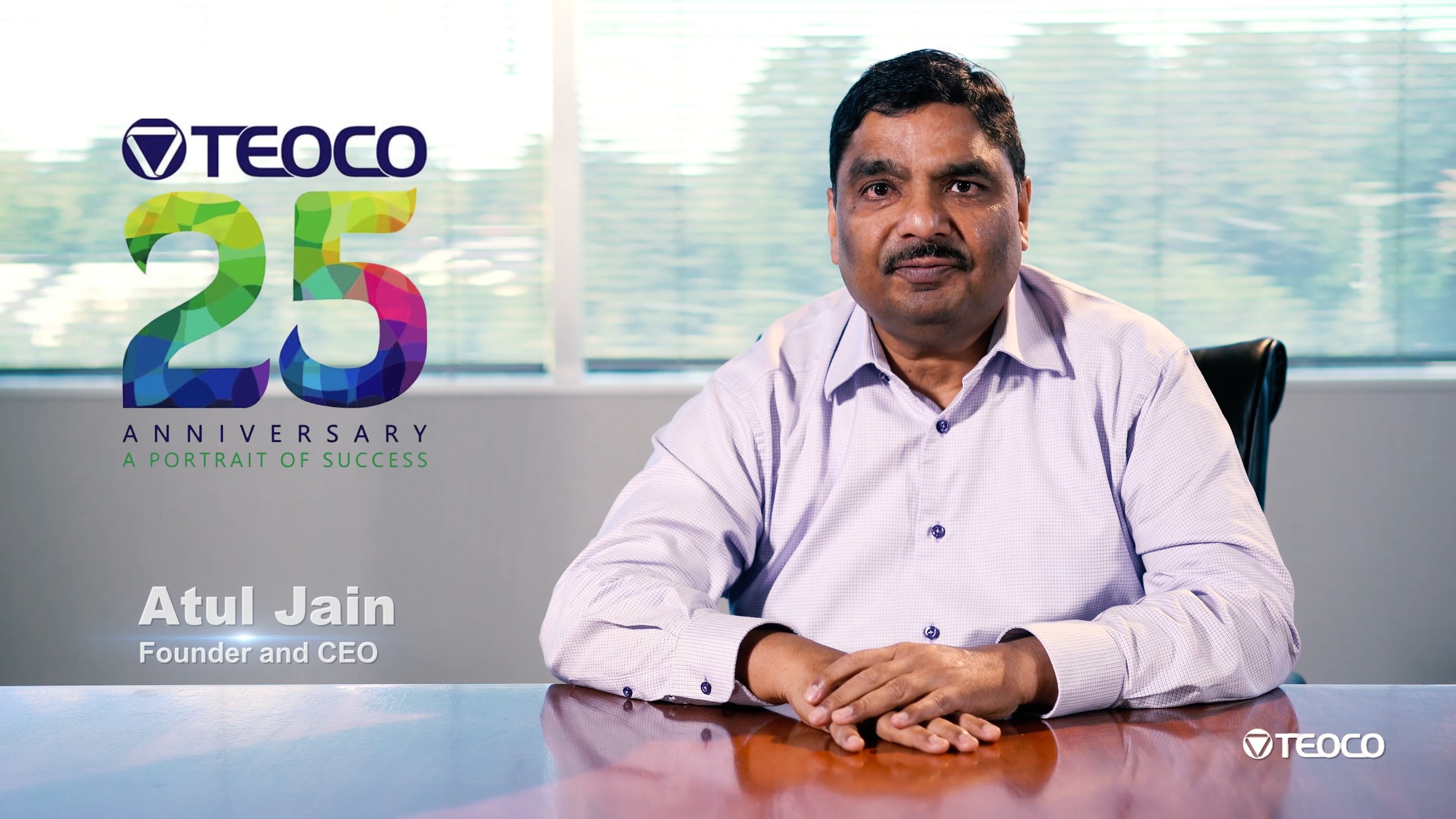
The chief executive in the recruiting room
For someone who thinks carefully about expenses, Jain spends conspicuous amounts of his own time on recruiting. Colleagues have asked whether he has anything better to do. His answer is that hiring deserves the attention. Experienced candidates, he believes, need to feel that the company specifically wants them and understands what they can contribute.
He has described interviewing two candidates for a Kolkata recruiting role, choosing one, and getting an offer out within forty-eight hours. The candidate accepted, then served a three-month notice period that Jain found interminable. The account is endearingly impatient for an executive associated with slow soup. When the right person appears, apparently, lunch can wait.
His writing returns to the opportunities colleagues have found inside TEOCO. John Devolites, who joined in 2004, pursued technology for reconciling network usage with billing. Wasif Akbar came from life sciences into software development and joined in 1999. Jain describes their contributions as exchanges: the company helped make room for their ambitions, and their work helped build the company.
He also argues that employees learn from what an organization actually does. If a company asks people to act courageously, it must allow room for unsuccessful attempts. A value displayed on a website needs corresponding behaviour when a decision goes wrong. Otherwise, the sensible employee will learn caution, whatever the poster says.
The teacher is still at work
Jain’s interest in teaching found another outlet at IIT Gandhinagar, where his donation established the TEOCO faculty chair. It is a concrete connection to the academic world he once expected to join. His own working life went elsewhere; the wish to support learning remained.
He has also developed his management ideas through the At What Price? blog and podcasts. In discussing a book project with longtime friend and colleague Srinivas Bhogle, Jain described their division of labour: his ideas, Bhogle’s words. The project’s purpose was to make principled entrepreneurship understandable to people who wanted to practise it.
His influences extend beyond software executives. An essay by August Turak about the Trappist monks at Mepkin Abbey prompted him to think about how a shared purpose shapes a working culture. Jain recognized parallels with the environment he hoped to create at TEOCO: mutual respect, trust, and people enjoying the work of building something together. He also acknowledged that the company does not always succeed at it.
Thirty years, and another set of questions
When TEOCO marked its thirtieth anniversary in 2025, Jain chose trust as the achievement he valued. He pointed to customer relationships that allowed the company to tackle new problems together. SmartXDR grew from work with Qwest, now Lumen; SmartCircuit developed through work with T-Mobile. Familiar customers had become partners in deciding what to build next.
He also wanted more servant leadership throughout the organization. Sharing financial information with employees and acknowledging failures to clients were among the practices he described. These are fairly specific tests of a broad philosophy. Both require handing other people information a manager might find more comfortable keeping to himself.
By his year-end 2025 interview, the technology questions centred on AI, automation, and network orchestration. He described customers asking how an AI-supported decision could be checked, governed, and reversed. His stated plans for 2026 included AI offerings for radio planning and optimization. He placed engineering judgement and the practical requirements of network operators at the centre of the discussion.
The language of telecom changes faster than a founder’s temperament. Jain is still asking whether an attractive idea will work when people must depend on it. That question connects the new software to the old salary reserve, and the latest customer conversation to a Saturday demonstration in Oklahoma. The laptop could be replaced. The promise had to survive.
Keep the conversation going
More from Jain, in his own words.