Before James L. Dolan had a spherical building in Las Vegas, he had a circle on a page. Inside it was a stick figure. For a project that eventually required acres of screens, the first audience member was pleasingly inexpensive.
The figure matters. A circle alone could have been a logo, a doodle, or somebody’s lunch order. Put a person inside and it becomes a proposition about experience. Dolan and David Dibble, his technology collaborator, were working through possible shapes for an entertainment venue. The drawing gave the discussion a destination. Dibble kept it and eventually framed it.
By September 2023, the proposition had become a building, and U2 had become its opening act. The room was now capable of competing for attention with the people onstage. That is an unusual ambition for a venue executive, whose ordinary triumph is getting everybody seated before the lights go down.
Dolan’s route to that room winds through family ownership, cable television, New York sports, and a microphone he has repeatedly declined to put away. Viewed together, these pursuits suggest a useful way to read his career: he is interested in the business of gathering an audience, and in the feeling of standing before one. Those jobs offer very different kinds of feedback.
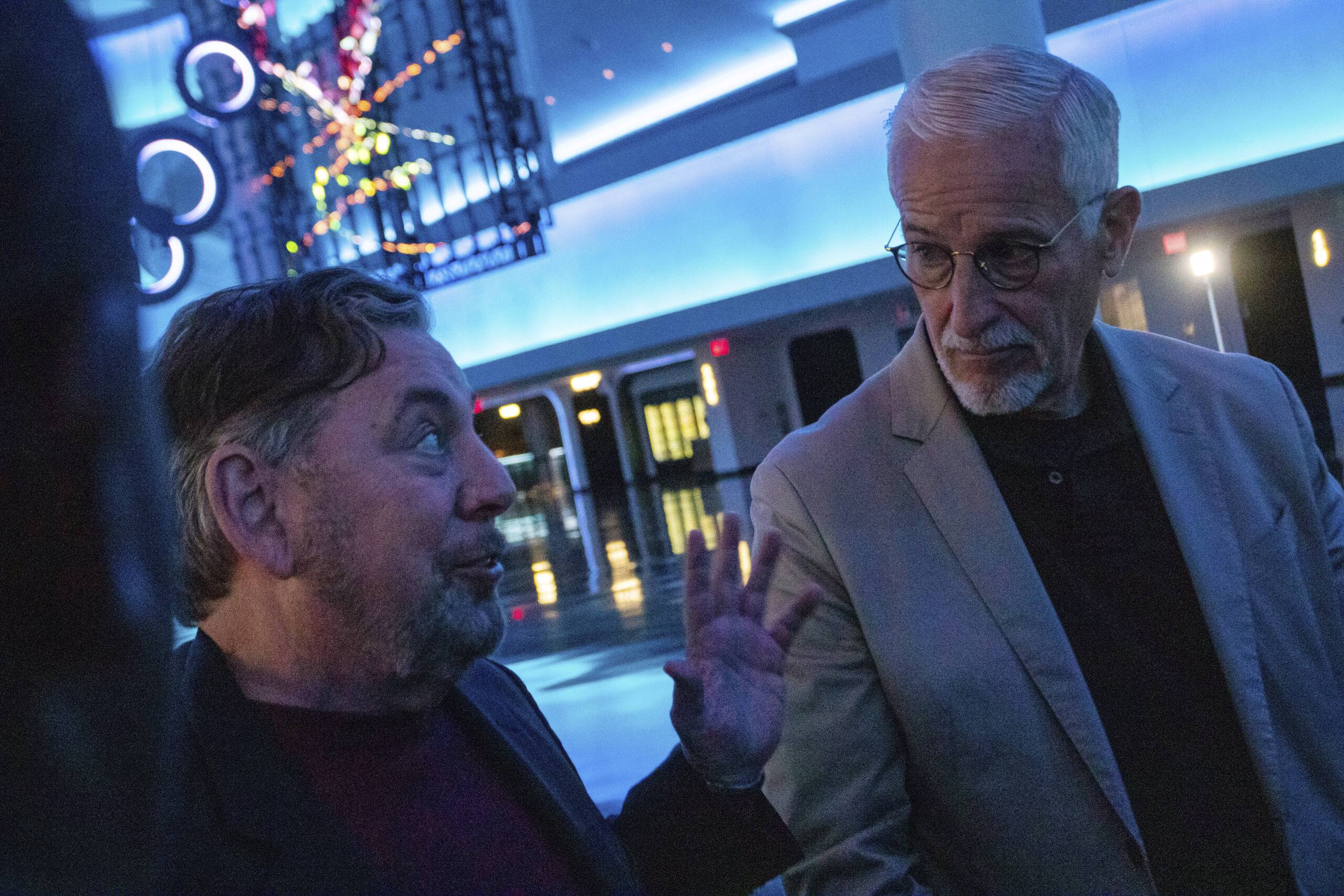
A guitar before the corner office
Dolan was born in Massapequa, New York, in 1955, into the family of Charles Dolan, the cable entrepreneur who founded HBO and Cablevision. He attended SUNY New Paltz, where his studies turned toward communications. The company he would later lead was already part of the family story. Music, however, had arrived early too.
He began playing at 16. His teenage listening included the Allman Brothers, the Grateful Dead, the Band, the Who, and the Beatles. Those are bands with very different approaches to a song, but they share something useful for an aspiring guitarist: they make playing together seem like a way of living.
JD & the Straight Shot gave Dolan a continuing place to do it. The band’s recordings moved through blues and roots rock toward acoustic arrangements; its catalog includes Where I’ve Been and the 2019 album The Great Divide. He has toured as an opener for the Eagles. Joe Walsh produced Where I’ve Been. The address book and the record collection had found common ground.
His description of the attraction was unusually precise. “They balance each other out,” he said of business and music. In the studio, his own voice and decisions reach the listener directly. In his corporate work, customers encounter television programs, cable connections, games, or performances made by other people.
There is also the matter of judgment. “I am sensitive to criticisms,” he admitted about his music. A concert offers fewer places to hide than an organizational chart. Even a person who can arrange the booking must still sing the song. Money can secure an opening slot; it cannot make an audience hum on the way home.
“They balance each other out.”
James L. Dolan, on business and music
Learning to sell the connection
Before the arenas and residencies came the less glamorous business of connecting households. Dolan worked at Cablevision in the 1970s, including selling door to door. The future executive chairman first had to persuade people that the service was worth having. It was an education in attention conducted on doorsteps.
He became chief executive of Rainbow Media in 1992 and Cablevision’s CEO in 1995. He remained in the latter role until the company’s sale to Altice in June 2016. Those two decades covered cable’s expansion from television delivery into a package of television, broadband, and telephone services.
In discussing Cablevision’s network investment, Dolan gave substantial credit to engineering adviser Wilt Hildenbrand. He described an executive’s role as believing the technical argument and then backing it. The pattern is recognizable in his later work with Dibble: a proposal about the customer’s experience creates a large assignment for the engineers.
His account of Charles offered another clue. He saw his father’s interest in technology as a means of reaching consumers with new products, rather than a fascination with equipment for its own sake. He identified with that approach. Screens and networks earn their place when somebody wants what they deliver.
The inheritance brought opportunity and an unavoidable comparison. It also brought disagreement. James opposed Charles’s satellite venture, Voom, on economic grounds. Family businesses can have unusually intimate strategy meetings. In this one, agreement about the importance of a new product did not guarantee agreement about its price.
The audience comes back next month
New York supplied another kind of connection: attachment to a place. Dolan’s responsibilities now span Sphere Entertainment, Madison Square Garden Entertainment, and Madison Square Garden Sports, whose teams include the Knicks and Rangers. He also chairs AMC Global Media. The titles multiply; the public tends to remember the ticket.
Consider Billy Joel. His monthly Garden residency began in 2014 and ended in July 2024 with his 150th lifetime performance at the venue. A musician became a recurring appointment in a building associated with recurring sports seasons. The relationship between artist, room, and audience acquired a calendar.
That arrangement helps explain the residency model at Sphere. When a production stays put, the same installation can serve successive audiences. Elaborate visuals take time and money to make; repeated performances spread that expense. For an artist, staying in one room also changes the working life of a show.
Dolan has long expressed affection for rooms with history. He singled out the Beacon Theatre’s atmosphere and named Nashville’s Ryman Auditorium among venues he admired. Sphere heads in a different architectural direction, but the commercial wish is familiar: make a place people will seek out, then give them a reason to return.
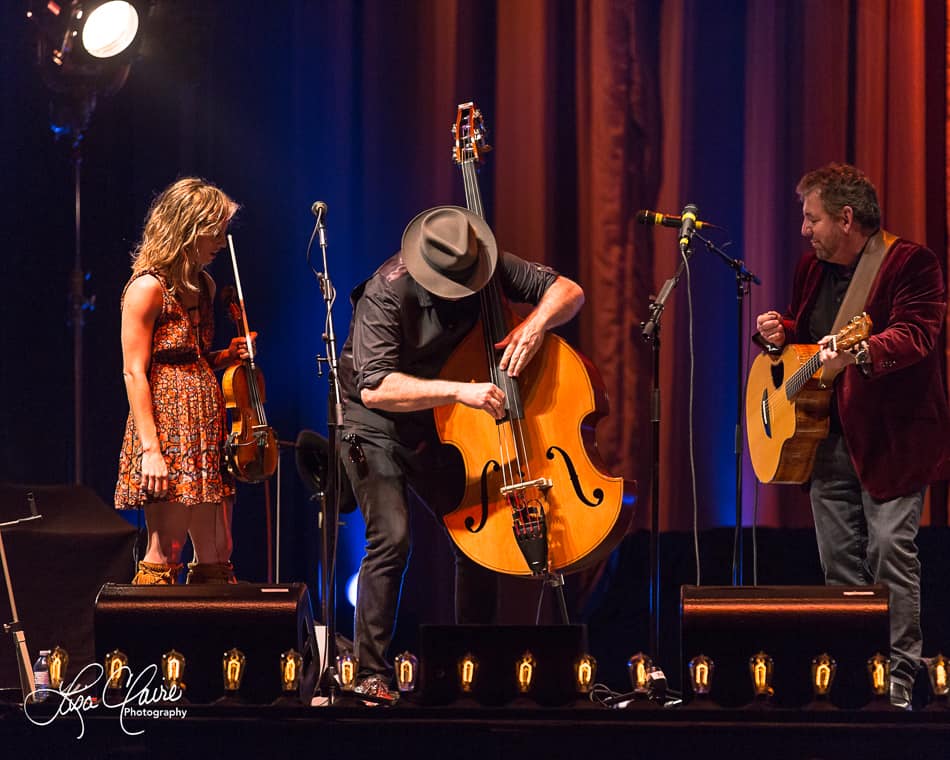
His music complicates the picture in a productive way. He can think about a venue as a property and as the room in which a guitar must be heard. A photograph of him performing with an upright bass and a violin looks a long way from Las Vegas’s LED surface. Both arrangements still depend on people deciding to listen.
A building with a production schedule
Sphere’s physical specifications make the change of scale plain. Its interior display covers 160,000 square feet. The audio system includes 167,000 individually amplified loudspeaker drivers. These numbers describe an instrument that requires artists, filmmakers, and technicians to work together before an audience enters.
Populous, the venue’s architect, arranged the seating around the stage and the enveloping display. The surrounding infrastructure has to support images, sound, and production equipment without continually reminding the visitor of the machinery. A large part of the work disappears when the experience goes as intended.
That creates a second enterprise inside the first. A venue can rent a room; Sphere also needs material designed for its particular dimensions. Darren Aronofsky’s Postcard from Earth brought filmmaking into the opening program. The production operation gives Dolan something closer to a studio as well as a place to sell tickets.
The Wizard of Oz at Sphere, which opened in August 2025, made that requirement visible in another way. An existing film, made for a conventional frame, had to be adapted to a screen wrapping over and around its audience. Sphere Studios worked with partners including Google Cloud and Magnopus. The recognizable story became a substantial production assignment.
Audiences showed up. By mid-June 2026, the company reported more than three million tickets sold for Oz and over $400 million in ticket sales. In the same quarterly report, the company recorded an operating loss of $61.3 million. Ticket demand and corporate profitability answer different questions. Dolan’s room has attracted customers; the wider financial task continues.
The next production announced was The Rocky Horror Picture Show at Sphere, expected in 2027. That choice extends the program from one familiar screen property to another with a very different audience tradition. The building may stay in place, but its schedule has to keep finding reasons for people to walk through the doors.
Who gets through the doors?
At Dolan’s New York venues, the question of admission has also become a public dispute. In January 2023, New York Attorney General Letitia James requested information about MSG Entertainment’s use of facial recognition to exclude lawyers associated with firms pursuing litigation against the company. Some had valid tickets.
MSG defended its policy, saying it did not unlawfully prohibit entry and was not intended to discourage lawyers from representing plaintiffs. The attorney general raised concerns about retaliation and discrimination. Those positions belong in the same account: a request for information is not a finding, and a company’s defense does not settle the argument.
The dispute exposes a tension in Dolan’s business. He sells access to shared experiences in places that people regard as part of their city. The company also controls admission to private premises. When those interests clash, the question becomes larger than whether an individual executive likes a critic.
His companies’ relationship with their communities includes the Garden of Dreams Foundation, which works with young people in need. That commitment and the admission controversy coexist. A portrait assembled only from corporate projects would miss the argument over power that follows him. A portrait assembled only from disputes would miss the work of making the rooms.
The circle travels
Expansion has already demonstrated that a compelling concept needs a willing location. London’s mayor rejected the proposed east London Sphere in 2023, with light pollution among the concerns. A display welcomed in one skyline can be unwelcome in another. Entertainment architecture has neighbors.
Abu Dhabi offers a different setting. In May 2026, Sphere Entertainment and the Department of Culture and Tourism confirmed Yas Island as the site for a venue planned for up to 20,000 people, with construction expected to finish by the end of 2029. Its program is intended to include Emirati storytelling and artists alongside international entertainment.
National Harbor, Maryland, is a separate proposal. Announced in January 2026, it would use a smaller design with about 6,000 seats. That makes the next stage a test of both location and scale. A network requires more than reproducing the first building’s dimensions.
Dolan’s ambition is a global group of venues, each supplied with experiences people will travel to see. The risks are concrete: financing, construction, approvals, production costs, and the continuing obligation to fill seats. A circle is easy to repeat on paper. A working entertainment business requires more cooperation.
Back in his music interview, Dolan was asked which part of his varied working life was his favorite. His answer was “Winning.” It was brief enough to fit on the original drawing. The more revealing part of that drawing, though, remains the little figure inside. After the corporate arrangements, the arguments, and the construction, somebody still has to sit there and decide whether the show was worth it.
Keep the conversation going
- Dolan’s Sphere Entertainment biography ↗
- Between Rock and a Hard Spot: the music interview ↗
- Dolan on Dolan: the cable years ↗
- A conversation about Sphere and residencies ↗
- New York attorney general’s venue-access inquiry ↗
- MSG’s response and the facial-recognition debate ↗
- Sphere’s July 2026 results ↗
- The Yas Island announcement ↗
- The Roommates Show: Dolan with Jalen Brunson and Josh Hart ↗
- YouTube: Better Find a Church, official music video ↗
- YouTube: Glide, live ↗
- JD & the Straight Shot on Apple Music ↗
- Band Instagram ↗ · Band X ↗ · Band Facebook ↗
Profile photograph: Rich Fury / MSG Entertainment. Story photographs: Ty O’Neil / AP and Lisa Bower / Rock At Night.