James Chua’s first inventory was Marvel comics. At seven, he was buying and selling them - an unusually early introduction to the difference between liking something and finding somebody else who will pay for it. Much later, his inventory would become furnished apartments. The customers would include people arriving in a city to work, with a suitcase, a deadline and very little enthusiasm for buying a washing machine.
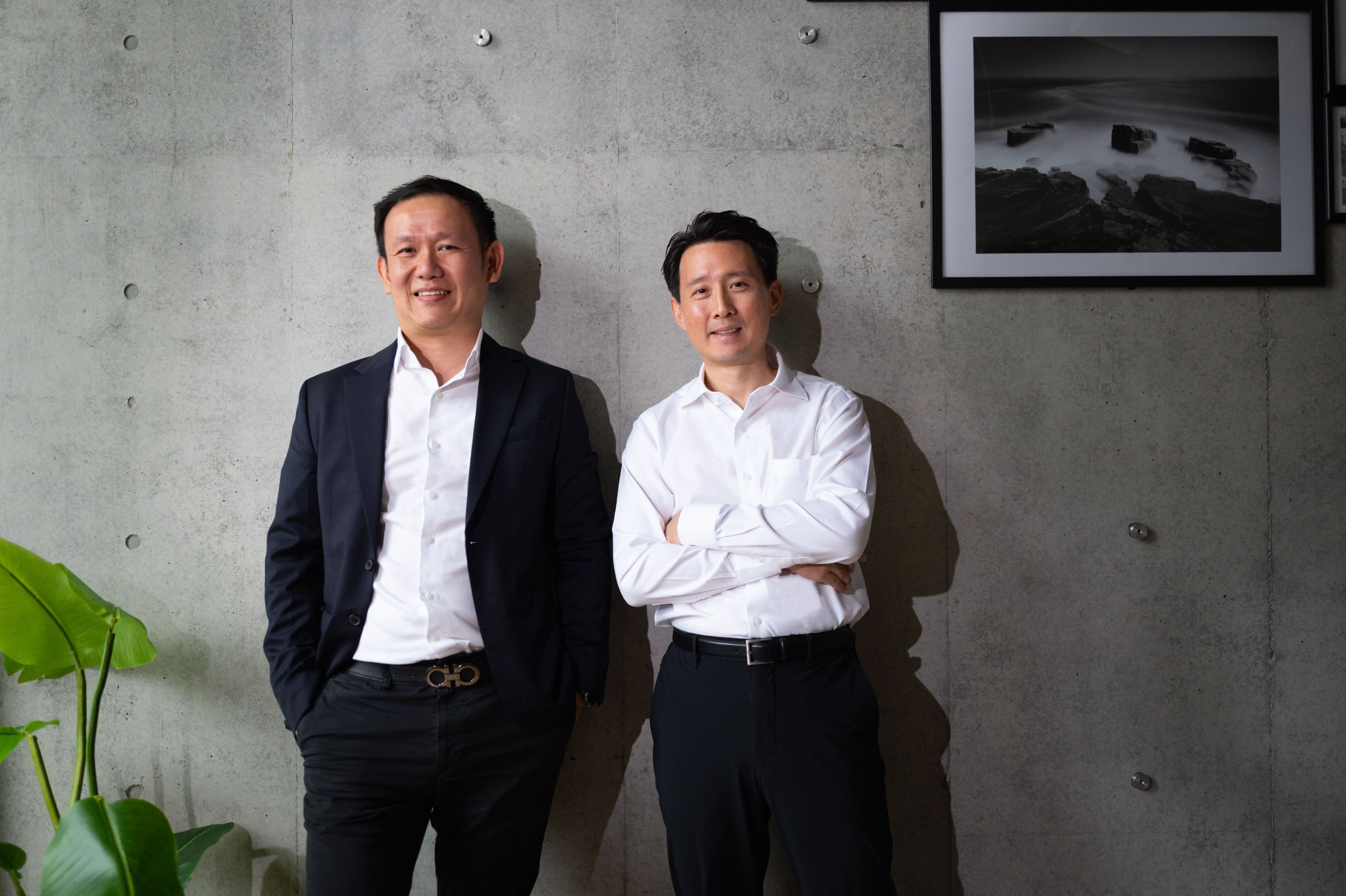
Chua is the co-founder and CEO of MetroResidences, the Singapore-based accommodation business he built with Lester Kang. Its subject is a peculiar interval in adult life: the stay that lasts long enough to make a hotel room tiresome, but ends too soon to make setting up an entire household sensible. In that interval, ordinary domestic things become business problems. A kitchen, a workable commute and somebody who answers a maintenance request acquire considerable value.
His path into this business ran through economics, investment management and a travel startup called PandaBed. Each stage brought him closer to a practical question: how do you persuade people to trust a home they have never entered?
Two students, a small budget, a better place to stay
Chua and Kang met in Los Angeles in 2001, while both were at university. They began travelling together around the United States, Europe and Mexico. Money was limited. Chua later described himself as “poor as a church mouse.” Their accommodation included backpacker lodgings, bed-and-breakfasts, homestays and the homes of friends of friends.
Back in Singapore, they found that planning similar trips around Asia was harder. Hotels were easy to locate online; the more personal places they wanted were less visible. Friends who normally chose hotels enjoyed joining them on one of their spontaneous trips. An idea began to look like a business.
They co-founded PandaBed in 2012. The premise was to help travellers find vacation homes and other alternatives to hotels across Asia. In retrospect, this first company puts an appealing wrinkle in Chua’s career: the future corporate-housing founder initially wanted to help people travel more adventurously. Before the business traveller came the traveller.
Learning to read a business - then running one
Chua earned a BA in economics from the University of California San Diego in 2005. His early professional life was at Phillip Capital Management, where he worked in equity analysis and portfolio management. Studying businesses was his job before building one became his job.
That background matters as context, without turning every subsequent decision into a finance lesson. An analyst can examine how a company earns its money. A founder has to arrange for the money to arrive. In accommodation, that means assembling a workable relationship among guests, property owners and the people who keep the property usable.
At PandaBed, Chua’s work included developing a network of vacation homes and encouraging travellers to consider private residences and homestays. Trust sat close to the centre of that task. A photograph can establish that a room has a sofa. It cannot establish that somebody will deal with a problem after check-in. For a booking business, those are rather different promises.
The early entrepreneurial experience was also less tidy than the eventual career summary. In a 2017 podcast conversation, Chua discussed keeping faith through periods without web traffic, sales or a salary. Those absences supply a useful correction to the comic-book anecdote. Starting young does not make every later venture easy.
The customer who changed the question
The route to MetroResidences emerged through demand at PandaBed. Multinational companies wanted affordable, dependable accommodation without negotiating with individual homeowners. Owners, meanwhile, wanted rental income without taking on the work of hosting. Chua and Kang had encountered two groups asking for help with opposite ends of the same transaction.
MetroResidences began operating in Singapore in 2014. The new business concentrated on selecting apartments and managing the stay, including housekeeping, maintenance and customer service. It gave the founders a more defined customer and a more demanding promise.
Consider the engineers Chua used as an example when explaining his market: people working on new train lines for several months. Their accommodation needs follow a project timetable. Location matters because they must get to work. Reliability matters because sorting out a defective appliance is an unwelcome second assignment. The apartment has to function as a temporary home.
A conceptual map of accommodation needs, rather than a statement of rental rules.
The distinction is easy to miss if every accommodation company is described as a booking website. A corporate customer is also buying the expectation that the stay will require less supervision. Chua’s business choices suggest an interest in this unglamorous part of travel: the arrangements that let somebody get on with the reason they came.
Growth, with an apartment inspection attached
In January 2016, MetroResidences announced S$1 million in seed funding led by 500 Startups. Its portfolio had risen from 10 apartments to 200 in 18 months. It reported more than 10,000 booked apartment nights and customers including over 100 multinationals and 200 small and medium-sized businesses.
Those figures were accompanied by a less photogenic condition: unsuitable apartments were removed. Kang, then responsible for assets, described maintaining minimum corporate standards. Growth meant finding more homes that could deliver the service, rather than simply giving every available property a listing.
Apartments in the portfolio. The company reported this change over its first 18 months.
In 2017, Chua acknowledged the appeal of rapidly increasing supply, while arguing for selection and restraint. He also acknowledged that MetroResidences could not match larger hotels’ marketing spending. His answer was to make use of the variety of locations available through the platform, letting customers stay closer to work.
“we cannot outspend the larger hotels in marketing.”
James Chua, 2017
It is a revealing admission from somebody selling accommodation. A limited budget forces a choice about what the business can do well. Chua chose to talk about the customer’s journey to the office. The commute seldom appears in a glamorous travel brochure; it does, however, occur rather frequently.
A Singapore business learns new cities
A S$4 million investment from Rakuten in 2017 supported regional expansion. Chua’s plans included faster booking for HR managers and a guest app connecting residents with practical services and neighbourhood information. The promise extended into the apartment: the company described arranging a backup appliance on the day a refrigerator or air conditioner failed.
The Tokyo operation was taking shape that year. In February 2018, MetroResidences announced its entry into Hong Kong, its third market after Singapore and Japan. The company reported more than 200,000 booked nights across its first two markets. The geography had changed; the organising problem remained recognisable.
Chua’s own description of the business in 2018 included a complaint with a smile in it. People he met locally often had little awareness of MetroResidences because its business was largely conducted with companies. He sometimes wished it were more visible. He compared corporate housing to radio signals: difficult to see, yet present in everyday life.
That image suits the kind of founder his public work reveals. The business becomes noticeable when someone needs it. Chua’s writing discussed apartment layouts, neighbourhoods and the economics of longer stays. His material was about making ordinary arrangements work for people temporarily living somewhere else.
The people behind the bookings
By October 2018, the company described a team of 50, tracing its beginnings to a three-person operation in the basement of Singapore Management University’s startup incubator. Chua appeared at a discussion hosted by WeWork with Wantedly’s Amin Sulaiman and Peacemakers’ Sean Lim, considering how employers could better understand their staff.
In 2019, he also participated in Workforce Mobility Interactive in Singapore, in a discussion on the evolution of expatriate packages alongside Kylie Barry of NatWest Markets APAC. These appearances placed him among the people whose professional task was moving employees between countries.
His later writing kept returning to time. A 2023 article distinguished the tenant willing to furnish and manage a home from the visitor who needed an apartment ready to use. It explored a familiar source of friction: an owner’s personal attachment to a property meeting a tenant’s desire to get something fixed.
There is a dry comedy in that mismatch. One party sees a cherished apartment; the other sees an appointment waiting to happen. Chua’s argument was that managed accommodation could take those negotiations off a busy visitor’s list. The service earns its place through the chores it absorbs.
Eighty rooms, and the question of arriving
In June 2026, MetroResidences announced plans for an 80-room property in Tokyo’s Roppongi area, scheduled to open in winter 2026. The project includes a partnership with Social Interior for furnishings and design. Planned two-bedroom layouts could accommodate families or provide a separate workroom.

Chua’s accompanying remarks focused on the barriers foreign professionals encounter in Japan’s rental system and the importance of overseas talent to its cities. The ambition now reaches beyond finding an available apartment to making arrival in another country easier.
Read across his career, a consistent preoccupation emerges: a place can exist and still be difficult to access. First came homes travellers struggled to find online. Then came apartments businesses wanted without managing the stay themselves. Now comes a Tokyo project designed around people whose working lives cross borders.
From the childhood comic trade to a furnished apartment, Chua’s career offers an unusually domestic view of entrepreneurship. The decisive detail may be a booking confirmation, a repaired fridge or a bedroom that doubles as an office. For somebody who has just landed with work to do, these are ample reasons to care.
Continue the conversation
Interviews, writing and the next chapter.
- MetroResidences website
- James Chua on LinkedIn
- Chua on the origins of PandaBed
- The early founder interview
- The 2017 conversation on entrepreneurship
- The 2016 portfolio and seed funding announcement
- The Rakuten investment announcement
- Chua on accommodation, competition and quality
- The sharing-economy founders in conversation
- The Hong Kong expansion announcement
- Chua’s 2018 corporate housing essay
- Chua’s 2023 rental comparison
- The 2018 workforce discussion
- Workforce Mobility Interactive 2019
- The June 2026 Roppongi announcement