James Bargon has a job title that fits neatly on a business card: President/CEO. His basketball record takes a little more space. Sixteen seasons coaching travel basketball in Wilton. Six years on the association’s board. A place in West Hartford’s girls league, where he has coached his granddaughter and now handles registration. Put the two records together and a more interesting portrait emerges: an agency executive whose commitments extend to the arrangements that let children play.
The word “registrar” is unlikely to inspire a sports documentary. It deserves a little sympathy. A game has a score, a clock and an audience. Registration has fields to complete. Yet the second makes the first possible. Bargon’s story offers a reason to look at the work that happens before anyone blows a whistle.
A career built inside the agency
Bargon studied economics and political science at Boston College, then marketing at Columbia Business School. His undergraduate years ran from 1979 to 1983; his MBA studies from 1986 to 1988. The combination places an interest in organizations alongside an education in how they communicate. It also supplies a straightforward beginning to a career that would lead into agency management.
He became president of Impact Communications in 2002 after holding positions of increasing responsibility. By July 2008, his career record places him as president and CEO of Communication Partners Group. The progression matters because it begins inside an organization. There is a history of responsibility before the executive title, and the title is one point along that history.
Today, Bargon is identified as President/CEO of Impact Communication Partners. His professional world is an agency world: clients, colleagues, creative work and the practical obligations that come with delivering it. An agency relationship has to survive the interval between an appealing idea and a completed assignment. That interval provides plenty of room for people to discover whether they can work together.
The announcement came after the working relationship
On October 31, 2023, The Bloc announced a formal partnership with Impact and its sister agency, BioMedCom Partners. Jennifer Matthews, The Bloc’s president and CEO, described a relationship grounded in earlier joint projects. Bargon likewise spoke about what the organizations had already learned by working together. The public announcement gave an existing collaboration a new form.
“We have learned much by working side-by-side with The Bloc,” Bargon said. It is a useful phrase to keep from a corporate announcement. Side by side is a physical description, even when the work spans offices. It places the emphasis on shared experience rather than the ceremony of an agreement.
“We have learned much by working side-by-side with The Bloc.”
James Bargon, October 2023
Impact’s current website continues to identify the agency as a member of The Bloc. It describes a team whose backgrounds extend beyond the expected job descriptions: artists, musicians, novelists, coaches, ballroom dancers and stand-up comics feature among its range of talents. Those are descriptions of the team, rather than hobbies to assign to Bargon. Still, the list gives the organization a texture that a chart of departments would miss.
A company can introduce its people by naming their functions. It can also acknowledge that people bring experience from elsewhere. A musician has rehearsals. A novelist has revisions. A coach has a team that must understand what happens next. The agency’s choice to include such interests leaves room for the lives its colleagues lead outside their assignments.
A logo finds its way onto the local court
In January 2016, the Wilton Basketball Association publicly thanked Bargon and Communication Partners Group for helping brand the association and design its new Wilton Hoops logo. The acknowledgment appeared in a letter recognizing the businesses and contributors supporting that season’s youth travel teams.
It is a specific contribution, easy to picture without inventing a scene. A basketball organization needed an identity. An agency and its executive helped supply one. Professional knowledge crossed into a local activity where the result could belong to players, parents and volunteers.
The letter also thanked a collection of restaurants, shops and other supporters. Its account of the season included several ways to raise money and bring people together. The logo was one piece in a shared undertaking. Bargon’s name appeared among people helping the association do its work.
There is something pleasingly concrete about that scale. Branding can be discussed in language that seems determined to escape the room. Here, the task had a name: Wilton Hoops. It had an organization waiting to use it. A contribution could be recognized in a few words, without requiring a grand theory of civic life.
The game has an administrative side
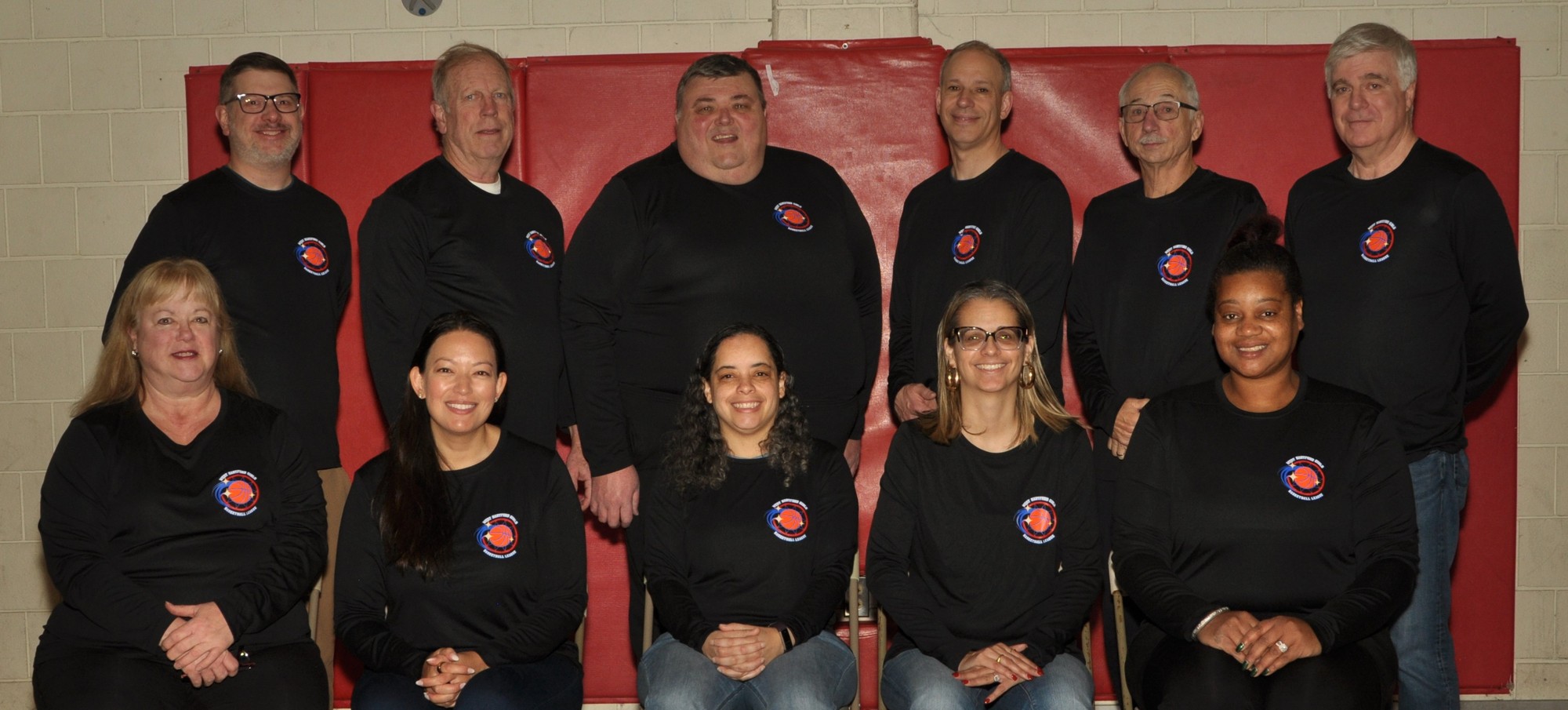
In West Hartford, the registrar manages player registration, creates the league’s registration page and assigns players to teams in the Minors Division. Those are Bargon’s listed responsibilities. They put him near the beginning of a player’s experience, when participation becomes an actual place on an actual team.
The league’s handbook gives that experience a framework. It sets out the roles of its board and the expectations surrounding the season. Even a small instruction has a purpose: in winter, players are encouraged to carry their basketball shoes separately so snow and salt stay off the gym floor. A good game requires a surprising number of things to go right before it begins.
The shoe advice is an appealing antidote to abstract discussions of leadership. Somewhere, an adult has thought about the floor. Elsewhere, someone has thought about the roster. These details seem minor until they are neglected. Community organizations accumulate them because their work involves real people arriving at real places.
Bargon also appears on the league’s bylaw committee, which recommends changes to its governing rules, and its scholarship committee, which considers applications and recommends awards. The assignments cover participation, governance and what happens after a player’s time in the league. They are distinct jobs within the same organization.
- RegistrationA player enters the league.
- Team assignmentThe Minors roster takes shape.
- ParticipationThe basketball can begin.
A diagram of the registrar’s responsibilities, rather than a measure of game results.
What the league wants players to carry away
The West Hartford Girls Basketball League was founded in 1988 to give girls in town a place to play. Its first president, David Weil, created it for his daughter, Marni. That origin gives the organization a personal scale: a parent’s wish for a child became a structure other families could use.
Its purpose remains instructional. The league puts commitment, teamwork, sportsmanship, fair play, hard work and fun together in its account of basketball. Fun earns its place on the list. An organization can be earnest about teaching without forgetting why a child might want to join.
The league’s leadership values include confidence, humility, respect, responsibility, perseverance and gratitude. These are its stated aims, rather than a personality assessment of every volunteer. The distinctions matter. A league sets an ambition for what participation can teach; its coaches and administrators take responsibility for offering that experience.
The coaches guidebook addresses the adults who make it possible. It emphasizes the experience coaches create for young players and outlines the season’s duties, including selecting sportsmanship award recipients. The work involves recognizing how players behave as well as how they perform. An organization reveals its priorities through the things it asks adults to notice.
Its college scholarship program extends that attention beyond the final season. Eligible former players submit an essay about what their league experience meant and how it may help them afterward. The program offers a $1,000 award. Bargon’s committee role places him within the group responsible for considering those applications.
An essay is an interesting companion to a basketball record. A score can describe a game precisely and leave most of its meaning untouched. Asking a former player to write invites a different account: what stayed with her, what she learned and which experiences she expects to use again.
A family move, and another generation of players
Bargon and his wife moved to Hartford’s West End to be closer to their daughter, son-in-law and three granddaughters. His league biography adds the detail that he coached a granddaughter in the Minors Division. A move toward family and a return to youth coaching belong in the same small paragraph of his life.
That paragraph changes the scale of the profile once more. Career dates explain progression. A partnership announcement explains an organizational relationship. A family move explains why a place becomes home. Each answers a different question, and the last brings the story close to the people Bargon wanted nearby.
Basketball provides a connection between those chapters without needing to turn them into a business parable. A child’s team has its own purpose. The adults who help run it contribute to something the child can experience directly: belonging to a group, learning the game and having somewhere to play.
Seen from that angle, the registrar’s title has a little more life in it. There is a person behind the registration page, with a professional history and a family nearby. The role joins a sequence of community commitments. It is an ordinary assignment with consequences for the people who depend on it.
Bargon’s biography can hold the agency office, the Wilton logo and the West Hartford roster together. They show different forms of useful work. The whistle eventually sounds. Long before it does, someone has helped make room for the players.