At 12, Jacqueline Samira understood the ladder. A sixth-grade assignment asked what she wanted to become, and while classmates chose the familiar constellation of athlete, doctor, lawyer and actor, she wrote about being a CEO. Her route was admirably orderly: earn straight A's, collect extracurriculars, enter a fine university, land a fine job, work hard and climb. It was the sort of plan adults reward because it places chaos somewhere safely off the page.
Then she graduated from the University of California, Irvine, in 2008 with a degree in economics and an appetite for Wall Street. Wall Street, inconveniently, was busy collapsing. She spent 19 months applying to hundreds of companies and receiving rejection from all of them. Debt rose. The ladder vanished. Eventually she took a sales job, a concession that became the central education of her career.
Samira brought mathematics to selling. She measured, tested and refined. Within two years, she has said, she had become a director at a company producing $100 million in revenue. The job moved her to Austin in 2011, just as the city's startup scene was becoming less underground and more skyline. Technology had been present in her childhood: her mother was a computer engineer, although one who had wanted to be an architect and advised her daughter to follow her own affinities. Samira discovered a useful place between code and commerce. She could build the teams that turned technical skill into a working business.
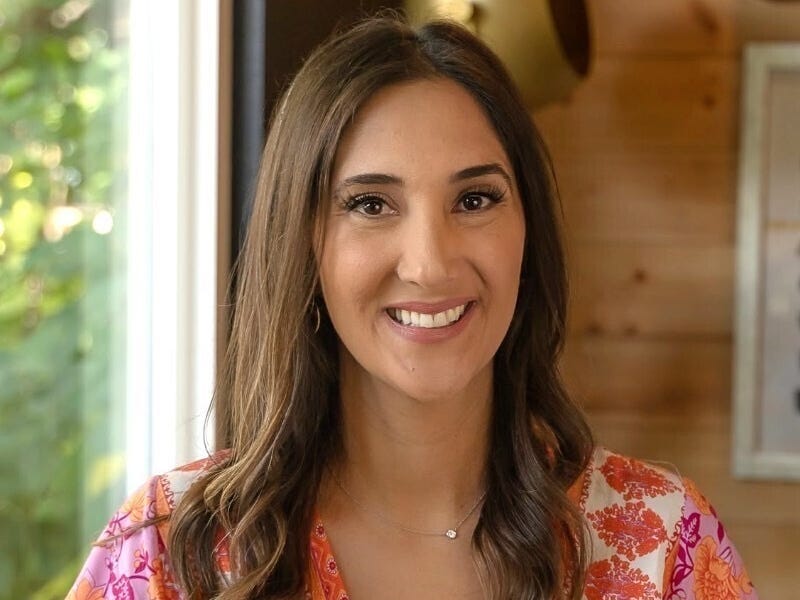
The useful detour
Her résumé became a study in revenue: sales training, regional direction, leadership at Austin software company OwnLocal, then head of sales at logistics startup Shipwell. She learned the pleasures and irritations of being the capable number two. She also learned how thin recognition can become when credit travels upward. The Howdy idea had been sitting at the back of her mind: U.S. technology companies were hungry for engineers, while accomplished professionals across Latin America were separated from those jobs by access, paperwork and habit.
“I didn't have to wait for someone else to anoint me as CEO.”Jacqueline Samira, on deciding to start
In 2018, she stopped waiting. She and technical co-founder Frank Licea started the business in Austin with five people and one client. Its first name, Austin Software, was almost comically literal. The premise was larger: find and support Latin American professionals who could join American teams full time, in compatible time zones, without being treated as disposable labor.
Samira financed the beginning with $175,000 saved over ten years. In her telling, that money was assembled on the quiet evenings when peers went to happy hour and she stayed home. It was not glamorous capital. It was foregone dinners, accumulated restraint and a very personal runway.
The arithmetic soon showed its teeth. An early international payroll mistake cost roughly $40,000, collapsing an 18-month plan into about 12 months of runway. This is the less photogenic face of entrepreneurship: not the visionary at a whiteboard, but the founder discovering that a misplaced figure has eaten half a year. Samira kept selling. By mid-2020 the company had reached the point where she could pay herself a salary.
A company changes its name, then its scale
The company grew to roughly 50 team members and entered Y Combinator's Winter 2021 class. Samira later recalled arriving at Demo Day with no committed funding, collecting $500,000 that day, and closing a $2.9 million seed within two weeks. The founder who once applied for work into a void now had investors making decisions from a single slide.
She did not leave the storytelling to the deck. Samira recorded herself presenting the material so investors heard the context, emphasis and argument rather than flipping ahead and inventing their own. It was a salesperson's solution to a founder's problem: control not the answer, but the conditions under which the question is considered.
The company in four moves
A $13 million Series A arrived in 2022, followed by a $5 million extension announced in early 2023. The company moved through a second name, Astro, before landing on Howdy.com, a Texas greeting with international ambitions. The rebrand worked because it sounded like an introduction. In this business, introductions are the product.
In August 2023, Howdy acquired GeekHunter, a Brazilian technology-talent marketplace with nearly 400,000 registered candidates. The purchase extended its map and answered rising demand for AI and machine-learning skills. By 2026, Samira's public profile described a company operating in eight countries with about 500 developers. Inc. named her to its Female Founders 500, pointing to Howdy's expansion into Mexico and Peru and its branded Guadalajara office.
Keep one person in the room
Growth usually encourages abstraction. Employees become headcount, candidates become inventory, countries become markets. Samira has proposed a charmingly stubborn defense: think of Juandi. Juan Diego “Juandi” Boix was Howdy's first developer and remains at the company. When considering an event, a post or even the signal sent by a luxury, she has described asking what the decision would mean to him. More customers might mean job security. A boastful post might make the team feel less valued.
“When you design for one real person you understand, decisions become clearer and more human.”Samira's operating test
This does not make Howdy a charity, nor does Samira pretend commerce can run on good feeling. It turns empathy into a design constraint. The company's physical gathering spaces, benefits, local support and emphasis on long-term placement are intended to make a cross-border job feel like a career rather than a rental. Its stated 98 percent retention rate is the commercial evidence it offers for that choice.
Samira is frank about the uglier vocabulary that shadows international hiring. “Outsourcing” can be shorthand for paying the least, withholding the ordinary protections of employment and treating turnover as somebody else's problem. Her argument for nearshoring is economic, but it is also moral: a lower cost to the client need not require a diminished life for the worker. Competitive pay, professional development and a community are not decorative extras in this model. They are defenses against the churn that makes cheap labor expensive.
That balance is harder than the slogan. Howdy sits between clients who want speed and flexibility and professionals who need stability and respect. It also crosses legal systems, currencies and working cultures. The company's role is therefore larger than making a match. It handles payroll, benefits, equipment and compliance, the unromantic infrastructure on which the romantic phrase “work from anywhere” depends. Samira's talent is to make this plumbing part of the promise. A bridge is only useful if somebody maintains it.
Her dashboard expresses the same hierarchy. In a recent public post, Samira wrote that revenue is a trailing indicator, while the number of Howdy Professionals is the north-star metric. One professional means one family, one network of obligations and ambition, one career someone has trusted the company to help steer. Revenue is still counted, of course. It simply does not get the first chair.
The discipline of an ending
Samira's life has the numbers of a person who enjoys testing the carrying capacity of a calendar: six children, a multinational company and, according to her public X biography, 15 longhorns. Yet her most persuasive productivity rule is about stopping. At home, she takes no meetings before 8:30 in the morning or after six in the evening. A major prospect does not change the rule. Neither does a prestigious interview.
6:00
The calendar fence.
Meetings live inside the working day. Mornings and evenings belong to her children and husband. Samira says the opportunities waited.
There is a small rebellion here against founder theatre, with its worship of exhaustion and its curious conviction that every email becomes wiser after midnight. Motherhood, Samira has said, made her a more efficient entrepreneur because hours became scarce enough to deserve scrutiny. A boundary can be a productivity system wearing ordinary clothes.
The same practical optimism shapes her view of artificial intelligence. She has compared AI's arrival to the printing press: disruptive to existing work, yes, but also capable of creating new kinds of opportunity. Howdy now presents itself increasingly in the language of an AI workforce. The interesting tension is whether a company can accelerate the machinery while preserving the person-by-person philosophy. Samira's answer so far is to keep Juandi in the room, even when the room is an algorithm.
Her product advice is similarly resistant to ceremony. Build the smallest workable thing, she says, get it into the hands of the people who described the problem, and listen before hardcoding a costly assumption. It is the founder's version of her sales apprenticeship: reality gets a vote early. The method lacks the glamour of a grand unveiling. It has the quieter virtue of allowing customers to be right before the company has spent a fortune proving them wrong.
Her sixth-grade plan was wrong in almost every procedural detail. There was no smooth ascent, no obliging Wall Street, no appointment bestowed at the end of exemplary service. There was a crash, rejection, sales quotas, a decade of saving, a payroll error and several company names. Yet the title at the top of the old report proved accurate. Children are sometimes excellent strategists and terrible logisticians.
Samira's more consequential achievement is not the title. It is the bridge: between Austin and Latin America, companies and professionals, ambition and the hours after six. She built it after discovering that the ladder was missing. A bridge, it turns out, was the more interesting structure.