The first version of Contrario was clever. Customers had the discourtesy not to care. Arya Marwaha and his co-founder, Aditya Sood, had built AI screening software for recruiting, joined Y Combinator and collected more than 200 rejections from customers and investors. Then one prospective buyer offered a useful insult to the product: forget the tool, the buyer said in effect, and make the hire. The fee would be $10,000.
The founders promised to find founding engineers in under 30 days. Neither had recruited professionally. Marwaha later described red-eye flights to Carnegie Mellon hackathons, thousands of cold messages sent across 16-hour days and visits to Stanford lectures in search of engineers. Their young company ran through WhatsApp threads, emailed PDFs and messy spreadsheets. Three candidates got jobs. More important for the business, two founders discovered the difference between admiring a workflow and understanding one.
That month supplied the idea Contrario now sells: software should absorb recruiting's repetitive choreography, while people keep the work that depends on context, persuasion and taste. The current platform connects companies with expert recruiters and equips those recruiters with AI agents for coordination, sourcing support, scheduling, follow-ups and record keeping. The founders arrived at automation only after becoming the humans they once hoped to automate.
A contrarian education
Marwaha grew up in Orange County, California, with parents who had immigrated to the United States. His mother attended dental school; his father attended medical school. He has spoken about watching them work through years of loans while creating a life for their family. His mother's contribution appears in his memories as a catalogue of unremarkable acts that became enormous in aggregate: rides to practices, performances and debate tournaments, early mornings at school, lunches packed every day.
He was an energetic sampler. Soccer, debate, drama, pentathlon, writing and literature all received a turn. An older brother urged him to take bigger risks and consider paths outside the approved route. At 15, Marwaha interned on Capitol Hill under Representative Raja Krishnamoorthi and published legislative research on educational equity. In high school, he bootstrapped an education technology startup to six figures in annual recurring revenue. Before he was old enough for the standard founder mythology, he had already acquired the more helpful habit of making things and asking strangers to take them seriously.
At Stanford, that appetite kept roaming. He conducted research in human-computer interaction, worked across early-stage startups and spent a summer in product development at Boston Consulting Group. He also persuaded Stanford to fund a summer job at a golf technology startup in Latvia. Remote Fridays left room for overnight buses through Eastern Europe on a student's budget. Scrappiness, in this instance, included both a work schedule and the timetable from Riga.
“Founders should deeply understand a workflow before automating it.”Arya Marwaha
Marwaha met Sood in their first-year Stanford dorm. They kept building together. After Marwaha's BCG summer, the pair returned to campus and began testing ideas around the hiring problem: mock interviews, technical screening and voice agents that could conduct evaluations. Weekends disappeared inside the Gates and Packard buildings. Customer conversations kept pointing away from interview mechanics and toward an older complaint. Companies did not merely need better tests. They needed access to the right people.
Their language at launch was heavily technical: graph neural networks for matching, conversational AI for screening. Their later language became more operational. They had learned that a recruiter is part analyst, part salesperson, part confidant and part air-traffic controller. Only one of those jobs should spend Tuesday afternoon moving calendar invitations around.
Give the agents
- Scheduling and follow-ups
- Sourcing coordination
- ATS notes and data entry
- Matching across existing talent pools
Keep for people
- Trust and motivation
- Candidate relationships
- Communication and nuance
- Judgment about team fit
The spreadsheet earns some respect
Becoming recruiters changed the founders' opinion of the industry. Marwaha recalled meeting professionals running substantial businesses from Excel sheets and Gmail threads. Their systems looked primitive; their judgment was not. A polished interface could speed the work without automatically knowing which candidate would thrive under a particular founder, why someone might leave a comfortable role or how to recover a conversation after an awkward interview.
This is where his position on AI becomes more specific than the usual promise of efficiency. He has warned that models used in hiring can reproduce bias and miss experiences that never reach a résumé or LinkedIn profile. Interpersonal qualities emerge in conversations. His preferred architecture mixes human-labeled and machine-labeled information, keeping consequential decisions connected to the richer evidence that people can gather.
One Contrario product, AI Matchmaker, takes a résumé or LinkedIn profile supplied by a recruiter and returns between three and 15 potentially suitable roles, using screening notes and background material alongside the profile. The agent expands the recruiter's memory and reach. The recruiter still has to decide whether the match makes human sense. It is less a robot headhunter than an unusually wakeful associate who has read every file.
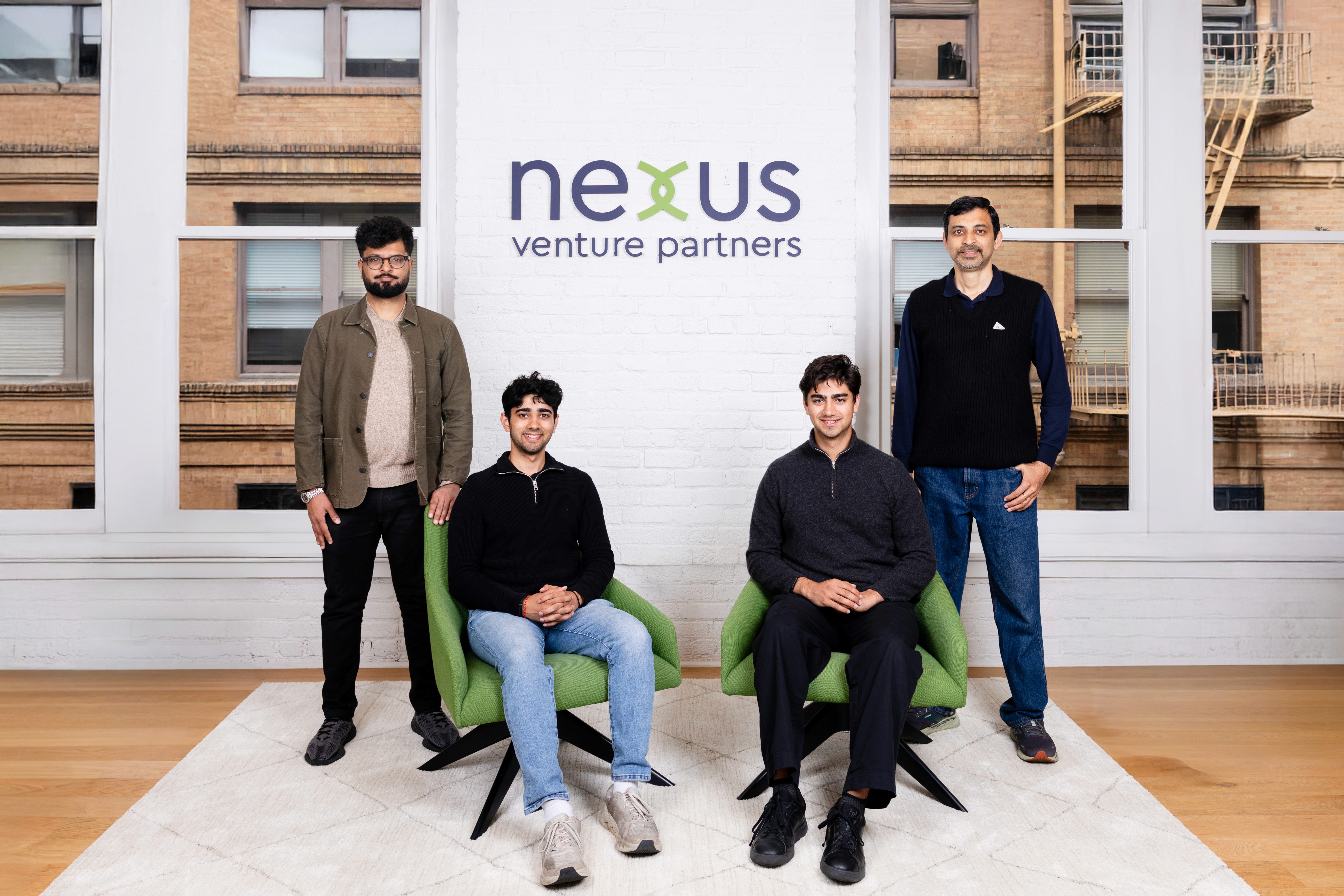
By its public launch in May 2026, Contrario said it had reached more than $6 million in annualized revenue in under six months, worked with over 200 companies, placed more than 150 candidates and paid over $1 million to recruiters. The company announced a $2.3 million seed round led by Nexus Venture Partners, with backing that includes Y Combinator, Goodwater Capital and Inventum Ventures. Those are company-reported operating figures, useful as a measure of early demand rather than a prophecy about what happens next.
Finishing, leaving, continuing
The compressed biography calls Marwaha a Stanford dropout, which is accurate and incomplete in a pleasing way. He left the master's program early to build Contrario, but returned to finish his undergraduate degree in three years. More than 30 relatives came from around the world for graduation in 2026. He said he completed remote coursework while spending more than 70 hours a week on the company.
His own account lingered on senior dinner, fountain hopping, late nights and old friends. The diploma mattered because his parents' sacrifices mattered. The ceremony belonged to the people around the credential. Then he added the necessary comic footnote: he remained a Stanford dropout from the master's program. Startup identity survived the conferral.
There is a revealing tension here. Courage, in Marwaha's telling, meant leaving comfort and stability. Completion meant returning to honor a promise larger than professional convenience. The two impulses can coexist. A founder may abandon the wrong product after 200 rejections and finish the right degree after an exhausting detour. Persistence is not devotion to every plan. It is the judgment to know which commitments still deserve you.
“If you're close to finishing something you've started, see it through. You rarely regret it.”Arya Marwaha
What the robots should leave alone
Marwaha's ambition is not modest, but it is neatly bounded. He imagines a smaller number of expert recruiters doing what entire agencies once did because agents handle the operational burden. Recruiters would spend more time speaking with candidates, closing offers and understanding teams. The goal is leverage without evacuating the relationship at the center of hiring.
His favorite formulation is about taste. As generated words, images and decisions grow cheaper, he argues, the ability to recognize quality becomes more valuable. Hiring makes this argument tangible. Two candidates can share a title, a school and a list of programming languages while carrying completely different appetites for risk. A young company may need the person who enjoys unfinished systems; another may require someone delighted by order. A database can retrieve both. Choosing between them asks for a picture of the company that may not yet exist.
That principle extends beyond recruiting. His advice to AI founders is to experience a problem manually before building agents for it. The practice reveals whether a product is treating an urgent need or adding a decorative layer to a chatbot. It also exposes the edges where automation fails. A founder who has chased an interview slot through three calendars will design coordination software differently. One who has persuaded a nervous engineer to join a tiny startup will be slower to label persuasion as a text-generation task.
Marwaha has said he would like to sit down with Laszlo Bock, the former Google people executive, to ask how an exceptional hiring organization preserves quality while growing quickly. The choice says something about his current preoccupation. Contrario has already moved beyond the dorm-room hunt. Its next problem is institutional: translating a founder's intense, specific understanding of a hiring bar into a network where hundreds of recruiters and agents can act consistently. Software can copy a field into an applicant tracking system. Culture is harder to serialize.
Contrario's story remains early. Marketplaces must balance both sides, and a service built around judgment has to protect quality as volume rises. Marwaha's contribution so far is a useful operating answer to a noisy question. The future of work need not be a contest between people and machines. It can be an allocation problem: give repetition to software, consequence to judgment and the tedious middle to whichever party does not complain about calendar invites.
The company began with a product that sounded modern and a customer request that sounded old-fashioned: please find me a person. By accepting the unfashionable job, Marwaha and Sood found the modern company. Their best idea was not produced by abstraction. It arrived after the overnight flight, the ignored message and the spreadsheet cell nobody wanted to update.