In 1969, Jerome Pustilnik and Herbert Behrens offered institutional investors a tempting shortcut: trade shares with one another through a computer network. Banks, insurers, and fund managers could find each other electronically, anonymously, without the familiar procession of intermediaries. The technology worked. The people were harder to move.
- Instinet helps institutions execute trades and find liquidity.
- Its business combines brokerage, crossing tools, and trading software.
- Its early lesson: a network needs active counterparties, not just subscribers.
A network with nobody on the other side
There is something wonderfully awkward about inventing a market. You can install the terminals. You can connect the telephone lines. You cannot install someone willing to sell the shares your customer wants to buy. Instinet’s early institutional subscribers made little use of the system. An alternative market without dependable trading interest was a difficult alternative to choose.
In the early 1980s, the company widened its ambitions. Bill Lupien, who was running Instinet by 1983, helped expand its connections, including links to Nasdaq and London. Brokers became part of the opportunity. A service conceived around direct institutional trading became more useful by connecting to the wider financial world. The original idea needed a larger cast.
“And then they made very, very little use of us.”
Jerome Pustilnik, recalling early subscribers in Institutional Investor
The history carries a useful warning for anyone building a marketplace: willingness to subscribe is a weak substitute for willingness to transact. A customer can admire the invention and still return to the place where the counterparties already are. Instinet’s problem was visible long before anyone called it a platform problem.

The price beneath the price
Today, Instinet serves professional investors and brokers through execution services, liquidity tools, and technology. Its customers include asset managers, hedge funds, pension funds, mutual funds, and insurers. These are organizations managing positions large enough that the act of trading can become its own problem. Buying a stock is straightforward. Buying a substantial position discreetly takes more thought.
Imagine a fund trying to buy a large holding. Advertising the whole order can reveal demand. Moving too slowly risks missing the price. Moving aggressively can consume the available offers. The commission appears on a bill; the consequences of timing and market impact appear in the investment result. Instinet’s services address that wider execution problem.
Conceptual illustration. No cost proportions implied.
The company operates primarily through an agency model, executing for clients. Its own disclosures allow limited principal or riskless-principal activity for situations such as correcting errors, settlement requests, and foreign exchange. The distinction matters: “agency” describes the core arrangement, rather than an absolute promise about every transaction.
Nomura bought Instinet for $1.2 billion in February 2007. That is a historical purchase price, not today’s valuation. The business earns brokerage commissions and fees and supplies trading technology under commercial arrangements. For a prospective customer, the relevant cost is the agreement for its particular execution and technology needs, alongside the less visible costs of getting orders done.
The desk is the product
Instinet’s range makes more sense when you follow the trader’s day. Before an order goes out, analytics can estimate costs and help plan execution. During trading, algorithms can work toward a volume benchmark, follow a participation target, or seek liquidity. High-touch traders handle orders that call for human attention. Afterward, execution analysis examines what happened.
Newport brings execution and order management onto a multi-dealer desktop. The detail to notice is “multi-dealer”: users can connect to a network of brokers and venues. Instinet advertises trading across more than 60 markets, with equities, options, and futures capabilities. The software sits inside a desk’s working environment, where changing screens and re-entering information have practical consequences.
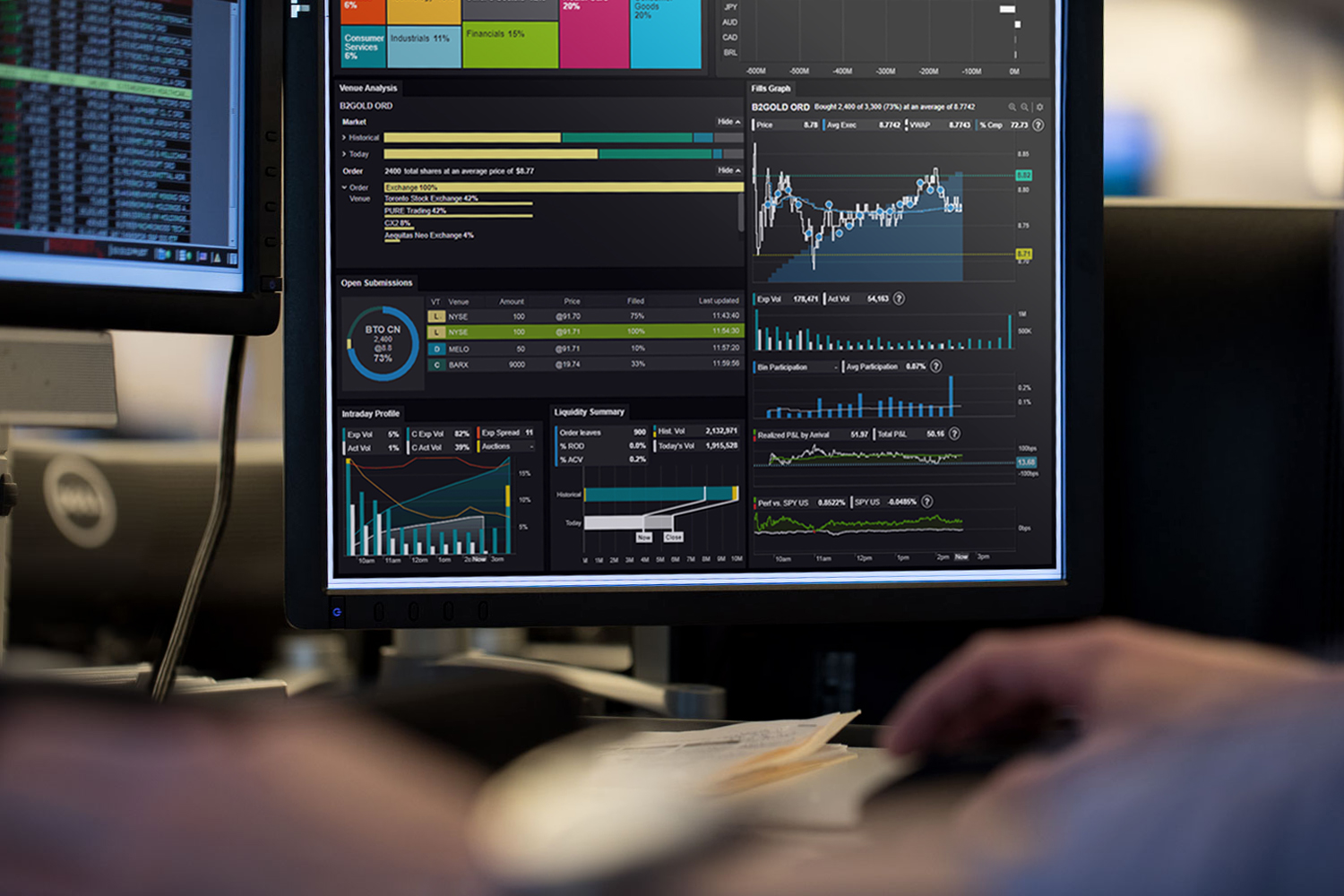
BlockCross tackles the search for larger trades. It integrates with a trader’s blotter, monitors relevant activity, and sends configurable alerts when potential block opportunities appear. Traders decide whether and how to respond. That is a modest but consequential design choice: discovery happens alongside the work already underway.
Other tools cover the surrounding chores. TradeSpex Strategy supports pre-trade planning; Indigo Live brings analysis into live trading; Execution Insights evaluates completed execution. Plazma manages commission budgets, aggregation, and research payments. Together, these products show how much institutional trading happens before and after the moment someone presses a button.
Institutional execution desks compete for the order. Trading software competes for the desktop. Instinet participates in both markets.
Its alternatives therefore depend on the job. A fund might compare execution providers, choose a different multi-broker desktop, or assemble separate analytics and liquidity tools. Instinet’s proposition is the connection between those functions, backed by an operating brokerage. That breadth needs to earn its place in a client’s workflow.
The expertise also has a technical layer. Instinet acquired FIS Execution Services, formerly Fox River, in 2022, bringing algorithmic technology and staff into the business. Its technology division offers custom enterprise systems and outsourced infrastructure as well as desktops. A client can therefore buy a piece of the machinery rather than adopt every service. For a trading desk with established processes, that flexibility can matter as much as a new feature. The practical question is whether the tool improves the route from an investment decision to a completed, measured trade.
More doors, fewer detours
The recent announcements continue the theme. In February 2026, Instinet integrated PureStream ATS into BlockCross, adding access to streaming liquidity through the existing desktop. Access was opt-in for clients upgraded to version 10. In September, Instinet Canada announced completed connectivity to CIX ahead of its planned launch; algorithmic routing integration was still described as planned.
Neither connection guarantees a counterparty or a completed trade. Suitable liquidity must exist, market coverage must fit, and users need the relevant access and controls. Instinet also explicitly excludes retail investors. These are professional tools built around institutional problems.
For a marketplace builder outside finance, the copyable idea is quite practical: watch where customers already work, connect them to useful participation, and measure actual activity. Instinet’s early terminals offered a possibility. Decades of brokerage, connectivity, and workflow development helped turn that possibility into something a trading desk could use.