The first thing INSHUR discovered was silence. Dan Bratshpis and David Daiches had built an insurance app. They expected drivers to arrive. Instead, as Bratshpis recalled on The InsurTech Geek Podcast, “And it’s just crickets.” A product could be digital, available, and almost completely beside the point.
- INSHUR builds commercial cover for rideshare, delivery and carshare work.
- Platform connections help it reach drivers and understand their working patterns.
- Its early comparison app gave way to underwriting, policy administration and claims.
The founders responded with a research method that sounds suspiciously like an excuse to ride around New York. They used burner phones and rideshare promotions, then interviewed drivers in cars. Their original idea had been an insurance comparison service. The conversations helped persuade them to become a managing general agent, taking responsibility for designing and underwriting products. Better shopping was only part of what drivers needed.
01 / The car has more than one job
Bratshpis knew the world inside those cars. Members of his immigrant family had driven cabs. By the time he and Daiches founded INSHUR in 2016, a passenger could summon a ride with a phone. Buying the commercial insurance that made the ride possible could still involve paperwork and an office visit.
The mismatch went deeper than convenience. A vehicle might carry a paying passenger, deliver a parcel, or sit between rental bookings. Each activity presents a different insurance question. INSHUR’s expertise is matching commercial cover to those uses, then making the purchase and administration fit the platforms where the work begins.
Consider its UK Amazon Flex product. Pay as you Flex links to delivery activity and charges for actual working time. A driver gets a quoted hourly rate; billing follows minutes. The product includes specified commuting buffers around blocks. For someone whose delivery schedule changes weekly, the attraction is intelligible: a cost that moves with the job.
That distinction matters. Pay as you Flex supplements a separate personal motor policy. Its current product page lists a £1.49 wallet management fee every 30 days, alongside individually quoted insurance charges. It is designed for approved Amazon delivery work; someone delivering across other platforms needs a product that covers those activities. The small print describes the product’s boundaries.
02 / Meet the customer before the search
INSHUR serves two connected audiences. Drivers and fleet owners need usable cover. Platforms need drivers who can start work with appropriate insurance. Embedding insurance into onboarding puts the offer near a concrete decision: getting on the road. It also gives the insurer access to information about how work actually happens.
This is the company’s competitive proposition. Zego also offers flexible delivery and private hire insurance in the UK. A mobile interface alone does little to distinguish them. INSHUR’s case rests on platform relationships, insurance expertise and control over the journey from quote to claim. Its partner tools include INSHURCheck, which verifies driver coverage.
The business operates as an MGA and insurance producer. Carriers provide policies and risk capacity; INSHUR handles functions including pricing, underwriting, distribution and administration. In August 2026, it announced a US program with Mobilitas providing capacity and Incline serving as fronting carrier. The partners projected more than $50 million in premium volume. That is a program expectation, not booked company revenue.
Company-reported milestones, June 2025. Policies sold are not unique customers.
03 / An old business joins the app
In 2023, INSHUR bought American Business Insurance Services. ABI was founded in 1983 and, at acquisition, insured more than 50,000 vehicles. The purchase extended INSHUR’s reach across the US. The same announcement included a $26 million funding raise. That amount was financing, rather than a disclosed acquisition price.
The combination is revealing. A digital insurance business still needs people who understand transportation risks, carrier relationships and local markets. Buying an established operator added that knowledge. INSHUR had already brought claims capabilities in-house, starting in New York in 2020. The operation behind the screen mattered as much as the screen.
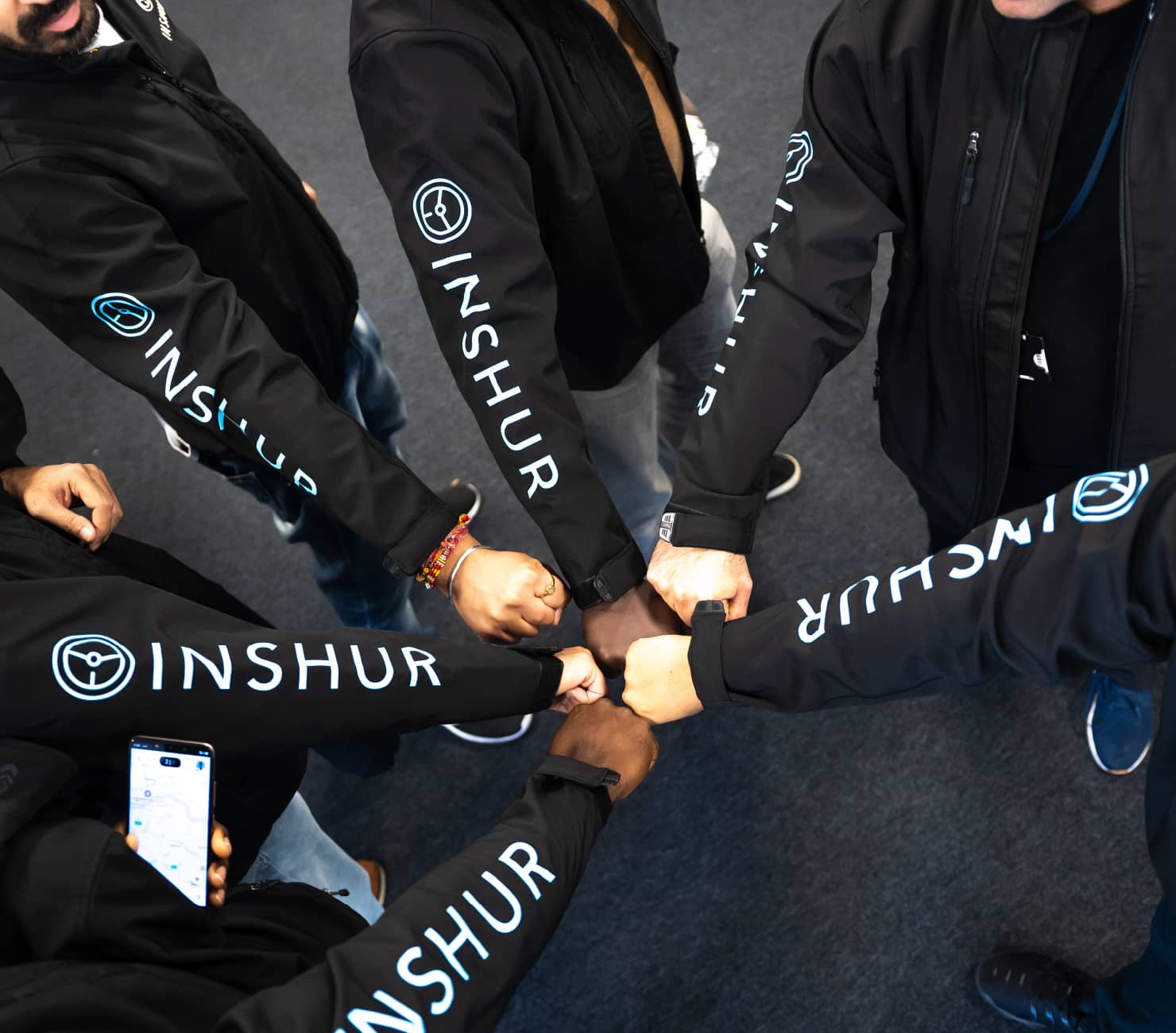
Its careers material describes flexible hybrid working, individual learning budgets and an emphasis on accountability. Current recruitment pages also encourage AI experimentation. These are the company’s stated practices. They fit a business whose work crosses software, customer service and insurance operations, where a polished demonstration cannot substitute for handling the next awkward claim.
04 / The business between bookings
The carshare products make the idea especially clear. Period X covers eligible off-rental risks, such as cleaning, maintenance and staging a vehicle. Period Z, launched through ABI with Incline in November 2025, addresses on-rental cover. The distinction follows the vehicle through its working life.
In September 2026, INSHUR announced direct access to Period X for Turo hosts starting with one car, subject to eligibility and state availability. The offer also permits limited personal use. A host does not become a large fleet simply by needing commercial insurance. Designing for that smaller operator is a useful detail, and a useful market.
“Everyone starts with one car before they scale.”Dan Bratshpis · September 2026
05 / A useful idea still has to pay
The financing has been substantial. Viola Growth led a $19 million round in October 2024. Trinity Capital announced a $35 million growth-capital commitment in July 2025. INSHUR said the latter would support US expansion and research into AI pricing and autonomous vehicle insurance. Those research ambitions should be read as plans.
The lesson another business can borrow is practical: interview people while they do the job, identify the unit they earn against, and put the service where they already work. For INSHUR, that unit might be a delivery minute or a rental period. The model depends on reliable platform data, suitable carrier capacity and sound underwriting. A faster sale cannot rescue a badly priced risk. The clock helps describe the work. The insurance still has to add up.