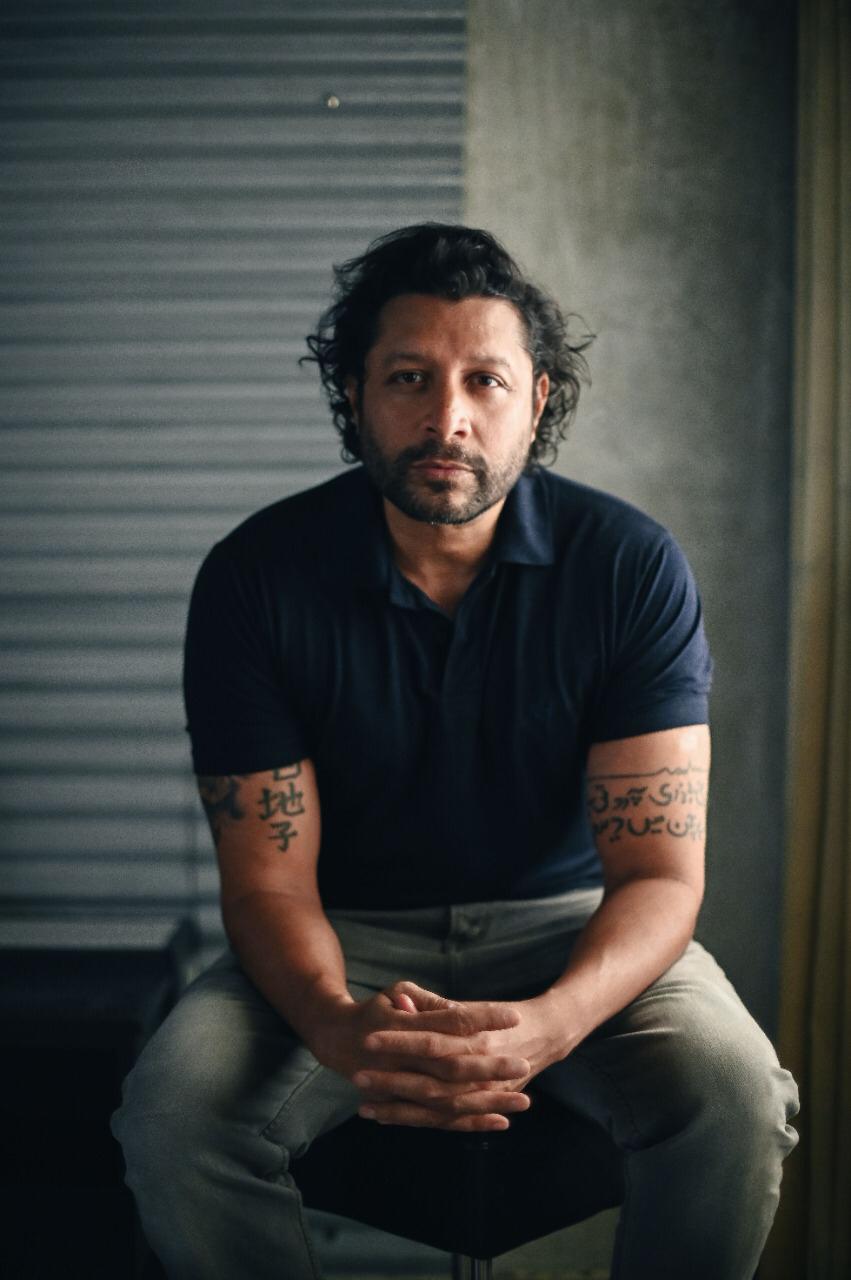
The first thing Indus River Valley Institute did was admit that a classroom had failed. While teaching architecture in Karachi, Zain Mustafa kept meeting students who could draw a building but knew surprisingly little about the civilizations that had built on the same ground before 1947. Pakistan’s past had been trimmed to a young nation’s timeline. The older, messier material - Buddhist Taxila, Persian crossings, Sikh Lahore, Kalash valleys, the trade routes running toward China and Central Asia - sat in separate chapters, if it appeared at all.
Mustafa’s response in 2012 was wonderfully literal: take people outside. Cube Edutours began with Makli, the vast necropolis in Sindh, and grew into guided learning across more than 50 heritage sites. A decade later, in August 2022, that road-tested method became the Indus River Valley Institute for Research & Development, or IRVI, based in Islamabad.
Calling it a think tank is accurate but incomplete. IRVI is also a field school, publisher, tour operator, reference library, connector of artisans, workshop designer and, lately, a game-design convener. LinkedIn lists a team of two to 10. The footprint is small; the brief is not. IRVI wants to redraw Pakistan’s cultural identity around the Indus watershed and its connections to the Silk Road, placing 7,000 years of overlap on one map.
The tour guide is not the teacher. The place is.
The distinctive move is not simply visiting ruins. Plenty of tour companies do that. IRVI treats a site as a stack of evidence: its stone and mud, the river or road that fed it, the craft techniques that survived nearby, and the people who still remember how the place worked. Mustafa has called those people “living museums” capable of telling visitors what books miss. The phrase risks romanticizing communities, but the operating idea is sound: expertise does not always arrive with a university title.
This makes the institute useful to several kinds of customer. Schools and universities get place-based lessons. Architects, historians and anthropologists get access to sites and a network of custodians, craftspeople and specialists. Cultural tourists get trips with more intellectual scaffolding than a sightseeing itinerary. Communities near heritage sites get training that may turn cultural knowledge into income. NGOs and public bodies get a small partner that can move between research, design and delivery.
Four businesses wearing one field jacket
IRVI’s public offer makes more sense as a portfolio than a single product. There are immersive Cube Edutours. There is publishing - newsletters, essays, videos, guidebooks and an online reference collection. There are workshops and proposed residencies connecting artisans with students, designers and researchers. Then there is project work, where the institute applies its field method to a specific preservation or livelihood problem.
Go
Heritage trips turn forts, shrines, streets and landscapes into a roaming syllabus.
Collect
Research, oral histories, a directory and hundreds of reference titles build a shared memory bank.
Make
Craft workshops, food, media and design exercises convert knowledge into usable skills and objects.
Hand over
Community tourism is designed so local hosts can eventually operate the experience themselves.
The business model is similarly mixed. IRVI does not publish revenue, prices, ownership details or profitability. Its visible activities point to tour fees through Cube Edutours, commissioned education and training, publishing, residencies, partnerships, contributions and participation in grant-backed work. That places it between conventional alternatives: more hands-on than an academic center, more research-heavy than a tour company, more commercially alert than an archive, and more distributed than a museum.
At Manchar Lake, preservation learned to cook lunch
The clearest example sits at Manchar Lake in Sindh, where the Mohana people’s houseboat culture has been battered by severe drought, flooding and a collapsing lake ecology. Only 35 traditional houseboats remained when a Cultural Protection Fund project set out to restore them. NED University of Engineering and Technology led the project; IRVI was a partner responsible for a practical slice of the problem: if the boats survive, how might the people living on them earn from heritage without becoming props in somebody else’s tour?
The first failure was environmental and economic: harsher droughts and floods damaged the lake system while traditional livelihoods weakened.
IRVI’s workshop bundled tour-guide etiquette, waste management, cooking, hospitality, social media and merchandise. Participants discussed boat rides, overnight stays, local fish dishes, Rilli quilts, reed work and carved boat pieces. Tourist pamphlets were produced in English, Urdu and Sindhi. A social-media trainer worked in Sindhi. Even the exit was designed: IRVI’s proposal says its involvement should conclude once visitors reach the lake, leaving hosting and guiding to the Mohana community.
The cost is public but oddly inconsistent. The British Council’s project page lists a £107,000 grant. Its 2024-25 annual report records £146,086 for the same NED-led award. Neither figure is an IRVI funding round, and neither should be presented as money raised by the institute. They are two official totals for a broader preservation project in which IRVI served as partner.
Then the ruins asked for a game engine
In September 2025, IRVI organized a ten-day World Heritage Volunteers residency at Taxila, selected within UNESCO’s global campaign. Volunteers from Pakistan, Sri Lanka and Ethiopia studied the museum, archaeological sites, Buddhist architecture and local craft. Their assignment was to sketch a concept for an immersive game that might make heritage legible to young people who are unlikely to read a conservation report.
Taxila: a prototype path
The team used photography, storytelling, architectural observation and conservation methods to imagine a playable Taxila around 323 BCE, with the arrival of Alexander and the later Buddhist influence of Ashoka shaping the narrative. It was a conceptual blueprint, not a finished commercial release. In July 2026, IRVI said the project had received a “Star of Outstanding” recognition from the World Heritage Education and Interpretation Centre.
This is where IRVI’s hybrid form earns its keep. A pure game studio might skip the patient site work. A conventional heritage body might stop at documentation. IRVI can convene both. But it also inherits both sets of risks: historical simplification on one side, and a prototype that never becomes a product on the other.
The part worth copying
The institute’s playbook is portable precisely because it does not require a grand campus or a large staff. It requires restraint, local access and a bias toward making something that remains useful after the visitors leave.
- Begin with a place, not a thesis. Let the building, landscape and community expose which version of the story is incomplete.
- Map the unofficial faculty. Caretakers, cooks, builders, musicians and craftspeople may hold the operating knowledge.
- Bring learners on site. Observation creates questions that a slide deck politely hides.
- Make an artifact. A guide, translated pamphlet, workshop, product sample or game prototype forces research to become usable.
- Design the handoff. If outsiders remain indispensable, the project has built dependency rather than capacity.
It will not work when community consent is cosmetic, local people do not control the visitor experience, tourism demand is imaginary, travel is unsafe, ecological damage makes access irresponsible, or a short grant ends before local operators can earn. Place-based learning is also hard to scale: every new site demands trust, research, translation and repeated fieldwork. The friction is not a bug. It is the cost of doing the work honestly.
IRVI’s next test is institutional, not historical. A charismatic founder can connect architecture, anthropology, education and a long road network in his own head. A durable institute has to turn those connections into repeatable programs, paid work, finished publications and leadership beyond one person. Its proposed earth-architecture residency and continuing heritage trips suggest the portfolio is still expanding.
Yet the central insight already travels well. A country does not lose its past only when a monument collapses. It loses it when students cannot place themselves in the story, when a craft has no buyer, when a caretaker is treated as background, or when preservation leaves the neighboring household poorer. IRVI’s answer is to put those pieces in the same vehicle and drive to the site. The bus was never just transportation. It was the first working prototype.