In vitro fertilisation runs on a strange contradiction. The hormones that decide whether a cycle succeeds move in hours - a luteinising-hormone surge here, a progesterone dip there - but the measurements that guide treatment arrive every other day, drawn from a vein and sent to a lab. A patient can give blood a dozen times across a single stimulation cycle and still be dosed off numbers that are a day or two stale. Impli, a medtech company founded in London in 2019, thinks that gap is a problem worth building hardware around.
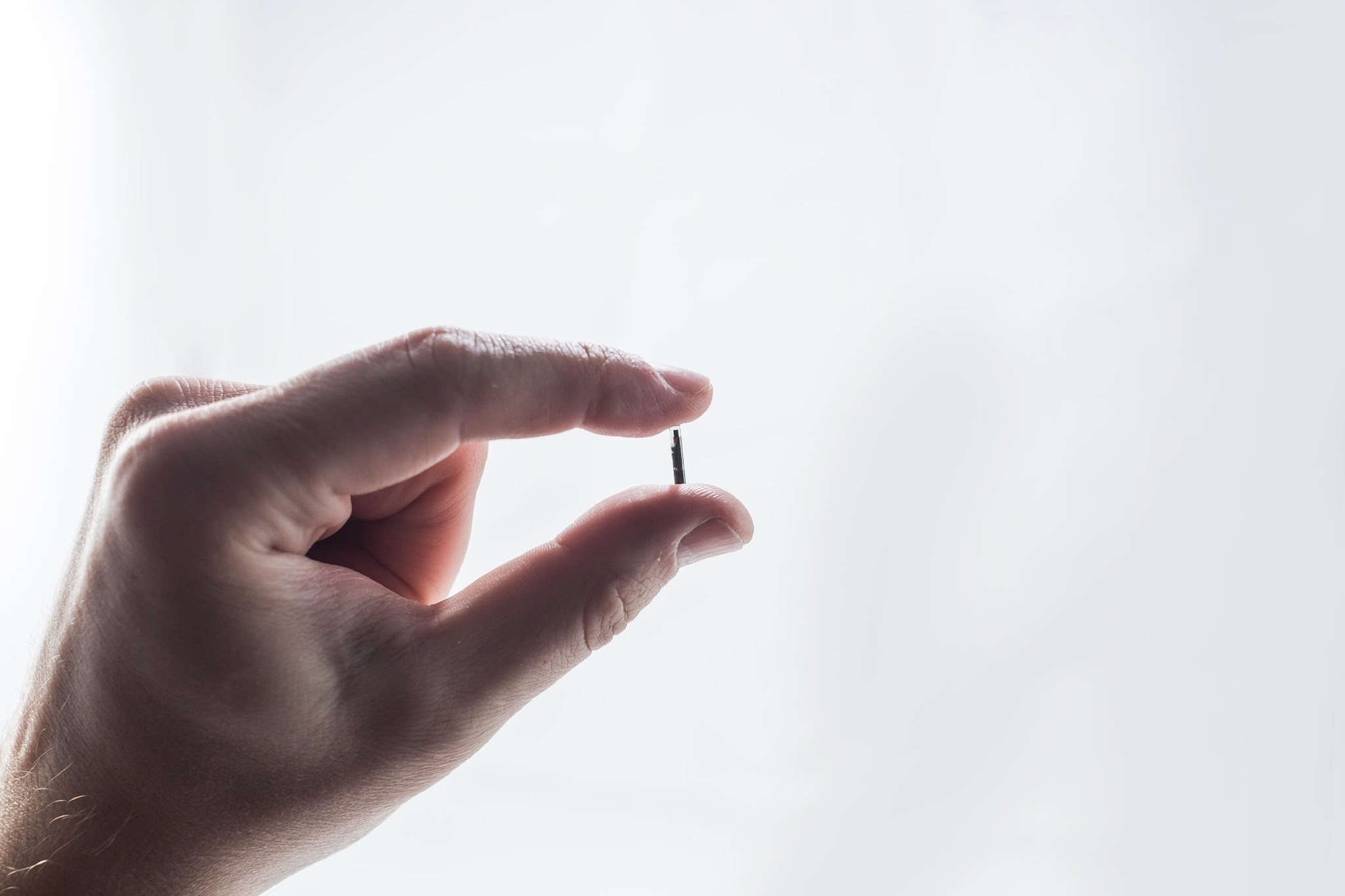
Its pitch is easy to picture even if the engineering is not: a sensor the size of a grain of rice that reads reproductive hormones continuously and streams them to a phone, the way a continuous glucose monitor reads sugar for someone with diabetes. Instead of snapshots, a graph. Instead of a clinic visit, a live feed. The company's first market is fertility, but the underlying idea - continuous hormone monitoring - is the whole bet.
01 / The problemWhy every-other-day isn't good enough
Roughly 189 million people worldwide experience infertility, and IVF remains the heavy-machinery option: expensive, physically demanding, and stubbornly uncertain. Published success rates sit somewhere between 15 and 32 percent per cycle. Part of what makes those odds hard to move is timing. Clinicians make dosing and retrieval decisions on hormone values that may already be 24 to 48 hours old, which means fast-moving events can slip through unseen - the surge that determines when an egg is released, the dip that precedes an implantation failure, or the early biochemical signs of ovarian hyperstimulation syndrome, a serious complication of treatment.
The status quo, in other words, is a blood-test marathon that still leaves blind spots. Impli's argument is that you can't optimise what you only measure intermittently - and that the fix is to move the measurement out of the lab and onto, or into, the body.
02 / The productAn implant, then a patch
Impli's technology reads hormones electrochemically from the interstitial fluid between cells - the same fluid glucose monitors sample. That sensing can live in two form factors. Impli Ceres is the implantable version: a rice-grain-sized biosensor placed just beneath the skin, between the dermis and the subcutaneous layer, transmitting readings wirelessly to a smartphone. BEAM - the Bio-Endocrine Analysis Monitor - is the skin-worn version: a microneedle patch, worn on the upper arm, that measures the same hormones without a permanent implant. In both cases, companion AI software turns raw electrochemical signal into a readable trend line.
The three hormones IVF timing depends on
Oestradiol
Tracks follicle growth and ovarian response during stimulation.
Luteinising hormone
The surge that signals egg release - easy to miss between blood draws.
Progesterone
A premature dip can precede implantation failure; timing matters.

The lineage is worth noting because it explains why a 14-person company is attempting something this hard. The biosensor draws on roughly 15 years of research by Dr Salzitsa Anastasova in the mechanical engineering department at Imperial College London, spun out into a commercial firm rather than invented from scratch. Impli is, in effect, the translation layer between a long lab project and a product a fertility clinic could actually use.
Snapshot vs. stream - how monitoring changes
Illustrative comparison of measurement frequency, not clinical claims.
"We are not just building a device, we are building the evidence base."Anna-Luisa Schaffgotsch, CEO & Founder
03 / The founderFrom a forgotten key card to a biosensor
Anna-Luisa Schaffgotsch studied biosciences, discovered entrepreneurship through a business module, and worked at biotech startups in Germany before starting Impli. The origin story she tells is almost too tidy: after a punishing job with long hours, she forgot her office key card and faced a two-hour round trip to retrieve it. The irritation turned into a question - why aren't the things we most need simply part of us? - and that question turned into an implantable-technology company.
The first product, ImpliCaspian, was launched in January 2020. It was not a hormone sensor at all but an NFC medical-ID implant: a rice-sized chip, inserted in about two minutes with a two-day healing window, that stored a person's medical information under the skin and could be read by tapping an NFC-enabled phone. Then, in March 2020, COVID-19 shut the operation down two months after launch. The company describes the founder working "from 7 o'clock in the morning right through to 12 o'clock at night" through the pandemic - not to save the original product, but to pivot away from it toward clinical-grade hormone monitoring. The pivot is the company now.

"It allows you to hold your medical information with you at all times through a small rice-sized implant that sits right underneath the skin."Anna-Luisa Schaffgotsch, on the original ImpliCaspian implant
04 / TractionBayer, the NHS, and a grant that buys evidence
Two outside validations give Impli's roadmap weight. In October 2024, after winning a Bayer innovation challenge at HLTH Europe in Amsterdam, the company signed a strategic R&D partnership with Bayer to explore hormone-monitoring use cases beyond fertility - the pharma giant has publicly floated applications in stress, sleep, weight management, cardiovascular and bone health. Schaffgotsch called the alliance "an opportunity to innovate and transform lives."
In June 2026 came the more concrete milestone: a £1.4 million grant from the UK's National Institute for Health and Care Research, through its Invention for Innovation programme. The 30-month project funds the move from prototype to first-in-human trials of the BEAM biosensor - a 25-patient clinical study run with Imperial College Healthcare NHS Trust and King's College London, with the patient network Fertility Europe involved and an NHS adoption pathway already in scope. It is the kind of money that buys not revenue but proof.
"Continuous hormone monitoring has the potential to change the landscape of fertility treatment."Sotirios Saravelos, consultant gynaecologist
05 / The marketWhere Impli fits, and who it's up against
The default alternative to Impli isn't another gadget - it's the current standard of care: serial venous blood tests plus clinic ultrasound. That's the incumbent to beat. On the technology frontier, Impli sits inside the emerging "continuous hormone monitoring" category that femtech figures such as Clue founder Ida Tin have started to back. It's adjacent to at-home hormone testers like Mira, Inne and Oova, which read hormones from urine or saliva rather than sensing continuously beneath or through the skin. Impli's differentiator is the continuous, body-worn read and the clinical framing around IVF specifically.
Fertility is the wedge, not the ceiling. Impli has been open that the same core sensing could extend to hormonally driven conditions - polycystic ovary syndrome, endometriosis, menopause, and hormonally driven cancers - which is precisely why a partner like Bayer is interested in the platform rather than the single product. The business model reflects that: a regulated medical device plus companion software, funded through grants, pharma partnership and venture capital, aimed at fertility clinics and health systems, with a US medical-device launch targeted around 2027.
None of it is on the market yet, and the company is careful to say so - the honest read is that Impli is a pre-commercial deep-tech firm running its first human trial. But it is the rare femtech story where the science, the founder and the timing appear to line up, and where the plan is to earn adoption with evidence rather than vibes.
06 / TimelineSix years, one hard pivot
Impli founded in London
Anna-Luisa Schaffgotsch starts the company to explore implantable health technology.
ImpliCaspian launches, then COVID hits
The NFC medical-ID implant ships in January; operations pause in March, forcing a pivot to hormone monitoring.
Swiss expansion via Biopôle
Joining Biopôle's Vanguard Accelerator establishes Swiss operations and networks.
Pre-seed and Venture Leaders Medtech
Roughly $1.2m raised; Impli is selected as a Venture Leaders Medtech company.
Bayer partnership
A Bayer innovation-challenge win in Amsterdam leads to a strategic R&D partnership in October.
£1.4m NIHR grant and BEAM trial
Funding for a 30-month, 25-patient first-in-human trial of the BEAM microneedle biosensor with the NHS.
Targeted market launch
Impli aims for its first medical-device launch, with the US in scope.