A spreadsheet has an agreeable personality. It opens without demanding a strategy meeting. It accepts a new column without consulting procurement. Then a business grows, somebody adds another tab, and an accommodating little file finds itself running an operation. Illia Pinchuk has made that promotion a subject of his work. The founder and CEO of DICEUS spends much of his public working life discussing what happens after the spreadsheet becomes indispensable.
In his 2026 conversations about captive insurance, the recurring problem is painfully ordinary: more clients bring more manual administration, which brings more hiring. Policies, renewals, reporting, and financial records need attention. A business can win customers and still struggle to become easier to run. Pinchuk approaches that predicament with an engineer’s interest in how the parts connect.
His route to this question runs through freelance development, .NET programming, system architecture, and the company he founded in 2011. Based in Vienna, he now leads a business selling configurable insurance software alongside engineering expertise. The distance between those jobs is considerable. The underlying concern, making a complicated system behave coherently, has remained useful.
Before the boardroom, the code
Pinchuk’s working history starts earlier than DICEUS. His career record lists freelance development from 2006 to 2008, followed by a senior .NET developer role at Techno Info Service in Kyiv from 2008 to 2010. In 2011, he became a system architect and team leader at FDC/Kuadriga, a position listed through January 2013. These are jobs in which an attractive proposal eventually has to compile.
He also studied at the National Technical University of Ukraine, Kyiv Polytechnic Institute, with his education record listing 2006 to 2011. The chronology places study and professional work alongside one another. It offers a useful starting point for understanding a founder whose public vocabulary still includes architecture, integration, and dependencies.
DICEUS was founded in 2011. Its early history includes an insurance broker platform for Willis, followed by a U.S. insurtech collaboration with BriteCore in the 2015-2016 period. Insurance was therefore part of the company’s work well before the recent product emphasis. The sector supplied recurring technical problems, relationships across borders, and opportunities to learn how software survives contact with established businesses.
A founder coming from architecture carries a particular professional inheritance. A component can work perfectly on its own and still cause trouble when attached to everything else. That is a useful lens for reading Pinchuk’s later interest in disconnected insurance operations. The problem often sits in the journey between two functioning parts.
- 2006Freelance development
- 2008Senior .NET developer
- 2011System architecture · DICEUS founded
- 2023-24Insurance product suite launched
A customer is a business to understand
By July 2018, Pinchuk was describing DICEUS as a technology partner serving customers in more than 20 countries. The company’s work ranged across enterprise systems and mobile development. His ambition was to take customers through research, design, implementation, and maintenance, keeping the relationship going beyond the first delivery.
His answer about choosing development platforms centered on guiding customers throughout the project. The practical work behind that promise included researching the customer’s business, industry, and intended users before choosing a development platform. Software decisions were supposed to follow that understanding.
There was attention to the people doing the building, too. He described individual development plans and opportunities for employees to attend professional events. A technology company’s capabilities depend partly on whether its staff can keep learning while client work continues to arrive. The calendar has to accommodate both.
That customer relationship became a recurring theme. In his 2023 account of DICEUS’s operations, dedicated project managers and transparent communication featured alongside engineering services. Onboarding, explaining goals, and coordinating a larger team were treated as work with a purpose. Anyone who has watched a meeting produce three incompatible interpretations of the same sentence can appreciate the expense being addressed.
“We guide our clients every step of the way.”Illia Pinchuk · 2018
Learning the same industry twice
DICEUS’s history records a Raiffeisen Bank contract in 2021 and new work for UNIQA in 2022. In 2023-2024, the company launched a suite of insurance products covering areas such as policy administration, claims, billing, and AI tools. Its relationship with Vienna Insurance Group also appears in that period. The chronology shows the business accumulating industry experience before packaging more of it into products.
That transition changes the founder’s task. Custom development begins with a particular customer’s problem. A reusable product asks which parts of that problem recur elsewhere and which should remain configurable. Too much specificity makes every implementation a fresh construction project. Too little leaves customers paying for something that understands their industry only in the broadest terms.
Pinchuk’s current portfolio includes a Captive Management Platform, Captive Owner Portal, Insurance General Ledger Platform, and Data Warehouse for Insurance. The names are unromantic and quite helpful. They identify administrative jobs and the people who need them done. In this corner of software, an intelligible ledger has more immediate appeal than a mysterious promise.
His professional interests also extend to RiskVille, the Danish insurance software business of which he is a co-owner. Taken together, these activities give his career a recognizable shape: years spent building systems, followed by a growing emphasis on products organized around insurance work.
The cost of one more client
A captive is an insurance company established to cover risks associated with its owners. Its administration creates a meeting point for policies, money, claims, records, and oversight. Pinchuk’s 2026 podcast appearances repeatedly return to the difficulty of coordinating that work when information lives in separate places.
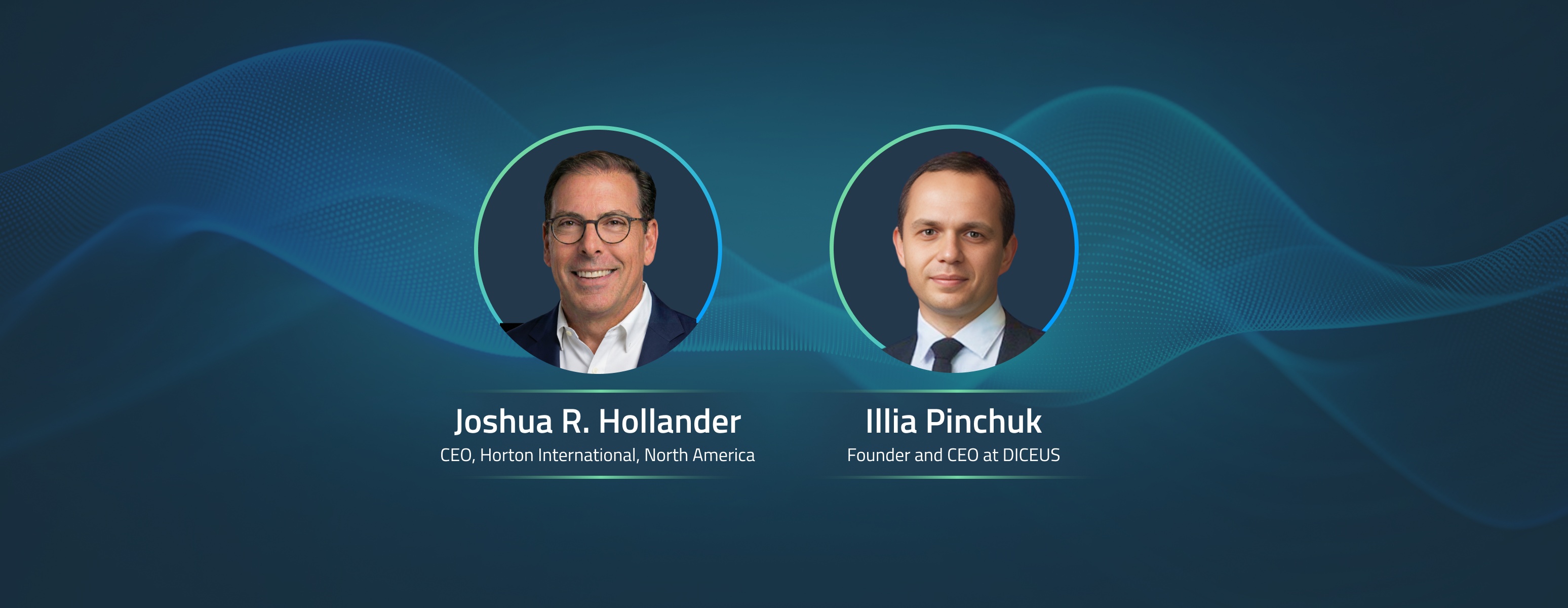
With Joshua R. Hollander on the Insurtech Leadership Podcast, he discussed a model in which each addition to the business generates more manual work. A new policy requires attention. A renewal requires attention. A filing requires attention. When those demands are handled separately, the organization’s capacity becomes closely tied to how many people it can employ.
This is a modest-sounding constraint with large consequences. Winning another customer is supposed to be good news. If each win brings a nearly matching increase in administrative effort, growth can feel oddly like standing still with a longer payroll. Pinchuk’s interest is in changing the relationship between the size of the business and the work required to operate it.
The conversation also covered feature-based pricing. For a captive manager evaluating software, the bill belongs in the same calculation as the time saved. His commercial argument therefore connects product design to operating costs: the software must fit the organization’s work and make economic sense to adopt.
A separate conversation with David Carothers examined integrated administration and portals for captive owners. Better access matters because a system serves people on different sides of the same business. The manager needs to carry out the work. The owner needs to understand what is happening. Making the records accessible can reduce another round of messages asking for information already held somewhere else.
Issue & renew↔Finance
Bill & reconcile↔Reporting
Review & share
Connected records are central to Pinchuk’s argument for reducing repeated manual administration.
AI, with somebody still at the controls
Pinchuk’s AI commentary has a revealing preoccupation: the quality of the work around the model. In a May 2026 article on policy administration delivery, he described using AI to organize requirements, prepare development tickets, assist programmers, and support testing. Human review remains part of those processes. Business decisions and technical judgment still have owners.
The distinction matters in a large software project. A requirement may arrive in a meeting, an email, or a document. Before anyone can build it reliably, people have to agree on what it means and how it relates to the other requirements. A faster coding tool cannot settle a disagreement that nobody has noticed.
His argument emphasizes consistency and predictability. Earlier clarification can spare a team later rework. More coherent documentation can make the next handoff easier. These are improvements a delivery team can use on an ordinary Tuesday, which gives the AI discussion a welcome connection to actual work.
By September 2026, his RiskCellar conversation with Brandon Schuh and Nick Hartmann was addressing pricing, configurable platforms, and connected workflows alongside controlled enterprise use of AI. Traceability and audit trails were part of the discussion. For Pinchuk, the prospect of faster change comes with the practical question of how an organization will retain control of what changed.
The founder keeps a student’s place
There is another entry in his recent career that fits this interest in decisions and evidence. In 2025, he completed a Harvard Business School Online certificate program involving quantitative methods for management decisions. His education record describes the subject in terms of analyzing data and improving judgment. It is a specific course of study, added years after founding the company.
He has also described contributing practical experience to a fintech textbook initiative led by Alex Zarifis at the University of Southampton. It is an extension of a theme visible in his earlier comments about employee development: professional knowledge has value when it can travel beyond the person who first acquired it.
His public appearances in 2026 brought him into conversations with Tony Cañas on Profiles in Risk, Hollander on Insurtech Leadership, Carothers on captive operations, and the RiskCellar hosts. The subjects vary, but the same operational questions recur. How does information move? Where does manual work accumulate? What can be configured? Who remains responsible for the result?
Those questions give Pinchuk’s story its continuity. The freelance developer became an architect, then a founder, then the leader of a company turning insurance experience into software products. Each stage enlarged the system he had to consider. The spreadsheet, meanwhile, kept doing what spreadsheets do: accepting more work. His current ambition is to give some of that work a better home.