A purchase worth less than a dollar is an awkward place to put the future of money. Add a transaction fee of several dollars and the future begins to look like a very expensive errand. In 2022, Igor Telyatnikov described precisely that problem while discussing Bitcoin payments in El Salvador. His company, AlphaPoint, was helping upgrade Chivo, the country’s Bitcoin and dollar wallet. The grand experiment had arrived at the till.
Telyatnikov’s answer involved the Lightning Network, which lets Bitcoin payments move quickly with small fees. He also talked about application responsiveness and administrative tools that would help customer-service teams respond faster. It was a revealing list. Alongside a new monetary network sat the familiar business of answering people when something went wrong.
That combination runs through his career. Before becoming AlphaPoint’s CEO in 2019, he worked in security technology, advertising technology and venture investing. His professional story is full of systems that do complicated things on behalf of someone else. The customer sees a useful result. Somewhere behind it, a considerable amount of machinery has agreed to cooperate.
The exchange before the exchange
At Penn State, Telyatnikov studied marketing, attending from 2003 to 2007. His early work included security technologies and systems integration at Ingersoll Rand, the business associated with what became Allegion. He helped drive adoption of new security technologies. This was an education in getting technology into an organization that already had its own habits, equipment and requirements.
He later led West Coast business development at LiftDNA, an advertising exchange business. Its platform made real-time pricing predictions for more than 10 billion advertisements a month. OpenX acquired LiftDNA in 2012. Digital advertising and digital assets would eventually supply different products, but both placed a market inside software. A transaction depended on a system most participants would never inspect.
Then came Cvetlo, an early-stage investment firm focused on financial technology, advertising technology and online media. Telyatnikov served as managing director. He had worked with the adoption of technology and the sale of it; now the work included deciding which young businesses might deserve capital. In his later public account of his preferences, the pull of operating remained stronger.
Bitcoin catches his attention
He dates his first interest in cryptocurrency and blockchain to 2012. Before AlphaPoint, he put time and capital into mining and trading businesses. That sequence matters: his involvement began with participation in the young market, followed by building a business to serve it.
AlphaPoint was founded in 2013. Telyatnikov became part of its founding group, with his involvement dated to 2014 in contemporary reporting. The proposition gave organizations software to run digital-asset markets under their own brands. The supplier could build a substantial business while remaining a name the eventual customer never learned.
Consider the bargain from a buyer’s side. An exchange operator wants to offer a market. It needs software that handles orders and transactions, and it needs that software to fit its own operation. AlphaPoint’s white-label model let the operator put its identity on the service. Fame, in this arrangement, was a benefit the customer could keep.
A simplified view of the white-label model. The customer owns the front door.
A bank asks the software to prove itself
By 2017, Telyatnikov was identified publicly as AlphaPoint’s president and chief operating officer. That March, the company announced completion of a blockchain technology trial with Scotiabank. The exercise lasted several months and used trade reports, rather than a speculative promise, as its raw material.
The platform ran on Microsoft Azure and AlphaPoint hardware. It converted FIXML trade-report messages into smart contracts in real time, creating a common record across the network. The technical detail is useful because it shows what an institutional experiment actually involved: messages arriving from existing systems, being transformed and remaining available to the participants who needed them.
A bank trial is a particular kind of scrutiny. The software must enter a world already occupied by other software. The new arrival has to explain itself to the old residents. For a company selling infrastructure, those meetings between systems are part of the product.
In 2018, Telyatnikov was discussing projects involving CME and the Royal Mint’s digital-gold work, property tokenization with Muirfield, and XP’s planned XDEX exchange in Brazil. His public attention ranged across assets and institutions. Bitcoin had opened the conversation; the possible customers were asking questions about considerably more than Bitcoin.
- 2012Crypto catches his attention
- 2019Becomes AlphaPoint CEO
- 2022Chivo upgrade announced
- 2024Wenia exchange and card
The CEO chair came with customers attached
On May 31, 2019, AlphaPoint appointed Telyatnikov CEO, succeeding Salil Donde, who moved into a strategic advisory role. Telyatnikov had already been responsible for business strategy, customer success and revenue growth. The title changed after he had spent years close to the commercial and operating work.
The leadership reshuffle also made Joe Ventura chief information officer and Kapil Rathi chief operating officer. Rathi brought experience in securities exchanges and regulated markets. The arrangement placed Telyatnikov among colleagues whose backgrounds reflected the institutions AlphaPoint wanted to serve. A technology company’s ambitions become more concrete when someone has to organize the people delivering them.
He also spent time with people building younger companies. His LinkedIn profile lists mentoring at the Yale Entrepreneurial Institute beginning in June 2014. A March 2019 account of the Techstars Alchemist Blockchain Accelerator includes him among its visiting mentors. The record gives his career a conversational dimension: experience passed around a table, before anyone could know what a startup would become.
Chivo makes the customer a country
The Chivo work made the operating questions unusually public. El Salvador launched the wallet in September 2021. AlphaPoint’s role upgrading it was publicly announced in early 2022, after that initial launch. Telyatnikov was leading a supplier being brought into a service that already existed, with citizens and merchants depending on it.
The scope extended across the mobile application, merchant portal, call-center support software and administrative console. These are distinct parts of one experience. A person attempting a payment does not divide responsibility neatly between them. The technology has to do that organizational work out of sight.
In an interview with his brother and fellow co-founder Vadim, Telyatnikov described an emphasis on a simple interface. His separate discussion of Lightning returned to those small purchases and disproportionate fees. The ambition of broad access met the particulars of using a wallet: speed, cost, responsiveness and help when needed. A payment technology acquires meaning through the payment.
in transactions reported by AlphaPoint at its tenth anniversary, across more than 10 million users globally. Platform activity, rather than personal wealth.
Another route through a familiar institution
In May 2024, AlphaPoint announced its work with Bancolombia Group’s Wenia. The exchange application supported buying, selling, converting, sending and receiving digital assets, including COPW, a Colombian peso-backed stablecoin. For Telyatnikov, this put the access argument inside a project backed by an established financial group.
Wenia’s operating design combined several suppliers and requirements. Its Bermuda Class F license, wallet technology from Fireblocks and integration of Chainlink’s reserve-verification data sat alongside AlphaPoint’s exchange technology. The customer-facing app was the visible piece of an arrangement involving markets, custody and oversight.
By November, AlphaPoint was supporting Wenia’s crypto-backed Mastercard, with assets converted for purchases. Telyatnikov linked the card launch to the need to make digital assets usable at the point of sale. There was the checkout again, patiently waiting for the industry to finish its presentation.
Tokenization remained part of the work, too. An August 2024 Polymesh partnership aimed to simplify issuing and trading tokenized assets through an API. Telyatnikov emphasized the requirements of regulated assets. His early interest in widening the kinds of assets a market could handle had acquired a vocabulary of compliance, integration and customer implementation.
The operator outside the organization chart
There are glimpses of a person beyond these projects. He has described enjoying action sports. Asked whom he would like to meet for a meal, he chose Elon Musk, with a particular interest in time management and planning. His stated advice to people considering a similar career included pursuing work they care about, doing it well and continuing to learn.
One early connection he remembered was David Johnston, whom he met at a Bitcoin conference. Johnston’s ideas about decentralization and assets beyond currency stayed with him; Johnston later became an AlphaPoint advisor and friend. It is a small episode with a recognizable shape: somebody says something at a conference, and the conversation lasts much longer than the event.
“I’m excited to help other firms navigate and win in their markets.”
Igor Telyatnikov · public advisory profile
His title has since changed. AlphaPoint’s current leadership page names Scott Bambacigno as CEO and says he assumed the role in 2026. Telyatnikov’s public advisory profile describes a preference for operating and helping other entrepreneurs grow. He reports having helped take AlphaPoint above $20 million in annual revenue and raise $24 million, figures he presents without a measurement date.
The work continues to offer a useful way to read his career: through the institutions and people expected to use what a team builds. A bank needs its records. A merchant needs a payment. A founder needs a business that can grow. For all the novelty of digital assets, those are wonderfully persistent requests. Telyatnikov has spent much of his working life trying to make the machinery answer.
Follow the conversations
Interviews, public profiles and a closer look at the projects.
- Igor Telyatnikov on LinkedIn · Twitter / X · Advisory profile
- AlphaPoint website · Current leadership
- Watch: Riderflex conversation with Steve Urban
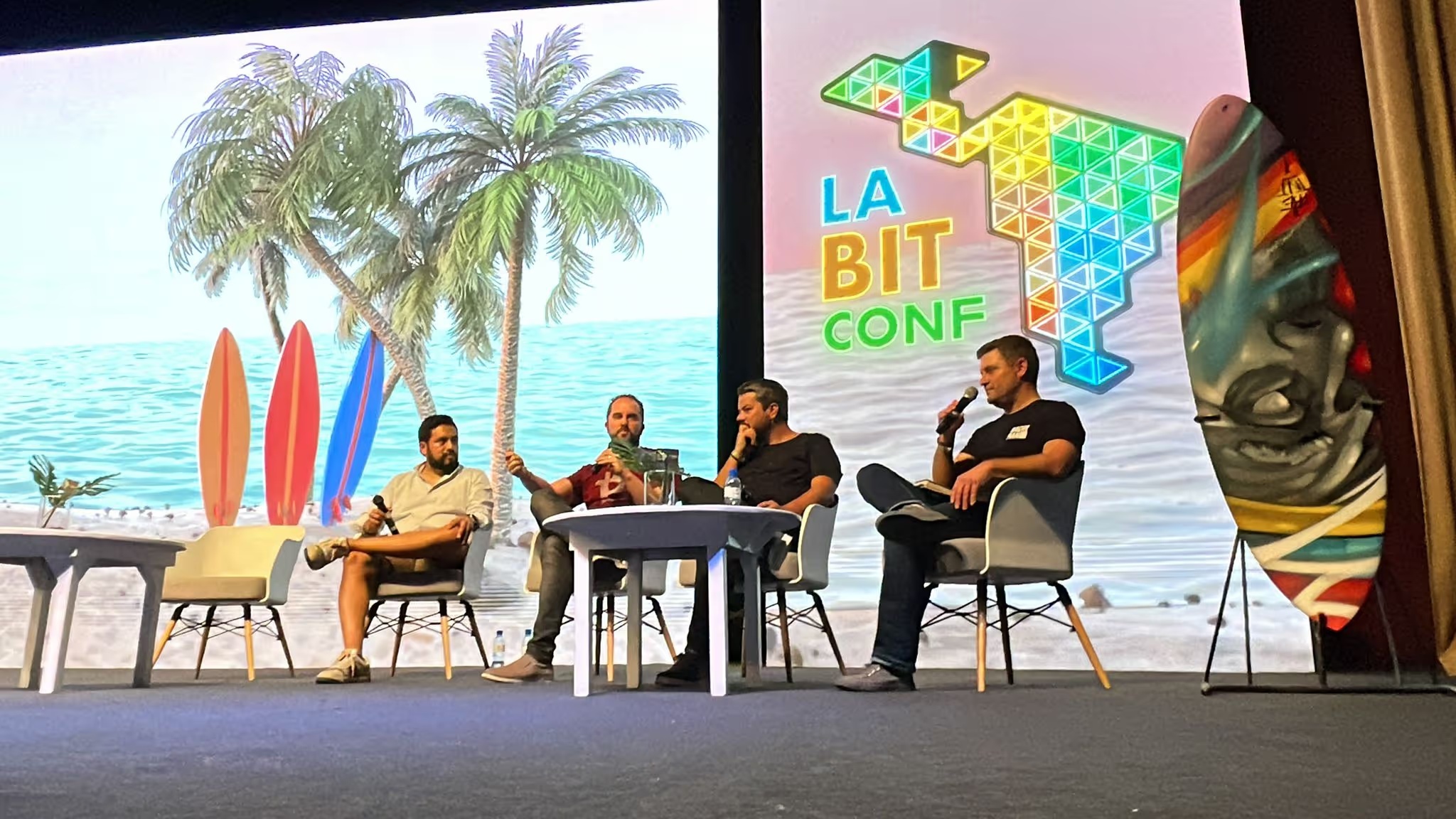
- Watch: LABITCONF exchange-strategy panel
- Listen: Inception with Mike Edelhart
- The early Bitcoin interest and personal ambitions
- The 2022 conversation about Chivo and Lightning
- Wenia’s 2024 exchange announcement