The first thing to fail was the building. In 1974, Los Angeles inspectors looked at the small Pentecostal sanctuary at 122 South Evergreen Avenue and closed it. The structure was old, badly deteriorated and, in the church's own blunt account, falling down. A congregation can survive a mediocre organist or a rainy fundraiser. A condemned roof is less negotiable.
So Iglesia Pentecostes Roca de Salvacion became mobile. Its people met at a church on Eastern Avenue, returned for a time to 2118 Brooklyn Avenue, then rented another building on Dozier Street. They compared this period to wandering in the desert. The journey lasted three years. In 1977, they came home to a new sanctuary on Evergreen.
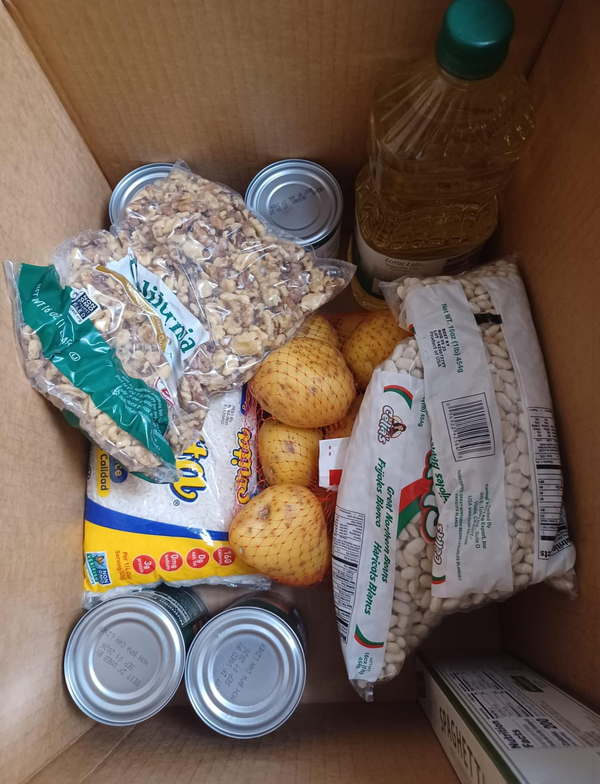
That episode explains this organization better than the occupational label attached to it in some business databases. Roca de Salvacion is not a public-relations agency. It is a bilingual Pentecostal church in Boyle Heights, affiliated with the Assemblies of God, that has turned one address into a dense network of worship, teaching and neighborhood service. The oldest product is belonging. The most visible current one may be a cardboard box filled with beans, onions, cereal, cans and cooking oil.
The originA living room before the sanctuary
The story began downtown. Rev. Carlos Manuel Guzman, who had come from the Dominican Republic by way of New York, was leading a small ministry near Third Street and Broadway. There he met Maria Elia, from Michoacan, Mexico. After that meeting place closed and a short pastoral assignment elsewhere ended, the couple started again. In 1956, they gathered in the Mednick Street home of Candelario and Maria Valdez.
The house filled. They rented a location at 2118 Brooklyn Avenue, on the street now called Cesar E. Chavez Avenue, and later bought the little church on Evergreen. Notice the recurring sequence: a space becomes too small or unusable; the group moves; the inconvenience forces a larger commitment. The church did not grow because disruption was romantic. It grew because people kept showing up after the address changed.
Every person has the right to hear the Gospel presented at their level of understanding.Roca de Salvacion's statement of purpose
The same logic produced the 1991 expansion. Roca de Salvacion says members performed most of the construction under Joe Guzman's direction, with Rene Alegria coordinating the congregation's labor. They added a sanctuary for 700 people, eight Sunday-school classrooms and two parking lots. The revealing cost was paid in work: design, coordination and the hours of members who built the rooms they intended to use.
The crucial observationThe neighborhood changed the language
By the 1990s, the church faced a quieter kind of mismatch. The original congregation served Spanish speakers, but Joe Guzman and his wife, Rev. Rosalinda Guzman, saw English-speaking people in the community whom the ministry was not reaching. In 1995, they started Rock of Salvation Church, an English-language congregation in the same building.
This was not a rebrand. It was an extension. The distinction matters. A bilingual institution can ask one group to adapt to the other, or it can let each worship in the language in which faith feels least translated. Roca de Salvacion chose two congregations under one roof. Its public sermons now include Spanish and bilingual services; its program names move easily between Escuela Dominical, Girls Ministry, Ministerio de Varones and Royal Rangers.
For people deciding among local churches, that combination is the point of difference. Boyle Heights has many congregations, and residents can obtain food, counseling or youth programming from secular providers. Roca de Salvacion's offer is bundled and relational: worship, Bible education, family support and material help delivered by people who may see the same family several times in a week. Its market is not the globe. It is the radius around Evergreen Avenue, deepened over decades.
The operating systemMore calendar than campaign
The church's services read less like a polished portfolio than a crowded family calendar. There are Sunday worship services, Monday prayer, midweek groups and Friday gatherings. A ministry for residents 65 and older sits alongside youth programming. Girls can join Girls Ministry; boys can join Royal Rangers. Leaders visit hospitals, organize street and park evangelism, coordinate transportation and run men's and women's groups.
The family ministry offers members free, confidential couples and family counseling. Graciela and Jesus Calderon, the church says, hold family-counselor certificates from the Centro Hispano de Estudios Teologicos. The food ministry distributes groceries through a Los Angeles food-bank connection and even provides a form allowing someone else to collect an order. Years ago, the neighborhood's La Favorita Bakery was reported donating bread to the church. These details are mundane in the best way. Trust is built when the service accounts for a person who cannot make pickup.
Roca de Salvacion's business model is voluntary giving converted into continuity. Donors can contribute once, schedule recurring gifts, give by text or use the church's mobile option. Money supports the building and programs; volunteers expand what the payroll can accomplish. This is not a venture-backed machine, and valuation would be a category error. The return is a room that opens when scheduled, a counselor who already understands the family, and food close enough to carry home.
The handoffSuccession after a long apprenticeship
In October 2023, at age 89, Maria Elia Guzman passed senior leadership to her son Joe and became Pastor Emerita. It was a family succession, but not an abrupt one. Joe had received his first ministerial credential in 1990, become fully ordained in 1994, helped direct the building expansion and co-founded the English congregation. By the time he received the title, he had already been carrying parts of the institution for decades.
Maria Elia died in July 2025. A year later the church marked its 70th anniversary. Its public archive celebrated with a slideshow and a sermon; its calendar kept moving. That pairing says something useful about continuity. An anniversary looks backward, but an institution survives by knowing who has the keys next Friday.
The old sanctuary failed first. What replaced it was not only a stronger building, but a congregation accustomed to doing the work.The practical lesson of Evergreen Avenue
What others can copyBuild around observed gaps
The transferable idea is not to copy the program list. It is to copy the method. Roca de Salvacion noticed where its structure excluded people: no stable building, too little classroom space, one language, a neighbor unable to pick up groceries. Each answer was concrete. Rebuild. Add rooms. Start an English congregation. Let an alternate person collect the food.
The method requires conditions that are easy to skip over: leaders who stay, volunteers willing to own unglamorous tasks, donated income, a usable physical base and enough neighborhood trust for people to ask for help. Remove those inputs and a packed calendar becomes fragile. With them, small services reinforce one another. The food pickup introduces the address; a class creates a weekly habit; a family counselor deepens the relationship; a second language keeps the next generation inside the circle.
Seventy years after the Mednick Street living room, Roca de Salvacion still looks most convincing at human scale. Its grandest number is 700 seats. Its sharpest insight is smaller: notice who is missing, then change the arrangement.