Ido Susan once said he wanted to be a carpenter. By then, he had helped sell a software company to Cisco for $475 million and was running another company that asked telecommunications operators to rethink their networks. Carpentry would at least give him a finished object to point to. The internet offers fewer opportunities to stand back and admire the joinery.
There is a tempting version of Susan’s story that ends with the sale. It has a young founder, an enormous number, and enough room in the final paragraph for a beach. Susan kept working. The interesting part begins with that decision, because his next company would require years of engineering and the consent of customers who could scarcely afford an experiment to go wrong.
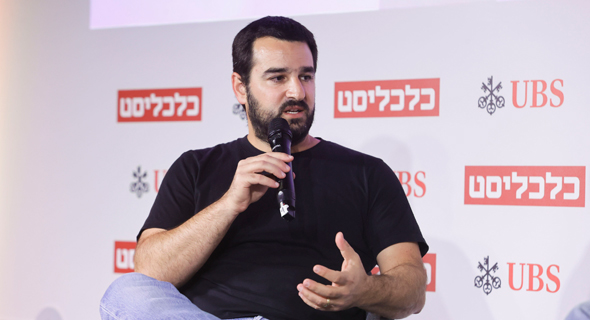
Today, he is the co-founder and CEO of DriveNets, based in Ra'anana, Israel. His work has moved from mobile-phone networks to the connections inside AI infrastructure. Across that distance, a practical question keeps returning: why buy more expensive machinery before making better use of what is already there?
The first congestion problem
Susan grew up on a kibbutz with parents who were farmers. Computers caught his attention in high school. He liked working with them and making things, an interest that continued into his service in an Israeli military intelligence unit. He later described those years as an education in handling large systems and real operations.
After leaving the military, he briefly began studying computer science, then decided to start a company. Intucell’s early idea involved location-based advertising. Conversations with potential customers sent the team in another direction: software to improve the operation of mobile networks. The first idea had served its purpose by bringing them close enough to hear a better problem.
Mobile demand moves around. A network must deal with changing concentrations of users and traffic. Intucell developed self-optimizing network software that let operators adjust their cellular infrastructure automatically as demand changed. The work concerned capacity, configuration, and the everyday business of keeping service dependable.
The appeal is easy to understand without learning the vocabulary. A system bought for one pattern of use can find itself serving another. Software can help it adapt. Susan’s first company worked in that gap between the equipment an operator owned and the performance it needed.
An exit with an unfinished question
On January 23, 2013, Cisco announced its intention to acquire Intucell. The agreement called for approximately $475 million in cash and retention-based incentives. Cisco wanted a layer of network intelligence that could help mobile operators manage spectrum, coverage, and capacity. Intucell’s employees were to join its Service Provider Mobility Group.
Susan went into Cisco’s mobility business after the acquisition. A startup problem had become part of a much larger organization. The transaction bought the company and its operations; it also changed the setting in which he worked. By December 2015, he was building again, this time with Hillel Kobrinsky.
Kobrinsky had co-founded Interwise, a web-conferencing company acquired by AT&T. Both founders arrived at DriveNets with experience of selling a company to a telecommunications incumbent. They chose a project aimed at the way those incumbents built infrastructure. There is a certain professional intimacy in returning to an industry whose purchasing habits you already know.
“I do not want to retire at the age of 28.”
Ido Susan, 2021
Susan explained his return in terms of personal challenge and the wish to build a substantial company. That is a useful distinction in his career: the first transaction had given him a result, while the next venture gave him a problem worth spending more time on.
A router made of building blocks
DriveNets pursued a different way to assemble a network. Conventional large routers tied important functions to specialized equipment. Susan’s company took inspiration from cloud computing, where software can organize pools of resources. Its approach separated networking software from the hardware underneath and used standard white boxes as building blocks.
Several physical boxes could work together as a larger logical router. The operator could expand the system and choose components within an ecosystem rather than treat every function as inseparable from one proprietary machine. The architecture gave software a larger role in deciding what the network could do.
A useful mental picture is a building whose rooms can be rearranged as its occupants change. The walls still have to hold. The plumbing still has to work. Flexibility earns its keep only when the people relying on the building can carry on with their lives.
For Susan, this was also an economic proposition. In 2020, he described the pressure created by customers consuming more traffic while their communications bills declined. Operators needed a cheaper way to carry that traffic. A technical architecture would have to answer a commercial question.
The customer gets a veto
Telecom operators have good reasons to proceed carefully. Their networks carry other people’s work, entertainment, and communications. A persuasive presentation is a modest qualification for that responsibility. Susan’s public account of selling into the industry emphasizes the trust of engineers, architects, and operations teams, built step by step.
DriveNets announced its production core-routing deployment with AT&T in September 2020. In January 2023, it reported carrying more than 52% of AT&T’s core production traffic. AT&T’s own account described moving control from hardware toward software and said more than half its production traffic had migrated to its next-generation core routers.
The years matter as much as the percentage. In a 2023 conversation, Susan described the need to show customers both economic value and working technology. Kobrinsky recalled the significance of moving from a lab into production and staying there. A successful installation had to become an ordinary part of operations.
Comcast supplied another example. Its Janus initiative began a trial in Atlanta in September 2024, using DriveNets software in its core network. In March 2025, Comcast and DriveNets announced an expansion of the trial. Separating hardware and software was intended to make the network easier to adapt, automate, and manage.
A grocery-store theory of finance
Susan has a pleasantly undramatic comparison for company finance: a grocery store. In 2022, while discussing a market correction, he brought the conversation back to revenue, expenses, and balance. Growth mattered, he said, but a business needed profitability too. The arithmetic survived even when technology valuations became difficult to explain.
He also said DriveNets had received offers to sell and had chosen to keep building. That choice placed a different demand on the founders. They needed resources for a long project, including development, operations, and customer support. A networking company cannot ask its customers to share its enthusiasm for improvisation at inconvenient hours.
The early commitment had been personal as well as professional. A July 2020 account reported that Susan invested about $10 million of his own money in DriveNets before outside fundraising. It gave the second venture room to begin building before asking investors to finance the journey.
By June 2026, the company announced a $410 million Series D, led by Bessemer Venture Partners and Atreides Management. AMD joined as an investor. DriveNets said it had been cash-flow positive since 2025. Bessemer’s relationship with Susan extended back to Intucell, giving the financing a history longer than the current excitement around AI.
Now the chips are waiting
AI brought a new setting for Susan’s familiar concern. Large numbers of graphics processors must exchange data to work together. Money spent on chips buys less useful output when the network makes them wait. At MWC 2025 in Barcelona, Susan described power and rack-space limits that could force customers to distribute computing across multiple data centers.
That makes networking part of the design of the computer itself. DriveNets’ pitch extends beyond supplying connections: it involves coordinating the fabric, the systems around it, and the software that lets the processors work together. Susan’s emphasis falls on using the equipment efficiently once it has been installed.
“a GPU waiting on the network”
Ido Susan’s description of an idle asset, June 2026The phrase gives his latest work a recognizable shape. Intucell had responded to changing demand in mobile infrastructure. DriveNets had rearranged the relationship between software and network equipment. AI now put costly compute behind the same practical question about how a system’s parts worked together.
Fifty-two miles, one machine
In July 2026, DriveNets announced that its AI fabric connected two WhiteFiber H200 GPU clusters, 52 miles apart, into one logical supercluster. It reported 111.2 terabits per second of bandwidth and 0.9 milliseconds of guaranteed latency. Those were figures for that deployment, with a specific architecture behind them.
Later that month, DriveNets and AMD published a reference architecture pairing AMD Instinct MI350-series GPUs with DriveNets AI Fabric. The companies supplied a deployment guide as well as a design. Susan’s customer needed a system that could be assembled, tuned, and operated, with the pieces working together.
The work he keeps choosing
In September 2026, Susan argued that AI infrastructure should be judged by cost per token, the price of useful output, and that different stages of a workload could benefit from different accelerators. His case for heterogeneous AI depended on software, orchestration, and networking making that mixed equipment function as a system.
It is a practical ambition, though hardly a small one. The path from a kibbutz to mobile-network software, Cisco, and DriveNets has brought him back repeatedly to the machinery beneath the visible service. Users see a phone call, a stream, or an AI response. Susan works on what has to cooperate before those things arrive.
The carpentry remark remains an appealing detail. A joint that fits, a structure that carries its load, a collection of parts that becomes useful: there are worse interests for someone who spends his working life asking how things should be put together. His first sale gave him the freedom to choose another project. He keeps choosing the assembly.
Keep the conversation going
Explore Susan’s writing and interviews, and the networks behind the story.
- Ido Susan’s DriveNets essays
- Ido Susan on LinkedIn
- DriveNets website
- Watch: Susan talks AI networking with Zeus Kerravala on YouTube
- Watch: Susan and Hillel Kobrinsky at MWC 2023
- Read: Susan on heterogeneous AI, September 2026
- Read: the decision to build another company
- Read: DriveNets’ June 2026 financing announcement