ZTE knows what happens when someone pulls the plug. In May 2018, the Chinese telecommunications equipment maker announced that its major operating activities had ceased after Washington barred American suppliers from selling it components and technology. A company whose business was keeping other people connected had encountered a disconnection of its own.
Eight years later, its sales pitch reaches well beyond the telephone network. ZTE builds wireless infrastructure, fiber systems, servers, storage, home broadband equipment and smartphones. Its August 2026 results put computing at 35.1% of first-half revenue. The business once most easily explained by pointing at a mobile mast increasingly requires a tour of a data center.
That makes ZTE an unusually revealing company to follow. It sells much of the machinery behind the digital economy, competes across several very different buying decisions, and operates under political constraints that a product brochure cannot wish away. Its next chapter depends on whether a seasoned network supplier can turn the appetite for AI into a durable computing business.
Before the server rack, a telephone switch
Founder Hou Weigui came from industrial engineering. Before moving to Shenzhen, he worked at China’s aerospace Factory No. 691, including as head of its technology division. The predecessor company was established in 1985. Early products included telephone switches, the equipment that makes it possible to connect one caller with another. It was a practical start: find a communications problem and manufacture the box that fixes it.
By 1996, ZTE had articulated three changes in direction: from switches to a broader product range, from rural markets to cities, and from China to overseas business. The sequence matters. Diversification is an old habit here. The company listed in Shenzhen in 1997 and Hong Kong in 2004, giving it access to public capital as its ambitions expanded.
Today, the corporate site describes operations across more than 160 countries and regions. Customers fall into three broad groups: telecom operators, governments and businesses, and consumers. The operator buys the infrastructure; the household may buy, or receive from its broadband provider, the terminal at the other end. ZTE can appear in both places without the person using the connection giving its name much thought.
The billion-dollar interruption
The company’s most consequential failure was in compliance. In 2017, ZTE agreed to plead guilty in the United States over conduct involving unlawful shipments of American-origin goods to Iran, obstruction of justice and false statements. The combined criminal and civil settlement announced that year totaled approximately $1.19 billion, including a suspended component. This was already an expensive warning.
Then came the broken commitments. The U.S. Commerce Department’s April 2018 denial order described false statements about disciplinary measures for employees involved in the earlier violations. The order activated a supplier ban. By May 9, ZTE had publicly acknowledged the operational shutdown. Supplier access proved to be a dependency that scale and a substantial engineering workforce could not quickly replace.
The June 2018 settlement required a new $1 billion payment and another $400 million placed in escrow as a suspended penalty. It also required replacement of the board and senior leadership and independent compliance oversight. The denial order was lifted in July after the specified conditions were met. The escrow was security against future breaches, not another immediately forfeited $400 million fine.
What changed was concrete: management, oversight and the conditions under which the business could obtain essential supplies. The lesson is uncomfortable for anyone who treats compliance as paperwork. A purchasing relationship can disappear because a company failed to do what it told a regulator it had done. Product demand does not repair that breach.
The second amount secured a suspended penalty. It should not be described as an additional immediately paid fine.
In Mexico, the product is behind the service
To understand what ZTE actually delivers, consider izzi. In March 2024, ZTE announced it had won the Mexican operator’s mobile virtual network operator project. The package included core network and value-added service functions using Red Hat OpenShift and Red Hat OpenStack Platform. ZTE hardware and Ceph storage were part of the proposed system. This was a network architecture, not a shipment of phones.
For izzi, the point was to operate mobile services with software-based network functions and a more flexible infrastructure. ZTE described the project as its first delivered solution based on Red Hat OpenStack Platform. It also shows why the word “integrated” keeps appearing in the company’s pitch: the customer needs equipment, software and management functions to work together.
The commercial model follows the work. ZTE designs, manufactures, supplies and installs telecommunications systems, alongside software and professional services. Its business includes substantial equipment and project sales; consumers encounter retail devices and operator distribution. An operator’s network project belongs in a different buying conversation from a gaming phone, even when the manufacturer is the same.
ZTE’s Mexican subsidiary dates to 2003. Its local website describes engineering, project, logistics and commercial roles across Mexico City and other cities. That presence helps explain how a Shenzhen supplier competes for a Mexican deployment: delivery and support require people close enough to the customer to handle the details after the contract is signed.
The phone has a fan. Of course it does.
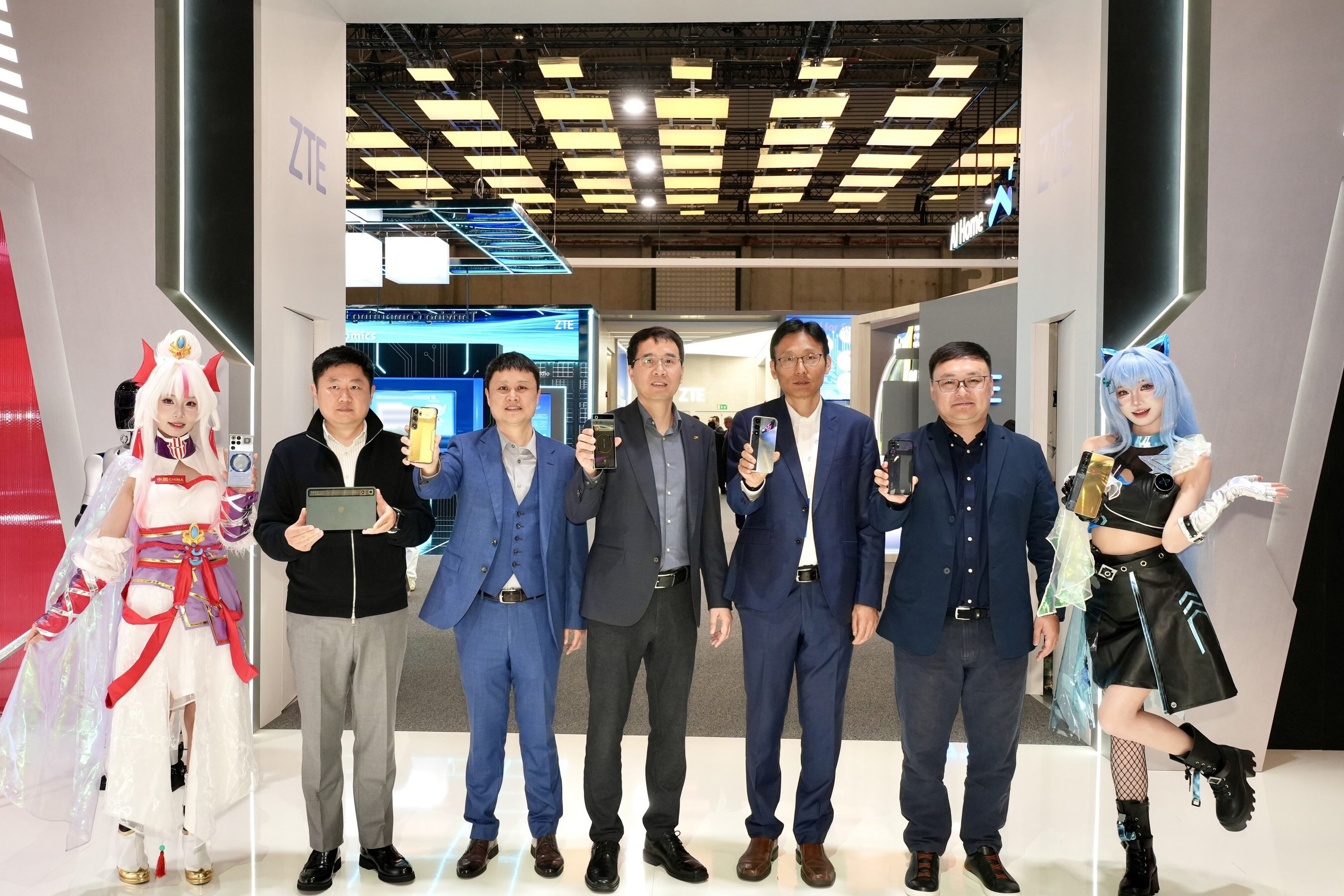
At the consumer end, ZTE can be considerably less sober than a rack of networking equipment. The nubia Neo 5 GT, introduced at MWC Barcelona in March 2026, puts an active cooling fan inside a gaming smartphone. It also has shoulder triggers and a 144Hz AMOLED display. The proposition is pleasingly physical: games generate heat, so give the phone a way to move air.
ZTE’s announcement put the Neo 5 GT’s starting price at €399 and the Neo 5’s at €299, with the rollout beginning in Southeast Asia. Those were launch prices, not a promise about every country’s taxes, stock or current offers. For a buyer, this is a feature-focused pitch aimed at gaming: controls, cooling and sustained play rather than an abstract claim to make everyone’s perfect phone.
The home portfolio serves a different need. Fixed wireless access equipment brings broadband over a mobile network; fiber access terminals connect premises to optical networks; home networking products distribute that connection indoors. Alongside wireless access, optical transport and core networks, these products show the range of ZTE’s engineering. The company can sell the connection at several stages of its journey.
The new growth comes with a margin question
ZTE’s pivot has a recognizable trigger. In his message for 2025, then-chairman Li Zixue connected the shift toward computing to maturing 5G networks and the rapid development of AI. That is an industrial reason to change direction: the customers who built one generation of infrastructure are adjusting their spending while another class of workload demands new machines.
The 2025 results show the scale of the response. Revenue reached RMB 133.90 billion, up 10.4%. Computing revenue grew approximately 150% and represented 24.6% of the total. Research and development expenses reached RMB 22.76 billion, about 17% of sales. The company was investing heavily in the transition while reporting pressure on gross margins from industry conditions and its changing sales mix.
By the first half of 2026, revenue was RMB 78.03 billion, up 9.0%, and computing revenue had grown more than 55% year on year. Net profit attributable to shareholders was RMB 2.75 billion. A rising computing share establishes that the sales mix is changing; it does not, by itself, establish that every additional server sale is equally profitable.
Public capital remains part of the machinery. In August 2025, ZTE published an offering circular for RMB 3.584 billion of zero-coupon, U.S.-dollar-settled convertible bonds due in 2030. This is financing for a listed industrial company, with bondholders and potential share conversion, rather than the venture-capital rounds associated with a young software startup.
Its competitive set depends on the purchase. Huawei, Ericsson and Nokia are alternatives in carrier networks; Cisco overlaps in networking; server specialists enter the picture when the brief shifts to computing. ZTE’s argument is breadth and integration. Whether that wins depends on the operator’s installed equipment, required interfaces, support expectations and the markets in which the supplier is eligible to compete.
FROM THE COMPANY’S BEHAVIOR GUIDELINES“Tell complete truth.”ZTE · 2025 annual report
Copy the engineering discipline. Count the dependencies.
There is a useful operational idea in ZTE’s expansion: sell the next system your existing customer needs. Carriers already managing demanding networks also need computing infrastructure. The izzi project illustrates another transferable approach, combining the supplier’s equipment with established outside platforms. For a smaller business, the practical equivalent is to integrate around a specific customer problem before expanding the catalog.
The limits deserve equal attention. A broad supplier relationship can simplify accountability, but buyers still need to examine interoperability, migration and replacement options. Geography matters too. The FCC’s 2022 rules prohibited new authorizations for covered equipment from companies including ZTE. Technical suitability alone therefore cannot determine where its products can be sold or deployed.
AI automation brings its own reality check. TeleCom-Bench, a research paper released in May 2026 with code under ZTE-AICloud, evaluated eight language models on telecommunications tasks. It reported roughly 90% accuracy on certain language-interface tasks but around 30% on procedural solution generation. These are benchmark findings, not a measurement of all ZTE products. They do explain why answering a network question and safely fixing a network are different accomplishments.
ZTE’s published culture includes the instruction “Tell complete truth.” Its history supplies a particularly expensive reason to take that phrase seriously. The company now has a measurable computing business, a broad product range and customers with substantial infrastructure needs. The demanding part is making all that equipment useful, supportable and profitable over its working life. The next convincing proof will arrive in customer operations and financial results, long after the exhibition lights go out.
Follow the equipment
Explore the product range, company updates and a conversation about network automation.