Breaking
Allied Telesis: building Ethernet since 1987 An entire network managed as a single virtual device ~1,900 employees across Asia, Europe, the Americas & Oceania HQ in Tokyo - North American base in San Jose, California OpenFlow SDN and Layer-3 switching on the same port Listed on the Tokyo Stock Exchange since July 2000 Allied Telesis: building Ethernet since 1987 An entire network managed as a single virtual device ~1,900 employees across Asia, Europe, the Americas & Oceania HQ in Tokyo - North American base in San Jose, California OpenFlow SDN and Layer-3 switching on the same port Listed on the Tokyo Stock Exchange since July 2000
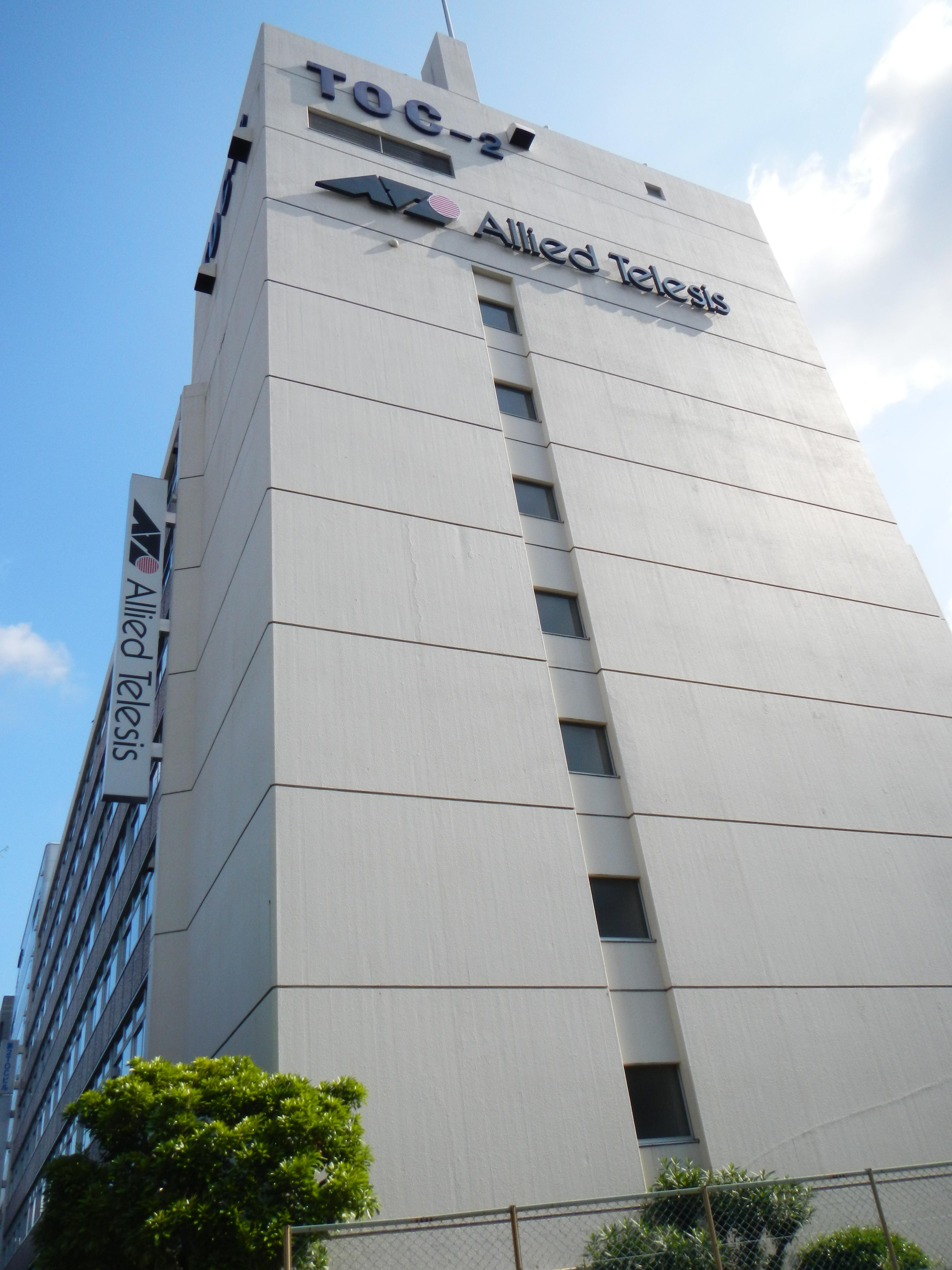
Allied Telesis headquarters building
Allied Telesis HQ - the kind of glass-and-steel box where, somewhere inside, a switch is quietly deciding which packet goes first.
Company File / Computer Networking

Allied Telesis

The networking company that builds the infrastructure you only notice when it stops working. Founded 1987. Still online.

EST. 1987 TOKYO & SAN JOSE ~1,900 PEOPLE B2B HARDWARE + SOFTWARE
Dispatch / Present Tense

The network nobody sees


Right now, somewhere you are not thinking about, a hospital is admitting a patient, a city is timing a traffic light, a school is loading a video, and a camera is watching an empty loading dock. None of it pauses to ask how the data gets there. That indifference is the product. When the wiring underneath works, you forget it exists - and a sizeable share of that forgettable wiring is Allied Telesis.

They make switches, routers, firewalls, wireless access points, transceivers, and the software that herds all of it. It is not glamorous work. It is the plumbing of the connected world, and Allied Telesis has been doing it, mostly out of frame, since 1987.

The company is, by the standards of its industry, mid-sized and unhurried. Roughly 1,900 people. A head office in Tokyo, a North American base on Orchard Parkway in San Jose, and operations stretched across Asia, Europe, the Americas and Oceania. It is publicly listed, decades old, and notably uninterested in the hype cycles that wash over networking every few years. The wave of the moment changes; the job does not.

The Problem They Saw

Networks grow faster than the people who run them


Here is the tension that runs through everything the company does. A network starts small and tidy. Then it grows. More switches, more sites, more devices, more places for a single mistyped command to take a building offline. Most of the work of running a network is repetitive, manual, and unforgiving - precisely the kind of work humans are worst at doing perfectly, ten thousand times in a row.

"AMF enables an entire network to be managed as a single virtual device from any node." - Allied Telesis, on its Autonomous Management Framework

The skeptic's question is fair. Everyone in networking promises automation. The difference is where you put it. Allied Telesis put it in the gear itself, not in a separate console you have to remember to log into.

Consider the unglamorous reality of a campus network: dozens of switches scattered across buildings, each one a candidate for a typo at 2am. A new device arrives and someone has to configure it from scratch. A switch dies and someone drives out with a replacement and a printed runbook. Multiply that by a school district, a transit authority, a hospital group, and the cost stops being about hardware. It becomes about hours, and about the quiet probability that one of those manual steps will go wrong at the worst possible moment.

The Founders' Bet

A company called System Plus


In March 1987, Takayoshi Oshima started a company in Japan with about one million yen and a deeply unfashionable conviction: that the dull qualities - reliability, longevity, control of your own supply chain - would matter more over decades than any single clever feature. It was first registered as System Plus Co., renamed Allied Telesis K.K. a few months later, and for a stretch even went by the spelling "Allied Telesyn." The name wandered. The thesis did not.

From the margins Allied Telesis still manufactures its own products. In an industry fond of outsourcing, that is either old-fashioned or quietly strategic - the company argues it is how you guarantee reliability and a secure supply chain. Both readings can be true.

The bet was that someone, somewhere, would always need a network that simply works on the first try and the ten-thousandth. Governments. Hospitals. Schools. Transit systems. Customers for whom "the network is down" is not an inconvenience but a headline.

The Long Way Round

Milestones


The Product

Hardware, plus the software that babysits it


Strip away the catalogue and the idea is simple. Build solid boxes, then give them a shared brain so a person does not have to configure each one by hand. AlliedWare Plus is the common operating system across the range. The Autonomous Management Framework Plus (AMF Plus) is the automation layer - bulk configuration, auto-recovery, and zero-touch replacement, so swapping a dead switch is closer to changing a lightbulb than performing surgery.

Switches

Data center, campus, SMB, PoE and ruggedised industrial models - the workhorses of the lineup.

Routers & Firewalls

Secure VPN routers and UTM firewalls for the branch and enterprise edge.

Wireless

Indoor and outdoor access points, steered by the Autonomous Wave Control (AWC) controller.

AMF Plus

Automation that treats the whole network as one device - and forgives the occasional human.

SDN / OpenFlow

Certified OpenFlow that runs hybrid alongside Layer-3 switching, configurable per port.

AMF-Sec

A software controller that pushes security decisions all the way to the network edge.

"Continuous PoE keeps powered devices running even while a switch reboots." - networking's version of changing a tire while driving
The Proof

Who relies on the boring stuff


Reliability is hard to photograph, so here are the numbers and the customers instead. Allied Telesis sells direct and through a global channel of resellers and integrators, backed by support plans, managed services and training. Its gear shows up in government buildings, hospitals, classrooms, factory floors, transit systems and IP-surveillance deployments - the places where downtime is not a ticket but an incident.

1987Founded
0Employees
0Years On
7+Industries Served

A footprint, sketched

// approximate, illustrative figures - sources: Wikipedia, company filings
Employees ~1,900
Revenue (USD) ~$262M
Years trading 37
Public since 2000

Note the modesty of those figures next to the giants of networking. Allied Telesis is not trying to out-Cisco Cisco. It competes on the unglamorous edges - industrial-grade switches, public-sector deployments, fiber monitoring, resilient rings - where "good enough for the demo" is not good enough.

The proof, such as it is, also lives in integrations. StreamConnect ties the network into video management systems so IP cameras and smart-city sensors are not bolted on as an afterthought. Active Fiber Monitoring watches the physical layer itself, flagging when someone tampers with a cable. Resilient rings - the EPSR protected-switched-ring scheme - keep traffic flowing when a link breaks. None of these features sell themselves with a keynote. They sell themselves the day something fails and the network shrugs it off.

Against that, the alternatives are familiar: Cisco and Juniper at the high end, HPE Aruba and Extreme in the campus, NETGEAR and others below. Allied Telesis rarely wins the headline accounts. It wins the ones where reliability, supply-chain control and a willingness to support gear for the long haul matter more than brand gravity.
The Mission

Standards, reliability, and a controlled supply chain


The stated aim is unfussy: standards-based performance and product reliability that delivers value to customers and partners worldwide. Three words do the heavy lifting - flexibility, reliability, security - and the company keeps returning to the same argument, that because it builds its own products it controls the chain from design to delivery. There is even an environmental thread, with ISO 14000-oriented sustainability woven into how it talks about its hardware.

"Manufacturing its own products lets Allied Telesis control the supply chain for flexibility, reliability, and security." - paraphrasing the company's own pitch
Why It Matters Tomorrow

More things, more connections, less patience


The world keeps adding devices - sensors, cameras, lights, locks, kiosks - and every one of them expects a network that is already there and already secure. Smart cities and IoT do not forgive the manual, fragile networks of the past. That is the direction Allied Telesis has aimed its automation, SDN readiness and edge security: fewer humans typing commands, fewer single points of failure, more networks that quietly recover on their own.

So return to where we started. The hospital admits its patient. The traffic light changes on time. The video loads. The camera keeps watching the empty dock. Nobody in any of those buildings says the words "Allied Telesis" today, and that is precisely the point. The company's whole ambition is to be the thing you never have to think about - and after 37 years, it is still very good at being forgotten.

Pass It On

Share this profile


Links, blogs & channels


// Allied Telesis does not list a single official YouTube channel in public results; the video links above search for its product demos and AMF walkthroughs.