In 1961, a group of IBM engineers checked into the New Englander Motor Hotel in Greenwich, Connecticut, and quietly began plotting the destruction of their employer's best products. IBM sold five different computer lines. They were profitable. They were also incompatible, which meant that a customer who outgrew one machine often had to throw away its software and begin again. The engineers' assignment had an appropriately bureaucratic name - SPREAD - and a wildly unbureaucratic consequence. If they succeeded, IBM would replace everything with one family of computers.
The bill reached $5 billion over four years, more than the Manhattan Project cost in nominal dollars. During the worst stretch, IBM came close to missing payroll. Then System/360 arrived. Software written for a small model could move to a larger one. A customer could grow without suffering amnesia. More than 1,000 systems were ordered in the first month.
This is the useful way to understand IBM. It is not principally a museum of famous machines, though it has made plenty. It is a company that learned to turn technological upheaval into a managed crossing. Today the vocabulary is hybrid cloud, watsonx, containers and quantum computing. The sales proposition is the same one that won in 1964: keep what matters, change what must, and do not make the customer leap without a bridge.
01 / The machine beneath the fashion
The old box did not die. It ate the new ideas.
A bank does not wake up wanting a mainframe. It wants card payments authorized before a shopper taps twice, fraud scored while the transaction is still moving, and regulators kept unexcited. An airline wants reservations to remain reservations during a storm. A government wants the benefits system available on the worst morning of the year. IBM sells into that particular species of anxiety.
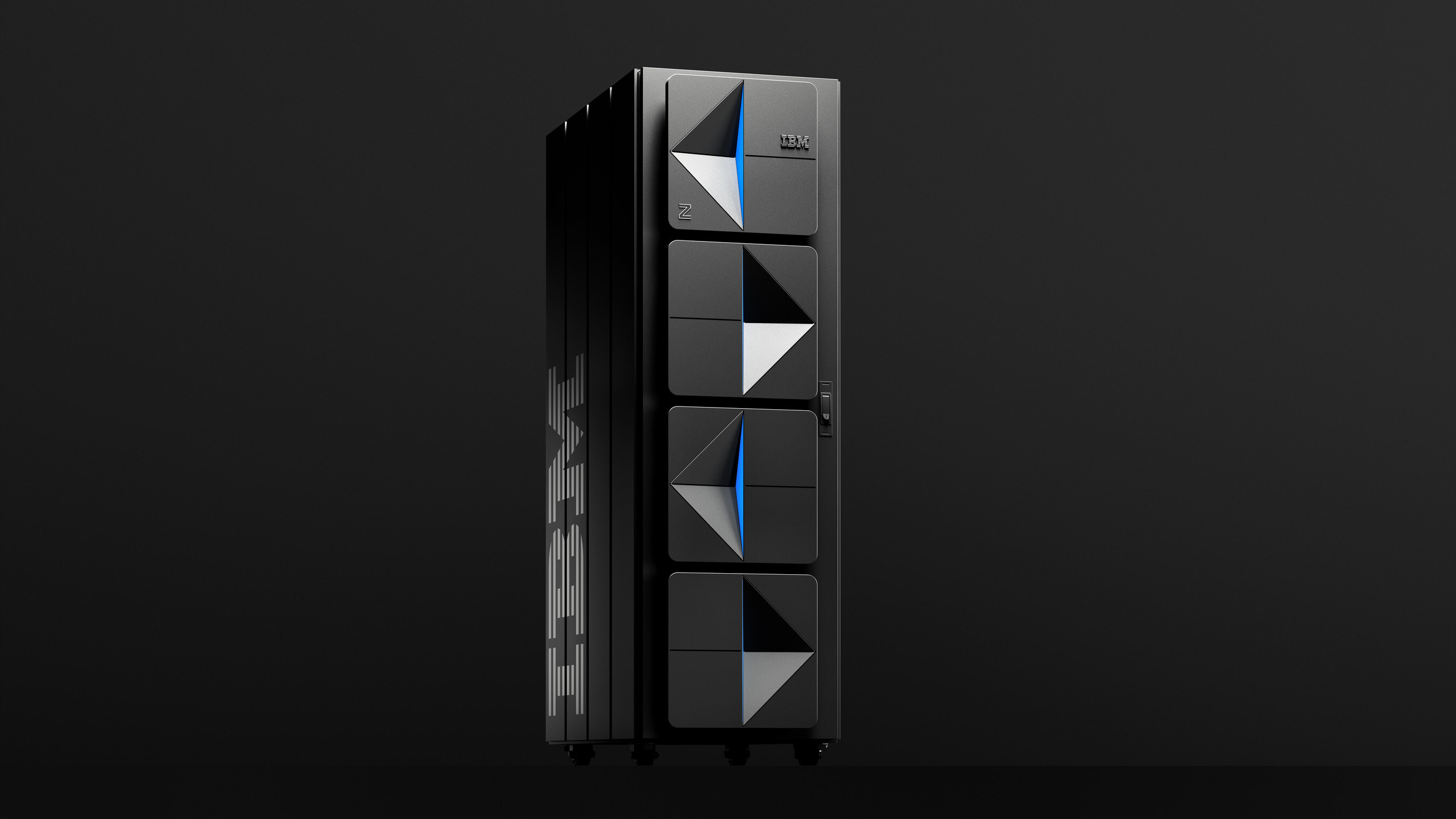
The z17 mainframe, introduced in 2025, makes the continuity pitch almost comically literal. Its Telum II processor puts AI acceleration beside the data, allowing models to score transactions without first sending sensitive information on a sightseeing trip through other systems. IBM says it can perform more than 450 billion inference operations per day at one-millisecond response time. There are more than 250 stated use cases, from loan risk to retail fraud.
Around that machine sits a much larger business. Red Hat OpenShift gives companies a common container platform across their own data centers and public clouds. watsonx supplies tools for building, running and governing AI. Automation and data products help integrate applications, observe systems and control cost. IBM Consulting supplies the people who turn the diagram into an operating system for a business. In 2025, more than 80 percent of IBM's revenue came from clients buying across software, consulting and infrastructure. The bundle is not incidental. The bundle is the product.
The trick is not choosing old or new. It is making both answer to the same operator.
“Good design is good business.”Thomas J. Watson Jr.
02 / The collapse that clarified the business
First the PC escaped. Then the customer put IBM back together.
IBM's preference for bridges did not prevent it from occasionally driving into a ditch. The IBM PC, launched in 1981 with an unusually open architecture, became a standard precisely because other manufacturers could copy it. Microsoft controlled the operating system. Intel supplied the processors. Compatible makers squeezed the hardware. IBM had created a market and failed to keep its economics.
The damage reached the income statement slowly and then all at once. In 1992, IBM lost $8.1 billion, then the largest annual corporate loss in American history. The planned remedy was to split IBM into smaller companies. It sounded tidy from headquarters. It sounded dreadful to customers, who did not want to assemble a working system from a reunion of newly independent vendors.
Louis Gerstner arrived as chief executive in 1993 and changed course. He kept IBM together, cut deeply, listened to large customers and moved the center of gravity toward services. Two years later, a presentation about the commercial internet shifted the argument again. Gerstner saw that the web would rearrange whole businesses, not merely add shopping carts. IBM spent roughly $500 million advertising “e-business,” then sold the integration, servers, software and security beneath the slogan. From 1994 to 2000, revenue rose nearly 40 percent to more than $88 billion.
System/360 replaced five incompatible lines and preserved customer software.
Customer demand for integration overruled the elegance of a breakup.
Red Hat cost about $34 billion and made OpenShift the hybrid-cloud hinge.
That history explains the $34 billion Red Hat acquisition in 2019. Public cloud had again threatened to reduce IBM's relevance. Instead of pretending every company would move everything to one cloud, IBM bet that large organizations would remain untidy: some applications on premises, some on Amazon, Microsoft or Google, some on systems old enough to rent a car. OpenShift promised a consistent layer across the mess. Expensive, yes. Coherent, also yes.
03 / The customer paid to worry
IBM's market is where novelty meets consequences.
Microsoft, Amazon and Google own larger public-cloud platforms. Accenture and Deloitte sell transformation at enormous scale. Oracle, ServiceNow, Broadcom and Palantir occupy valuable enterprise-software territory. IBM's distinction is not that it wins each category. It is that it can place software, consultants and specialized infrastructure in the same room, then accept responsibility for the handoffs.
That is attractive when the buyer has old data, strict rules and no maintenance window. It is less attractive to a small company that wants one clean software subscription and can rebuild freely. IBM's strengths arrive with IBM-shaped costs: a broad catalog, complicated procurement, long engagements and the danger that integration becomes dependence. Hybrid cloud is most persuasive when there is something genuinely valuable to keep hybrid.
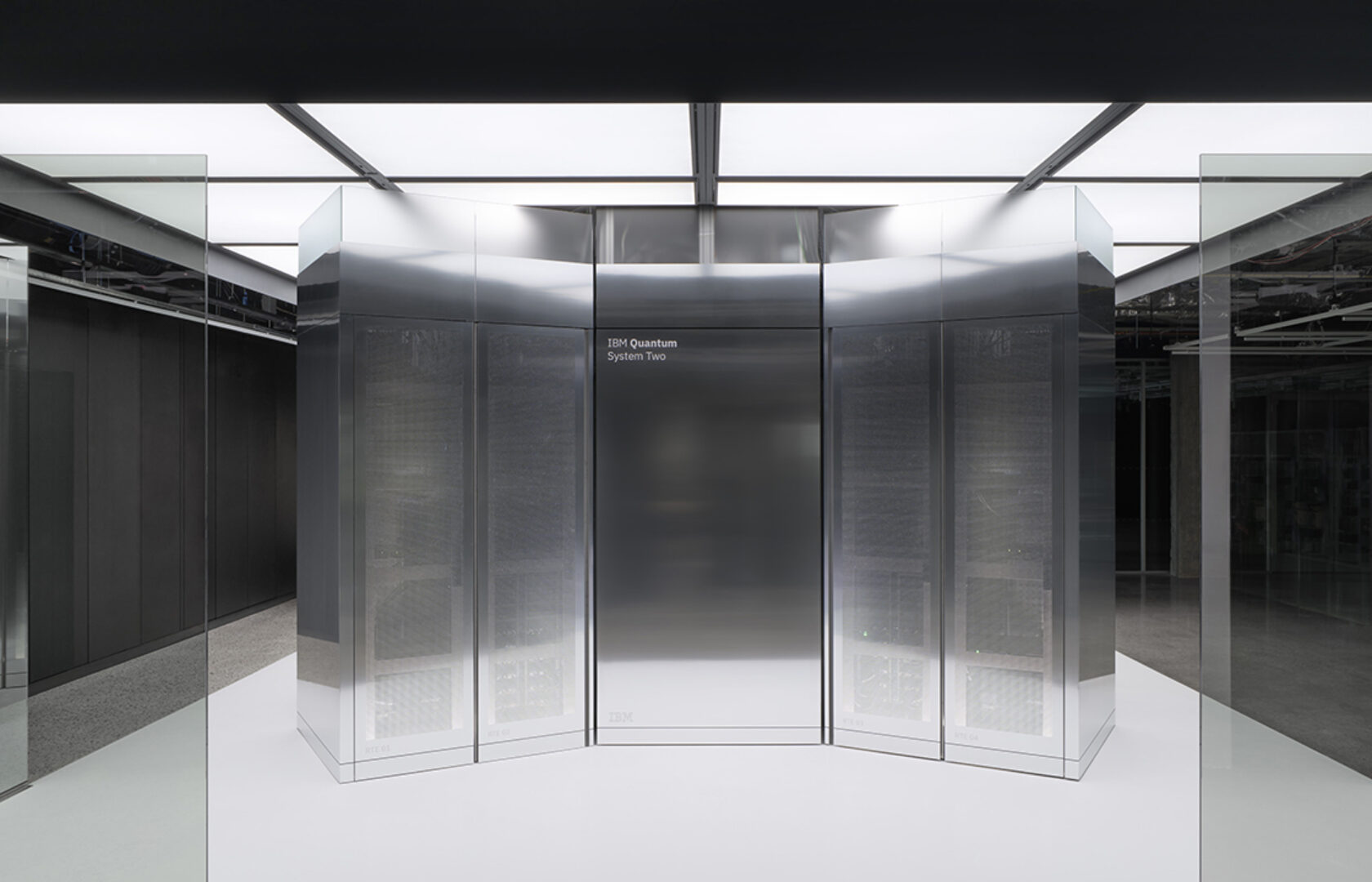
Quantum computing pushes this model to its furthest horizon. IBM operates systems for research partners and has committed more than $10 billion to a roadmap toward Starling, a fault-tolerant machine planned for 2029. The honest product today is access, software, education and joint experimentation. The future machine is a target, not a finished appliance. This works for institutions able to fund learning before commercial advantage is certain. It does not work for a buyer searching for next quarter's ordinary compute savings.
What a smaller company can copy
- Replace a product only after designing the customer's migration path.
- Bundle the difficult handoffs, not every feature you happen to own.
- Let field evidence change the organization chart.
- Fund research with a durable cash engine, then label roadmaps as roadmaps.
04 / THINK, with invoices
A one-word culture survives by changing what it means.
IBM's famous THINK slogan began as a reprimand. Thomas J. Watson Sr., frustrated by a sleepy meeting, told his colleagues they were paid to use their heads. He carried the word into C-T-R, the time-clock, scale and tabulator company that became IBM in 1924. It appeared on walls, notebooks and desk signs until corporate philosophy became office furniture.
The slogan could have hardened into nostalgia. Instead, IBM repeatedly attached it to expensive decisions: Watson Jr. backing System/360, Gerstner preserving the integrated company, the sale of the PC division to Lenovo, the Kyndryl separation, Red Hat, and now AI and quantum research. The record includes vanity, missed markets and bruising reorganizations. It also includes a rare willingness to demote the object that made IBM famous.
The company now describes its purpose as being “the catalyst that makes the world work better.” The phrase is soft. The business underneath it is hard-edged. IBM sells assurance to institutions whose technology has accumulated rather than arrived. Its expertise is less about predicting a pristine future than negotiating with a cluttered present.
That is why the mainframe matters even when it is invisible, and why IBM can discuss AI agents and COBOL in the same appointment. Every fashionable technology eventually meets an unfashionable system that already runs payroll. IBM has spent 115 years standing at that meeting point, carrying a clipboard, and billing for the introduction.